What Getting a Food Truck Permit in Houston Actually Involves in 2026
Everything a food truck operator needs before pulling up to a Houston parking lot. The permit stack is more complex than most expect: at least two city agencies in sequence, a mandatory commissary …

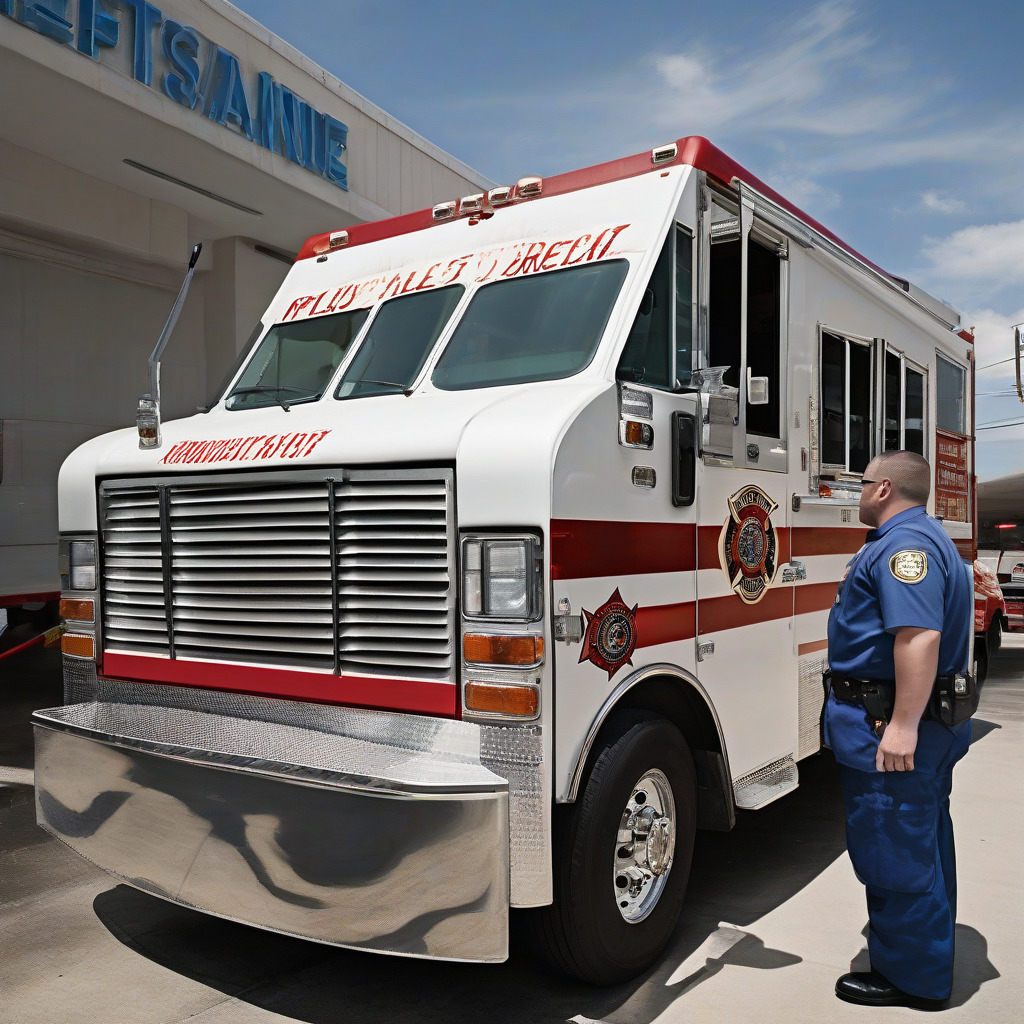
Everything a food truck operator needs before pulling up to a Houston parking lot. The permit stack is more complex than most expect: at least two city agencies in sequence, a mandatory commissary relationship running $400–$800 a month, and a Houston Fire Department inspection that must happen before the Houston Health Department will finalize anything.
The food truck pitch is familiar: lower startup costs, no lease, no buildout, freedom to move. In Houston, some of that holds up. The city’s lack of traditional zoning removes one layer of friction that kills trucks in other markets. But the permit process trips up most first-time operators — not as a hedge, I mean that literally. You’re navigating at least two city agencies in sequence, a mandatory commissary relationship, and an HFD inspection that has to clear before HHD signs off on anything.
Here’s what the process actually looks like in 2026: who issues what, what it costs, where the delays hide, and how the full picture compares to opening a brick-and-mortar in the same city.
Which agency issues Houston food truck permits, and who should you call first?
The primary permitting authority for Mobile Food Units is the Houston Health Department, Bureau of Consumer Health Services. Start at houstontx.gov/health. That’s your first stop and your ongoing point of contact.
What confuses applicants early: the city secretary’s office, Harris County, and TABC are all separate agencies with separate functions. If you plan to serve alcohol, TABC is eventually your problem, but that’s its own process. For food service permitting, HHD owns it.
Sequencing matters more than most guides admit. HHD won’t finalize your MFU permit until the Houston Fire Department has completed its inspection. That clearance is a prerequisite — not a parallel step you knock out simultaneously. The practical consequence: get the HFD inspection into the queue early. Operators who treat it as the final step frequently lose weeks sitting in a line they could have entered at the beginning.
For a full-prep truck with complete documentation and no reinspection failures, four to eight weeks from initial submission to operational permit is a plausible estimate. But two assumptions embedded in that estimate — a clean document package on first submission and no HFD reinspection — don’t always hold. Verify current HHD processing times directly before building a launch date around any number you read here.
What does the HHD Mobile Food Unit permit require, and what does it cost?
The HHD application requires:
- Completed MFU application form
- Commissary agreement letter on commissary letterhead
- Full menu
- VIN and license plate
- Water and wastewater tank capacity documentation
- Texas Food Handler certificates for all employees
- Texas Food Manager Certification (ServSafe or equivalent) for at least one manager
- Plan review documentation for new builds or significant equipment changes
Fees in 2026 depend on truck category. A full-prep MFU with open flame, fryers, and commercial cooking equipment runs approximately $534–$612 per year. Limited-prep or prepackaged-only trucks are $200–$300 annually. Plan review for new builds is $150–$200. A failed inspection costs roughly $105 for reinspection. Confirm these figures at houstontx.gov/health before you submit — fee schedules update independently of news coverage.
One detail that reliably surprises people in month eleven: find out early whether your permit runs on a calendar year or from your application anniversary date, and whether prorating applies. If you’re buying and modifying a used truck, ask HHD directly whether your equipment changes trigger plan review. The answer depends entirely on the scope of what you’re doing.
Is a commissary kitchen agreement actually mandatory?
Yes. The commissary requirement isn’t optional, isn’t waivable, and can’t be addressed after the fact. HHD requires a signed commissary agreement letter on commissary letterhead before the permit is issued — and the commissary itself must hold a valid City of Houston food establishment permit. If your commissary’s city permit has lapsed, your agreement letter is worthless to HHD.
The arrangement covers food storage, prep space, facility cleaning, and wastewater disposal. It’s the infrastructure a food truck can’t carry on its own.
Houston has a reasonably developed commissary market. The Cookline operates multiple Houston-area locations that cater to MFU operators. Several licensed brick-and-mortar restaurants also sublease commissary access, which can be more cost-effective if you find one with compatible hours and equipment — this is worth pursuing directly with established operators in your cuisine category, because it rarely surfaces on a Google search.
The most common mistake: operators present a Restaurant Depot or Gordon Food Service account as their commissary arrangement. It doesn’t work. Those are wholesale purchasing accounts. HHD requires a licensed food establishment with a formal signed agreement covering the operational functions listed above.
HHD also applies a reasonableness standard to commissary location. If you’re running primarily in Midtown and your commissary is past Katy, be prepared to explain that or find something better-situated.
Current market rates run $400–$800 per month depending on location, hours of access, and included equipment. At $700 a month, you’re spending $8,400 a year on commissary alone. That number becomes very relevant when you compare total food truck operating costs to a brick-and-mortar restaurant, a comparison we explore further in our business & professional coverage. We’ll get to that.
What does the Houston Fire Department inspect, and what gets trucks failed?
The HFD inspection is a mandatory prerequisite for permit finalization. Any truck running open flame, fryers, or commercial cooking equipment must clear HFD review before HHD closes out the application. Schedule through the HFD Fire Prevention Division. Don’t wait until everything else is assembled.
HFD will check:
- Hood suppression system: must meet UL 300 / Ansul standards with a current service tag per NFPA 96 intervals. Verify the specific interval HFD enforces — an expired tag is an automatic failure.
- Class K fire extinguisher: on board, properly mounted, within inspection interval. This is a separate requirement from hood suppression, not a substitute for it.
- LP gas system: cylinders secured and chained, pressure-tested, shutoffs accessible and marked. Inspectors physically check cylinder restraint.
- Electrical: no exposed wiring; generators must be properly grounded. Used trucks that have been through multiple owners often carry informal electrical modifications — this is where the archaeology starts.
- Exhaust clearance from combustible materials per NFPA 96.
- Emergency shutoff reachable from outside the cooking area.
- CO/smoke detection in enclosed cooking spaces.
The four failure points that most reliably delay Houston operators: expired hood suppression service tags, improperly secured LP cylinders, missing or out-of-inspection Class K extinguisher, and ungrounded generator. All preventable. Walk through this list before you schedule the inspection. A reinspection failure costs you the fee and, more importantly, queue time you don’t get back.
The HFD initial inspection fee is approximately $0–$100. Verify the current amount with HFD Fire Prevention before scheduling.
Where can a food truck legally park in Houston, and for how long?
Houston’s regulatory reality here is genuinely different from most major cities, and it matters for route planning.
Because Houston has no traditional Euclidean zoning, there’s no city map showing where food trucks are permitted. No designated “food truck zones” to look up. What actually governs parking is private property owner permission, deed restrictions, and city right-of-way rules.
Private property permission is the primary mechanism for most Houston food truck operations. The active truck hubs Houstonians know — the Midtown/Bagby area, EaDo lots, The Heights, Energy Corridor office park clusters — operate on private landowner agreements, not city designations. Get it in writing. A verbal agreement with a property manager disappears the moment someone complains, and there’s always eventually a complaint.
Deed restrictions are Houston’s de facto zoning substitute, and they’re enforceable. A deed restriction in a residential area prohibiting commercial activity means a food truck on adjacent property can face legal challenge regardless of city permit status. Before committing to a regular spot, run the Harris County property records search. This step gets skipped constantly.
Operating from a public street or sidewalk requires a Solicitor’s Permit or, for events, a special event permit through the Mayor’s Office of Special Events — meaningfully more restrictive than private-lot operation.
On the proposed 300-foot distance restriction from brick-and-mortar restaurants: this has been a recurring subject of Houston food industry policy debate, and the status keeps shifting. Verify current ordinance language directly with HHD or the City Secretary’s office before building any route assumptions around it.
Special venues operate on their own terms entirely. NRG Park and HLSR vendor agreements go through HLSR, not the city. Discovery Green and Buffalo Bayou Park each require conservancy event permits with their own insurance and vendor requirements. Public festivals run through the Mayor’s Office of Special Events, with timelines that can stretch months ahead of the event date.
There’s no confirmed city-wide time limit on how long a food truck can operate from a single private-property location. The practical limits are the landowner agreement and deed restrictions.
Does a food truck need separate permits to operate outside Houston city limits?
This is the question national food truck guides consistently get wrong, because they treat “Houston” as a single jurisdiction.
Unincorporated Harris County — which includes significant stretches of the metro — falls under Harris County Public Health, not HHD. That means a separate application, a different fee schedule, and a different inspection process. An HHD MFU permit does not cover you there. Beyond that, every suburb runs its own process. Sugar Land involves both Fort Bend County health authority and City of Sugar Land requirements. Pasadena, Pearland, and Friendswood each have their own health authorities. Katy straddles Harris, Fort Bend, and Waller counties depending on which part of Katy you mean — the jurisdiction question is literal before the permit question is.
An operator building a route across Houston proper, unincorporated Harris County, and two or three suburbs is potentially looking at three to five separate permits, each with its own annual fee, renewal date, and inspection cycle. The renewal calendar management alone becomes its own part-time administrative job. Before committing to routes outside Houston city limits, contact each municipality’s health authority directly. Don’t rely on what another operator told you about their setup — jurisdictions update requirements independently, and operators aren’t always current on their own permits.
How does the food truck permit process compare to opening a brick-and-mortar restaurant?
This is the comparison that actually matters for anyone weighing options, and it’s more honest than the food truck boosters usually make it.
Health permit fees favor food trucks, but not dramatically. An HHD MFU permit runs $534–$612 annually; a restaurant pays $900–$1,200 or more on HHD’s sliding scale. Plan review for a new truck build is $150–$200; a restaurant plan review runs $500–$2,000 depending on kitchen complexity. The HFD inspection for a truck is roughly $0–$100; a restaurant’s fire inspection embeds into the Certificate of Occupancy process, which involves multiple city agencies over a longer sequence.
Timeline advantages lean heavily toward food trucks. Building out a new truck takes 6–16 weeks; a used truck with modest modifications is faster. A restaurant buildout takes 3–18 months, and raw shell space takes considerably longer than a second-generation location. From application to first legal day of service, food trucks typically need 4–8 weeks with a clean submission. Restaurants routinely take 3–6 months minimum, longer for complex builds.
Here’s where the math closes the gap: commissary at $400–$800 per month, every month, indefinitely. A brick-and-mortar restaurant doesn’t have this line item. Their kitchen infrastructure is a capital expense, not recurring monthly overhead. At $700 a month, a food truck operator spends $8,400 a year on commissary — which, in Houston’s lower-rent neighborhoods, approaches actual lease cost for a small restaurant footprint.
That’s not an argument against food trucks. It’s an argument for doing the math honestly before committing to either path. Food trucks have lower entry costs and faster timelines to operation — those advantages are real. The comparison tilts more clearly in their favor when you factor in no buildout debt and the flexibility to test concepts across locations. But anyone presenting the food truck route as simply “cheaper than a restaurant” is skipping the commissary math, and that line item doesn’t go away.
Houston-specific operational hazards a permitted operator should actually plan for
The permit is the beginning, not the end.
Houston’s June through September operating environment is demanding in ways operators from other markets don’t anticipate. Temperatures regularly hit 95°F with heat indexes above 105°F. Generator load increases significantly under sustained heat. Cold-holding failure risk rises. HHD’s temperature compliance focus intensifies during summer months — inspectors know this is when cold-hold violations are most likely. Documented temperature logs are your evidence of compliance if an inspector shows up during a heat event. If your refrigeration equipment is marginal, Houston summer will find it out.
Hurricane season presents real equipment risk. A city permit doesn’t protect physical equipment from flood damage, and Hurricane Harvey’s impact on food truck operators across the city was substantial. Trucks are mobile, but they’re also sitting in lots and commissary parking areas when the water rises. The location of your commissary relative to flood-prone corridors is a genuine siting consideration. Harris County’s flood map resources are public and searchable. If your commissary sits in a historically flood-prone area, that’s a business continuity risk worth factoring into your choice of facility before you sign an agreement. Understanding how to read the Houston flood zone map before committing to a commissary location can save a costly mistake.
The Houston Livestock Show and Rodeo is the largest single food vending opportunity in the metro, running through February and March at NRG Park. First-year operators miss the application window regularly. Vendor applications open months in advance, require a separate HLSR agreement, and require certificate of insurance beyond standard MFU coverage. This process is entirely independent of your city permit — a valid HHD permit gives you no standing in HLSR vendor selection. If HLSR is a target for your operation, look up the application timeline now, not in January.
2026 Houston Food Truck Permit — Quick-Reference Checklist
Step 1 — HFD Fire Inspection Schedule early through HFD Fire Prevention Division. Required before HHD finalizes permit. Fee: approximately $0–$100; verify with HFD before scheduling.
Step 2 — HHD Plan Review (new builds only) Submit equipment layout and build documentation. Fee: approximately $150–$200.
Step 3 — Commissary Agreement Signed letter on commissary letterhead; commissary must hold valid city food establishment permit. Current market rate: $400–$800/month.
Step 4 — HHD MFU Application Complete package: application form, commissary agreement, menu, VIN and plate, tank capacity documentation, Texas Food Handler certificates for all staff, Texas Food Manager Certification for at least one manager, HFD inspection clearance. Fee: approximately $534–$612 (full-prep) or $200–$300 (limited-prep).
Step 5 — HHD Physical Inspection Inspector visits the truck. Reinspection fee if failed: approximately $105.
Step 6 — Permit Issued Verify permit year structure and renewal date directly with HHD. Estimated time start to finish: 4–8 weeks for a complete, clean application.
Total first-year estimated permit costs (full-prep MFU, new build): HHD permit plus plan review plus commissary (annualized): approximately $5,500–$10,400. Commissary is the dominant recurring cost by a wide margin. Sit with that number before you sign anything.
Fees and requirements reflect publicly available HHD and HFD schedules as of early 2026. Verify current amounts directly with the Houston Health Department at houstontx.gov/health before submitting your application.