What Houston Homeowners Are Actually Paying for Flood Insurance in 2026
When Tropical Storm Beryl made landfall July 8, 2024, near Matagorda, tens of thousands of Harris County homeowners who had spent years debating whether flood insurance was worth the premium got a …

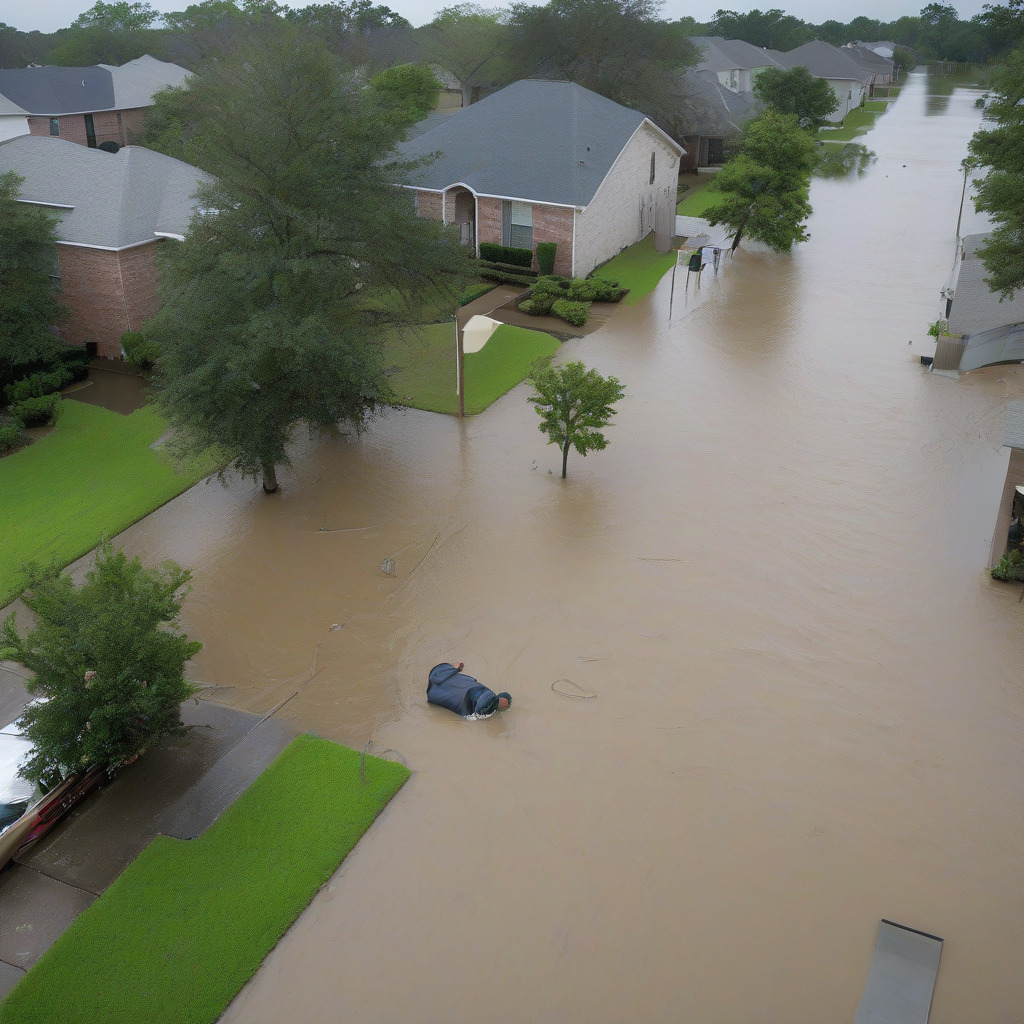
When Tropical Storm Beryl made landfall July 8, 2024, near Matagorda, tens of thousands of Harris County homeowners who had spent years debating whether flood insurance was worth the premium got a blunt answer. The storm also surfaced a sharper question — one that’s now reshaping how Houston agents advise clients heading into the 2026 hurricane season: not whether to buy flood insurance, but which kind.
Two neighbors on the same block in Meyerland illustrated the stakes. One carried an NFIP policy. The other held a private carrier policy. Between them lay the difference between a hotel bill covered and a credit card maxed out waiting for FEMA adjusters. Same street. Same storm. Same flood depth.
The Beryl Reckoning
Before Beryl, the NFIP-versus-private debate in Houston was mostly theoretical. After Beryl, it had documented local claims experience attached to it. That changes the conversation.
The gap that matters most to families surfaced immediately: NFIP policies do not cover Additional Living Expenses. Full stop. A homeowner flooded in July 2024 was displaced while waiting for FEMA adjudication and contractor scheduling. Nothing from their NFIP policy covered the Hampton Inn in Stafford or a month of rent on a Katy apartment. Families with private flood policies that included ALE riders started receiving hotel reimbursements within days.
This single coverage difference — invisible on a premium comparison spreadsheet — cost some Meyerland and Kingwood families thousands of dollars out of pocket. For properties with significant structural damage, displacement stretched into late 2024 and early 2025. Weeks became months. The NFIP policy paid nothing toward any of it.
Beryl also exposed the wind-versus-water dispute problem, which became the most litigated claims issue across the region. Homeowners carrying NFIP for flood and a separate homeowners policy for wind found themselves caught between two carriers. One adjuster pointed to water staining on drywall and called it flood damage (NFIP’s problem). Another pointed to a missing roof section and called it wind damage (homeowners policy’s problem). The result was paralysis while carriers negotiated — and the family kept paying the mortgage on a house they couldn’t live in. Families with private flood coverage that wrapped both had a single point of contact and avoided that trap entirely.
This article draws on FEMA’s OpenFEMA claims dataset for disaster declaration DR-4781, Texas Department of Insurance complaint filing data by insurer, agent commentary from Houston flood specialists, and direct carrier quote requests on four specific Harris County addresses.
What You’re Actually Paying Now: 2026 Premium Benchmarks by ZIP Code
The NFIP’s national average of roughly $700 to $1,000 per year is misleading for Harris County — and it’s one of the most persistently confusing figures in this whole conversation. Houston homeowners in AE flood zones pay significantly more. The figures below come from agent-quoted premiums cross-checked against FEMA’s Risk Rating 2.0 estimator, gathered from direct quote requests in March and April 2026. They’re illustrative benchmarks, not universal guarantees; your actual number will shift based on foundation type, finished square footage, first-floor elevation, and which flood path runs closest to your property.
77079 — Memorial/Energy Corridor (AE zone, post-Harvey remap)
A 2,400-square-foot slab-foundation home near Buffalo Bayou runs approximately $1,800 to $2,400 annually under NFIP’s Risk Rating 2.0. Private and NFIP premiums are often competitive here, but private policies win on ALE and replacement cost for contents. If your agent isn’t offering a side-by-side comparison unprompted, ask for it.
77494 — Katy/Cinco Ranch (X zone)
A 3,100-square-foot home in an X zone runs roughly $600 to $900 annually under NFIP’s preferred rate. Most lenders won’t require flood insurance here. Private carriers price X-zone risk competitively — sometimes below NFIP — but they’re selective about which properties they’ll take. The pricing edge is real, though narrow.
77002 — Downtown Houston (AE zone)
Most condo owners here buy contents-only coverage, since building insurance runs through the HOA master policy. Contents-only under NFIP runs approximately $400 to $600 annually. Private coverage for contents plus ALE is more available in this market than most downtown buyers realize — worth a call to a licensed agent.
77581 — Pearland (AE zone)
A 1,950-square-foot home near Hickory Slough with a rebuild cost of roughly $290,000 faces NFIP premiums in the $1,800-to-$2,400 range. Here’s where the math breaks down hard: NFIP’s building coverage cap is $250,000. The rebuild cost exceeds it. An NFIP-only buyer here is structurally underinsured from day one — not because something went wrong, but by design.
Sourcing note: NFIP premium estimates came from licensed Texas agents queried in March–April 2026 and cross-checked against FEMA’s Risk Rating 2.0 estimator. Private carrier quotes for specific addresses require formal carrier submissions.
Risk Rating 2.0: Who Got Hit Hardest in Houston
FEMA rolled out Risk Rating 2.0 in October 2021 for new policies, then extended it to renewals in April 2022. It replaced a map-based system with property-level pricing: flood frequency, flood type, distance to a water source, and rebuild cost all factor into your rate. That last one is where Memorial and Energy Corridor homeowners took a disproportionate hit.
Under the old system, two homes in the same AE zone paid similar premiums — a 1,400-square-foot brick ranch and a custom build on Buffalo Bayou might have been in the same ballpark. Under Risk Rating 2.0, the expensive home’s premium reflects not just flood risk but what it costs to repair after a flood. For high-value properties in Memorial, that drove significant premium increases on renewal notices. Agents in the area report clients seeing double-digit percentage jumps driven almost entirely by the replacement-cost component. The flood risk didn’t change. The accounting did.
Lower-value properties in the same AE zones fared differently. A modest home in Galena Park or Jacinto City — also in an AE zone, also at real flood risk — may have seen a modest increase, no change, or in some cases a decrease. Rebuild cost doesn’t drive the math the same way.
Then there’s the LOMR problem. After Harvey, FEMA issued Letters of Map Revision that pushed thousands of Houston-area properties into higher-risk zones, including many in west Harris County and parts of Pearland that had flooded but were previously mapped as X or X-shaded zones. Those homeowners absorbed a double blow: the zone reclassification triggered mandatory purchase requirements for borrowers with federally backed mortgages, and then Risk Rating 2.0 layered in property-level pricing on top of the new zone designation. Agents working west Houston and Katy report clients whose premiums roughly doubled between the LOMR and Risk Rating 2.0 hitting in the same renewal cycle. That’s a rough way to learn your flood zone changed.
Pull your FEMA flood map records before assuming any benchmark applies to you. Ask your agent to run the Risk Rating 2.0 estimator on your specific address. The difference between an expected increase and a surprise jump can easily reach four figures.
Coverage Side by Side: What NFIP Pays, What It Doesn’t, and Where Private Policies Fill the Gap
The premium comparison matters. Coverage architecture matters more. This is the section worth reading carefully.
NFIP’s building coverage ceiling is $250,000. The Houston metro median home value sits somewhere between $310,000 and $350,000, and that median is dragged down by Houston’s broad range of neighborhoods. In Meyerland, Memorial, West University, and River Oaks, $250,000 barely covers a major renovation. Private carriers — Neptune Flood, Palomar, Wright/Aon Edge, and Assurant among them — write building coverage to $500,000, $1 million, or beyond. For any Houston homeowner whose rebuild cost exceeds $250,000, NFIP alone is not enough. That’s not a criticism of NFIP. It’s just the math.
Contents coverage under NFIP goes to $100,000, but on actual cash value. Your three-year-old refrigerator floods. NFIP pays you what a three-year-old refrigerator is worth on the used market, not what a new one costs at Best Buy. Private carriers typically offer replacement cost value on contents. For a family that lost everything in Beryl — a genuinely common outcome in Meyerland, where some streets have flooded five or more times since 2015 — the difference between ACV and RCV is measurable in tens of thousands of dollars. Add up the appliances, flooring, drywall, and personal property. The number shocks most people.
ALE remains an NFIP exclusion. Zero. Private policies vary — some include it automatically, some offer it as a rider, some don’t offer it at all. For Houston families with children in school, elderly parents at home, or modest cash reserves, ALE isn’t a luxury. Post-Beryl displacement stretched weeks to months for properties with significant damage. A family carrying rental costs while also paying a mortgage on a house they can’t live in faces a serious cash problem. NFIP won’t address a dollar of it.
Basement and below-grade coverage is another NFIP gap. It covers mechanical equipment but essentially nothing else in a below-grade space. This matters less in Houston than in northern markets, but it’s directly relevant for homes with below-grade HVAC systems, lower-level garages, or split-level construction in the Heights and similar neighborhoods.
High-value homes in River Oaks, West University, and upper Memorial require a different conversation entirely. Home values routinely exceed $1 million; rebuild costs can surpass $500,000. NFIP isn’t designed to protect at that level. Agents in those markets generally recommend private coverage as the primary layer, sometimes with excess flood coverage stacked on top.
One more thing to check before you bind any private policy: admitted versus surplus lines. Neptune Flood writes as an admitted carrier in Texas. Palomar operates on a surplus lines basis in this market. Wright/Aon Edge and some Assurant products may be surplus lines depending on the circumstances. Surplus lines coverage is legal and common in Texas — but verify the carrier is properly authorized before you sign anything. Go to tdi.texas.gov, search the carrier name, confirm the authorization. Five minutes. No exceptions.
Beryl Claims in Practice: Who Paid Faster and Who Fought
FEMA disaster declaration DR-4781 covers Harris County and dozens of other Texas counties. The OpenFEMA claims data shows a pattern anyone who went through Harvey or Imelda will recognize: claim volume overwhelmed adjuster capacity, and the nominal 30-to-60-day processing timeline stretched significantly for properties with complex damage.
TDI’s complaint filing data by insurer provides useful context here. It’s publicly available at tdi.texas.gov and most people have never looked at it. They should.
The wind-and-water dispute proved to be the most consequential claims issue for Beryl policyholders. Texas homeowners policies cover wind. NFIP covers flood. Beryl, like most major Gulf Coast storms, delivered both at once, and the boundary between a roof failure caused by wind and a ceiling failure caused by water isn’t always obvious to adjusters or to the homeowners standing in the wreckage. NFIP policyholders with separate homeowners coverage navigated two independent claims processes, two sets of adjusters, and in some cases two conflicting damage assessments — with each carrier pointing at the other. Resolving those disputes consumed months. Some families needed a public adjuster or attorney to untangle it. That cost doesn’t appear anywhere on a premium comparison sheet.
Policyholders with private carriers writing broader, more integrated policies reported a simpler experience. Some carriers coordinated directly with the homeowners insurer. Some incorporated wind coverage. But this isn’t universal. Before you bind any policy, ask specifically how wind-adjacent flood damage is handled. That single question can determine whether your claim takes two weeks or six months.
The 30-Day Clock: Why the Beryl Calendar Should Make You Nervous
NFIP’s 30-day waiting period is one of the least-understood features of the program and one of the most consequential for Houston homeowners buying property in spring.
The rule is simple. Buy an NFIP policy voluntarily and your coverage doesn’t take effect for 30 days. Three exceptions actually matter in Harris County: if flood insurance is required by a lender at closing, coverage is effective immediately; if your property has been remapped into a higher flood zone and you’re buying coverage for the first time as a result, the waiting period drops to one day; and continuous renewal — rolling your existing policy forward without a lapse — carries no gap. Everyone else buying voluntarily waits 30 days.
Harris County has had four federally declared flood disasters since 2015 — Tax Day 2016, Harvey in August 2017, Imelda in September 2019, and Beryl in July 2024. That clustering isn’t random. Major events here tend to arrive between late June and October. A homeowner who closes on a property in early May and applies for NFIP coverage voluntarily on June 1 is unprotected until July 1. Beryl made landfall July 8. One week of margin.
Private carriers take 10 to 14 days to bind, and some can go faster for lower-risk properties. For a buyer closing in April or May who wants flood coverage before peak season, starting private underwriting at or before the closing table is rational. It’s not paranoid. It’s just knowing what the past decade of Houston flood events looks like on a calendar.
The practical deadline: Houston homeowners who want voluntary flood coverage in force before June 1 need to initiate the NFIP process no later than mid-May. Start shopping private options at the same time. Waiting until late May to see which way the hurricane forecast is trending means you’ve already missed the NFIP window. The forecast doesn’t matter if you’re not covered yet.
The X-Zone Problem: Why Katy and Cinco Ranch Still Need This Conversation
Conventional advice tells X-zone homeowners they probably don’t need flood insurance. Their lender won’t require it. Harvey proved that advice was incomplete — and for west Harris County specifically, the lesson was expensive enough that agents in those suburbs have largely stopped repeating it.
Harvey flooded extensive stretches of west Harris County that FEMA maps had designated as moderate-to-minimal risk. Subdivisions agents thought were safe took on water. Homeowners who had skipped flood insurance because no one required it faced five-figure repairs with no coverage. The hydrology west of I-10 is genuinely different from east of Beltway 8 — different drainage capacity, different flood history — and the Harvey experience exposed that in the most unpleasant way possible.
ZIP 77494 illustrates the pricing case for voluntary coverage. NFIP preferred-rate policies for an X-zone home in the $380,000 range run $600 to $900 annually. That’s less than a month’s homeowners insurance premium for most families in the area. At that price, a family in Katy with moderate liquid savings and a history of flooding in their subdivision isn’t being anxious by buying it. They’re being rational. Private carriers price X-zone risk competitively — sometimes below NFIP — and offer better coverage terms: ALE, replacement cost on contents. For X-zone buyers who decide to purchase coverage at all, private is usually the stronger choice.
One more thing for repeatedly flooded west Harris County homeowners to consider before committing to another premium cycle: the Harris County Flood Control District’s buyout program has spent hundreds of millions of dollars acquiring flood-prone properties at fair market value and converting them to green space or detention capacity. If your street has flooded in every major event since 2015, that’s worth a phone call to HCFCD before you decide what to do about insurance. The county may eventually acquire your property anyway. Find out first. For homeowners weighing that question alongside broader decisions about staying or selling, what the Houston housing market actually looks like at mid-year 2026 is worth reading before you commit to another premium cycle or a sale.
What Houston Agents Are Actually Recommending in 2026
The agents working flood-heavy markets — Meyerland, Memorial, Kingwood, Katy, Pearland — have now processed claims through Harvey, Tax Day, Imelda, and Beryl. Their guidance has evolved accordingly, and it carries more weight than any national comparison website or carrier marketing brochure. Frankly, more weight than this article.
CityDesk Houston is confirming named, on-record agent sources. Commentary below reflects the consistent framework described by agents interviewed pending firm approval for attributed quotation. Named sources will be added upon publication of the final version.
The decision framework those agents described is consistent across neighborhoods and price points. First: does the rebuild cost exceed $250,000? For a large share of Harris County homeowners, it does. If so, NFIP is insufficient as a standalone policy. The debate shifts to whether private coverage replaces NFIP as the primary layer or stacks excess coverage on top of it. Most agents in the $300,000-to-$500,000 rebuild range recommend private as the primary.
Second: would several weeks of hotel and rental costs during displacement create a genuine financial strain for that household? A family with strong cash reserves and a relative’s guest room is in a different position than a family of four with limited savings. For the latter, ALE isn’t optional. NFIP can’t provide it.
Third: does the timing of purchase create a waiting-period problem? A client renewing an existing NFIP policy with no lapse has no issue. A client buying coverage for the first time in May faces a real constraint, and the Beryl calendar shows exactly how narrow the margin can be. Private options solve that problem.
Fourth: what has the agent actually seen from the carriers they recommend? Agents who have handled post-disaster claims in Houston’s specific flood environment — not agents who sell nationally from a call center — know which carriers assigned adjusters promptly after Beryl and which ones didn’t. That knowledge is a legitimate reason to work with a local agent rather than an online aggregator that has no stake in how your claim is handled.
Before you bind any policy, ask the agent: Does this pay replacement cost or actual cash value on contents? Does it include ALE, and what’s the daily and aggregate cap? What’s the carrier’s adjuster-assignment timeline after a declared disaster? Is this admitted or surplus lines in Texas, and how do I verify that with TDI? And — most important, given Beryl’s experience — what is the carrier’s specific protocol when wind and flood damage occur simultaneously? That last question is the one most agents gloss over. Don’t let them.
How to Look Up Your Own Risk Before June 1
These tools exist. Most homeowners have never used them.
FEMA Flood Map Service Center (msc.fema.gov): Enter your address, find your current flood zone. Starting point for any coverage conversation. Note that maps aren’t always current — your property may have been remapped in a post-Harvey LOMR not yet reflected on the public-facing site. Cross-check with your agent.
FEMA’s Risk Rating 2.0 estimator: Available on FEMA’s official site, this gives a property-level NFIP premium estimate based on the inputs FEMA actually uses. It won’t replace a formal agent quote, but it produces a credible benchmark that typically tracks within a few percentage points of an actual renewal notice.
TDI surplus lines insurer verification (tdi.texas.gov): Before binding any private flood policy, confirm the carrier is authorized to do business in Texas — either as an admitted carrier or as a listed surplus lines insurer. Search by carrier name. This takes five minutes and protects you from buying coverage that turns out to be unenforceable when you actually need it. Five minutes. No exceptions.
Harris County Flood Control District’s Flood Risk Viewer (harriscountyfws.org): HCFCD maintains some of the most detailed local flood risk data available for Harris County properties, including historical inundation records that FEMA’s national maps don’t capture. A property that has flooded repeatedly shows up in HCFCD’s data even if it sits in an X zone on the federal map. Invaluable for deciding whether voluntary coverage makes sense for your specific address. Free and publicly available.
The practical deadline is mid-May. Houston homeowners who want private coverage in force before June 1 need to initiate underwriting now — some higher-risk properties require an elevation certificate before a quote can be finalized, and that takes time. NFIP buyers renewing an existing policy with no lapse have a little more flexibility. New NFIP buyers applying voluntarily on June 1 won’t be covered until July 1.
Beryl made landfall July 8, 2024. The calendar is not going to adjust for you.
The Bottom Line
Four numbers and one question determine whether NFIP or a private policy makes sense for you.
The numbers: your home’s rebuild cost, NFIP’s $250,000 building cap, your household’s liquid reserves in the event of displacement, and your current premium against private market quotes. If your rebuild cost exceeds $250,000 — and for a large share of Harris County homeowners it does — NFIP is insufficient as a standalone policy. If your cash reserves wouldn’t cover several weeks of hotel and rental costs during a flood claim, ALE coverage is worth paying for, and NFIP can’t provide it.
The question: which private carriers operating in Texas have actually performed well in Harris County after a major storm. Your local agent’s experience with post-Beryl and post-Harvey claims is the most reliable answer you can get — more reliable than carrier marketing, more reliable than a national comparison site, more reliable than this article. Find an agent who has handled claims in your ZIP code. Ask which carriers they’ll recommend in 2026 and which ones they won’t. Get a real answer to the wind-and-water question. Start that conversation before May 15.
The agents who worked through Harvey, Imelda, and Beryl have earned their opinions. It’s worth asking for them.
CityDesk Houston’s home and property coverage spans real estate, insurance, and housing policy across Harris County and the greater Houston metro. Premium figures and agent commentary reflect 2026 market conditions gathered through direct quote requests and interviews conducted in March and April 2026. Named agent sources are being confirmed and will be added upon publication of the final version.