What Texas Security Deposit Law Actually Requires and How to Get Yours Back in Houston
Summer lease turnover is peak dispute season in Harris County. Most tenants don't know the law well enough to push back.

Summer lease turnover is peak dispute season in Harris County. Most tenants don’t know the law well enough to push back.
If you moved out of a Houston apartment this summer and your landlord still has your deposit, you have real options—and more power than you probably think. June through August is when Harris County sees concentrated lease turnover: graduates leaving units near the University of Houston and Rice, medical residents rotating out of Texas Medical Center-area apartments, and academic-year renters vacating Midtown, Montrose, and the Heights all at once. Landlords know the churn creates confusion, and some count on tenants not understanding the clock well enough to push back.
This piece explains what Texas law actually requires, what is and isn’t a legitimate deduction in Houston’s specific housing context, how to write a demand letter that triggers the penalty clause, and what it costs to file in JP court on your own if it comes to that.
The 30-Day Clock, and the Forwarding Address Trap That Resets It
Texas Property Code §92.103 controls the timeline: a landlord must return your security deposit, minus any lawful deductions, within 30 days of you surrendering the premises. Miss that deadline, and they lose the statutory right to retain the deposit at all—even if some deductions would otherwise have been valid.
That’s the rule most tenants know. What far fewer know is the trap buried in §92.107.
The 30-day clock does not start until the landlord receives your forwarding address in writing. Verbal notification at move-out doesn’t count. Texting it to the property manager doesn’t create a reliable record. If you hand your keys to a leasing agent and say your new address out loud, you have not legally triggered the clock. This single procedural gap kills more otherwise-valid deposit claims than almost anything else—which is genuinely frustrating when the fix takes five minutes.
Landlords in Harris County JP proceedings have argued that the 30-day period never began because they had no written forwarding address on file, sometimes months after a tenant moved out. Courts have accepted that argument when the tenant couldn’t produce proof of written delivery.
Send your forwarding address by certified mail before or on the day you move out. If you communicate with your landlord primarily by email and they’ve responded substantively to that address throughout your tenancy, a documented email thread may also hold up. Certified mail is cleaner. Courts treat it more predictably. Keep your USPS receipt. This is not the step to skip.
What “Surrender” Actually Means, and Why Houston’s Summer Turnover Creates Disputes
The 30-day clock begins at “surrender of the premises,” and that phrase does real legal work. Texas courts have generally understood surrender to mean vacating the unit, returning all keys and access devices, with a clear understanding—ideally written—that the tenancy is over. When a lease expires and a tenant moves out and returns keys, surrender is unambiguous.
The disputes arise at the margins. In Houston’s summer market, common contested scenarios include a tenant who mails keys back but keeps an electronic fob; a tenant who vacates early and leaves belongings for a few extra days while a friend helps move; and the situation where a tenant’s lease runs through August 31, they physically vacate August 15, and assume the clock starts then. Unless the landlord acknowledges in writing that they accept early surrender, the 30-day period in that last scenario arguably doesn’t begin until August 31. That’s two weeks of the window, gone.
If you’re vacating before your lease end date, get written acknowledgment from your landlord that they accept return of the unit as of that earlier date. An email that says “Confirmed, we accept return of the unit as of August 15” is worth keeping. Absent that, assume the clock starts on the last day of your lease.
What happens every summer in Harris County is that thousands of informal move-outs occur in quick succession without proper documentation. Property managers handling dozens of turnover units simultaneously make procedural errors. Tenants who assumed everything was fine stop following up. By the time anyone sends a demand letter, weeks of the 30-day window have been lost to ambiguity about when surrender actually occurred. That ambiguity works entirely in the landlord’s favor. Every time.
What Houston Landlords Can Legally Deduct, and What They Cannot
Texas Property Code allows landlords to deduct for damages beyond “normal wear and tear.” That phrase isn’t defined in the statute, which means courts interpret it case by case. The general standard: normal wear and tear is deterioration from ordinary, reasonable use—not from neglect, abuse, or accidents.
Deductible charges include pet damage to carpet, including staining and odor remediation; holes punched in walls beyond minor nail holes; broken fixtures that weren’t reported and resulted from tenant negligence; cigarette burns on counters or floors; locks that need rekeying because a tenant lost a key fob.
Not deductible: carpet that’s matted or worn from foot traffic in a unit occupied for a year or more. Scuff marks on baseboards. Minor nail holes from standard picture hanging. In Houston’s climate, where air conditioning runs near year-round, a filter that needs replacement at move-out is routine maintenance, not tenant damage—particularly when there’s no evidence the landlord instructed the tenant to replace filters on a specific schedule and the tenant ignored it.
If a landlord withholds any portion of the deposit, they must provide a written, itemized list of deductions under §92.104. This isn’t optional. A landlord who sends back a check for less than the deposit with a generic note saying “damages” and no itemization has failed to comply with the statute. That failure weakens their legal position significantly.
The itemization has to be specific enough to mean something. “Cleaning: $200” with no detail is better than nothing but still invites challenge. “Cleaning: $200—professional carpet cleaning, vendor invoice attached” is what a landlord who expects to defend a deduction in court should be producing. Judges notice the difference when they’re reading both files side by side.
Houston’s Housing Stock Makes Wear-and-Tear Disputes Different Here
Harris County has deduction categories that come up constantly in local disputes because of conditions specific to this city. Tenants in older stock should know what to expect and document before they move out.
Mold remediation charges appear frequently in deposit disputes involving older Montrose, Heights, and Third Ward units. Many of these buildings have aging HVAC systems that struggle with Houston’s structural humidity—and if you’ve lived in one, you know exactly what that means. When mold appears in a bathroom or closet in a unit with an inadequate exhaust fan or a poorly maintained air handler, a landlord’s attempt to charge the departing tenant for remediation is legally shaky, particularly if the tenant reported moisture issues in writing and the landlord failed to act. Keep that record. Harris County courts have shown real skepticism toward mold charges in buildings with documented ventilation problems.
A related charge: AC coil cleaning. Some property managers bill departing tenants for HVAC coil cleaning as though it’s damage the tenant caused. Unless a tenant physically misused the system, coil cleaning is routine maintenance that falls on the landlord. When a tenant can show the system was already degraded before they moved in, or that the landlord deferred maintenance throughout the tenancy, the charge doesn’t hold up.
Paint charges deserve particular attention in this market. Absent actual damage—crayon on walls, unauthorized paint colors, smoke staining—full repainting charges against long-term tenants are contestable. Houston’s intense sun and humidity age interior paint faster than most climates, and courts recognize this. If you lived somewhere two or more years and the landlord is billing you for a full interior repaint, that charge is worth fighting.
Photograph everything before you leave. Timestamped photos of the HVAC filter condition, bathroom tile, walls, and any existing damage at move-in and move-out are the most useful evidence you’ll bring to a JP court hearing. A landlord who can’t produce photos of the damage they claim to have remediated is in a weak position. Your photos don’t lie.
The Penalty Structure, Because a Missed Deadline and Bad Faith Are Not the Same Thing
This is the section most tenants skip past in generic legal blog posts. Don’t.
Texas Property Code §92.109 creates two distinct outcomes. The first: if the landlord misses the 30-day deadline without providing an itemization, they lose the right to retain any portion of the deposit. The tenant is owed the full amount back. If the tenant has to sue to recover it, they can also recover court costs. On a Houston apartment deposit, that’s often $1,000 to $2,500—not nothing. But it’s the more limited remedy.
The second outcome is where the math gets interesting. If the landlord misses the deadline and acts in bad faith—withholds money without legitimate basis, fabricates an itemization, or deliberately delays past the deadline knowing they have no real damage claim—they face $100 in statutory damages plus three times the wrongfully withheld amount, plus attorney’s fees if you’re represented. On a $1,500 deposit wrongfully retained in bad faith, that exposure is $100 plus $4,500 plus fees. That changes the landlord’s calculus immediately, which is why many cases settle the week the demand letter arrives or a JP court citation is served.
Courts look at the whole picture when evaluating bad faith: Did the landlord respond at all? Did they send an itemization, even a flawed one, or go silent? Did they send an itemization that was pretextual—listing routine maintenance as damage, or claiming damage for items photographed as undamaged at move-in? A landlord who sends a timely but disputed itemization is in a very different position than one who disappears for 60 days. Judges understand the distinction and are not particularly sympathetic to the second type.
Before you write a demand letter, decide whether you have a missed-deadline claim, a bad-faith claim, or both. Overstating bad faith without solid support doesn’t help you. Failing to allege it when the facts support it means you’re leaving the three-times remedy on the table.
How to Write a Demand Letter That Actually Works Under Texas Law
A demand letter isn’t a formality. For many landlords—especially smaller operators managing a handful of properties without dedicated legal counsel—a well-constructed letter that cites the correct statute and articulates the penalty exposure produces a settlement check before you ever file. I’ve seen cases close the week the letter arrived. The letter itself is sometimes enough.
A demand letter that works under Texas Property Code needs every one of the following elements.
Start with the statutory citation. Cite Texas Property Code §92.109 by name and section number. Citing the exact code signals that you know what you’re doing and that a response matters. Follow with specifics: the full deposit amount, the date you paid it, the date you surrendered the premises, and the date the 30-day window expired or will expire.
State your basis for the dispute with precision. If the landlord sent no itemization, say so explicitly. If they sent one you’re contesting, identify each disputed line item and explain why. “The charge of $300 for carpet replacement is not recoverable as the carpet showed only normal wear from a fourteen-month tenancy and no pet or staining damage” is more useful than “I disagree with the carpet charge.” That level of specificity tells the person reading it that you’re prepared to keep going.
If the facts support it, allege bad faith. If the landlord sent no itemization at all, state that the failure to provide an itemized statement under §92.104 and the failure to return the deposit within the statutory period constitute bad faith retention under §92.109, exposing them to $100 plus three times the wrongfully withheld amount. Set a specific response deadline—courts expect to see one, and an open-ended demand is weaker than a hard date.
Include your forwarding address in the letter itself, both to eliminate ambiguity and to build a second written record of it.
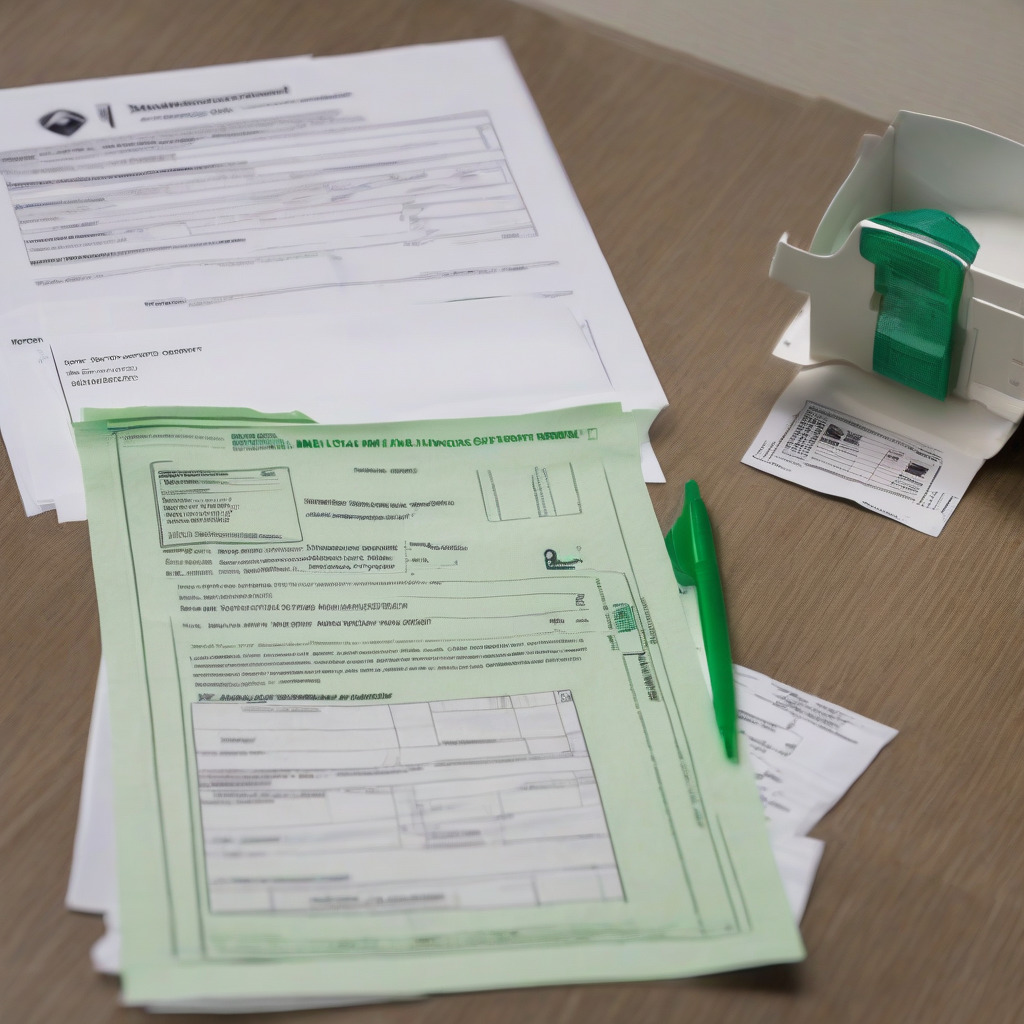
Send by certified mail with return receipt requested. Keep the green card, or print the USPS tracking confirmation showing delivery. Don’t rely on email alone, even if your prior communications with the landlord were exclusively electronic.
Before you send anything, assemble your documentation: timestamped move-in and move-out photos, all written move-out communications, a copy of the lease, the landlord’s itemization or documentation that none was provided, and your certified mail receipt showing you gave a written forwarding address. This is the file you’ll bring to JP court if the letter doesn’t resolve it.
Filing in Harris County JP Court, Which Precinct Handles Your Case, and What It Costs
If the demand letter produces nothing, filing in Justice of the Peace court is straightforward without an attorney. It’s more accessible than most people expect.
Harris County has eight JP precincts, and your case must be filed in the precinct where the rental property is located. Filing in the wrong precinct can get your case dismissed or transferred. Precinct 1 covers central Houston including Downtown, Midtown, EaDo, and the Third Ward. Precinct 2 covers northeast Houston, Galena Park, and Jacinto City. Precinct 3 handles west Houston, the Katy area, and the Energy Corridor. Precinct 4 covers northwest Harris County, Spring, and the Champions area. Precinct 5 handles southeast Houston, Pasadena, and the Clear Lake area. Precinct 6 covers south Houston and the Pearland-adjacent area. Precinct 7 handles Alief, the Westheimer corridor, and southwest Houston. Precinct 8 covers north Houston, Aldine, and Greenspoint.
If you’re not sure which precinct your address falls in, check harriscountytx.gov or call the JP court clerk system. Always call before filing—fees and procedures change.
The small claims filing fee runs roughly $85 to $100 for a claim under $10,000. Constable service to formally deliver the citation to your landlord adds around $75 to $80 per defendant. On a $1,500 deposit dispute with potential three-times damages, spending about $175 to pursue a potential $4,600 recovery is not a hard decision. Texas JP courts handle small claims up to $20,000, so virtually every residential deposit dispute in Houston falls within jurisdiction.
Hearings are typically scheduled four to eight weeks after filing, though timing varies by precinct and case volume. A significant share of cases settle before the scheduled hearing date. Receiving a formal court citation from a constable changes the landlord’s calculation considerably—especially the one who assumed you’d give up.
You’re allowed to represent yourself. Bring your lease, move-in and move-out photos, all written communications, certified mail receipts, and the landlord’s itemization or documentation that none was provided. Dress professionally. Speak to the judge, not to the landlord. Be specific about amounts and dates.
When to Call Lone Star Legal Aid, and What They Can Actually Do
If you’re income-eligible and uncertain about navigating this process, call Lone Star Legal Aid at (713) 652-0077. They’re located at 1415 Fannin Street, Houston, TX 77002, and their intake information is at lonestarlegal.org.
Lone Star Legal Aid serves Harris County tenants at or below 200 percent of the federal poverty line. Call to confirm current income eligibility thresholds, which are updated annually.
What they can do for you varies by case volume and staff capacity—summer is their busiest season, so call sooner rather than later. In security deposit matters, services typically include reviewing a demand letter before you send it, legal advice at clinic sessions, and in some cases direct representation for tenants facing landlords with a history of violations. A 30-minute staff attorney review of your demand letter can catch procedural errors that would undermine your JP court case. That’s worth scheduling.
Houston Volunteer Lawyers (713-228-0735) handles pro bono referrals if Lone Star’s capacity is stretched. They maintain a list of attorneys willing to take limited-scope consulting arrangements on small claims matters.
If your landlord is a larger property management company and you suspect other tenants have had the same problem, the Texas Attorney General’s consumer protection complaint process is worth using in parallel—and our legal & finance coverage tracks how state consumer protection tools apply in Houston contexts. Individual complaints create a public record. A pattern of complaints against the same operator can eventually prompt investigative attention—it won’t fix your case quickly, but it contributes to a record that adds pressure on repeat offenders and helps the tenants who come after you. Takes about fifteen minutes to file.
Sidebar: Houston Deduction Red Flags—What to Push Back On
These are the charges that appear most frequently in Harris County deposit disputes and that raise legitimate questions worth contesting.
AC filter replacement billed as damage. Filters are consumables. Routine maintenance in any climate, and in Houston, where cooling runs near year-round, this is especially clear. Unless your lease specifically required you to replace filters on a schedule and you demonstrably ignored it, this is a maintenance charge, not a damage charge. Property managers sometimes bundle it with other work to make it look more justified. Read itemizations carefully.
Mold remediation in buildings with documented HVAC problems. If the building’s ventilation was already deficient—common in older Montrose, Heights, and Third Ward stock—mold that results from structural humidity and inadequate airflow isn’t straightforwardly tenant-caused damage, particularly where the tenant reported moisture problems in writing during the tenancy. The landlord’s obligation to maintain building systems is separate from the tenant’s obligation to leave the unit undamaged. If you had ongoing disputes about repairs during your tenancy, the broader picture of what Houston renters can actually do when a landlord won’t fix the AC is directly relevant to building that record.
Full repainting after a tenancy of two or more years. Unless there’s actual documented damage—crayon on walls, unauthorized paint colors, smoke staining—a full repainting charge against a long-term tenant in a climate where sun fading and humidity accelerate paint aging is worth contesting. A landlord charging for full repainting should have before-and-after photos. No photos means a weaker charge.
Carpet replacement for matting alone. Matted carpet from ordinary foot traffic is wear and tear. Replacement is more defensible where there’s staining, pet odor, or burn damage—and landlords should have the photos and vendor invoices to back it up. A replacement charge without visible damage documentation doesn’t hold up well in court.
Professional cleaning fees on units left in ordinary condition. Texas law generally doesn’t allow a landlord to charge for “professional cleaning” as a standard move-out requirement unless the lease explicitly requires it and the unit was returned in worse than ordinary condition. Check your lease for cleaning clauses, and photograph your move-out condition. A clean unit in normal condition shouldn’t generate a cleaning bill.
One rule applies across all of these: a line item with no supporting receipt, invoice, or vendor quote is weaker than one that does. When you challenge a deduction, ask in your demand letter or in court for the supporting documentation. Many itemizations that look authoritative on paper fall apart when the landlord is asked to produce an actual vendor invoice. Ask for it. Don’t assume it exists.
If you moved out of a Houston rental this summer and haven’t heard anything about your deposit, start the clock now. Write down the date you surrendered your keys. Confirm you sent a written forwarding address. If the 30-day window is approaching or has already passed, a demand letter is your next step. Most landlords who get a properly cited, specific demand letter respond to it. The ones who don’t tend to fold when a constable shows up at their door with a court citation.
Harris County JP court clerk contact information by precinct is available at harriscountytx.gov. Lone Star Legal Aid intake: 713-652-0077.