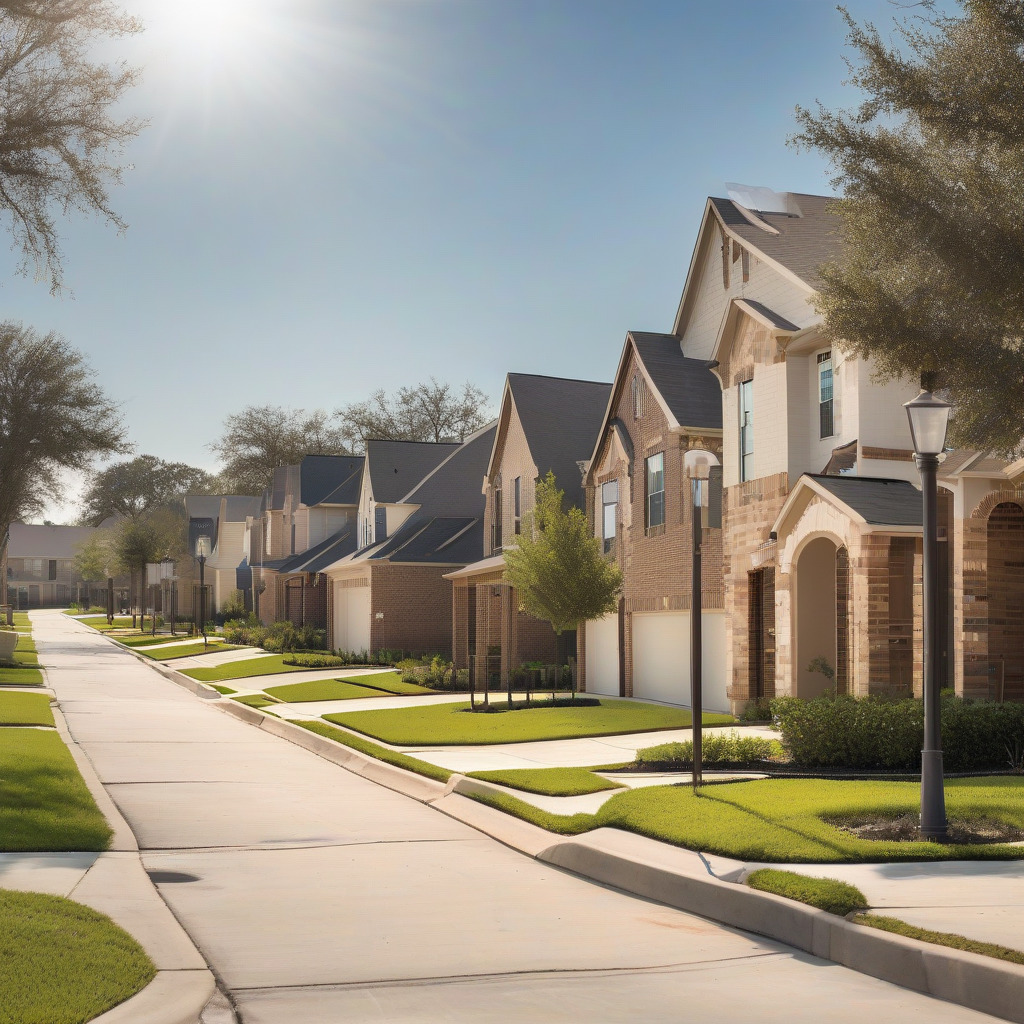
How Buyer's Agent Commissions Work in Houston Now After the NAR Settlement
The NAR settlement changed how buyer's agent fees work nationwide. Texas has its own rules, its own forms, and its own market quirks that most coverage ignores. Here's what Houston buyers actually …


The NAR settlement changed how buyer’s agent fees work nationwide. Texas has its own rules, its own forms, and its own market quirks that most coverage ignores. Here’s what Houston buyers actually need to know going into 2026’s spring season.
Spring is the busiest home-buying season in Houston, and this year it arrives with a layer of paperwork confusion that a lot of buyers aren’t ready for. The National Association of Realtors settlement took effect August 17, 2024, and it restructured how buyer’s agent compensation is disclosed and negotiated across the country.
Most of the national coverage that ran in 2024 is stale. It predates Texas’s actual implementation and glosses over the specific forms and MLS rules that Houston buyers are encountering right now — at the kitchen table or on a Zoom call with their agent. That coverage is still circulating, still being shared, and it’s not helping anyone.
If you’re buying in Harris County, Fort Bend County, Montgomery County, or anywhere in the Houston metro this spring, here is what actually applies to you.
What Texas Already Required — and What Changed in August 2024
Texas is not a typical state in this story.
Most national coverage treated the requirement to sign a buyer representation agreement before touring homes as the big, disruptive change from the NAR settlement. In Texas, that requirement was already law. The Texas Real Estate Commission has mandated written buyer representation agreements since around 2012, well before the NAR consent decree made headlines. So if you read a breathless explainer last year about how buyers suddenly had to sign contracts before touring homes — that was genuinely news in most states. Here, it was Tuesday.
What changed in August 2024 was the substance of the form, not its existence. Before the settlement, a buyer representation agreement could include open-ended compensation language — something to the effect of “the buyer’s agent will be compensated at whatever the seller offers through the MLS.” That language is now prohibited.
The agreement must state a defined compensation figure: a specific dollar amount, a percentage, or a clearly stated formula. It cannot float based on whatever a seller happens to offer.
This matters. For the first time, buyers are looking at a concrete number before they commit to an agent — $9,000, or 2%, or 2.5% of the purchase price — rather than a background assumption nobody scrutinized. That visibility gives buyers actual negotiating power. Based on conversations with Houston-area agents and brokers since the settlement, most buyers still aren’t using it.
The TREC Buyer Representation Agreement — What You’re Signing Before That First Showing
The form you’ll sign before touring homes with a licensed agent in Texas is the TREC Buyer/Tenant Representation Agreement. Confirm the current form number with TREC directly at trec.texas.gov — TREC updates forms periodically and any third-party summary, including this one, can lag behind.
Several provisions deserve your attention before you sign anything.
The term is how long the agent has exclusive rights to represent you. It’s negotiable, and agents don’t always say so. A buyer who wants to test a relationship before committing can request 60 days instead of 180 and revisit before renewal. If an agent pushes back hard on a shorter term, pay attention to that.
The property description and geographic scope define what you’re searching for and where. An agreement covering all of Texas is not the same as one covering Harris and Fort Bend counties. Read this section and push back if the scope is broader than your actual search area.
The compensation figure is the new critical field post-August 2024. The agreement must state a specific number or percentage — no floating language. The current working range in Houston has compressed from the pre-settlement norm of 2.5–3%. Many buyer’s agents are now quoting 2% to 2.5%, though it varies by neighborhood and price point.
What the form actually commits you to: if you purchase a home fitting the agreement’s description during its term — even without your agent’s direct involvement in finding it — you may owe that agent their agreed compensation. That exclusivity language is what you need to read. Read it before signing. Read it again.
The form is TREC-standardized. The fillable fields — term, compensation, property scope — are not fixed. They’re negotiable before you sign.
What Houston Buyer’s Agents Are Charging in 2026
Here’s the math across four realistic Houston price points at three fee tiers. Verify these figures with broker sources before making financial decisions, but they give you a concrete frame for what’s actually being quoted in the market.
Entry-level (~$300,000 — Acres Homes, Sunnyside, Northeast Houston)
| Fee Rate | Buyer-Agent Fee |
|---|---|
| 1.5% | $4,500 |
| 2.0% | $6,000 |
| 2.5% | $7,500 |
Mid-market suburban (~$450,000 — Katy, Cypress, Pearland)
| Fee Rate | Buyer-Agent Fee |
|---|---|
| 1.5% | $6,750 |
| 2.0% | $9,000 |
| 2.5% | $11,250 |
Inner loop (~$600,000 — Heights, Montrose, EaDo)
| Fee Rate | Buyer-Agent Fee |
|---|---|
| 1.5% | $9,000 |
| 2.0% | $12,000 |
| 2.5% | $15,000 |
Luxury (~$1,200,000 — River Oaks, Memorial, Tanglewood)
| Fee Rate | Buyer-Agent Fee |
|---|---|
| 1.5% | $18,000 |
| 2.0% | $24,000 |
| 2.5% | $30,000 |
Before August 2024, the standard buyer-agent commission in Houston was typically 2.5% to 3%, funded through the MLS co-op compensation field and largely invisible to buyers. The market hasn’t collapsed to zero — sellers still frequently offer buyer-agent compensation — but visible compression toward 2–2.5% reflects what happens when buyers are actually looking at the number instead of not knowing it exists. A $450,000 home that would have generated an $11,250 buyer-agent fee almost automatically under the old system now requires explicit negotiation. That’s a real shift, even if it didn’t generate the same headlines as the initial settlement.
For broader context on where Houston’s moving & real estate coverage situates this buyer’s agent question within the 2026 market, our mid-year housing report tracks inventory and pricing shifts across the metro.
Who Actually Pays the Buyer’s Agent
The old assumption — that sellers automatically funded the buyer’s agent through the MLS — is no longer the operating norm in Houston. After August 17, 2024, HAR removed the mandatory cooperative compensation field from listings.
Sellers may still voluntarily offer buyer-agent compensation, and many do. But it’s now disclosed differently and treated as a negotiation rather than a built-in term.
The seller covers the full agreed fee. The seller agrees, either through their listing agent or through offer negotiation, to pay the buyer’s agent the full amount specified in the buyer representation agreement. The money flows through the closing statement as a seller concession or direct compensation to the buyer’s brokerage. Many sellers continue to offer this because it attracts buyers and competitive offers. It remains the most common scenario in Houston’s market.
The seller covers part of it; the buyer covers the gap. The seller offers 1.5%, but your agreement specifies 2.5%. You pay the difference at closing. The next section covers this in detail.
The buyer pays the agent directly, with no seller involvement. Less common in Houston but increasingly visible in competitive segments where tight margins make seller concessions difficult.
One practical point that agents don’t always raise upfront: how buyer-agent compensation is structured in the contract affects what a lender will allow. FHA, VA, and conventional financing each have different rules about seller concessions and whether buyer-paid agent fees are permissible. Verify the loan-type implications with a Houston-area lender before assuming any particular payment path will work with your specific financing. Don’t assume. Ask.
The Gap Scenario — When the Seller Offers Less Than Your Agreement Specifies
This is the anxiety most Houston buyers are carrying into the spring market. Work through it in concrete terms.
You’re under contract to work with a buyer’s agent at 2.5% of the purchase price. You find a home in Katy listed at $450,000. The seller has voluntarily offered 1.5% buyer-agent compensation — $6,750. Your agreement specifies $11,250. The gap is $4,500, and you’re contractually on the hook for it.
You have options, none of them painless.
Negotiate a seller concession to cover the gap. Ask the seller, as part of your purchase offer, to increase their contribution. This works best when the seller has room in their margin and the market isn’t so competitive that your offer needs to be lean. In inner loop properties that have appreciated substantially, it’s often achievable. In thin-margin entry-level transactions in Acres Homes or northeast Houston corridors, sellers may not have room to move.
Renegotiate the fee with your agent. If the seller won’t cover the gap, ask your agent whether they’ll reduce their fee for this transaction to match what’s being offered. A good agent who wants to close the deal will often accommodate this, particularly if the gap is modest. Your leverage comes directly from the fact that the fee is a written, negotiable number — not an industry rule that can’t be touched.
Walk away from the home. If neither path resolves the gap to your satisfaction, you’re not obligated to buy. The post-settlement framework is designed to make this a visible, deliberate choice rather than a hidden surprise at the closing table.
Gap scenarios are most likely in entry-level and mid-market suburban segments where seller margins are thin and competition around $300,000–$400,000 is intense. They’re less common in inner loop markets — Montrose, EaDo, the Heights — where seller equity runs deeper and buyers at $600,000 and above have more room to negotiate.
New Construction in Houston Is a Completely Different Game
Houston is one of the largest new-construction markets in the country. This is the section most national coverage skips — and for Houston buyers specifically, it’s a significant omission.
KB Home, Perry Homes, Meritage, David Weekley, and Pulte are all actively building across Harris, Fort Bend, and Montgomery counties. Entire communities in Katy, Cypress, Pearland, and the Woodlands corridor are under active development. If you’re shopping new construction — and in Houston’s suburban market, there’s a reasonable chance you are — the post-settlement framework works differently in several important ways.
Builder transactions don’t go through HAR MLS. Builder sales operate through the builder’s own sales team in model homes, using the builder’s proprietary purchase contract rather than a TREC One to Four Family Residential Contract. Your TREC Buyer Representation Agreement still governs your relationship with your agent, but the transaction mechanics are controlled by the builder.
The model home registration rule is critical. If you walk into a KB Home or Perry Homes model home without your buyer’s agent having already registered with that builder on your behalf, you may permanently forfeit that agent’s ability to receive compensation on that transaction. Your agent must register you before your first site visit. Not after. If you’ve already toured a model home without your agent — even briefly, even once — ask immediately whether that registration window is still open. In many cases, it isn’t.
Builder compensation to buyer’s agents is set by the builder, not HAR policy. Builders may offer co-op compensation as an incentive, reduce it during slow periods, or restructure it when conditions shift. You’re negotiating with a corporate sales department, not an individual homeowner, and builders typically have less flexibility. The same gap arithmetic from the previous section applies here — just with fewer levers to pull.
If you’re seriously considering new construction in the Houston suburbs, have this conversation with your agent before your first community visit.
Is a Buyer’s Agent Worth It in Houston
Buyers are researching this question quietly. It deserves a direct answer.
Houston has no zoning. That’s not a talking point — it’s a fact with real financial consequences. What’s across the street from a home you’re considering, or what the lot next door is legally permitted to become, can be radically different from what you see today. An experienced Houston buyer’s agent knows how to read deed restrictions, how to identify properties in municipal utility districts with significant tax implications, and how to pull flood zone history for specific addresses. Harris County’s flood exposure is not uniform and is not obvious from a listing photo. Buyers unfamiliar with Houston’s geography can make expensive mistakes in this market. Some do, every year.
In competitive multiple-offer situations — which still characterize desirable inventory in the Heights, Montrose, and EaDo — an agent who knows the listing agents, knows the comps, and can structure an escalation clause or waive contingencies strategically is providing measurable value. Out-of-state relocators, which Houston attracts in significant numbers, have an especially strong case for full representation in a market they don’t know.
Standard suburban resales are a different story. When comparable sales are plentiful, inspection contingencies are routine, and negotiation is largely mechanical — the kind of transaction common in standard-build subdivisions across Katy, Cypress, or Pearland — buyers with real estate experience have a legitimate basis for questioning whether full-service representation at 2–2.5% is worth it. Buyers who are willing to do their own research, comfortable reading a title commitment, and familiar with Harris County’s flood and MUD disclosure norms can find reduced-scope arrangements.
Several flat-fee and rebate buyer’s agent services operate in Houston. Before using any of them, verify their licensing status with TREC, confirm what services are included and excluded, and understand how they handle gap scenarios. The market for reduced-scope representation is shifting, and specific fee structures should be confirmed with current sources. For buyers who want to understand what a thorough property review should cover at this stage, our guide to what a Houston home inspection should cover that many inspectors skip addresses what’s commonly missed before closing.
How to Use Your Negotiating Power Before You Sign Anything
Having a specific dollar figure on the buyer representation agreement gives you a document-backed opening to negotiate before you commit to an agent. Most buyers don’t use this because they don’t realize it exists.
Ask for a shorter agreement term. A shorter initial term is reasonable when you haven’t worked with an agent before. Agents who are confident in their service will agree to this. An agent who won’t is telling you something.
Ask exactly what’s included at the quoted fee. Is the agent personally attending every showing, or delegating to assistants? Are they doing comparative market analysis for every offer? Are they reachable in your preferred format and on your schedule? The answers will tell you whether the fee reflects the service you’re actually getting.
Talk to more than one agent before signing. The TREC form is standardized; the fee field is not. Comparing two or three agents on their quoted compensation, their specific Houston neighborhood knowledge, and what they offer for that fee is exactly what the post-settlement framework enables. You’re not obligated to sign with the first agent who puts a form in front of you.
Understand that the fillable fields are your negotiation, not a regulatory requirement. An agent presenting the form with a pre-filled 3% fee and a 180-day exclusive term is presenting their opening position. You can push back. The form itself is a TREC document; the numbers inside it are not.
For the current version of the TREC Buyer/Tenant Representation Agreement, go to trec.texas.gov. For current HAR MLS policy on how buyer-agent compensation appears in Houston listings, contact HAR directly at har.com. Both are more reliable than any third-party summary for the precise language you’ll be asked to sign.
CityDesk Houston covers local business, real estate, and economic news for residents of the Houston metro. Form numbers, fee ranges, and lender guidelines cited here should be verified with TREC, HAR, and a licensed Houston-area mortgage professional before you make financial decisions.