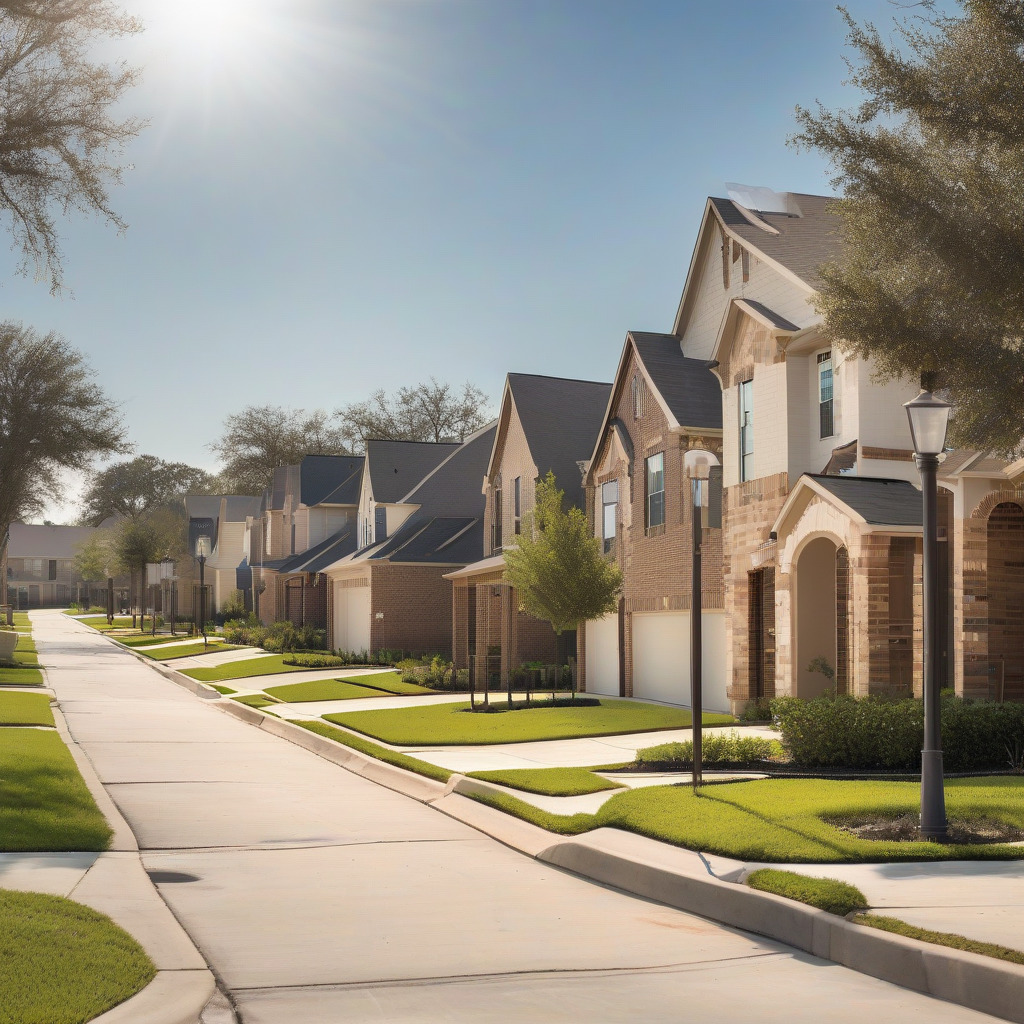
HOA Fees and Rules Across Houston's Master-Planned Communities Compared
From Bridgeland to The Woodlands, actual annual assessments, what's covered, what isn't, and what happens when you don't mow your lawn.

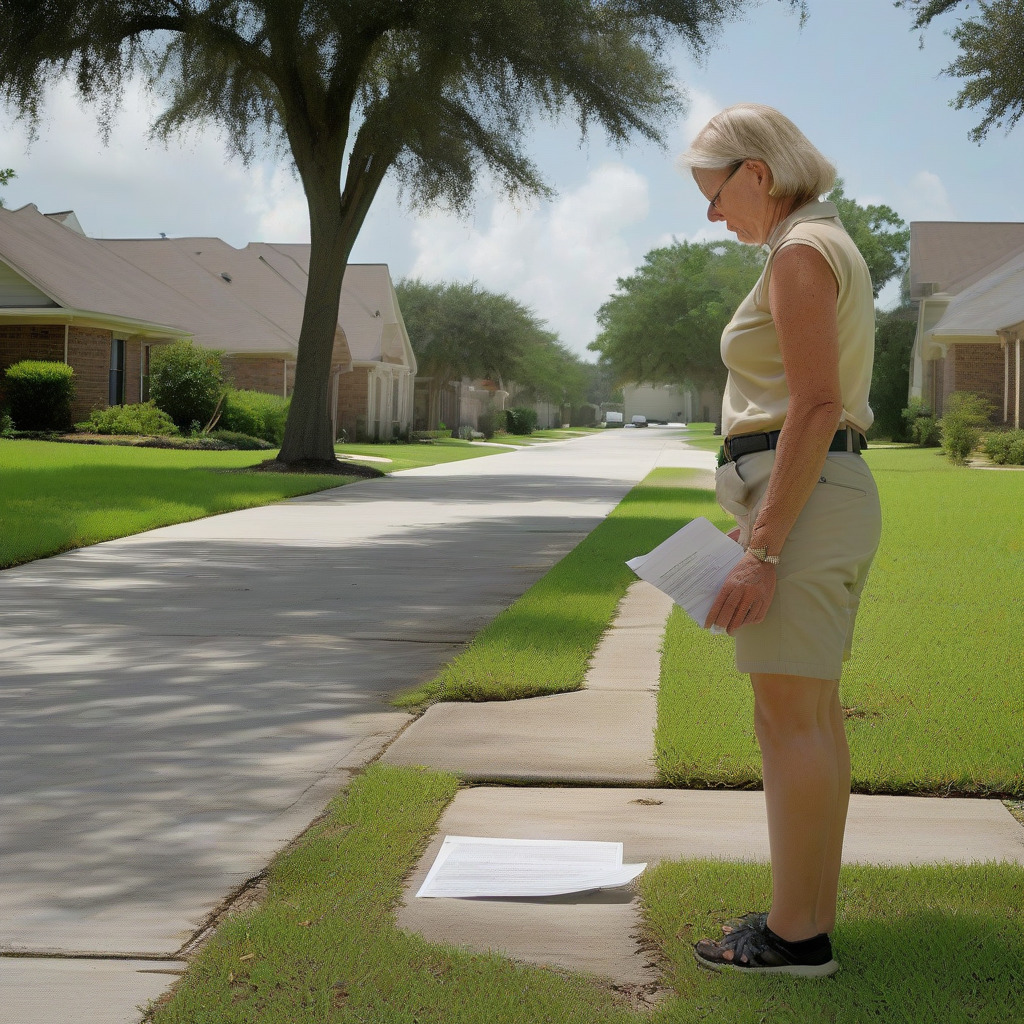
From Bridgeland to The Woodlands, actual annual assessments, what’s covered, what isn’t, and what happens when you don’t mow your lawn.
The number that stops buyers cold usually arrives somewhere between the purchase agreement and the closing disclosure. It’s not the property tax rate. Houston buyers expect that conversation. It’s the HOA fee line, which in some communities runs under $500 a year and in others clears $1,600 before a single sub-association charge is added on top.
The spread across Houston’s major master-planned suburbs is wide enough to shift a household’s annual budget by more than a thousand dollars. What makes that worse: the services those fees buy vary so dramatically that comparing communities by dollar amount alone is nearly meaningless. You could spend an hour on Zillow running fee comparisons between two communities and come away knowing almost nothing useful.
This piece pulls fee schedules from community documents and deed records, examines five years of assessment history where available, and talks to residents in Cinco Ranch, First Colony, Bridgeland, and Harvest Green about what the disclosure process told them — and what it didn’t. It also covers enforcement: what a violation notice looks like, the timeline that follows under Texas law, and why the community your neighbor lives in may operate under completely different rules than yours even if the zip codes are adjacent.
The Communities in This Comparison
Five communities anchor this report: Bridgeland (Harris County, developer Howard Hughes Corporation), Cinco Ranch (Fort Bend and Harris County line), The Woodlands (Montgomery County primarily, with Creekside Park in Harris County, also Howard Hughes), Harvest Green (Fort Bend County, developer Johnson Development Corp.), and Sugar Land.
Sugar Land is not a single HOA. It’s three distinct legacy communities — First Colony, Telfair, and New Territory — each with separate governance and fee structures.
These are not interchangeable suburbs. They were built in different decades, under different master plans, by different entities, and governed today under structures ranging from a single HOA to a layered township-plus-village system that appears nowhere else in the Houston metro. A buyer moving from one to another should not assume they understand the governance until they’ve pulled the actual deed restrictions and fee schedules for the specific lot. This is especially true for anyone relocating from out of state, where HOA structures tend to be simpler. What works as an assumption in the suburbs of Atlanta or Phoenix will not serve you here. For broader context on what the Houston housing market looks like right now, our moving & real estate coverage tracks conditions across the metro.
The Comparison Table
The figures below reflect 2024 annual assessments as reported in community disclosure documents, HOA websites, and Fort Bend and Harris County deed records. Where sub-association fees apply on top of the master fee, both figures are noted. Verify all figures directly with each community before any purchase decision — your specific lot and village may fall outside these ranges.
| Community | Annual Master Assessment | Sub-Association Fee | Management | Developer | County | Notes |
|---|---|---|---|---|---|---|
| Bridgeland | ~$1,200–$1,450 | Varies by village and product type; some townhome pods carry additional fees | FirstService Residential | Howard Hughes Corporation | Harris | Fees increase as amenity buildout continues through 2030s |
| Cinco Ranch | ~$800–$1,100 | Some sections carry separate swim club or amenity fees | Varies by village | Various (legacy master plan) | Fort Bend/Harris | Older sections trend lower; newer sections near top of range |
| The Woodlands (Village Assoc. only) | ~$300–$700 (varies by village) | Township tax (~$0.22/$100 valuation) billed separately on property tax statement | Village associations are largely self-managed; Township is a separate entity | Howard Hughes Corporation | Montgomery (primarily); Creekside Park in Harris | Township tax is not an HOA fee; it funds parks, trails, and emergency services |
| Harvest Green | ~$1,400–$1,600 | Working farm programming fee status: unconfirmed as base or add-on (see below) | FirstService Residential | Johnson Development Corp. | Fort Bend | Newest community; fees reflect full amenity package |
| First Colony (Sugar Land) | ~$400–$600 | Some sections add pool/amenity fees | First Colony Community Services Assoc. | Not confirmed | Fort Bend | Oldest community in comparison; lower fees reflect mature infrastructure |
| Telfair (Sugar Land) | ~$900–$1,200 | Some sections carry sub-fees | Various | Not confirmed | Fort Bend | Mid-range fee structure; city utility bills are separate |
| New Territory (Sugar Land) | ~$600–$800 | Limited sub-association layer | Various | Not confirmed | Fort Bend | Fee includes some amenity access |
HOA fee disclosure in Texas improved after SB 1588 took effect in 2021, but granular per-village or per-lot figures often require contacting the HOA directly or pulling subdivision-specific deed restriction documents from the county appraisal district. The ranges above reflect what a buyer in each community should realistically expect to see quoted.
What the Fee Actually Buys
The distinction between what a fee covers and what it doesn’t is where most buyer confusion lives. Every one of these communities leads with amenities in its marketing rather than governance documents. That’s understandable — lakefront photos close deals, reserve fund disclosure statements do not — but the information gaps surface at the worst possible moment.
Bridgeland. At $1,200–$1,450, the fee covers the trail network and lakes system, access to the Bridgeland Activity Center, lakefront amenities, and common-area landscaping. The community is planned for 65-plus miles of trails at full buildout.
What it doesn’t cover: individual lot landscaping, flood insurance (a separate and often substantial cost in this part of Harris County), or fees charged by product-specific sub-associations. Some townhome and paired-patio configurations have those.
The structural issue unique to Bridgeland: because the community is still under active development through the 2030s, fee schedules are designed to rise as new amenities come online. Howard Hughes says this explicitly in its disclosure documents. Buyers who run today’s numbers should not expect them to hold. A resident who buys in phase one pays less than a resident who buys in phase five, because the later buyer is paying into a mature amenity set. It’s disclosed. It’s also the kind of detail that disappears entirely in conversation with a real estate agent. Read the documents yourself.
Cinco Ranch. The fee range reflects a development timeline that began in 1991. Older sections carry lower assessments tied to simpler original covenants. Newer sections run closer to the top of the range. Access to the Cinco Ranch Swim Center is included in the base fee for most sections, along with trail access and common-area maintenance. Individual lot irrigation — which runs constantly in Houston summers — is the homeowner’s cost.
Some sections carry a separate amenity or swim club overlay fee that’s easy to miss in initial disclosure. Ask explicitly whether your section has one.
The Woodlands. The Village Association fee is the smaller number and the easier one to find. It covers common-area landscaping within the specific village, some event programming, and administration. What it doesn’t cover is the Township tax — approximately $0.22 per $100 of assessed valuation — which funds the parks system, trails, emergency services, and community events.
On a home assessed at $500,000, that’s roughly $1,100 a year. It doesn’t appear on an HOA invoice. It appears on your county property tax statement. Many buyers running a quick HOA fee comparison fail to account for it until the first tax bill arrives, sometimes months after closing. I’ve heard this story more than once. The number was there. They just weren’t looking for it.
Harvest Green. The community’s signature differentiator is its working farm, The Village Farm at Harvest Green. Farm-to-table programming, garden plots, and agricultural events anchor the marketing. As of this reporting, it is not clear from publicly available documents whether farm access is bundled into the base $1,400–$1,600 assessment or structured as an add-on. The HOA did not respond to a request for clarification by press time. Get the answer in writing before you close.
What is confirmed: the base fee covers The Harvest Club amenity center, pool, fitness facilities, trails, and common-area maintenance.
Sugar Land (First Colony, Telfair, New Territory). First Colony’s annual assessment of $400–$600 is a function of age. The infrastructure is mature and paid down. The amenity set is modest by comparison with newer communities, and the covenants were written in an era when “community amenities” meant a neighborhood park and a pool. Residents who bought here 20 years ago locked in a governance baseline that costs less and offers less.
Telfair’s mid-range fees reflect a 2000s development philosophy with more robust amenity infrastructure. All Sugar Land communities within the city’s incorporated limits pay separate city utility bills — the HOA fee does not cover water or trash pickup the way some master-plan structures do. This catches residents off guard more often than it should, particularly buyers coming from communities where utilities roll into the HOA payment.
The Woodlands Is Structurally Different
Comparing The Woodlands to Bridgeland on HOA fees alone is like comparing a city’s property tax rate to a condo’s maintenance fee. The governance structure has no real parallel in the Houston suburbs, and it’s underexplained in virtually every real estate conversation happening in that market right now.
The Woodlands is divided into ten villages — Grogan’s Mill, Panther Creek, Cochran’s Crossing, Indian Springs, Alden Bridge, Sterlingridge, Player’s Forest, College Park, Creekside Park, and Harper’s Landing among them. Each has its own Village Association, its own deed restrictions, and its own fee schedule.
A buyer moving from Bridgeland’s single-invoice HOA structure into The Woodlands needs to identify their specific village, get that village association’s fee schedule, and then separately calculate the Township tax liability based on their expected assessed value. Both numbers are required before any honest cost comparison.
The Woodlands Township is a special-purpose district established under Texas law, with an elected board and taxing authority. Its levy funds a scope of services that in most Houston suburbs would come from a municipal government: parks and recreation, traffic management, community relations, emergency services. This is not an HOA. It functions more like a lightweight city government that operates alongside county services.
Creekside Park sits in Harris County rather than Montgomery County. That detail affects your tax bill calculation and your access to certain county services. It’s not a dealbreaker for most buyers, but it warrants a specific conversation with whoever is helping you navigate the purchase.
Enforcement — What a Violation Actually Looks Like
Master-planned communities in Houston emphasize manicured landscaping and property value protection through deed restrictions. What they don’t lead with is the enforcement apparatus behind those results. If you’ve ever driven through The Woodlands and wondered how every lawn looks that way, here’s part of the answer.
Under Texas Property Code Chapter 209, an HOA must provide written notice of a violation before imposing a fine and must allow a reasonable period to cure. For fines exceeding $200, the homeowner must be offered a board hearing. The law sets a floor. What happens above it varies significantly by community.
The Woodlands has a documented reputation among residents and agents for active enforcement. The Township’s covenant enforcement function operates separately from the Village Associations and employs field inspectors. Common citations include unapproved paint colors, refuse containers visible from the street, vehicles parked overnight on certain streets, and landscaping that deviates from community standards. The process follows Chapter 209. Written notice. Cure period. Hearing. The pace is brisk.
Agents who work that market regularly tell buyers that The Woodlands deed restrictions are not aspirational — they are enforced. If you’re planning a landscape renovation that differs from standard community practice, you need approval before the work begins. This is not the community where you paint the front door a color you like and ask forgiveness later.
Bridgeland, managed by FirstService Residential, runs a formal compliance review that includes drive-through inspections. Violation notices go out by mail and through the community’s digital portal. Residents say landscaping violations — failure to maintain lawn height — are the most common triggers. One Bridgeland homeowner described getting a violation notice for a satellite dish installation that didn’t comply with the approved placement requirements. “I got a letter with a photo attached, which surprised me,” he said. “The cure period was 30 days. I moved the dish, sent photos back to FirstService, and that was it. The process was straightforward, but it made clear they’re actually paying attention.” That last part is worth holding onto.
First Colony enforcement operates through the Community Services Association and draws fewer complaints than the professionally managed communities. The older governance structure means fewer per-day fine provisions in original deed restrictions, though amendments have tightened enforcement in some sections over the years. Relative to The Woodlands or Bridgeland, the posture is lighter. Lighter doesn’t mean absent.
One thing that applies everywhere: under Texas law, unpaid fines and assessments can result in a lien on the property, and Texas HOAs can foreclose on that lien to satisfy the debt. It happens rarely. It is not theoretical. Let assessments or fines accumulate and you’ve created a legal claim against your home that will complicate any future refinance or sale.
Why Fees Are Rising
Across all five communities, assessments have moved upward over the past five years. The causes vary, but a few show up everywhere.
Insurance is the most acute pressure right now. Property insurance in Harris and Fort Bend counties has been in a hard market since Hurricane Harvey in 2017 and hasn’t meaningfully eased. HOA master policies for common areas, pools, and shared structures have seen significant premium increases in renewal cycles since 2021. This hits newer communities hardest — a community with a large pool complex, multiple buildings, and miles of trails carries more insured value than one with simple common-area landscaping, and underwriters price that exposure accordingly. Those renewal conversations have not been going well for HOA treasurers.
Aging infrastructure is the dominant pressure in older communities. Cinco Ranch’s aquatic facilities, some of which opened in the 1990s, require capital expenditure that early reserve studies didn’t fund adequately. The original builders didn’t anticipate 30-year roof replacements or pool deck renovations in their original assessment structure. Reserve study adequacy is a real issue in communities past the 20-year mark. If you’re buying in an older section, ask specifically about the reserve fund’s funded percentage. Below 50 percent is a warning sign. Understanding what a home inspection in Houston should cover is another layer of due diligence that often surfaces infrastructure concerns before closing.
Landscaping and labor costs in Houston are structurally elevated. Year-round growth cycles mean year-round maintenance contracts. Landscaping crews cost more than they did five years ago — if you’ve hired one recently, you already know. Communities with extensive trail and green space feel this directly. Utility rate adjustments from MUD districts compound the problem for any HOA paying the irrigation bill on medians and common areas.
Five-year trend notes: Harvest Green is too new for a meaningful trend; its fees have risen with amenity additions. Bridgeland has seen incremental annual increases as phases open — Howard Hughes discloses this upfront. Cinco Ranch legacy sections have seen increases tied to insurance and infrastructure costs. First Colony has maintained some of the most stable fee histories in this comparison, but aging capital needs will test that in the next budget cycle. The Woodlands Township tax rate has held relatively flat in recent board votes. The catch: rising property values mean the dollar amount paid has increased even without a rate change. Your rate stays the same while your assessed value goes up, and your total bill rises anyway.
What Residents Say
The most consistent pattern across the resident conversations for this report: buyers who did thorough due diligence before closing report higher satisfaction, regardless of which community they’re in. Buyers who learned about fee structures after closing tend to have much sharper opinions about the experience.
Cynthia M. has lived in Cinco Ranch for 12 years, buying in a mid-2000s section. Her annual assessment has risen over that period. “The swim center is genuinely nice and it’s a five-minute drive,” she said. “Trail maintenance is good. What bothers me isn’t the amount so much as the explanation. When they raised fees two years in a row and the letter said ‘rising costs,’ I wanted specifics. I had to request the budget to see that insurance was the culprit. That information should come automatically.” She’s right. It should.
Robert and Dana K. bought in First Colony in 2019 — lower fees, stable assessments, but a community where the amenity gap relative to newer suburbs is visible. “The pool is old. The park equipment has been the same since our kids were little. We knew this when we bought in. We have no complaints about what we were told. We just have to be honest that we’re not getting the Bridgeland experience.” Eyes-open trade-offs like that are the best-case scenario.
Marcus bought in Harvest Green and closed in 2022. He describes the disclosure process as technically compliant but thin on practical context. “They gave us the fee schedule. What they didn’t walk us through was how the fee was going to move as they kept building amenities. I knew what the fees were. I didn’t fully understand that the model builds in increases as phases open. That was in the documents. I just didn’t know what to look for.” He flagged the farm programming ambiguity independently. “The farm is a big selling point, but I’ve never gotten a clear answer on what’s included in the base fee and what’s extra. I just kind of participate and hope I’m not getting charged twice.” Two years after closing, that’s not a great place to be.
Texas Law and What It Protects
Texas Property Code Chapter 209 is the governing statute for most residential HOAs in this comparison.
Before a fine can be imposed, the HOA must provide written notice and a reasonable cure period. For fines exceeding $200, the homeowner must be offered a board hearing. Fine schedules must be adopted by the board and made available to members. SB 1588’s 2021 mandates require communities with websites to post fine schedules and financial documents publicly. That’s a real improvement over where things stood five years ago, though compliance is uneven.
Annual assessment increases are subject to statutory limits without a member vote under Chapter 209. But communities still under developer control of the board operate differently — developers can raise assessments more readily than a member-elected board can. Harvest Green and active Bridgeland phases are currently in developer-controlled governance. Know which situation you’re buying into.
Your right to inspect records under §209.005 includes financial records, meeting minutes, contracts, and governing documents. You can invoke this right with a contract in hand, before you close. Most buyers don’t. Most buyers should.
The Texas Department of Housing and Community Affairs maintains a complaint process for HOA matters where Chapter 209 notice requirements weren’t followed. TDHCA’s authority is narrow — it’s not a silver bullet — but the process exists.
Questions to Ask Before You Sign
Every gap this reporting found maps to a question a buyer failed to ask before closing. Ask all of these. In writing where possible.
On fees: What is the current annual assessment for my specific lot, address, and village — not the community-wide range? Are there sub-association fees on top, and for which amenities? If you’re buying in The Woodlands, you need two numbers: the village association fee and the current Township tax rate. What will both cost annually based on expected assessed value? Is the community still under developer control of the board, and when is transition projected? Will fees rise as the community builds out, and is that documented somewhere you can review?
On reserve funds: Has the board adopted a current reserve study, and what is the funded percentage? What is the five-year history of annual assessments for your specific section? Has the board levied a special assessment in the past five years, and for what?
On enforcement: What is the current fine schedule, and is it posted as required under SB 1588? What are the most common violations cited in your section? Who performs enforcement inspections — in-house or a third-party management company? What is the cure period and escalation timeline for a standard violation?
On deed restrictions: Does the deed restriction prohibit short-term rentals, and is that prohibition enforced? Are exterior modifications subject to ARC approval, and what is the review timeline? What vehicle parking restrictions apply to your specific section?
On legal standing: Are there active BBB or TDHCA complaints against your management company? Can you review the HOA’s financial statements and most recent audit before closing? Request this formally under §209.005. Has the association initiated lien or foreclosure actions in the past three years?
The advertised annual assessment is where the number starts, not where it ends. The real figure includes sub-association fees, Township taxes, MUD district taxes, and where all of those are heading over your likely holding period. Get every piece of that in writing. Every piece.
CityDesk Houston contacted the HOA management offices for Bridgeland, Harvest Green, and First Colony for this report. FirstService Residential provided general procedural information. The Harvest Green community association did not respond to questions about farm programming fee structure by press time. Fee ranges in the comparison table reflect 2024 publicly available disclosure documents and should be verified directly with each community before any purchase decision.