What Houston Buyers Can Actually Negotiate When Buying New Construction From a Big Builder
DR Horton, Lennar, Perry Homes, and David Weekley are pushing inventory this summer across Katy, Pearland, Conroe, and Fulshear. Here's what's genuinely on the table — and what you're about to sign…

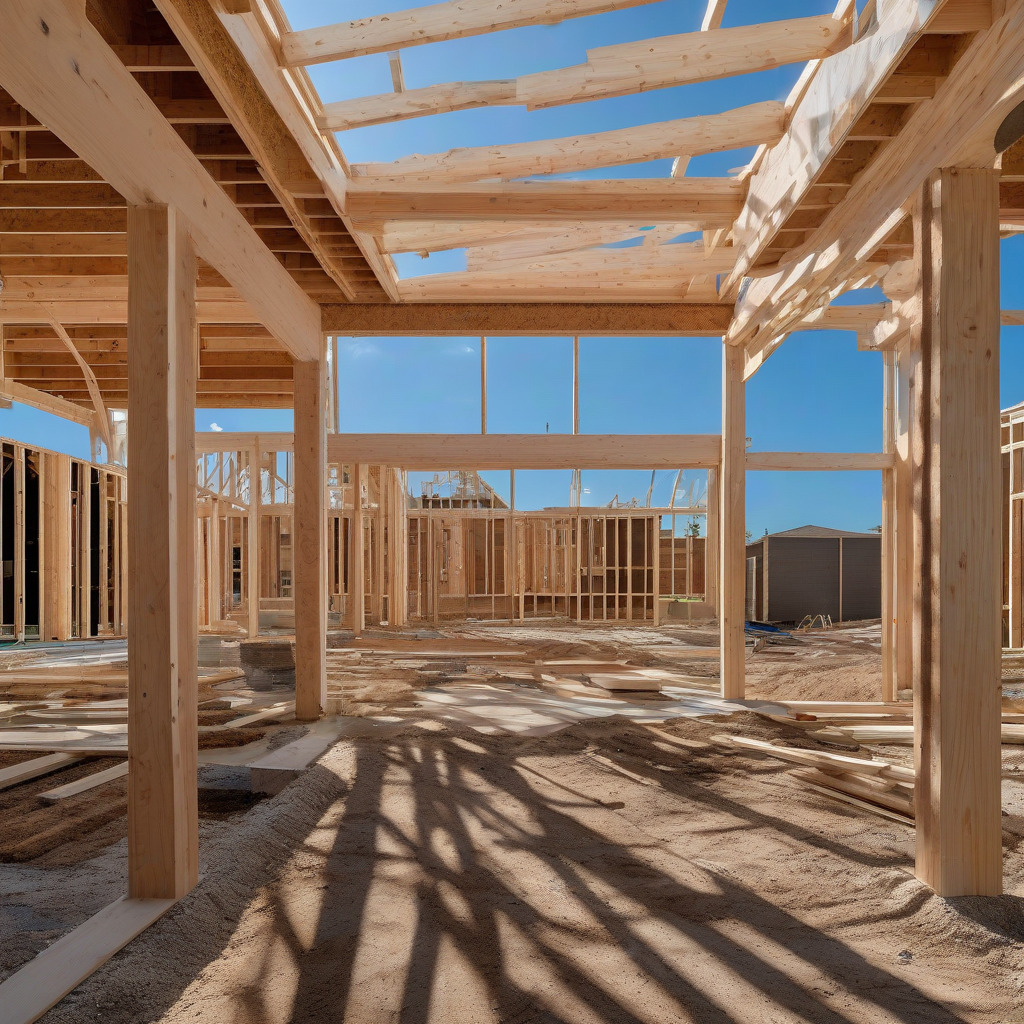
DR Horton, Lennar, Perry Homes, and David Weekley are pushing inventory this summer across Katy, Pearland, Conroe, and Fulshear. Here’s what’s genuinely on the table — and what you’re about to sign away.
If you’ve spent any time searching for new construction in Houston’s outlying suburbs this summer, you already know what you’re up against: builder websites, builder blog posts, Zillow listings that funnel you to builder sales agents, and YouTube walkthroughs filmed by agents who get paid when you sign. There’s no independent editorial layer. No consumer-side guide written by someone who isn’t being paid when you close.
That gap matters right now. Q3 is historically Houston’s slowest window for new construction sales. Spring buyers who needed to close before the fall school enrollment cutoff — Harris County, Fort Bend, and Katy ISD all have enrollment deadlines that effectively require families to have an address before August — are already under contract. Builders with inventory homes sitting in Katy, Fulshear, Conroe, and Pearland face a concrete problem: unsold spec homes that cost money to carry every month, against a year-end target they need to hit.
That combination creates real buyer power. Not unlimited. Not what existed in 2018 or early 2020. But it’s real, it’s specific to certain home types and communities, and most buyers have no idea how to find it or use it.
This guide is an attempt to fix that.
The Q3 Incentive Programs: What Each Builder Is Actually Offering
Every major builder operating in Houston’s master-planned communities is running some version of an incentive stack right now, but the mechanics differ significantly by builder. The headline number in the marketing is rarely the whole story.
DR Horton is the volume leader in this market, with active communities including Aliana in Richmond, Meridiana south of Houston near Manvel, and Sierra Vista in Missouri City. Their Q3 incentives have historically centered on financing: closing cost credits tied to use of DHI Mortgage, plus rate buydown structures — typically a 2-1 temporary buydown or a permanent rate reduction — funded at closing. Nearly all of these incentives are contractually conditioned on financing through DHI Mortgage. Remove DHI from the transaction and the credit either disappears or shrinks substantially. The dollar figure in the marketing is real. The conditionality buried in the addendum is also real.
Verify current Q3 2026 incentive dollar amounts directly at DR Horton model homes in Meridiana or Aliana before publication and before any buyer relies on them.
Lennar operates in several of Houston’s master-planned communities, including Harvest Green in Richmond and Cross Creek Ranch in Katy. The “Everything’s Included” program deserves real scrutiny. It includes genuine standards that other builders treat as upgrades, and in a direct comparison against a base-price competitor home, the all-in value is often real. What it does not mean — and this is what the model home tour won’t tell you — is that the design studio has nothing left to sell you. Flooring upgrades, cabinetry above the standard tier, lighting packages, outdoor living additions: all of it remains available, priced at high margin, in the design center. Lennar’s summer financing incentives run through Lennar Mortgage, with closing cost credits on select Houston metro inventory homes. Verify current figures at the Harvest Green or Cross Creek Ranch model homes. These numbers shift monthly.
Perry Homes is structurally different from the other three, in a way that has real consequences for buyers. Perry doesn’t run a captive mortgage company. That means the coercive dynamic DR Horton and Lennar use — take our lender or lose the credit — simply doesn’t exist here. Perry’s Q3 incentives run instead through upgrade credits applied at the design center and, in some cases, lot premium waivers or price adjustments on sitting inventory. Perry has active communities in Aliana in Richmond and Sienna in Missouri City. Because there’s no preferred lender requirement, Perry buyers can shop their financing freely. That’s a meaningful structural advantage even if the headline incentive number looks smaller on paper.
Verify current Perry Homes Q3 2026 incentive programs at Sienna or Aliana model homes before publication.
David Weekley Homes operates at the upper end of the big-builder segment in Houston, with projects in Bridgeland in Cypress, communities in the Woodlands area, and urban infill closer to the Loop. The “Personal Builder” model — a single builder representative assigned to shepherd a buyer through construction — affects how inspection access conversations actually go in practice, more than you might expect, and I’ll get to that in the contract section below. On incentives, Weekley offers fewer financing credits and more design center concessions and HOA fee prepayments in communities where sales have slowed. Sales agents in Bridgeland, where absorption has been slower this Q3, have shown more willingness to negotiate upgrade packages and structural options than they would in a tighter market.
All dollar figures cited in this section should be verified directly at model homes or in writing from sales agents before publication and before any buyer relies on them. Builder incentive programs change at the beginning of each month and sometimes mid-month on inventory homes.
The Preferred Lender Calculation: Run the Numbers Before You Decide
This is the single most consequential financial question in this guide, and the sales office will not volunteer the math. I’ve seen buyers take a $20,000 closing cost credit and never understand what they gave up over the life of the loan.
Here’s how it works. The builder offers a closing cost credit — say, $20,000 — conditioned on using their in-house mortgage company. That credit is real money. It covers prepaids, escrow setup, origination fees, and can reduce your cash-to-close substantially. For a buyer stretched on closing costs, it feels like the obvious choice.
Then there’s the math the sales office won’t run for you.
On a $400,000 loan at 30 years, a difference of 0.375% in interest rate — well within what an independent lender competing for your business might offer versus a captive builder lender — produces roughly $29,000 in additional total interest paid. A 0.50% difference produces approximately $38,000. The $20,000 closing cost credit looks different next to those numbers.
This doesn’t mean the builder’s lender always loses. Captive lenders sometimes buy the rate down explicitly to be competitive, particularly on inventory homes they need to move before quarter-end. You can’t know until you have a written rate quote from both the builder’s lender and at least one independent lender for the identical loan scenario — same loan amount, same term, same down payment, same lock period — on the same day. Same day matters. Rates move.
Contact independent Houston lenders including Prosperity Bank, Cadence Bank, and local credit unions. As we explore in our moving & real estate coverage, how and where you finance shapes the long-term cost of homeownership as much as the purchase price itself. A local mortgage broker can pull quotes from multiple wholesale lenders simultaneously. Run the full comparison. The $20,000 credit is worth taking if the rates are genuinely competitive. It’s not worth taking if it costs you $35,000 in interest to access it.
The MUD Tax: The Monthly Payment Number That Doesn’t Appear in the Builder’s Estimate
A Municipal Utility District is a special-purpose taxing entity created under the Texas Water Code to finance the infrastructure — water, wastewater, drainage — that makes outlying development possible. When a master-planned community is built 30 miles from central Houston, it doesn’t connect to existing city utility systems. The developer creates a MUD, issues bonds to build the infrastructure, and property owners repay that bond debt through a property tax levy that’s separate from — and in addition to — county, school district, and other taxes.
The MUD tax is not a fee. It’s a property tax, assessed annually, paid through your escrow account. In Houston’s outlying communities, it’s large. Buyers who discover this after closing are not happy.
On a $400,000 home, the difference between a 2.5% total effective property tax rate and a 3.5% rate is $4,000 per year — roughly $333 added to your monthly payment. That’s a car payment. It’s the difference between a mortgage that works for a family’s budget and one that quietly doesn’t. That number typically doesn’t appear in the payment estimate a buyer sees at the sales table, because builders quote taxes using the county appraisal district’s base rate without breaking out the MUD component.
Bridgeland (Cypress, Harris County): Bridgeland sits within multiple Harris County MUD districts. The MUD component alone has historically run around 0.35 to 0.50 per $100 valuation. Combined total tax rates — including county, CFISD, and MUD — have historically reached 3.0% to 3.5% depending on the specific district and parcel. Pull the specific MUD number for your lot from HCAD (hcad.org) using the property’s legal description or tax account number before you sign.
Meridiana (Manvel, Brazoria County): Meridiana is one of the more expensive MUD environments in the Houston metro, and the reason is straightforward: it takes a lot of infrastructure bond debt to develop land this far south without existing municipal utility connections. Brazoria County MUD rates serving Meridiana have historically included MUD components in the range of 1.10 to 1.20 per $100 — among the highest in the region. Several Brazoria County MUDs serving Meridiana have also approved rate increases in 2024–2025 as buildout accelerates. Pull rates from Brazoria County CAD (brazoriacad.org) and ask specifically for the MUD tax rate history for your specific district, not the community as a whole. Rates vary by district within the same master plan, and that distinction matters more than most buyers realize.
Harvest Green (Richmond, Fort Bend County): Harvest Green operates within Fort Bend County Water Control and Improvement Districts (WCIDs), which function similarly to MUDs under a different statutory structure. Fort Bend CAD (fbcad.org) is the correct source for current rates. The WCID component in Harvest Green sections has historically run around 0.65 to 0.85 per $100, but this varies by WCID and can shift as bond debt is retired or new series are issued.
Texas law requires a MUD disclosure — a separate document signed before the purchase contract is executed — that describes the district, its tax rate, and outstanding bond debt. Most buyers sign it because it’s part of the contract package and doesn’t look different from the other forms. It is a substantive financial document describing a taxing obligation you are assuming. Read it. If the tax rate in the disclosure differs materially from what the builder’s payment estimate used, that’s a discrepancy worth resolving before you sign. Houston homeowners who later discover they also missed exemptions they were entitled to compound this problem — property tax exemptions Houston homeowners often miss include homestead and other reductions that apply even in MUD-taxing environments.
What the Contract Actually Says About Inspections and Arbitration
Big-builder purchase contracts in Texas are written by the builder’s legal team, reviewed by the builder’s general counsel, and handed to buyers who have typically never seen one before. They’re not inherently unfair documents, but they contain provisions that buyers routinely miss — and some of those provisions matter.
Inspection access is the one that matters most for home quality. Most DR Horton and Lennar contracts permit an independent inspector but restrict timing: buyers typically get rights at two defined phases — pre-drywall and final walkthrough — not continuous access throughout construction. In Houston specifically, that restriction has real consequences. Houston’s clay substrate moves. The framing and foundation phases are when moisture intrusion, improper drainage grading, and framing defects are easiest to catch and cheapest to fix. Once drywall goes up, visible problems become hidden problems. The pre-drywall inspection window in most contracts does give you access at the right moment. The key is confirming in writing, before you sign, that your contract actually permits an independent inspector at that phase.
David Weekley’s “Personal Builder” model changes the dynamic. Because a single builder representative is assigned to shepherd construction, there’s a human relationship that makes inspection access conversations more navigable than in a high-volume DR Horton or Lennar development. Not a guarantee. But a real difference.
Hire a qualified Houston inspector for three phases: framing, pre-drywall, and final walkthrough. Given the clay soil conditions, skipping the framing phase is the mistake buyers most often regret. By the time they wish they hadn’t, the drywall is up.
Arbitration clauses are the contractual provision with the largest legal consequences and the smallest chance of buyer awareness. DR Horton and Lennar contracts include mandatory binding arbitration clauses that waive your right to a jury trial for construction defect disputes. If a significant problem emerges after closing — foundation movement, roof failure, water intrusion — your dispute runs through a private arbitrator, not a Harris County courtroom. Builders have arbitrated far more construction defect cases than any individual buyer ever will. They know how it works. You don’t.
The clause is effectively non-negotiable in a standard big-builder contract. I’m not telling you to walk away over it — most buyers don’t, and most disputes don’t end in catastrophe. But you should know it’s there before you sign, not after you’re sitting across from a builder’s attorney trying to figure out what you agreed to. Going in eyes open is a different thing entirely from going in blind.
Texas Warranty Law vs. What the Sales Office Implies
Texas provides statutory warranty coverage for new residential construction under the Texas Property Code. The structure matters, and it matters a lot more before a problem appears than after.
The Texas 1-2-10 warranty framework: one year of coverage for workmanship and materials defects, two years for mechanical systems (plumbing, electrical, HVAC), and ten years for major structural defects. This is the legal floor. Builders can offer more; they can’t contractually offer less.
What the warranty doesn’t cover is as important as what it does. Normal settlement — the minor cracking and movement that virtually every Houston home experiences on clay soil — is generally excluded. Cosmetic defects the buyer accepted or signed off on at the final walkthrough are excluded. Items the buyer modified after closing are excluded. If you notice a drywall ding at your final walkthrough and say nothing because you want to get to the closing table, you’ve likely waived your right to remediation on that item. That’s a small thing to lose a claim over.
The pre-litigation mechanism governing construction defect disputes in Texas is the Residential Construction Liability Act (RCLA), codified at Chapter 27 of the Texas Property Code. Before a buyer can sue a builder for a construction defect, they must provide written notice at least 60 days before filing suit. The builder then has the right to inspect and make a written offer of remediation — repair, cash settlement, or some combination. The buyer accepts or rejects it. Only after this process runs its course can litigation or arbitration proceed.
The RCLA process isn’t stacked for builders by design, but builders use the 60-day window more skillfully than first-time claimants do. Document defects thoroughly and in writing from the moment you notice them. Understand that an RCLA notice triggers a formal process with its own timeline. That’s information you need before a problem appears — not the day you discover water intrusion behind your sheetrock.
Confirm with your attorney or a current Texas legislative source whether any amendments from the 2025 legislative session have modified RCLA or the Texas Property Code warranty statutes before relying on the framework described above.
What Is Actually Negotiable Right Now
Q3 dynamics create real movement — but only on a specific subset of items. Knowing which is which saves you the frustration of pushing on things that won’t move.
Spec and inventory homes (already built or nearly complete) offer the most negotiable lot premiums. Builders assign lot premiums on desirable lots in communities like Bridgeland or Cross Creek Ranch — these are typically the last items to move when a home is sitting. A spec home that’s been listed for two months is a carrying cost problem, and lot premium waivers or reductions are frequently available if you ask directly and are ready to close quickly. Ask the sales agent how long the home has been in inventory. The answer — or the evasion — tells you something.
Design center upgrade packages on spec homes are also genuinely negotiable. Builder design center margins are high, which means concessions here are relatively cheap for the builder to offer. Additional design center credit on a spec home that needs to move is a reasonable ask, particularly at DR Horton and Lennar communities with multiple spec homes sitting simultaneously.
Closing cost credits and HOA fee prepayments are sometimes negotiable within the constraints of preferred lender conditionality. Perry Homes and David Weekley have both offered HOA prepayments in slower-moving communities — a concession that costs the builder relatively little while providing real value to buyers with tight cash-to-close situations.
On to-be-built homes, the environment is different. Builders aren’t trying to clear carrying costs. You can still extract upgrade packages locked in at contract, and structural options — media rooms, extended patios, covered outdoor living — bundled at a discount if you lock them early. Perry Homes and David Weekley are more responsive to this type of negotiation than DR Horton, whose volume model leaves less room for individual deal-making.
Then there are the things that won’t move. Base price on to-be-built homes. Contract terms and timelines. Warranty language. The arbitration clause. Inspection scheduling restrictions. These are standardized by the builder’s legal and corporate teams, and no on-site sales agent has authority to change them. Don’t waste the conversation.
A Houston-Specific Checklist Before You Sign
Pull the actual MUD tax rate for your specific district — not the builder’s estimate, and not the community’s general rate. The specific rate for the specific MUD or WCID covering your lot. Use HCAD (hcad.org) for Cypress and Bridgeland-area homes, Fort Bend CAD (fbcad.org) for Harvest Green, Cross Creek Ranch, Aliana, and Sienna, and Brazoria County CAD (brazoriacad.org) for Meridiana. Add that number to the other tax components and compare it against what the builder’s payment estimate used. Resolve discrepancies before signing.
Get parallel mortgage quotes before accepting any preferred lender incentive. Written rate quote from the builder’s lender and from at least one independent Houston-area lender — Prosperity Bank, Cadence Bank, or a local credit union — for the identical loan scenario, on the same day. Run the 30-year interest differential. Then decide.
Confirm inspection access in writing before signing. Read the inspection clause in your contract. Confirm it permits an independent inspector at pre-drywall and at final walkthrough. If it doesn’t clearly permit pre-drywall access, ask for a written addendum before signing. Then hire a qualified Houston inspector for all three phases: framing, pre-drywall, and final. No exceptions.
Read the MUD disclosure as the financial document it is. It’ll arrive in a stack of other disclosures. It is a substantive instrument describing a taxing obligation you are assuming. Treat it that way.
Identify spec homes that have been sitting. Ask the sales agent directly how long each inventory home has been listed. At 60 days or more, negotiate lot premium reduction, additional design center credit, or both. Have a closing timeline ready. Builders respond to buyers who can move.
Consult a Houston real estate attorney before signing any contract above your risk tolerance. This is especially important for higher-priced homes, unusual contract provisions, or concerns about arbitration waiver language. The Houston Bar Association’s Real Estate Law Section is a starting point for referrals. An attorney review costs a fraction of the purchase price. On the largest financial transaction most people ever make, it’s not a precaution — it’s just responsible.
The builder’s marketing stack — optimized search results, model home sales environments, incentive language engineered to lead with the most favorable number — isn’t designed to help you make a good decision. It’s designed to move homes. Builders negotiate these contracts hundreds of times a year. Most buyers do it once, maybe twice in a lifetime.
Q3 narrows that gap slightly. Spec inventory creates genuine room to negotiate. A buyer who walks into that conversation with a MUD rate pulled from the appraisal district website and a competing mortgage quote from Prosperity Bank is operating on completely different footing than one relying on what the sales agent said at the model home.
That’s the gap this guide is trying to close.