How the Port of Houston Expansion Is Reshaping Who Can Afford to Stay Close to the Ship Channel
When Lone Star Logistics Group renewed its lease on a 48,000-square-foot warehouse off Clinton Drive in East Houston last spring, owner Marcus Treviño had already done the math three different ways…

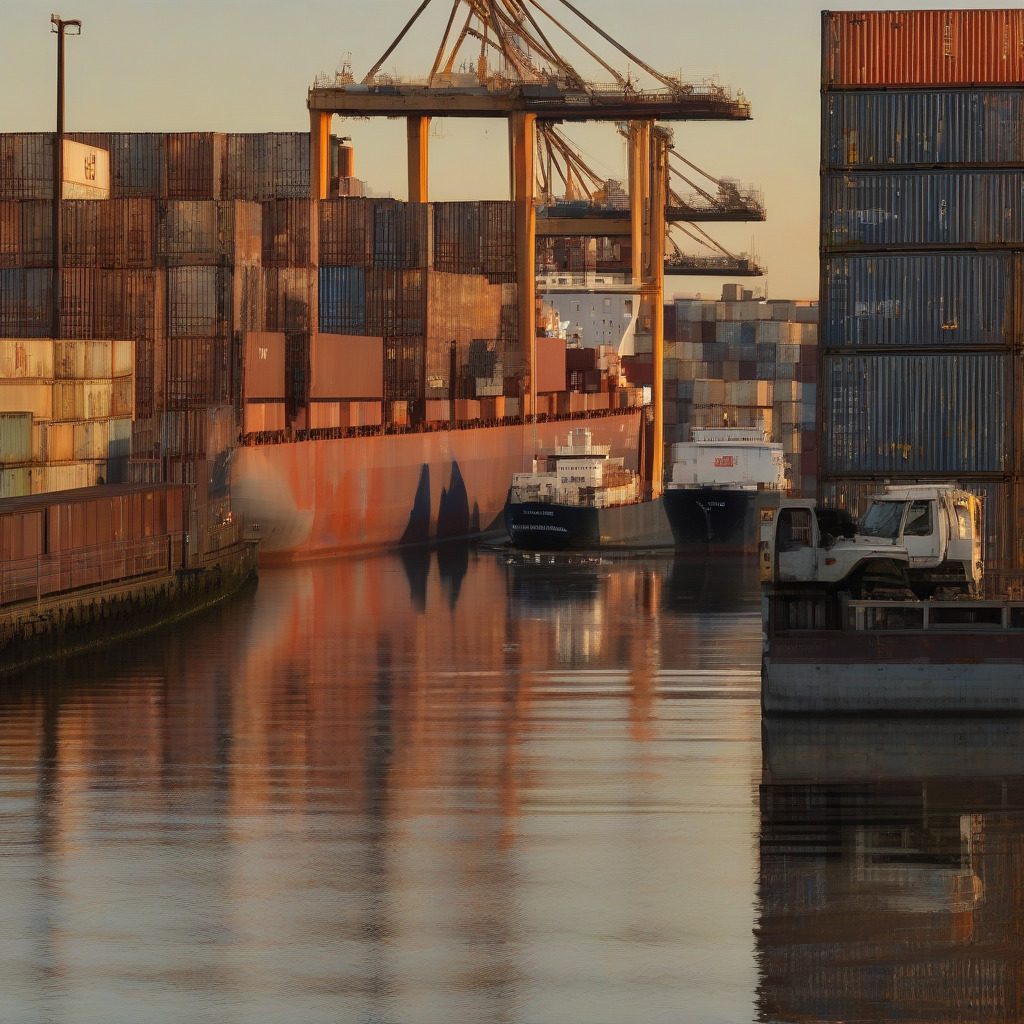
When Lone Star Logistics Group renewed its lease on a 48,000-square-foot warehouse off Clinton Drive in East Houston last spring, owner Marcus Treviño had already done the math three different ways. The asking rate had climbed roughly 30 percent above what he’d locked in five years earlier. Absorbing that would squeeze margins he’d spent years building. Moving to Crosby would add more than 20 miles to his drayage runs from Barbours Cut Terminal — enough to turn profitable port moves into breakeven ones on a bad traffic day on 225. Walking away from port-proximate space entirely meant losing customers who specifically contracted with him because he could guarantee next-day delivery of import containers.
“The cost of being close is going up faster than the revenue from being close,” Treviño said. “But the cost of being far is going up too, because you’re burning fuel and hours on 225 when everyone else is trying to do the same thing.”
He stayed. He signed the renewal. He absorbed the increase by renegotiating surcharges with two of his larger accounts. He knows operators who made different calls, and he says the math gets harder every quarter. I don’t think he’s being dramatic.
That single lease negotiation captures the central tension now running through the industrial real estate market along the Ship Channel corridor. The port is getting bigger, handling more cargo, drawing more national-scale tenants. The space closest to where that cargo lands is getting more expensive and harder for smaller, Houston-based operators to hold. There’s nothing mysterious about it — it’s just painful to watch play out in real time.
What Changed at the Port, and Why Real Estate Demand Is Rising Now
Project 11 — the U.S. Army Corps of Engineers dredging program to deepen the Houston Ship Channel to 46.5 feet — has been advancing in phases. The deeper channel allows fully laden neo-Panamax vessels to transit without tide-riding delays, which changes vessel schedules and cargo flow patterns in ways that ripple directly into the warehouse market. Port of Houston Authority officials confirmed the deeper channel enables calls from larger container ships that previously had to partial-load or wait for tidal windows, increasing per-vessel container volume with each call.
In 2023, the port handled roughly 4 million TEUs across Barbours Cut and Bayport terminals, maintaining its position as the largest container port on the Gulf Coast and one of the top five in the country by volume. Bayport in particular has been climbing with Phase 2 berth capacity additions. More containers arriving through bigger vessels on more berths means more containers that need somewhere to go within dray distance of the terminals.
The standard industry metric for viable drayage from a Gulf Coast port is 50 to 75 miles. In practice, the operators who actually win container drayage business near Houston work in a much tighter radius. Anyone who’s sat on SH-225 during a Tuesday morning rush knows what that means in lived terms. Traffic on IH-10 East makes the effective economic dray range considerably shorter than the mileage suggests. Every additional TEU is a container that needs to be unstuffed, cross-docked, stored, or transloaded somewhere in this corridor.
That somewhere has become a contested and increasingly expensive address.
Five Submarkets, Five Different Stories
Not all industrial submarkets near the port are under the same kind of pressure. The geography matters, because the difference between a facility on Clinton Drive and one in Crosby is not just distance. It’s asset class, vacancy rate, ceiling height, and the type of tenant who can realistically compete for the space.
East Houston and the Ship Channel proper. Clinton Drive, the Turning Basin, the older industrial corridors running along the channel itself — this is the tightest and most contested ground. Vacancy in this corridor runs around 4 to 5 percent, well below the metro average. The stock is mostly older tilt-wall and masonry buildings from the 1970s, ’80s, and ’90s with clear heights of 24 feet or less. Truck courts don’t accommodate modern 53-foot trailers efficiently. Despite those limitations, tenants pay a locational premium because nothing else puts them this close to Barbours Cut. Small drayage operators, import brokers, and container freight stations with long tenure have historically clustered here. That cluster is under pressure. Operators who’ve been in the same space for a decade are seeing rent spikes that force a real choice: absorb the increase, renegotiate customer contracts, or relocate. None of those options is painless, and for smaller operators, “renegotiate customer contracts” often means losing the customer.
Bayport, Seabrook, and La Marque. A different world. The stock here is newer Class A construction, purpose-built in the last decade to serve Bayport Container Terminal directly — 32- to 36-foot clear heights, ESFR sprinklers, expanded truck courts, proximity to the terminal’s gate complex. This is where national developers and institutional tenants have been most active. A 92,000-square-foot refrigerated transload facility that signed here in late 2023 was paying above $14 per square foot NNN. Five years ago that number would have prompted laughter.
Pasadena and South Belt. A middle tier. Older industrial mix, a competing petrochemical tenant base, rents that have risen but remain below the Bayport Class A peak. Operators displaced from East Houston don’t automatically land here — the petrochemical tenants occupy a lot of what’s available, and the fit isn’t always right for port-facing logistics. Most of the displaced operators end up further out.
Greens Road and Beltway 8 Northeast. Larger-format distribution centers and cross-dock facilities have found footing here because land costs are lower and building footprints can be bigger. Tenants using this submarket are typically handling cargo that’s already cleared customs and moved through a near-port facility — the second leg of the chain rather than the first. Rents are softer than Bayport or East Houston, but the submarket has benefited from port volume growth as e-commerce import logistics has pushed the first distribution stop closer to the terminals.
Crosby, Highlands, and the fringe corridors. The overflow valve. Rents are softer, land is more available, and a small but growing number of operators who relocated from East Houston in the last two or three years are working through the operational tradeoffs of the longer dray. Flood risk is the real constraint here. Crosby and Highlands sustained significant damage in Harvey and in the 2024 flood events. Institutional developers are cautious about committing capital to areas where the flood risk calculus is still being rewritten, and that caution limits how fast these corridors can absorb displaced demand.
What Tenants Are Actually Paying
Older Class B and Class C product in the East Houston and Ship Channel corridor trades in the $8 to $12 per square foot NNN range annually, depending on condition, clear height, and lease term. That has moved up roughly $2 to $3 per square foot from where the same product priced two years ago, according to brokers working the corridor. Class A construction in port-proximate locations asks $13 to $16 per square foot NNN, with some deals at the upper end for cold storage or high-specification buildings.
Houston’s overall industrial vacancy sits in the 6 to 8 percent range depending on the quarter and the methodology. Port-adjacent submarkets run considerably tighter.
The spread between what a tenant paid on a 2019 lease and what they’re looking at on a 2024 renewal is real money. Scott Sewell, a senior industrial broker with Colliers Houston who works port-corridor assignments regularly, put it plainly: “In some cases you’re talking about a 25 to 35 percent increase on the same four walls. Tenants who thought they had a cost-stable location are finding out they don’t.”
Most brokers working the corridor describe rates as having risen steadily since 2021 with no sign of softening. No large block of new supply is under construction in East Houston. Bayport-area new product is delivering pre-leased or leasing quickly on completion. That’s not a market that corrects itself on a short timeline.
Who Is Winning the Space
Cold chain operators are among the most aggressive competitors for port-proximate space right now. The import flow of produce, seafood, and refrigerated goods through Barbours Cut and Bayport has grown alongside container volume, and handling that cargo requires temperature-controlled facilities close to the terminals. Dole Food Company maintains a longstanding presence at Barbours Cut handling imported produce. Brokers say additional cold storage interest has intensified in the last 18 months, with at least two smaller regional cold chain operators pursuing expansion or relocation within the Bayport-Seabrook submarket.
Transload operators and container freight stations are the other category competing hard to stay close. A transload facility 40 miles from the terminal operates as a fundamentally different business from one eight miles away. For these operators, the location isn’t just a preference — it’s the product. They often pay above-market rates to hold their spot because the alternative isn’t just higher costs. It’s losing the business model entirely.
Import-side e-commerce distribution has become a notable new entrant in the port corridor in the last few years. Import containers carrying goods destined for e-commerce fulfillment increasingly move from port directly to a near-port distribution center rather than a distant inland hub. Several national e-commerce logistics providers have leased or are pursuing space in the Greens Road and Beltway 8 Northeast submarket for exactly that reason. Five years ago, most import goods would have moved further inland before being broken down. Now the first stop is often a near-port facility — a shift that has added a whole new category of tenant to a market that was already tight.
Petrochemical-adjacent warehousing continues to anchor demand in Pasadena and South Belt, where chemical companies and their distributors maintain inventory of industrial supplies, maintenance parts, and specialty materials that support the petrochemical corridor running down to Freeport. These tenants are less sensitive to port proximity than drayage operators, which helps stabilize rates in those submarkets during periods when port-focused demand dips.
National Players Versus Houston Operators
The most uncomfortable reality for smaller, locally owned logistics companies near the Ship Channel is the structural mismatch between what they can offer landlords and what national firms bring to the table.
Prologis has a portfolio presence in the Houston port corridor. National 3PLs can sign longer lease terms, provide stronger balance sheets as covenant, and absorb larger contiguous blocks of space that deliver better economics to landlords. When a 200,000-square-foot Class A building comes available near Bayport Terminal, the tenant pool capable of taking the full footprint is dominated by national and super-regional operators.
Sewell puts it bluntly: “The 30,000-to-50,000-square-foot operator who has been in East Houston for 20 years is not competing for the same space as Prologis’s customers. But even the older small-bay product they historically used is getting absorbed into higher rents because the overall market is tight. There’s nowhere cheap to hide anymore.”
Treviño describes it from the inside: “The nationals can sign a seven-year lease without blinking. My bank wants to see two years of audited financials before they’ll support a lease guarantee. The landlord on Clinton Drive knows that. They’d take my money, but they’d rather have someone who looks like a safer bet.”
That’s a hard thing to hear. It’s also just how the math works from a landlord’s perspective, and there’s not much point pretending otherwise.
The practical result is a sorting process that’s been accelerating. Smaller operators who have long-term relationships with privately owned Ship Channel landlords — facilities that haven’t yet been absorbed into institutional portfolios — are often holding on through those relationships alone. They’re signing longer terms than they’re comfortable with. Operators without those connections, or whose facilities are selling to institutional buyers, are being pushed toward older product in Pasadena or toward the fringe markets in Crosby and Highlands. Multiple broker sources describe a consistent pattern of Houston-based drayage and 3PL operators relocating from East Houston to Pasadena or further east in the last three years. Specific names weren’t confirmed on record, but the pattern is too consistent across broker accounts to dismiss. As documented in our business & professional coverage, displacement of locally rooted operators by nationally capitalized tenants is a recurring theme across Houston’s high-demand commercial corridors.
The Infrastructure Ceiling
Proximity to the port depends on what the road network between a warehouse and a terminal gate can actually deliver. IH-10 East and SH-225 are the two primary arterials serving the Ship Channel and Bayport Terminal. Both are chronically congested during peak periods. A 15-mile haul that takes 40 minutes at 6 a.m. can take 90 minutes at 9 a.m. That variability destroys turn-time economics for drayage operators. It’s not just inconvenient — it’s the difference between running three loads a day and running two.
TxDOT has active improvement projects in both corridors, but the timelines are long and the relief is partial. The SH-225 widening project has moved through design and right-of-way phases. Meaningful capacity additions are still years away. The Union Pacific Englewood Yard, the primary intermodal gateway for containers moving by rail from the port to inland destinations, adds a separate friction point. Rail-to-truck interchange at Englewood has been a chronic congestion problem during peak volume periods, and it affects operators handling intermodal traffic alongside straight port drayage.
Harris County Flood Control District standards, tightened significantly after Harvey in 2017, impose impervious cover limits and detention requirements that complicate new construction in low-lying areas near the Ship Channel. Land that looks suitable for industrial development on a county parcel map may carry stormwater detention requirements that consume 15 to 20 percent of the developable area. Several sites near the Turning Basin that brokers describe as logically suited for development have been sitting without activity partly because of that detention cost and engineering complexity.
TCEQ air quality permitting near the petrochemical corridor adds another layer for tenants handling certain cargo types or operating equipment subject to emissions review. Complex applications can run 12 to 18 months. These constraints don’t make port-proximate space less valuable — if anything, they make it more valuable, because barriers to new supply are high and the gap between what exists and what the market wants stays wide.
The Port Authority’s Own Land
There’s a dynamic in the Ship Channel corridor that almost never comes up in standard commercial real estate reporting, and it matters.
The Port of Houston Authority is itself a major landowner in the tightest corridor. Where Authority-controlled land sits, private developers cannot build competing product. Authority leases are often longer in term, tied to operational requirements, and oriented toward tenants whose cargo moves through Authority-operated terminals. That reflects the Authority’s statutory role as a navigation district. But the practical effect is that the private industrial market near the port operates in a geography where a significant portion of the most strategically located land is simply not available for private development. That’s not a criticism of the Authority — it’s something a lot of outside investors misunderstand when they first look at this corridor and start running pro formas.
Houston’s absence of citywide zoning means land use near the Ship Channel is shaped primarily by deed restrictions, Harris County regulations, and the Navigation District deed restriction overlay the Port Authority administers. Developers and tenants navigating this market need to treat those restrictions as the functional equivalent of zoning, even if they operate differently in legal terms. A site that looks developable on a county parcel map may carry deed restrictions or Authority easements that constrain use significantly.
One industrial developer active in the corridor explained: “People from outside Houston assume no zoning means anything goes. What it actually means is you have to do the deed restriction work upfront and know what you’re stepping into. Near the channel, that work can take months and produce surprises.”
I’ve heard that same point from several people in this market. The “no zoning” reputation attracts outside capital, and then the deed restriction reality does the sorting.
Where Rates Are Headed, and Who Takes the Hit
The near-term supply pipeline in port-adjacent submarkets is modest relative to demand. Speculative Class A construction is underway in the Bayport-Seabrook submarket and in parts of Pasadena, but the volume of new supply doesn’t appear sufficient to push vacancy meaningfully higher or soften asking rates in the next 12 to 18 months. Most brokers working the corridor expect rates to hold flat to slightly higher through 2025. I haven’t found anyone making a credible case for a significant softening anytime soon.
The fringe corridors are drawing more displaced operators and cost-conscious tenants, but flood risk limits how aggressively institutional developers will build in Crosby and Highlands. Infrastructure in those corridors is thinner. Seasonal demand patterns add volatility — Gulf Coast businesses stock ahead of storm season, and import cycles tied to retail restocking in late summer and fall create a second demand wave. Operators who can predict those surges and contract for short-term overflow space near the port have an edge. Those who scramble for it in-season pay premium rates.
The climate and flooding thread runs through all of this in ways that often get underweighted in deal underwriting. East Houston’s older industrial stock sits in flood-prone areas that took water in Harvey, the Tax Day floods, and subsequent events. Tenants in older Ship Channel facilities are betting that their specific site’s elevation holds. Some of them are right. Some have learned otherwise at considerable cost — ruined inventory, equipment losses, weeks of downtime. Appetite for post-Harvey flood certification and elevation certificates has grown among tenants negotiating leases in the corridor. Landlords who invested in flood mitigation have a real marketing advantage now.
For Treviño, the 12-month view is simple: “The rate isn’t going down. The port isn’t getting smaller. I need to find ways to make my cost structure work at the new normal, because waiting for rent to come back to 2019 is not a strategy.”
That’s probably the most accurate forecast available in this market right now. The port is growing. The cargo is coming. And the question of who gets to stay close enough to profit from it is being answered one lease negotiation at a time — mostly in favor of operators with the balance sheet to absorb the terms, and against those who built their business on the assumption that proximity was a fixed cost. It wasn’t. It never really was. It just didn’t used to matter this much.
CityDesk Houston covers commercial real estate, logistics, and port-related industry on an ongoing basis. Tips, lease data, and on-record sources can be submitted to our newsroom.