West Nile Virus Season Is Here. Here's What Houston Families Should Actually Do
Harris County has documented human West Nile cases every year since 2002. Here's how to track positive pool reports, read the spray schedule, and protect your family without canceling summer.

Harris County has documented human West Nile cases every year since 2002. Here’s how to track positive pool reports, read the spray schedule, and protect your family without canceling summer.
West Nile virus is not a novelty outbreak when it shows up in Harris County. It’s not a freak occurrence or a one-in-a-million event imported from somewhere else. It is an annual fact of Houston summer, as predictable as the heat and as local as the bayous that breed it.
The county has documented human cases continuously since 2002. The mosquito that carries it — Culex quinquefasciatus, the Southern House Mosquito — breeds in the warm, stagnant water that collects in every clogged storm drain, neglected bird bath, and roadside ditch from Katy to Galena Park.
What’s missing every single summer is coverage that actually tells Harris County residents what to do with that information. This is that coverage.
The Real Risk Level: Honest Numbers, Not Reassurance
Start with the framework that lets you calibrate everything else.
When a person is bitten by an infected Culex mosquito, three outcomes are possible. Two of them are essentially nothing.
Roughly 80 percent of infected people are asymptomatic — no fever, no fatigue, no missed work. Their immune systems clear the virus and they move on. About 20 percent develop what’s formally called West Nile Fever: a few days of flu-like illness with fever, headache, body aches, and sometimes a flat rash on the trunk. It resolves on its own. The remaining fraction — roughly 1 percent — develops neuroinvasive disease: West Nile meningitis, encephalitis, or acute flaccid paralysis. That’s the category that sends people to the ICU and, in some cases, kills them or leaves permanent neurological damage.
That 1 percent is not nothing. Across a metro area of this size, it translates to genuine hospital admissions and deaths in Harris County every summer. The Texas Department of State Health Services publishes annual arboviral surveillance data, and Harris County historically accounts for a disproportionate share of the Houston-Galveston region’s case count — a function of its bayou geography, its heat, and its density.
The message here is not panic. This is a manageable risk with concrete countermeasures — the kind of topic we cover regularly in our health and wellness coverage. But it’s also not something health departments invent to justify budget lines. I’ve seen both framings, the breathless alarm version and the dismissive shrug, and neither helps you decide what to put on your kids before they go outside.
How the County Knows West Nile Is Present Before You Do
Harris County Mosquito Control District runs a surveillance network that most residents have never heard of, despite it being one of the more sophisticated county-level monitoring systems in the country.
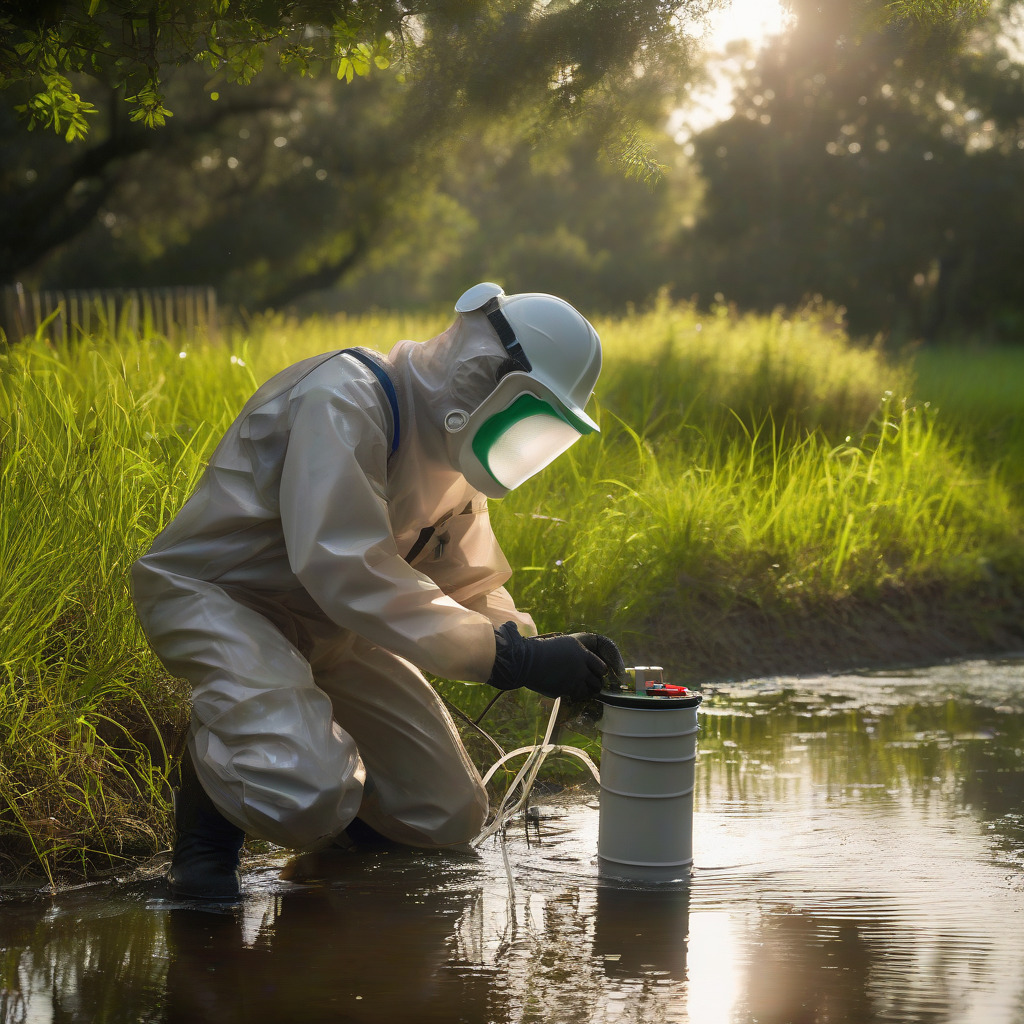
HCMCD operates CO2-baited light traps distributed across numbered surveillance zones throughout the county. The devices emit carbon dioxide to mimic human breath, attract mosquitoes overnight, and the collected specimens are pooled by species and submitted for West Nile virus testing. A “positive pool” means a batch of Culex mosquitoes from a specific trap location tested positive for WNV RNA. Results get reported to DSHS and published on the Harris County Public Health mosquito surveillance portal.
When local media report “West Nile detected in Harris County,” this is what they’re describing. A positive pool confirms active viral circulation in a specific area, which triggers the operational response: targeted larviciding, increased trap monitoring, and where the vector population warrants it, adulticiding sprays.
Spring rainfall totals significantly influence how early and intense the season runs. A wet spring — standing water throughout May and June — accelerates Culex population growth and can push the first positive pools weeks earlier than a dry year would. Peak surveillance activity historically runs mid-July through mid-September.
Where to Track Positive Pools and Spray Schedules Right Now
Harris County Public Health’s surveillance portal is at hcphtx.org. Navigate to Environmental Public Health, then Mosquito and Vector Control. The portal includes a map of reported positive mosquito pools, updated as results come in. Each point on the map corresponds to a surveillance zone tied to specific geographic areas of the county. When you see a cluster of positive pools in zones overlapping your ZIP code, that’s operationally significant — HCMCD is likely conducting increased monitoring and evaluating whether adulticiding is warranted.
HCMCD publishes its spray schedule on the same site, updated based on surveillance data. [Note to editor: Verify the current 2026 spray schedule URL at hcphtx.org before publication, as direct links change seasonally.]
The practical detail most residents miss is timing. Adulticiding truck sprays in Harris County typically run after 10 p.m. and into the early morning hours, following routes mapped to specific service zones. If your area is scheduled for a night spray, keep windows closed that evening and through the early morning. If you run a window AC unit with an outside vent, same logic applies. Households with infants, people with respiratory conditions, or immunocompromised members should seal up for the night.
The main contact line for spray schedules, standing water complaints, and service requests is (713) 440-4800. This line is staffed and functional. Residents who don’t want their property sprayed can formally request an opt-out. That’s also the number to call if you want larviciding treatment of a specific drainage ditch or suspect a neglected property nearby is breeding mosquitoes. More people should be making this call.
Which Houston Areas See the Most Activity
Geography drives West Nile activity in Harris County more than almost any other variable. Specifically: bayous.
Culex quinquefasciatus breeds in warm, organically rich standing water — exactly the conditions along Harris County’s bayou margins throughout summer. Corridors with historically elevated trap activity include Brays Bayou through Meyerland and the Third Ward, Greens Bayou in northeast Houston through Galena Park, and Sims Bayou in the southeast. Kingwood, Humble, Pasadena, and Galena Park have consistently appeared in surveillance data over multiple seasons, reflecting their proximity to bayou systems and drainage infrastructure that was stressed by Hurricane Harvey and subsequent flood events.
Meyerland deserves specific attention. Post-Harvey drainage changes in that corridor created persistent standing water conditions that extend the productive mosquito breeding period. For residents there, the weekly standing water elimination routine isn’t a county public health talking point — it’s a genuine neighborhood issue.
The 2026 season’s intensity will be partly determined by spring rainfall totals. A wetter-than-average spring means more early breeding habitat, more mosquito generations before surveillance catches up, and a higher probability of an earlier and more active season. [Editor’s note: Current 2026 positive-pool ZIP codes must be verified against HCPH’s live surveillance map before this article is published. Contact HCPH’s Environmental Public Health division for confirmed current-season data.]
Is It Safe to Let Your Kid Play Outside at Dusk in July?
Honest answer: it depends on timing, and it depends on your household.
Outdoor play before dusk carries substantially lower Culex exposure risk than outdoor play after dark. Culex quinquefasciatus is primarily a nighttime biter, active from dusk to dawn. Unlike Aedes aegypti — the day-biting mosquito that carries dengue and Zika — the Southern House Mosquito is largely inactive during the daytime hours when most children are at summer camps, in backyards, and at pools.
A 6:30 p.m. backyard cookout in July carries meaningfully different risk than a 9 p.m. outdoor event at the same location. That’s not a subtle distinction. The same timing logic applies to outdoor exercise — what Houston’s air quality alerts mean and when it’s safe to exercise outside is a related decision residents often make without enough information.
This doesn’t mean dusk-to-dawn outdoor activities are forbidden. It means they warrant repellent, appropriate clothing, and awareness of the season. Peak West Nile transmission in Harris County runs mid-July through mid-September. That’s the window when the risk calculus should weigh most heavily on your planning.
For families with immunocompromised members — adults on chemotherapy, organ transplant recipients, people with HIV — the calculus shifts considerably. Neuroinvasive disease disproportionately hits people with compromised immune systems, making the dusk cutoff and consistent repellent use not optional suggestions but the primary protection strategy.
Repellent That Actually Works in Houston Heat
High humidity accelerates sweat-based product loss in ways that generic CDC guidance doesn’t acknowledge. If you’ve applied standard DEET spray before an evening in the Heights and felt it wash off within the hour, formulation is why.
30% DEET in a controlled-release formulation is highly effective and long-duration. The controlled-release versions maintain protective concentrations for several hours even in high humidity — significantly better than straight-concentration sprays at the same DEET percentage. Higher concentrations don’t perform proportionally better; 30% is the practical ceiling for protection duration, not a starting point.
20% Picaridin is odorless and won’t degrade plastic gear, sunglasses frames, or synthetic athletic fabrics the way DEET can. Protection window is comparable to 30% DEET. Preferred by a lot of outdoor workers and athletes wearing technical gear, for obvious reasons.
Oil of Lemon Eucalyptus (OLE) works well for adults, with a protection window of a couple of hours. Not recommended for children under three. Do not confuse it with essential oil “lemon eucalyptus,” which is a different product with no EPA registration for mosquito repellency. The labeling on these two products is genuinely confusing, and the distinction matters in practice.
IR3535 is the lowest-irritation option, appropriate for use on children, with a shorter window adequate for an hour or two of outdoor play around dusk.
Permethrin for clothing and gear is what most Houston families underuse. Applied to clothing, shoes, and gear — not skin — it remains effective through multiple wash cycles. For anyone spending extended outdoor time in July and August, permethrin-treated clothing provides consistent baseline protection without requiring reapplication. Construction workers, landscapers, people doing anything that stretches into evening: this is the option worth knowing about.
One more thing worth understanding: the weekly standing water elimination rule has specific scientific grounding. The Culex life cycle from egg to biting adult takes a minimum of seven to ten days. Eliminating any container holding water every five to six days breaks the breeding cycle before it completes. Bird baths, plant saucers, children’s toys, tarps, gutters — anything that holds water after rain. A single five-gallon bucket of standing water in a Houston backyard in July can produce several hundred adult mosquitoes. Twenty minutes on a weekend is the cheapest and most effective intervention any household can make.
Symptoms: Home, Urgent Care, or the ER?
Fever, headache, body aches, fatigue, possibly a flat rash on the trunk or limbs. These symptoms after potential mosquito exposure describe West Nile Fever. In healthy adults with no immunocompromising conditions, this illness is self-limiting and typically resolves within three to six days. Hydration, rest, and over-the-counter fever management are appropriate. No antiviral treatment exists; medical care at this stage is supportive.
Monitor for progression. The fever that’s manageable on day one occasionally escalates.
If any of the following develop, stop waiting.
Sudden severe headache — especially one the patient describes as the worst headache of their life. Stiff neck. New confusion or altered mental status. Muscle weakness in the arms or legs developing over hours. Seizures. Vision changes.
These are neuroinvasive disease warning signs and constitute a medical emergency. Not an urgent care situation. The ER. (If you’re unsure whether a facility is the right fit for earlier-stage symptoms, which Houston urgent care centers are actually worth going to in 2026 is worth reading before you need it.)
Houston facilities equipped to manage severe neuroinvasive West Nile cases include Houston Methodist, Memorial Hermann-TMC, and Ben Taub (Harris Health) for uninsured patients. Pediatric neuroinvasive cases should go to Texas Children’s. An ER workup alone at Texas Medical Center facilities can run well into the thousands without insurance. That’s not a scare tactic — it’s the real-world financial argument for taking prevention seriously, alongside the epidemiological one.
What a Dead Crow in Your Yard Actually Means
Crows and blue jays die rapidly from West Nile virus infection. A dead crow in your yard is a biological signal that the virus is circulating in your immediate area. It’s not a guaranteed exposure event for anyone nearby, but the instinct to wave it off as “just a bird” is wrong.
Don’t handle the bird with bare hands. Use gloves and a plastic bag, then report it to DSHS at dshs.texas.gov/arboviral/wnv. The department uses corvid mortality data alongside trap results as part of its statewide monitoring system.
A separate indicator worth watching: equine West Nile cases in the Katy, Cypress, and Spring areas of Harris County’s western and northwestern margins. Horse communities in those areas report to the Texas Animal Health Commission when horses present with neurological symptoms consistent with WNV. Equine West Nile circulates through the same vector as human cases, and it signals active viral circulation in those neighborhoods.
There’s a licensed equine vaccine that’s highly effective at reducing severe disease in horses. No equivalent exists for humans as of 2026. Same virus, same mosquito, dramatically different options for horses versus people. That asymmetry hasn’t moved much in twenty years of surveillance.
Free Resources You’re Already Paying For
Every Harris County resident funds HCMCD through property taxes. Most residents have never called the district or requested a service. That’s leaving real protection on the table.
The district offers free property inspections for standing water sources, free larviciding of drainage ditches and storm drains, and free spray schedule information — including opt-outs for residents who don’t want their property treated. All of it through (713) 440-4800. Standing water complaint reporting gets a specific location added to the treatment queue through that same number.
If you want supplemental protection beyond what HCMCD provides, a private barrier spray service treating your yard’s vegetation typically runs $75 to $150 per treatment. It’s not a replacement for area-wide suppression, but it reduces resting adult mosquito populations in your immediate outdoor space.
The surveillance portal worth bookmarking right now is hcphtx.org. Check it weekly through September. A cluster of positive pools in surveillance zones near your neighborhood is a signal to confirm repellent supplies, check gutters and standing water, and track the spray schedule for your area.
West Nile season in Houston is not going away. It’s been here every summer since 2002, and it will be here next summer too. What changes year to year is how bad it gets. Right now, before positive pools start clustering and before anyone in your household is making decisions about an ER visit at two in the morning, is the window to act.
CityDesk Houston will update this article as Harris County Public Health releases 2026 positive pool data and spray zone updates. Readers with specific questions about their address or surveillance zone can contact HCMCD at (713) 440-4800.