What Houston Food Halls Are Still Open in 2026 and What Happened to the Ones That Closed
The last real roundup ran in 2022. Since then, Finn Hall went dark, the Ion scaled back, and the lunch crowd that was supposed to fill these places never came back downtown. Here's what's actually …

The last real roundup ran in 2022. Since then, Finn Hall went dark, the Ion scaled back, and the lunch crowd that was supposed to fill these places never came back downtown. Here’s what’s actually open right now—and where your favorite stall went.
If you’ve searched “Houston food hall” recently and clicked through for hours and a vendor list, you’ve almost certainly landed on coverage that’s two or three years out of date. Some of those articles still list Finn Hall as a dining option. Some describe the Ion’s food program in terms that no longer match what you’ll find at 4201 Main. None of them will tell you who to call for a holiday buyout or whether the parking situation at Understory has improved.
This guide exists because that information gap is real, because holiday planning season is underway, and because snowbirds and out-of-town family arriving through December will ask you where to take them for a casual group dinner. The answer in 2026 is different from the answer in 2022—sometimes by a lot.
Three Houston food halls are confirmed operating for regular public service: Politan Row at POST Houston, Bravery Chef Hall, and Understory. Finn Hall is closed and the space is being repositioned. The Ion’s multi-vendor concept didn’t survive in its original public-facing form. Lyric Market and the Conservatory have been gone long enough that their continued appearance in roundup articles is simply an editorial failure. Everything below is the reported version.
At a Glance: Houston Food Hall Status, 2026
| Hall | Address | Status | Hours | Private Events | Parking |
|---|---|---|---|---|---|
| Politan Row at POST Houston | 401 Franklin St. | Open | Call to confirm | Yes | Attached garage; validation available |
| Bravery Chef Hall | 409 Travis St. | Open | Lunch and dinner; call to confirm | Yes | Street + nearby lots; limited |
| Understory | 1000 Louisiana St. | Open | Weekday-oriented; call to confirm | Limited | Building garage access |
| Finn Hall | 712 Main St. | Closed | — | — | N/A |
| Ion (food hall concept) | 4201 Main St. | Restructured/Reduced | Tenant-oriented only | No public buyout | Campus lot |
| Lyric Market | 411 Smith St. | Closed | — | — | N/A |
| The Conservatory | Main St., Downtown | Closed | — | — | N/A |
Call each venue before visiting. Vendor hours within halls sometimes vary from posted open times, and operating status can change between publication and your visit.
The Halls That Are Open
Politan Row at POST Houston—401 Franklin St., Downtown
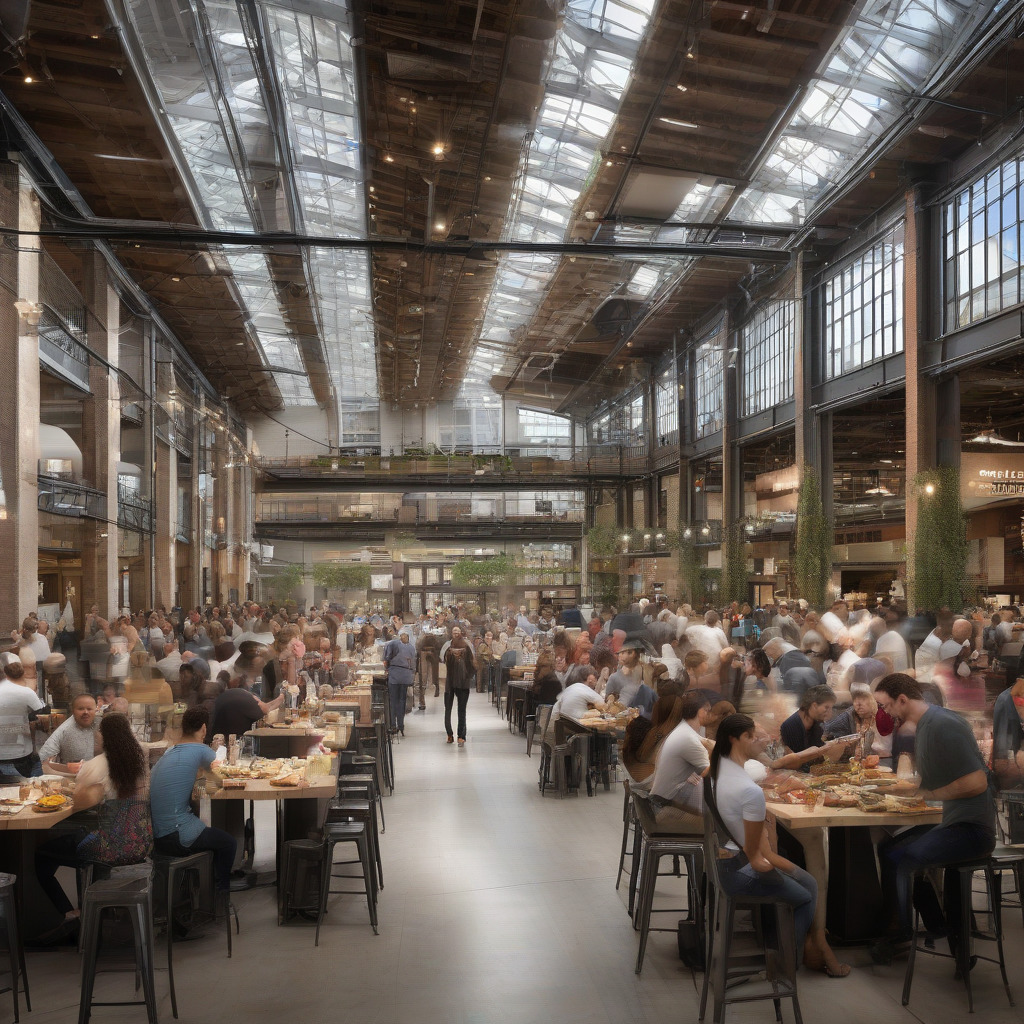
Politan Row is the strongest surviving food hall in Houston, and it’s not close. It sits inside POST Houston, the adaptive reuse of the Barbara Jordan Post Office building, and it has something the downtown halls that failed never had: a reason for people to show up that has nothing to do with lunch. POST’s concert venue, its rooftop deck, and its event calendar pull foot traffic independent of how many law firms are still sending people to the office on Fridays. That’s basically the whole explanation for why Politan Row has stabilized while the others struggled—an anchor that generates its own attendance.
The vendor roster has turned over, but a core group has stuck. The mix skews toward Houston’s broad Asian and Latin American culinary traditions, which reflects both the city’s demographics and the operators who’ve found the food hall model workable long-term. The hall is at its best on weekend evenings when POST has programming running. Architecturally, it’s the most impressive of the three open halls—the scale of the old postal facility translates surprisingly well to the market format, all that high industrial ceiling and open floor. Bring out-of-town guests on a weekend and you’ll look like you know what you’re doing. Verify the current vendor lineup directly before visiting, since turnover in the format is ongoing.
Parking: the attached garage off Franklin validates for dining visits. It’s the least aggravating situation of any downtown food hall, which is a low bar, but still. The Main Street METRORail line also serves the building.
For private events, POST Houston’s events team handles both rooftop bookings and Politan Row buyouts. The rooftop is priced significantly higher and suits larger corporate events. Politan Row semi-private arrangements are accessible for mid-sized holiday parties. Q4 lead times are real—October through February is when Houston’s outdoor-adjacent spaces are actually worth using, and the POST rooftop in fall weather is one of the better large event venues in the city. Don’t wait until mid-November to call.
Bravery Chef Hall—409 Travis St., Downtown
Bravery opened in 2019 in the Aris Market Square building around a specific idea: each stall is run by a named chef, not a brand. In practice that distinction is subtle until you’re eating there, but it shapes the whole character of the place—the food is more considered, the vendor count lower, the experience closer to a focused dinner than a sprawl. Some chefs have graduated to standalone restaurants since 2019; others left; new ones came in. The hall has restocked.
What’s kept Bravery viable when other halls couldn’t make it is its bar program. The hall invested in evening service in a way its failed competitors never did, and the Travis Street address is walkable from several downtown hotels—useful for visitors wanting to try multiple things at dinner without committing to a single restaurant. It’s smaller than Politan Row, more intimate, which makes it better for a group dinner than for a family reunion.
Parking is the practical headache. Street parking around Travis and Congress is limited and metered. Nearby surface lots add a walk. Budget the time. For private events, Bravery accommodates semi-private arrangements—designated seating area, food and beverage minimums, not a full buyout. Their November and December calendar fills early and isn’t heavily marketed; contact the hall directly. Verify the current vendor roster before visiting, as the operator has made updates over the past two years.
Understory—1000 Louisiana St., Downtown
Understory occupies ground-floor space in Brookfield Properties’ downtown office tower portfolio, and its orientation is obvious once you’re there. The vendor mix is built for lunch pace. The energy on a Tuesday at noon is completely different from a Saturday afternoon—quieter, more efficient, built around the office buildings above it. That’s not a criticism; it’s just what the place is.
For a solo or small-group weekday lunch downtown, Understory is useful. For evening events or weekend outings, it’s the weakest of the three operating options—Politan Row or Bravery first, every time. Building garage access runs at standard downtown pricing. The vendor roster has been updated over the past two years; verify before visiting.
Large event buyouts are logistically awkward here, and management hasn’t pushed the space for private events the way POST Houston has. For a corporate holiday party, this is the last of the three to call. Worth knowing it’s there; don’t anchor your plans around it.
What Happened to Finn Hall
Finn Hall at 712 Main St., inside GreenStreet—the development Midway Companies repositioned from the old Houston Center retail complex—is closed. The structural problem predated COVID and became unrecoverable because of it. Finn Hall was designed to serve the office worker population of Houston Center and the surrounding Main Street corridor. That population was already softening before 2020. After March of that year, it never came back in the form Finn Hall needed.
Food hall economics are unforgiving when volume drops. The model requires consistent high turnover at lunch, typically five days a week, to keep per-stall rents viable. When the anchor tenants in your catchment area go hybrid, things collapse fast. Several Finn Hall operators had already departed before the final closure, leaving gaps in the vendor map that made the hall feel half-empty even when technically open. That’s a self-fulfilling dynamic—empty-looking halls attract fewer visitors, which makes them emptier.
The 712 Main address has no food service operation. Contact Midway Companies for the current status of the space.
Many former Finn Hall operators haven’t maintained a public Houston presence, which is consistent with how the format works. Food hall stalls attract operators testing concepts on low capital; when a hall closes, not all of them can pivot immediately to a standalone location. If you’re tracking a specific concept, Instagram is the most reliable current source. Houston Press and Eater Houston archives have closure-period vendor coverage that can help establish where specific operators landed.
The Ion’s Food Program
Readers near Midtown or Upper Kirby keep asking whether there’s a real, public-facing food hall at the Ion campus at 4201 Main. The answer in 2026 is no. Not in the form originally envisioned, and not in the form some older coverage still describes.
When Rice Management Company redeveloped the former Sears building into the Ion innovation hub, the food and beverage program was conceived as a multi-vendor space anchored by the tech workers and startup community the campus was designed to incubate. The problem was that this was never a genuine public-facing food hall—it depended on a captive audience of tenants, co-working members, and program participants rather than street traffic. That audience never materialized at the required scale. Innovation districts are slow to build critical mass; the Ion’s tenant ramp-up was slower than projected, and when your built-in customer base is smaller than expected, the thin-margin food hall economics kick in the same way they kicked in at Finn Hall.
What exists at the Ion in 2026 is a reduced food and beverage amenity oriented toward building tenants. Rice Management describes it as a campus amenity, not a public food hall. It’s not a practical option if you’re not already there for another reason. The campus has genuine momentum in other respects—anchor tenants have signed and the surrounding corridor is developing—but it’s not a food hall destination. Don’t drive over there expecting one.
Closing the File on Lyric Market and the Conservatory
Two venues keep appearing in Houston food hall roundups that have been closed long enough that listing them is simply an error—coverage that hasn’t been corrected because nobody went back to check.
Lyric Market opened in 2019 in the historic Humble Oil Building on Smith Street. It struggled in its early years, compounded by the pandemic. The surrounding block never generated the consistent pedestrian volume the format needed. The space doesn’t operate as a food hall.
The Conservatory was a beer garden and underground food hall on Main Street combining craft beer with vendor stalls in a basement-level space. It ran for several years with a loyal following before closing. The underground bar atmosphere was genuinely distinctive—nothing else in Houston felt quite like it, and the craft beer community mourned the closure loudly and for good reason. It was a good room. But the space is not operating, and it hasn’t been for long enough that if you’ve found a website or Google listing suggesting otherwise, you’ve found stale data.
Both are permanently closed for any planning you’re doing in 2026. Don’t trust what the search results tell you.
Why Houston Is Hard Terrain for Food Halls
The closures aren’t primarily a pandemic story, though the pandemic made bad situations unrecoverable. They reflect a business model that was never well-matched to this city’s specific conditions. The same structural issues will shape whatever comes next, so it’s worth being clear about what they actually are.
Downtown office vacancy is the foundational problem. Current data from commercial brokers tracking the Houston CBD puts office vacancy in the high twenties percent range—improved slightly from pandemic peaks, still far above pre-2020 levels, and far above what food hall economics require. A hall penciled to serve a large daily office population and now serving a fraction of that on irregular hybrid schedules can’t operate the concept it was designed for. The math doesn’t close. Full stop.
Houston’s built form works against the spontaneous discovery that food halls depend on. In Philadelphia’s Reading Terminal or Chicago’s Revival Food Hall, a significant percentage of any given day’s customers weren’t planning to eat there—they walked by, smelled something, walked in. In Houston, most people who eat at a food hall drove there intentionally. That’s not insurmountable, but it means the hall needs a stronger reason-to-visit than it would need in a walkable city. Most Houston food hall developers underestimated this badly and built concepts that depended on foot traffic the city’s street-level environment was never going to deliver.
Summer heat eliminates the outdoor-marketplace atmosphere for most of the year. The format works best with some connection to outdoor or semi-outdoor space—an activated plaza, a patio, market energy spilling onto the sidewalk. Houston’s climate makes that viable from October through February. The other seven months push activity indoors and suppress the casual drop-in traffic that food halls need to supplement their regulars.
The competition is ferocious in ways the developers didn’t reckon with. Houston has an independent restaurant ecosystem that is exceptional by any national standard, built across generations by immigrant communities in Chinatown, Bellaire, the Harwin corridor, Spring Branch, and the East End. A food hall trying to offer variety and discovery is competing with a restaurant culture that already offers both, and does it better, with more space and better kitchens. Food trucks—operating on even lower fixed costs than food hall stalls, with no rent and total mobility—cover the casual lunch market from below. As explored in our food & hospitality coverage, the food hall concept landed between two sets of competitors, neither of which it could actually beat.
Politan Row works because POST Houston’s event venue generates foot traffic independent of the office population. Bravery has survived on its chef-driven identity and a bar program that gives it a genuine evening destination. Understory survives as a building amenity, a category that requires lower traffic volume to remain viable than a public-facing hall. Three different survival strategies. None of them is “build it downtown and wait for the office market to recover.”
Q4 Private Events and Holiday Bookings
Politan Row at POST Houston is the most capable venue for large-format private events among the three operating halls. POST Houston’s events team handles both Politan Row and rooftop bookings. The rooftop is a separate venue, priced accordingly, suited for larger corporate events with catering flowing through Politan Row’s vendor ecosystem. Contact POST Houston’s events department through the venue website or call the main line and ask for event sales. Q4 books up. Reach out well before you think you need to. Specific pricing changes; get a current quote directly.
Bravery Chef Hall handles semi-private arrangements for smaller groups—designated area, food and beverage minimums, individual ordering rather than plated catering. Good for a departmental holiday lunch or a small company party. Their Q4 calendar isn’t aggressively marketed but they do book events; contact them directly.
Understory has limited event capacity and doesn’t compete with the other two for this purpose. If you’re in the building and need something convenient, worth a call. Otherwise, look elsewhere.
What’s Coming
The most credible near-term addition is the food and beverage component of East River, the mixed-use development Midway Companies is building near Navigation Boulevard in the East End. East River has been in active development for several years, with phased commercial openings underway. A market hall and food vendor component has been part of the project’s programming from the beginning.
The East River approach looks like a deliberate response to the downtown failures—a destination concept designed to capture residents and visitors who are already choosing to be in that part of the city, rather than an office-worker formula that requires five-day-a-week commuting patterns that no longer exist. That’s the right framing. Vendor announcements and a confirmed opening timeline for the market hall component should emerge through 2026. For additional context on how the Houston Food Hall Report Card for 2026 grades the existing venues, that coverage runs alongside this guide.
In the suburbs, the strongest case for food halls sits in the high-density residential corridors—Sugar Land, The Woodlands, Katy—where weekend family traffic provides the volume that downtown weekday lunch never did. Whether a credible operator will execute in those locations in the next 12 to 18 months is speculative. Nothing announced meets this publication’s standard for confirmed reporting.
The food hall format isn’t dead in Houston. It’s being re-sorted toward models that fit the actual city rather than the city that developers in 2018 imagined. POST Houston’s model works. Whatever comes next, if it works, will look more like East River than Finn Hall.
CityDesk Houston will update this guide when East River’s market hall component announces confirmed vendors and an opening date. Hours, vendor rosters, and operating status for all venues should be confirmed directly before visiting. For corrections to operating status, contact the editorial desk directly.