What Houston Restaurant Surcharges Are Legal and Whether You Still Owe a Tip
The bill arrives. Two people, Montrose, a bottle of wine split between courses, nothing extravagant. Food and drinks come to $190. Then you see it: a "kitchen appreciation fee" at 20% and a "credit…

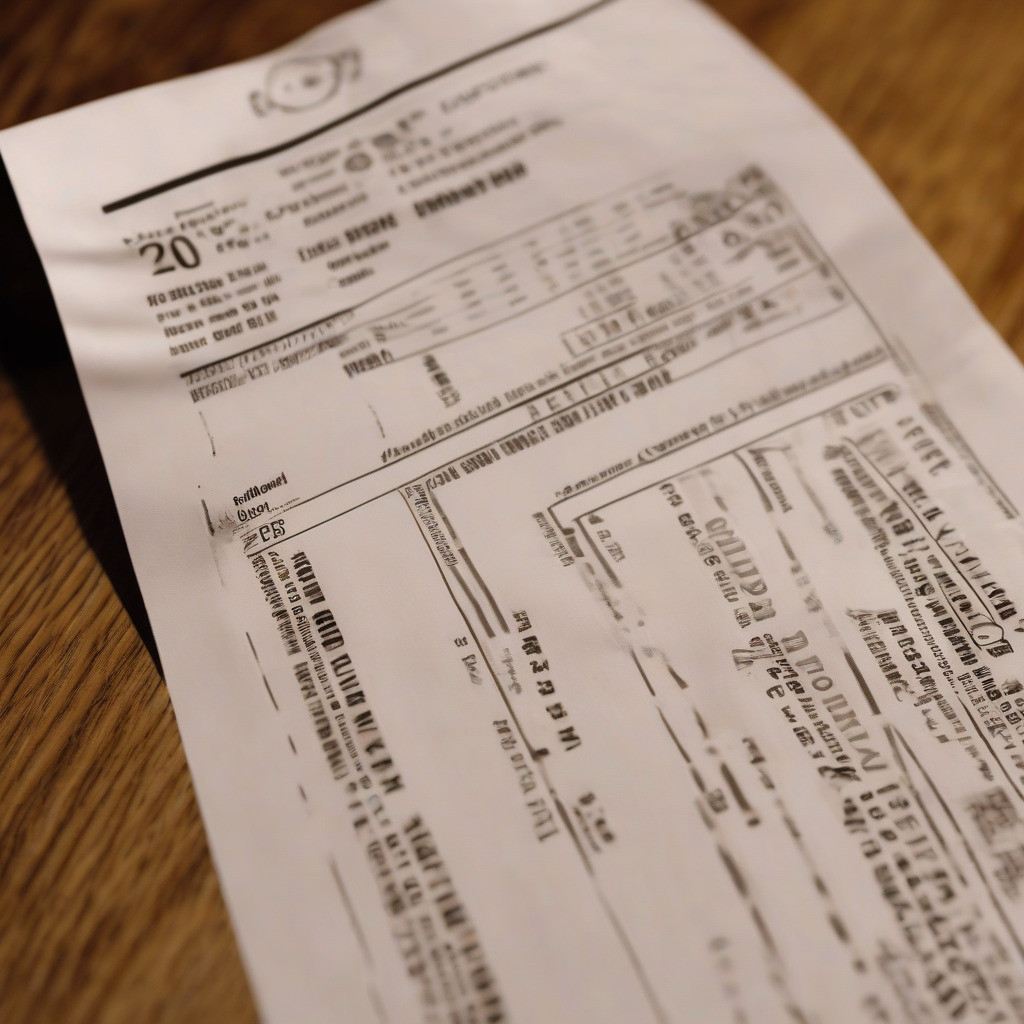
The bill arrives. Two people, Montrose, a bottle of wine split between courses, nothing extravagant. Food and drinks come to $190. Then you see it: a “kitchen appreciation fee” at 20% and a “credit card processing surcharge” at 3%, stacked below the subtotal as separate line items. Neither appeared on the menu. Neither was mentioned when you sat down. The total before any additional gratuity is $228, and there’s still a blank tip line staring at you.
This isn’t hypothetical. Receipts showing exactly this structure circulated on Houston food forums after a recent Houston Restaurant Week—one of the highest-traffic dining periods the city sees, when restaurants across Montrose, Downtown, the Heights, and Midtown run close to capacity for days at a stretch. The volume means more diners encounter fee structures they’ve never seen before, and more of them are comparing tabs afterward and asking the same questions. Loudly.
This piece answers five of them. Can a Houston restaurant legally add a surcharge without disclosing it on the menu? Is a service charge a tip, or does the house keep it? If you paid a 20% service charge, do you still owe your server anything? Which Houston restaurants are currently using these fees and why? And what can you actually do if a charge shows up on your bill uninvited?
What Texas Law Actually Permits—and Doesn’t Require
Start here, because it’s probably not what you’re expecting.
Texas has no restaurant-specific surcharge disclosure statute. There is no state law requiring a Houston restaurant to list a service charge, kitchen appreciation fee, or credit card surcharge on its menu before you order. This puts Texas in a materially different position from California, where AB 1360 took effect in July 2024 and banned hidden restaurant fees outright. That law doesn’t apply here, and diners who assume they have equivalent protections are wrong.
What Texas does have is the Texas Deceptive Trade Practices Act, Section 17.46 of the Texas Business and Commerce Code, which prohibits “false, misleading, or deceptive acts or practices” in trade or commerce. An undisclosed surcharge could theoretically qualify. But enforceability is more complicated than consumer advocates usually let on.
To pursue a DTPA claim, a diner would need to show the deceptive act was a “producing cause” of actual damage—meaning you have to demonstrate you wouldn’t have agreed to the charge had it been disclosed, and that you suffered a quantifiable loss. A small kitchen fee is unlikely to clear that bar on its own. The DTPA allows for treble damages and attorney’s fees in cases involving a “knowing” violation, but getting to that threshold over a single restaurant bill is a slog most lawyers won’t take on contingency for amounts under a few hundred dollars. That’s not a flaw in the law; it’s just how it works.
Houston has no city ordinance requiring fee disclosure at the point of menu presentation. Absent a local rule, the DTPA is the primary consumer protection lever, and it’s a weak one. A restaurant can legally add a service charge or kitchen fee as long as it’s disclosed somewhere before you pay. A placard at the host stand, a back-page menu notation, fine print at the bottom of the food list—any of these satisfy the basic requirement. A fee that appears for the first time on your printed bill is more vulnerable to challenge, but “vulnerable” doesn’t mean automatically illegal under current Texas law.
Service Charge vs. Tip: What the IRS Actually Says
This is the question most diners get wrong, and it costs them money.
IRS Revenue Ruling 2012-18 draws a clean line. A mandatory service charge—one the customer has no discretion to modify—belongs to the restaurant. The moment you pay a mandatory 20% service charge, that money is legally the restaurant’s. The restaurant controls where it goes. The server doesn’t receive it as a tip. Check with a tax professional if you need current guidance, since IRS rulings can be updated.
The tax mechanics reinforce the distinction. Tips servers receive and declare appear on their W-2 as gratuities. Service charge revenue distributed to servers flows through payroll as regular wages, hits withholding differently, and affects their year-end tax picture accordingly. For the restaurant, mandatory service charges have to have payroll taxes applied—they can’t be treated as pass-through tip income the way voluntary gratuities can. Two things that rarely come up when you’re staring at a $228 bill, but they matter.
For Houston diners, the translation is direct. That 20% “hospitality fee” is legally the restaurant’s money. Whether any of it reaches your server depends entirely on that restaurant’s internal policy, which most restaurants don’t publish and most diners never ask about.
Who’s Charging What in Houston Right Now
The fee situation across Houston’s restaurant corridors isn’t uniform, and the restaurants using surcharges generally have specific economic reasons for doing so—even when the execution frustrates diners. For broader context on how these operators fit into the local dining landscape, our food & hospitality coverage tracks the business side of Houston’s restaurant industry.
Three categories are currently in use.
Back-of-house equity fees. Goodnight Hospitality, the group behind March and Rosie Cannonball in Montrose, has used a service structure specifically aimed at sharing revenue with kitchen staff. The logic: servers receive tips and kitchen workers don’t, which creates a structural wage gap that a back-of-house fee can partially close. Whether and how that fee currently appears on their menus has shifted since 2022, so confirm before you go.
Benefits surcharges. Peli Peli, the South African-inspired restaurant group with multiple Houston-area locations, has previously disclosed a surcharge framed around providing health insurance or paid leave to hourly workers—benefits the Houston restaurant industry has historically struggled to offer given thin margins and a tipped workforce. Same caveat: confirm the current structure directly with the restaurant.
Credit card processing surcharges. These typically run 2–3.5% and are legal in Texas as long as they’re disclosed before the transaction. A sign at the host stand or a menu entry counts. A charge that first appears on your printed bill does not. This category is different in kind from the equity and benefits fees—it covers merchant processing costs, not staff compensation.
Some operators have gone the other direction entirely, absorbing labor cost increases into menu prices rather than adding fee line items. That’s a real philosophical divide within the industry. It makes the cost of dinner visible upfront rather than in the fine print. I don’t think there’s a clean answer about which approach is more honest—a restaurant that charges $38 for a pasta dish is doing the same math as one that charges $30 and adds a fee; it just feels different.
The economic driver behind all of it: post-pandemic labor competition has pushed wages upward across the Houston-Woodlands-Sugar Land metro. Texas has no local minimum wage above the state’s $7.25-per-hour floor, making Houston restaurants operate under one of the lowest mandatory wage floors of any major American metro. The gap between what operators need to pay to keep kitchen staff and what menu prices have historically supported is where surcharges live.
The Annotated Bill
Here’s a realistic two-top dinner bill from a full-service Houston restaurant, with each line item explained the way it should have been explained before you sat down.
Food & beverage subtotal — $190.00 Base charges for everything you ordered. Texas sales tax applies to prepared food and alcoholic beverages.
Mandatory 20% kitchen appreciation fee — $38.00 Under IRS Revenue Ruling 2012-18, this belongs to the restaurant, not your server. The restaurant controls where it goes. It’s also subject to Texas sales tax as part of the taxable meal price under Texas Comptroller guidance treating mandatory service charges as part of the sales price of a meal. Confirm the current rule with the Texas Comptroller’s office.
3% credit card surcharge — $5.70 Legal in Texas if disclosed at point of entry. Signage at the host stand counts; a surprise line on your check does not. Not a gratuity—covers merchant processing costs.
Texas sales tax at 8.25% — $18.81 Applied to food, beverage, and mandatory service charge combined. Not applied to voluntary gratuities. On a $190 tab, a mandatory 20% charge adds roughly $3.14 in additional sales tax compared to leaving the same amount as a voluntary tip. Small per-table; not small across a full Saturday night. Confirm the current Houston combined rate before relying on that figure.
Gratuity — [blank] Voluntary. Whether you owe anything here depends on a question the bill doesn’t answer: has your server received any portion of that $38? If the restaurant has passed none of it to front-of-house staff and your server is working for $2.13 per hour plus their own declared tips, a zero on this line has shorted them—through no fault of yours.
Total — $252.51
Do Servers Actually See This Money?
This is the part of the conversation that bothers me most, and it’s the part most coverage skips.
Texas wage law doesn’t change because a restaurant collects a service charge. Tipped employees in Texas can be paid $2.13 per hour under the federal tip credit, but only if their total hourly compensation—base wage plus tips actually received—meets the $7.25 minimum wage floor. A restaurant cannot count service charge revenue it retains as satisfying its minimum wage obligation to servers who don’t receive that money. If a server earns $2.13 an hour and tips are light, the employer has to make up the difference in wages. Service charges the employer keeps don’t factor in.
A server who could document that a restaurant collected mandatory service charges, retained them, and failed to pay minimum wage when tip income fell short would have grounds for a wage complaint with the Texas Workforce Commission. The evidentiary challenge is showing that tips were insufficient to meet the floor. Most servers don’t track their hourly net rigorously enough to have clean records, and given how unstable restaurant employment is, that’s hard to blame them for.
In most Houston restaurants using service charges, neither the diner nor the server receives written documentation of how that revenue is allocated. A 20% kitchen appreciation fee could go entirely to back-of-house staff, split between front and back of house, flow to a general revenue pool, or fund whatever the owner stated with no mechanism for verification. For diners who want to know whether their server benefits from the fee before they sit down, the only reliable method is asking. Be prepared for the honest answer to be “I’m not sure.”
Two Legal Angles Most Coverage Gets Wrong
TABC pricing transparency. Texas Alcoholic Beverage Commission Rule 33.5 governs pricing transparency for alcohol sales on a tab. An undisclosed surcharge applied to an alcohol purchase raises a technical question about whether the disclosed price of the beverage matches what was actually collected. At the table, this isn’t a card you can play effectively—the practical actors are attorneys and regulators, not individual diners arguing with a manager. But documented patterns can matter in a regulatory context. Verify the current Rule 33.5 language directly with TABC.
Sales tax on mandatory charges. Texas Comptroller guidance treats mandatory service charges as part of the taxable sales price of a meal. Voluntary tips left by the diner are not subject to sales tax. On a $200 food and beverage tab, a 20% mandatory charge adds $40 to the taxable base, generating about $3.30 in additional sales tax at the 8.25% rate compared to the same amount left as a voluntary tip. Most diners have no idea they’re paying it. I didn’t, until I worked through the math for this piece. Multiply it across every table on a busy Friday and it’s not trivial.
What You Can Actually Do, Ranked by Whether It Works
At the table, before you pay. Best move by a wide margin. Ask the manager—not your server, who has no authority over the bill—to remove the charge. Be specific: “This fee wasn’t disclosed on the menu or when we sat down. I’d like it removed.” A manager at a well-run restaurant will often pull an undisclosed fee rather than risk a scene or a bad review. A manager confident in the restaurant’s disclosures will explain where it appeared and let you decide. Either outcome gives you real information. Once you leave without asking, your options shrink fast.
Credit card chargeback. For a genuinely undisclosed surcharge, a dispute filed with your card issuer as “services not agreed to” is the most reliable practical remedy for small amounts. Photograph the menu, photograph the receipt, and file through your issuer’s dispute process. Major issuers put the burden on the merchant to demonstrate the charge was disclosed. This works best when it truly wasn’t. It works less cleanly when the restaurant can point to fine-print signage you may not have noticed. And to be direct about it: filing a chargeback for a fee you actually agreed to is bank fraud. This is only for genuinely undisclosed charges.
Texas Attorney General complaint. Filing at texasattorneygeneral.gov under the DTPA is worth doing if the amount is meaningful or you want the practice documented. A single complaint over a small fee won’t generate a call from an assistant AG. But documented patterns at a specific restaurant can contribute to an investigation. Think of it as doing your part, not expecting immediate results.
Texas Workforce Commission wage complaint. This is for servers, not diners. If you’ve worked at a restaurant that collected mandatory service charges and failed to ensure your total compensation met the $7.25 hourly floor, a TWC wage claim is the right channel. It requires records—pay stubs, shifts worked, tip amounts declared. More work than most people in unstable employment can sustain, but the legal standing exists.
Small claims court. Justice Court in Harris County handles small claims. A diner with documented evidence of an undisclosed fee and a clear paper trail of what was shown at the point of ordering has a plausible DTPA claim. The practical barrier is time—a small claims appearance means a court date, and most diners won’t spend half a day to recover a processing fee. Restaurants know this. For a documented pattern or a larger amount, it’s worth the filing fee.
The Honest Summary
Houston restaurants are operating under real cost pressure. Labor costs have risen, the state minimum wage hasn’t moved, and diners have historically resisted menu price increases that would make the economics transparent upfront. Surcharges are one response to that pressure, and many of the operators using them have genuine reasons for the structure they’ve chosen. Most of them aren’t trying to scam anyone.
What diners are owed, regardless of the economic context, is accurate information before they order. A fee disclosed clearly on the menu or at the host stand is legal and defensible. A fee that appears for the first time on your printed bill is a legitimate grievance—maybe not a viable legal claim, but a reasonable basis to push back before you hand over your card.
The tip question has a clean answer: if you paid a mandatory service charge, you’re not automatically obligated to add a tip on top of it. But whether your server saw any of that money is a question the restaurant may not answer unless you ask. In most Houston restaurants right now, nobody’s required to tell you.
So look at the bottom of the menu before you order and ask what the fee pays for. A good restaurant will answer clearly. If the answer is vague or annoyed, you’ve learned something useful before you’ve spent anything.