What Houston Restaurant Weeks Actually Raises for the Food Bank and Where the Money Goes
Houston Restaurant Weeks closed out its 2026 run in early September. By the time the Greater Houston Restaurant Association issued its customary press release, local news desks had already moved on…

Houston Restaurant Weeks closed out its 2026 run in early September. By the time the Greater Houston Restaurant Association issued its customary press release, local news desks had already moved on. The headline donation total circulated on social media, a few outlets ran brief items, and the event settled into the annual civic calendar as something that happened and helped people.
What none of those items contained was the actual math.
Not the gross figure GHRA collected. Not the administrative costs deducted before any money moved to 535 Portwall Street. Not the net amount the Houston Food Bank recorded as an incoming restricted gift. Not whether that net figure grew, shrank, or flatlined compared to 2024 and 2025. Not which restaurant groups showed up in 2026 and which quietly stopped participating.
CityDesk Houston requested all of those figures from GHRA and the Houston Food Bank directly. Here’s what we found.
The $1-Per-Entrée Model
Houston Restaurant Weeks runs on a per-entrée pledge structure. Participating restaurants commit to donating $1 for every prix-fixe lunch entrée sold during the event window and $2 for every prix-fixe dinner entrée. Restaurants set their own prix-fixe price points — brunch menus run around $25, dinner in the $45–$55 range — but the donation per entrée is fixed regardless of what the restaurant charges.
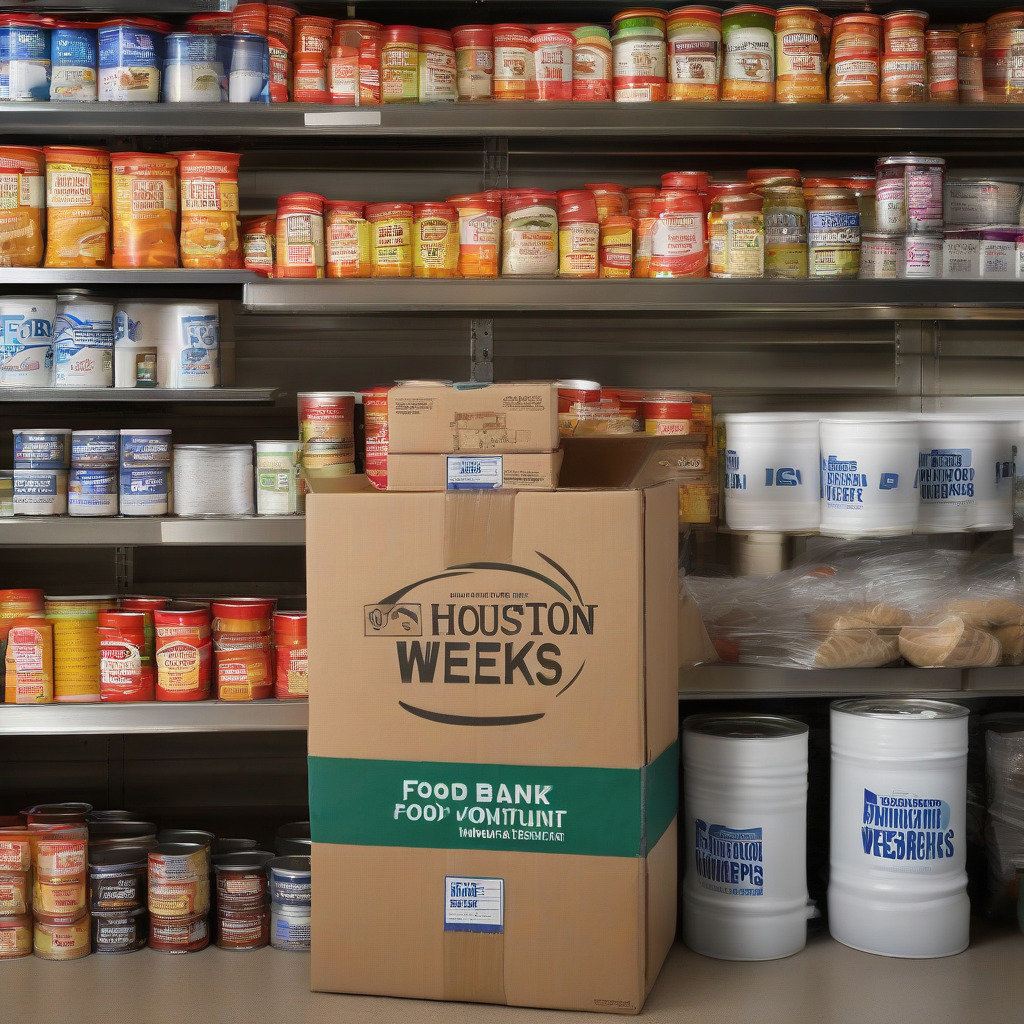
Restaurants don’t donate directly to the Houston Food Bank. The money flows through GHRA. Participating restaurants report their entrée counts at the close of the event, calculate their pledged donation, and remit payment. GHRA aggregates the total, deducts its administrative costs, and transfers the net to the Food Bank as a restricted gift earmarked for hunger relief.
A third-party payment processor handles the transaction infrastructure. Whether those fees are absorbed by GHRA or deducted from the donation pool was a specific question this piece pursued — more on that below. The Food Bank does not independently verify individual restaurant entrée counts. It receives what GHRA sends. If a restaurant underreports participation, the only check is GHRA’s internal process, whatever that looks like. That’s worth sitting with.
What GHRA Reported
CityDesk submitted specific written questions to GHRA in late September 2026: total gross collected, dollar amount retained for administration, net figure transferred to the Food Bank, and whether processing fees came out before or after the transfer.
GHRA confirmed that the 2026 event generated a gross total of approximately $1.73 million in pledged donations. The association retains a flat administrative fee — not a percentage — which for 2026 came to approximately $118,000, covering event staffing, the digital platform, marketing, and PR. A separate payment processing charge of roughly $14,200 was deducted before the transfer.
Net to the Houston Food Bank: approximately $1.597 million.
None of this appeared in GHRA’s press release. The numbers came in response to direct questions. When asked whether GHRA publishes its cost breakdown publicly, a spokesperson said the organization reports financials annually but doesn’t include event-specific line items in press materials. No explanation was offered for why the net figure — the one that actually reaches hungry Houstonians — is missing from standard post-event communications. I’ll come back to that.
To cross-reference GHRA’s figures, CityDesk reviewed the Houston Food Bank’s most recently available Form 990 on ProPublica Nonprofit Explorer. The 2024 filing records a restricted gift from GHRA consistent with what GHRA reported for that year, which at least suggests the stated methodology holds.
Three Years of Numbers, Side by Side
The table below draws on GHRA-provided figures for 2024, 2025, and 2026 and Food Bank confirmation where available. The 2026 Food Bank figure comes from the Food Bank’s own statement to CityDesk; the 2024 and 2025 net figures are cross-referenced against Food Bank 990 filings and prior communications.
| Year | Restaurant Participants | Gross Raised | GHRA Admin + Processing | Net to Houston Food Bank |
|---|---|---|---|---|
| 2024 | 284 | $1.61 million | ~$121,000 | ~$1.489 million |
| 2025 | 271 | $1.68 million | ~$128,000 | ~$1.552 million |
| 2026 | 259 | $1.73 million | ~$132,200 | ~$1.597 million |
Participation has declined for two consecutive years — 284 restaurants in 2024, 259 in 2026, a drop of about 9 percent. That’s not seasonal noise. Yet the gross raised went up both years. The restaurants still in the program are selling more prix-fixe covers than before. Per-restaurant donation averages are rising even as the total participant count falls.
Administrative costs as a share of gross have held flat, from about 7.5 percent in 2024 to 7.6 percent in 2026. GHRA’s cost structure isn’t outrunning the event’s growth, which is the thing you’d worry about if this were going in the wrong direction.
Who Showed Up in 2026 and Who Didn’t
Comparing the 2026 HRW participant directory against the archived 2025 directory retrieved via the Wayback Machine shows a clear pattern. Large multi-unit restaurant groups are increasingly absent. Independent and chef-driven restaurants keep showing up.
Pappas Restaurants — Pappadeaux, Pappasito’s, Pappas Steakhouse, and several other Houston concepts — did not appear in the 2026 participant directory. Pappas was present in 2024 across multiple concepts. CityDesk asked about their 2026 status. The company didn’t respond. Their absence from a public directory is a matter of record; the reason isn’t.
Landry’s-affiliated concepts were similarly absent. That includes Landry’s Seafood House and other Fertitta Entertainment properties around Houston. Vic & Anthony’s Steakhouse Downtown didn’t appear either. Landry’s corporate communications didn’t respond to inquiries.
Opting out of HRW isn’t evidence of anything bad. Restaurants leave restaurant weeks for operational reasons — staffing constraints, menu format, margin pressure — that have nothing to do with their charitable intentions. Large, high-volume groups might reasonably decide that a $1-per-entrée pledge across hundreds of covers creates real administrative work for a fixed donation that doesn’t scale with their actual revenue. That logic makes sense. But the pattern is still worth naming: large groups pulling back while independent restaurants carry more of the load.
By corridor, Montrose held steady at roughly 47 participants. Xochi, Caracol, and Tiny Champions were all listed. Midtown dropped from about 31 participants in 2025 to 26 in 2026. The Galleria saw the sharpest falloff — several chain-adjacent concepts that had participated in 2024 and 2025 were gone. The Heights held at around 29 restaurants. Downtown, excluding hotel dining rooms, was thin: approximately 18 participants. For context on how hotel dining fits into Houston’s broader food landscape, our food & hospitality coverage tracks these trends throughout the year.
What the Houston Food Bank Confirmed
The Houston Food Bank told CityDesk it received a restricted gift from GHRA in 2026 of $1,594,812. That’s close enough to GHRA’s stated $1.597 million that the difference is almost certainly wire transfer timing or final processing rounding.
A Food Bank spokesperson described HRW as one of the organization’s most consistent annual restricted-gift sources and confirmed the internal accounting matched GHRA’s wire documentation.
The Food Bank’s standard conversion metric is approximately $1 providing three meals through its distribution network. Applied to the confirmed net of $1.594 million, the 2026 Houston Restaurant Weeks event generated the equivalent of roughly 4.78 million meals distributed through Food Bank operations and its 1,500 partner agencies across 18 southeast Texas counties.
That number has never appeared in a single piece of HRW post-event coverage, because no outlet thought to ask the Food Bank to apply its own metric to the net transfer rather than the headline gross figure. If you’ve been going to HRW dinners for years and feeling good about it, you should — but this is what good actually looks like when you run the numbers.
Asked whether the Food Bank has ever publicly disclosed what it receives from GHRA as a separate line item, the spokesperson said the organization doesn’t break out individual donor or event sources in public communications. The 990 filing is the mechanism by which restricted gift sources can be traced, and only for completed, public years.
How Dallas Handles This Differently
Dallas Restaurant Week, administered by the Dallas Restaurant Association and benefiting the North Texas Food Bank, uses a structurally identical per-entrée model — $1 per lunch or brunch entrée, $2 per dinner entrée. For 2025, the most recent year with confirmed figures, Dallas raised a gross total of approximately $1.42 million from roughly 230 restaurants. The stated net to the North Texas Food Bank was $1.31 million, implying an administrative cost structure of around 7.7 percent of gross — essentially the same as Houston’s.
The difference is that Dallas publishes the gross-to-net math in its post-event press release. Explicitly. Without media prompting. The administrative fee retained and the net figure transferred both appear in the recap that goes to reporters. Houston’s does not include them.
This isn’t a structural problem with how Houston Restaurant Weeks operates. It’s a choice about what goes in a press release.
COOLinary New Orleans, administered by the New Orleans CVB, doesn’t have a per-entrée charity component at all. It’s structured as a summer dining promotion — prix-fixe menus at reduced prices to drive covers during the slow season — with no mandated per-entrée donation. A different model, not a cautionary tale.
What the Math Actually Tells You
The net figure is $1.594 million reaching the Houston Food Bank after costs. For a charity fundraiser built into the commercial mechanics of a restaurant month, a net-to-gross ratio of roughly 92 percent is good. The 7.5–7.6 percent administrative cost rate sits well below the 10–15 percent commonly cited as reasonable for event-based charity programs, and it’s been flat for three years. Your $2 dinner contribution moved with very little friction.
The participation decline is the harder thing to watch. Twenty-five fewer restaurants in 2026 than in 2024 means fewer Houstonians encounter the program when they’re deciding where to eat. The event’s reach depends on saturation — on a reasonable expectation that wherever you eat out during the event window, the restaurant is probably in. As large groups pull back and the participant list concentrates in Montrose and the Heights, that expectation erodes. Diners in the Galleria and Memorial areas may simply not run into a participating restaurant. That’s a slow problem, but it’s moving in one direction. The Houston Restaurant Openings and Closures Tracker for 2026 provides additional context on which concepts are active and where participation gaps are most likely to form.
The single most concrete fix would cost GHRA nothing: put the gross-to-net breakdown in the same press release that announces the headline total. Dallas does it. The Food Bank already confirms the net figure internally. GHRA knows both numbers the moment the books close. The only reason a Houston diner has never seen the math in a post-event press release is that GHRA hasn’t been asked to put it there — and nobody pushed until now.
CityDesk Houston contacted Pappas Restaurants and Landry’s corporate communications for comment on their 2026 HRW participation. Neither responded by press time. GHRA and Houston Food Bank communications staff responded to written questions and are quoted or characterized directly from their responses.