Where to Find West African Food in Houston and What Neighborhood to Start In
The Nigerian, Ghanaian, and Senegalese restaurant corridor in Southwest Houston is one of the most concentrated in the South. Almost entirely absent from mainstream food coverage, it feeds a substa…

The Nigerian, Ghanaian, and Senegalese restaurant corridor in Southwest Houston is one of the most concentrated in the South. Almost entirely absent from mainstream food coverage, it feeds a substantial Nigerian diaspora population, along with Ghanaian, Liberian, and Senegalese communities.
The search results for West African food in Houston are a graveyard of outdated Yelp tabs and a single blog post from 2019 that lists three restaurants, two of which have since moved or closed. That’s the entire English-language coverage record for a food corridor serving tens of thousands of people — Nigerian, Ghanaian, Liberian, Senegalese — who have built self-sufficient commercial infrastructure across Alief, Hillcroft, and the Fort Bend fringe. African grocery stores, money transfer shops, hair braiding salons, churches, restaurants. None of this requires a food journalist’s discovery. It has been here, feeding people, for decades — long before any food writer thought to look.
This guide is written for the first-timer who wants to eat well and show up prepared, and for the community member who wants a reliable reference for spots beyond their immediate neighborhood rotation. It’s not a ranked list. It’s a map.
Start in Alief — This Is the Neighborhood Anchor
If you have one afternoon, start in Alief. The 77072 and 77099 ZIP codes are the highest-density zone for West African restaurants, grocers, and community institutions in the city — probably the most concentrated such cluster in the South, sitting in a stretch of Southwest Houston that most of the city drives past without a second look.
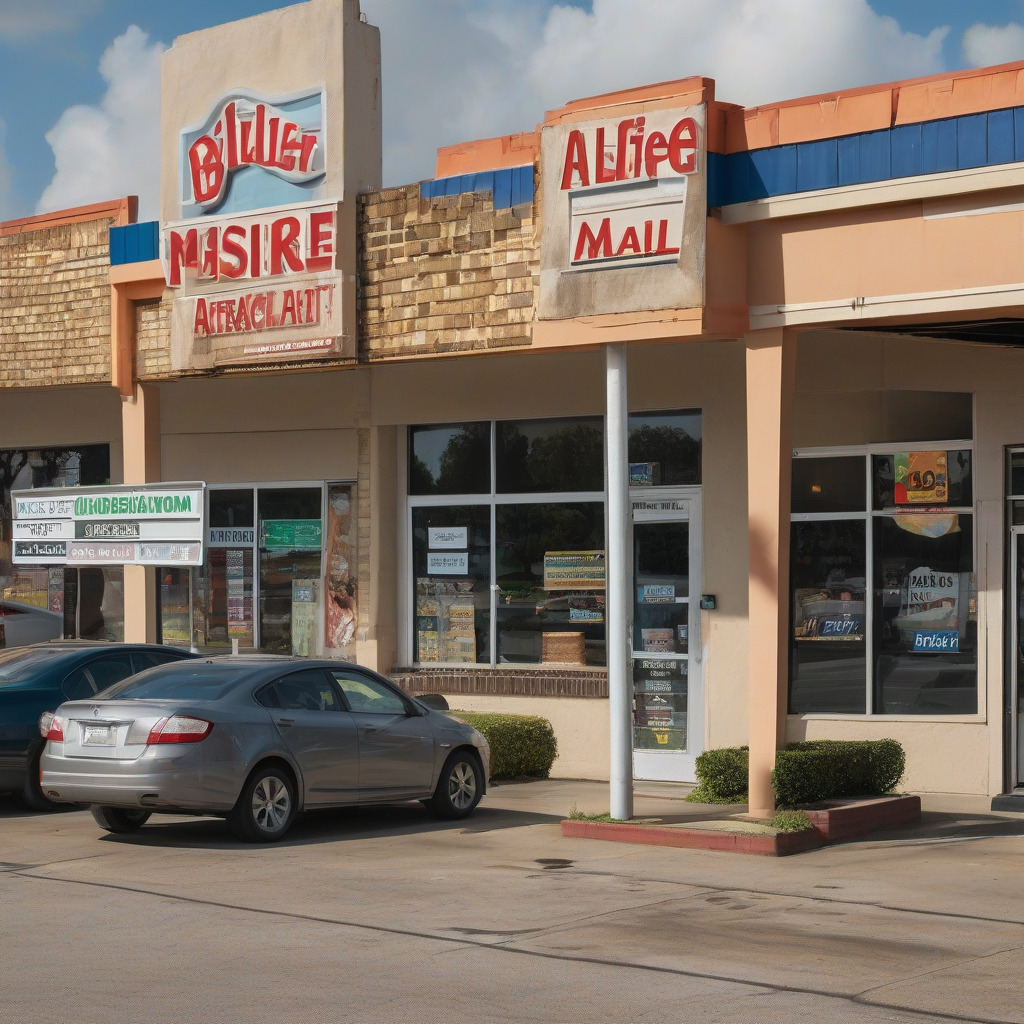
The primary strip runs along Bellaire Boulevard between Beltway 8 and Highway 6, a roughly four-mile stretch of low-slung strip malls that could easily read, at highway speed, as ordinary suburban commercial sprawl. Drive it slowly and the picture changes. African grocery stores anchor multiple plazas. Signage in English mixes with Nigerian brand names. The lunch crowd at a carryout spot on a Tuesday afternoon is real and local, not tourist-driven. This neighborhood doesn’t exist for outsiders. That’s exactly why the food is good.
Harwin Drive, running roughly parallel a few miles north, contributes a secondary strip of West African commercial activity, including food operations that don’t always appear on mapping apps.
What makes Alief a stable food scene rather than a transient cluster is the supporting infrastructure. Labadi African Market and Synergy African Market anchor multiple plazas in the corridor, both on or near Bellaire Boulevard — though hours and exact locations should be confirmed before you make a trip. These are not specialty food boutiques. They’re full-service community grocers stocking fresh iru (fermented locust beans), dried crayfish, stockfish, Maggi seasoning blocks, egusi, and the palm oil that underlies virtually all West African cooking here.
A well-stocked, high-volume grocery store tells you something crucial about a diaspora food scene: the community is large enough to sustain real supply chains, and those supply chains are what keep the restaurants functioning. Several large churches serve thousands of members weekly and are where some of the best cooking in the corridor actually surfaces — fellowship lunches, holiday celebrations, events you’re not going to walk into off the street. But they’re part of why the commercial scene holds together the way it does.
The Secondary Zones — Hillcroft, Bissonnet, and the Fort Bend Fringe
Hillcroft Avenue from Westheimer south to Bissonnet, and the Bissonnet corridor running west toward the Beltway, forms the second zone worth knowing. Restaurant and grocery density here is lower than Alief’s Bellaire strip, but Hillcroft-Bissonnet was a Nigerian-American commercial anchor before the population center shifted further southwest. Some of the earlier West African businesses in Houston planted here first.
The Nigerian-American population has pushed steadily into Missouri City and Sugar Land — suburban homeownership corridors — while maintaining commercial ties to the original urban cluster. Missouri City now has a meaningful Nigerian-American residential presence; Sugar Land a growing one. Restaurant infrastructure out there isn’t as dense. You’re more likely to find a catering operation or a carryout-only spot than a full sit-down restaurant. The demand is there, though. Spring Branch and Northwest Houston have some West African restaurants and grocers, but the concentration doesn’t match what’s in the Southwest.
For a first visit: Bellaire Boulevard in Alief, with Hillcroft as a secondary stop. The effort-to-reward ratio is better.
Nigerian Food in Houston — What to Order and What to Expect
Nigerian cuisine dominates this corridor, and the range is wider than most outsiders realize. Fast-carryout rice plates exist alongside full weekend sit-down meals with multiple courses.
Jollof rice is the entry point — and not the simplified version you may have encountered at a fusion spot or a grocery store hot bar. In a Nigerian restaurant, jollof is smoky, tomato-forward, and deeply spiced. It’s cooked in a covered pot until the bottom layer develops a slight char that infuses the entire rice with what Nigerians call “bottom pot” flavor. It’s almost never a side dish in the perfunctory sense. It’s the centerpiece, and a good version will hold your attention.
Egusi soup is made from ground melon seeds cooked down with palm oil, leafy greens, dried fish, and a protein of your choice. Thick, almost creamy, with a rich and slightly bitter undertone from the greens. Order it with pounded yam. You tear off a ball, dip it into the soup, and eat it in one motion. Don’t use a fork for the pounded yam. Nobody will say anything, but you’ll get a look.
The term “swallows” covers the starchy dough-like bases served alongside soups. Pounded yam is the most requested, but eba (cassava), fufu (fermented cassava), amala (yam flour), and semo are all common. Regulars have strong preferences — ask anyone at the next table if you want a fifteen-minute education. For a first visit, pounded yam is the most forgiving.
Suya is grilled, skewered beef or chicken rubbed with a spiced groundnut paste before cooking over charcoal, finished with additional spice mix and often served with sliced onions and tomatoes. Some spots sell it by the pound, others by the stick. It is technically a snack. Order more than you think you need.
Pepper soup is a thin, intensely spiced broth — catfish, goat, chicken, or offal — with a medicinal warmth that makes sense at 10pm on a Saturday in a way it doesn’t quite at noon on a Tuesday. Puff puff, fried dough balls dusted with sugar, is the most approachable introduction to Nigerian food and shows up at nearly every spot. If you’re uncertain about anything else, order puff puff. You won’t regret it.
Buka Restaurant has long been one of the most cited Nigerian restaurants in Houston, known for its egusi soup and pepper soup. It’s in the Harwin Drive area. Call ahead to confirm the current address — online listings for spots in this corridor are frequently out of date. The carryout packaging is styrofoam and plastic bags. That’s normal here, and the food inside is why people keep coming back.
Eko Kitchen operates in Southwest Houston and has built a community reputation for its carryout. Same rule applies: call ahead to confirm hours before making a trip. For a broader look at how Houston’s food & hospitality coverage tracks emerging neighborhood dining scenes, the Alief corridor is conspicuously underrepresented.
Beyond those, a number of carryout spots in Alief and along Bissonnet don’t appear prominently on Google Maps — they’re found through community referrals. Several are home-based or suite operations that take orders through WhatsApp and maintain Instagram presences without formal storefronts.
Most West African restaurants in this corridor are carryout-primary. That’s not a lesser experience. It reflects how this food is actually consumed. Portions are almost universally generous. A rice-and-stew plate — jollof or white rice with a protein and soup — runs around $12–18. A full sit-down meal with pepper soup, a swallow with egusi, and a protein runs $20–28 per person, more or less.
Ghanaian Food in Houston — Similar Pantry, Different Plate
The Ghanaian community in Houston is smaller than the Nigerian but well-established, concentrated in Missouri City and the Southwest Houston corridor. Ghanaian restaurants are fewer and dramatically less visible on mainstream platforms, which creates the misleading impression that Ghanaian food doesn’t exist here. It does — though it surfaces more often through catering, community events, and church fellowships than through branded storefronts.
Ghanaian jollof uses long-grain rice in a tomato and pepper base, but the smoke level is lower and the flavor profile cleaner than its Nigerian counterpart. Ghanaians and Nigerians will dispute this characterization. (More on that below.) For practical orientation: Ghanaian jollof is more restrained, Nigerian jollof is more assertive, and both are worth trying on their own terms.
Fufu in Ghana is made from cassava and plantain pounded together — or in restaurants, often from a flour mix — producing a slightly stretchier, slightly sweeter dough than Nigerian pounded yam. It pairs primarily with groundnut soup, a peanut-based soup that’s rich, reddish-brown, and warming, or light soup, which is thin, clear, tomato-and-pepper-based, and exactly right when you’re fighting a cold or a Houston August.
Kelewele is the Ghanaian street-food item that doesn’t have a direct Nigerian equivalent: ripe plantain cubed and fried with ginger and cayenne, sweet and hot at once. It works as a side, a snack, or alongside groundnut soup. If you encounter it on a menu or at a community event, order it. No exceptions.
Rice balls (omotuo) — cooked rice packed into smooth spheres, served with soup — are a comfort food in the deepest sense, and anyone who grew up eating Ghanaian food will clock them immediately as home cooking.
Missouri City has the most reliable Ghanaian restaurant activity in the metro. Within Houston proper, the Southwest corridor has some Ghanaian-owned carryout operations, but the storefront scene is thin enough that asking at a Ghanaian-owned African grocery store or contacting the Ghanaian Association of Houston is the most reliable sourcing method. Catering operations fill a significant portion of the Ghanaian food scene here — cooks preparing full menus for private events, church fellowships, and holiday celebrations, some of whom will accommodate advance carryout orders if you reach them directly.
The Jollof Wars Are Real — and Knowing the Difference Makes You a Better Diner
The Nigeria-Ghana jollof rice debate is the most publicly known West African food argument in the English-speaking world, and it’s treated as a joke often enough that the genuine culinary information embedded in it gets lost.
Nigerian jollof is cooked over high heat in a covered pot, with the tomato-pepper base cooked down aggressively before the rice goes in. The final stage involves a low-heat period that lets the bottom of the pot scorch — intentionally. The smoke from that controlled char circulates through the rice, producing the smokiness that Nigerian jollof fans consider non-negotiable.
Ghanaian jollof uses a broadly similar method but with meaningful differences. The fat content is typically lighter. Pepper is present but not the primary driver. The smoking step is either absent or much shorter, so the tomato flavor comes through more cleanly. The result is a rice dish that lets the protein and accompanying soup carry more of the meal’s weight, rather than competing with it.
The practical implication: visit a Nigerian spot for jollof when you want the rice to be the centerpiece. Visit a Ghanaian spot when you want to see how the full meal works as a system. If you only try one, you’re missing the argument — and honestly, the argument is half the fun. My honest take: Nigerian jollof is the more dramatic dish. Ghanaian jollof is the more generous one. Both claims will get you in trouble with someone.
Senegalese, Liberian, and What Else the Corridor Actually Holds
The Senegalese community in Houston is one of the most underreported in local media. Senegalese food is almost entirely invisible in English-language restaurant coverage despite a real and active community in Southwest Houston — and that’s a genuine shame, because the food is worth seeking out.
Thiéboudienne (often spelled ceebu jën) is the national dish: a one-pot rice dish cooked in a tomato and fish base with vegetables, deeply flavored and technically demanding. Once you’ve had a good version, the invisibility of Senegalese food in Houston food media feels less like an oversight and more like a failure. Yassa is chicken or fish marinated in onions and lemon, slow-cooked until the onions caramelize into something approaching a savory jam. It’s simple and remarkable.
Senegalese food in Houston operates primarily through catering, community events, and informal channels. The most reliable sourcing path runs through mosques — the Senegalese community in Southwest Houston has significant mosque attendance, and communal meals are a real access point if you have community connections. The West African grocery stores in Alief, particularly Labadi and Synergy, are the most reliable intelligence source: staff know who is cooking, who takes advance orders, when community events with food are scheduled. Ask directly. You’ll get better information there than from any app.
The Liberian community in Houston is one of the largest Liberian diaspora concentrations in the United States — a fact that surprises many Houstonians who aren’t aware of the history of Liberian immigration to Texas. Liberian food — dumboy (cassava dough similar to fufu) and pepper butter soup (a rich, peppery beef or chicken soup) — doesn’t currently exist in a consistent public storefront in the corridor. It surfaces at community events and through catering operations serving the Liberian diaspora for celebrations. The Liberian Community Association of Houston is your best first contact.
Ivorian and Francophone West African food doesn’t appear in English-language Houston coverage at all. There are Ivorian community members in the corridor, and the cuisine has genuine fans, but no dedicated Ivorian restaurant has been consistently operating under a public-facing storefront here. That’s a gap — and probably one that won’t stay this wide forever.
Cash, Cards, and When to Show Up
Cash preference is strong across most West African carryout and restaurant operations in the Alief-Hillcroft-Bissonnet corridor. This isn’t an inconvenience quirk. It’s a normal operating reality, and showing up without cash at a cash-only spot creates an awkward situation for everyone. ATMs are available in most of the strip-mall anchors in Alief, but counting on an in-restaurant ATM is unreliable. Withdraw cash before you go.
Some spots take cards. Buka and a handful of the more established sit-down operations have card and tap-to-pay capability, but verify before you assume — a Google Maps listing that hasn’t been updated in two years is not a reliable source on payment policy.
Saturday is the day to visit. Weekend service, particularly Saturday afternoon, is the most reliable operating window across the corridor. Full menus are available, kitchens are at full capacity, and the community actually eats out. Sunday service is available at many spots but is sometimes shortened after church hours. Weekday lunch is the highest-risk window — some operations are technically open but running limited menus. Saturday isn’t a suggestion. It’s the correct day for a first trip.
Ramadan affects hours at some operations. Senegalese and Northern Nigerian Muslim-owned spots may adjust service windows. Call ahead rather than rely on a static listing.
Nigerian Independence Day on October 1 generates a significant weekend of community events, pop-up food, and restaurant specials across the Southwest corridor. Ghanaian Independence Day on March 6 generates similar, if somewhat smaller, activity. These are the two dates worth marking if you want to encounter food that doesn’t surface in regular restaurant rotation — Ghanaian, Liberian, and Senegalese cooking that only appears at community celebrations. If you go once and get the bug, plan around these weekends. Our Houston Restaurant Openings and Closures Tracker for 2026 also notes when new West African storefronts enter the market.
How to Find the Spots That Aren’t on Yelp
West African food operations in Houston open, move, shift to catering-only, and change hours without updating any platform. A list of addresses will be partially wrong within eighteen months. A sourcing skill works indefinitely.
African grocery stores are the primary intelligence hub. Labadi African Market and Synergy African Market in Alief are full-service community anchor stores whose staff have current, granular knowledge of the restaurant scene that no app comes close to matching. Ask who is cooking right now. Ask who does catering. Ask where the Ghanaian food is. You’ll be pointed toward operations with no online presence whatsoever. This is, honestly, the most useful thing in this guide.
Facebook groups function as real-time bulletin boards. Active Nigerian community Facebook groups in Houston — search the Houston Afrobeats community and Nigerian community groups — post carryout hours, menu changes, pop-up announcements, and event catering in real time. They’re more accurate than Google Maps for current operating status, sometimes by months.
Instagram is where many carryout operations actually live. Newer, smaller, and home-based operations maintain active accounts and take orders through DMs or WhatsApp without ever building a website. Searching Instagram for Houston West African food returns real, active operations that don’t show up in Google at all.
Community organizations connect to the non-storefront economy. The Ghanaian Association of Houston and the Liberian Community Association of Houston both have public presences and can connect you to events and cultural celebrations that include food. For Senegalese food, mosque networks in Southwest Houston are the most reliable path. For Ivorian food, the broader Francophone African community in Houston is the starting point.
The best knowledge about where to eat in this corridor lives in the community. Every grocery store staff member, every regular at Buka on a Saturday, every person walking out of Labadi with a stockfish purchase — these people have better information than Yelp. Ask them.
The West African food corridor in Southwest Houston isn’t a discovery waiting to happen. It has been feeding tens of thousands of people, reliably and well, for years. The gap has been in English-language coverage, not in the food. Show up on a Saturday, bring cash, order the pounded yam with egusi soup. You’ll need at least two trips to understand what’s here. That’s not a problem.