A Plain-Language Guide to Building an ADU in Houston in 2026
No zoning code doesn't mean no rules. Here's exactly what Chapter 42, deed restrictions, and the flood maps actually require before you break ground.

No zoning code doesn’t mean no rules. Here’s exactly what Chapter 42, deed restrictions, and the flood maps actually require before you break ground.
Start Here — What One Garden Oaks Family Actually Built, and What It Cost
When Marcus and Diane Trevino decided to build a backyard cottage on their 6,500-square-foot lot on Lamonte Lane in Garden Oaks, they figured Houston’s lack of a zoning code would make the process straightforward. They were right about that. They were also wrong.
The cottage they completed in late 2024 is 480 square feet — full bath, full kitchen, pier-and-beam foundation, sitting about 12 feet behind their 1950s ranch house. Total construction cost: $138,000. That included a $9,500 concrete driveway extension they hadn’t originally planned for, added to satisfy the off-street parking requirement.
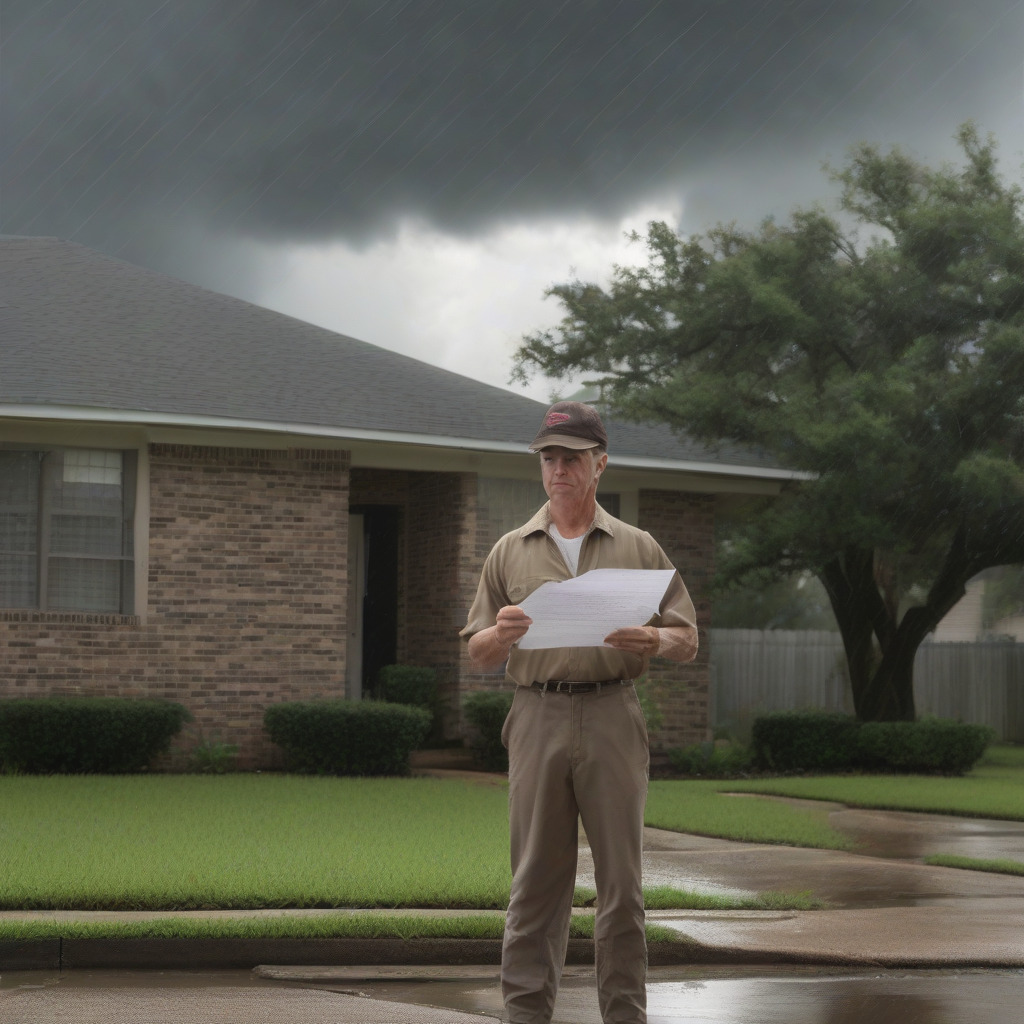
Permitting took 11 weeks from first submittal to permit issuance. One resubmittal cycle. A Public Works and Engineering reviewer flagged that their civil drainage plan didn’t account for the increased impervious cover on the rear of the lot. Their designer had submitted architectural and structural drawings without a grading and drainage exhibit. One correction round and three weeks later, the permit issued. They broke ground in February 2025 and got their certificate of occupancy in May.
That drainage note is the surprise that probably delays more Houston ADU projects than anything else, and it’s almost never mentioned in the “no zoning!” pitch.
Their experience is typical for inner-loop lots. The paperwork is more involved than most ADU construction packages advertise, but it’s manageable if you know which rules to look up before you hire anyone.
Houston Has No Zoning — But That Doesn’t Mean Anything Goes
The standard introduction to Houston real estate always mentions the absence of a citywide zoning code. It’s true. There’s no residential zone, no commercial zone, no mixed-use overlay map of the kind you’d find in Dallas or Austin. Houston will tell you this like it’s a selling point, and honestly, sometimes it is.
What Houston has instead is Chapter 42 of the Code of Ordinances, which governs land development and subdivision, and a patchwork of private deed restrictions that function as neighborhood-level zoning in everything but name.
For ADU builders, this distinction matters enormously. Chapter 42 sets the binding public-law requirements: minimum lot sizes, setbacks, lot coverage ratios. These apply citywide and are enforced through the permit process. You cannot get a building permit that violates Chapter 42.
Deed restrictions are different — they’re private contracts recorded in Harris County’s deed records. Many Houston neighborhoods, particularly those developed between the 1920s and 1970s, have recorded restrictions that prohibit “more than one single-family residence per lot” or require minimum square footages that effectively kill small ADUs. These are enforced not by the city but by property owners’ associations, civic clubs, and neighbors with legal standing to sue.
Here’s where it gets genuinely unsettling: The city will sometimes issue a building permit on a lot subject to a deed restriction prohibiting the structure, because the city isn’t a party to that private contract. You could pull a permit, spend $150,000, and still face a lawsuit from your HOA. The City of Houston’s permit office does not adjudicate deed restrictions. This happens rarely, but it happens. Check your deed records before you pay a designer anything.
The ADU-friendly inner-loop neighborhoods are those where deed restrictions have expired, were never recorded, or are weakly enforced: Garden Oaks, Oak Forest, Acres Homes, Kashmere Gardens, the East End, parts of Montrose, most of the Third Ward and Fifth Ward. Neighborhoods with active civic clubs and regularly renewed restrictions — Meyerland, Braeswood Place, most Memorial-area subdivisions — carry real legal risk if you build without checking first. West University Place is technically a separate municipality and has its own code entirely.
Historic districts add another layer. If your property is within a City of Houston historic district — portions of the Heights, Freedmen’s Town/Fourth Ward, Midtown — you’ll need a Certificate of Appropriateness from the Houston Archaeological and Historical Commission before the building department will issue a permit. HAHC reviews design compatibility, materials, and massing on a monthly meeting cycle. Miss the submission deadline and you’re waiting another four to six weeks. Factor this into your schedule before you sign a construction contract.
To check deed restrictions: pull your property’s chain of title through the Harris County Clerk’s real property records at hcrecords.harriscountytx.gov, search by subdivision name, and look for any recorded “Declaration of Restrictions.” It’s free, it’s public, and it takes about 20 minutes.
The Permit Checklist — Every Pull You Need, in Order
Building an ADU in the City of Houston requires multiple separate permits. Here’s the full stack for a detached backyard cottage.
The building permit is the primary one and covers the structure itself. You submit through the City’s CSS portal and plans are reviewed in ProjectDox, Houston’s electronic plan review system. The package requires a site plan showing lot dimensions, existing structures, proposed ADU footprint, setbacks, and impervious cover calculations, plus architectural drawings and structural drawings stamped by a Texas-licensed engineer. As of 2026, base fees for a residential structure in this size range run roughly $800–$1,500.
Trade sub-permits come after the building permit issues. Your licensed master electrician pulls the electrical sub-permit — which needs a service entry plan if the ADU gets its own meter, or a sub-panel diagram if it shares the house service (roughly $150–$300). Your licensed plumber pulls the plumbing sub-permit with a water and waste line plan ($200–$400 depending on fixture count). Your HVAC contractor pulls the mechanical permit ($150–$250). None of these are pulled by you; they’re pulled by the contractors.
The drainage review is where projects stall. Any ADU that adds impervious cover — a new concrete pad, extended driveway, covered patio — will likely trigger a grading and drainage review by Public Works and Engineering. There’s no separate fee; it runs through the building permit process. But it requires a grading and drainage exhibit from a licensed civil engineer or surveyor, which typically runs $800–$2,000 as a separate deliverable. This is what the Trevinos were missing. It’s the most common first-submittal comment on new detached ADUs in Houston, and it’s also the most predictable. Just include it upfront.
If your ADU requires a new or widened driveway curb cut, you’ll need a driveway permit from the Department of Public Works ($75–$150). If your property or any portion of the proposed construction falls within the HCFCD’s regulated floodplain or a designated bayou buffer zone, you’ll need a separate Harris County Flood Control District development permit — issued by the county, not the city, on its own timeline. Two bureaucracies, two clocks.
All City of Houston permit applications are submitted at houstonpermittingcenter.org.
How Long Permitting Actually Takes, and Where It Stalls
Based on timelines reported by Houston builders and applicants in 2024–2025: a clean submittal for a garage conversion with no drainage issues takes roughly 4–8 weeks from application to permit issuance. A new detached cottage requiring one resubmittal runs 8–16 weeks. Projects that also need a Harris County Flood Control permit can push 20 weeks or longer.
The bottleneck is the Public Works and Engineering plan review queue, which has historically run 3–5 weeks for an initial review. Plans come back with comments on the majority of new detached ADU submittals, according to local permit expeditors. You then have 30 days to respond. The resubmittal goes back into the queue for another 2–3 week review cycle. One comment round easily adds six to eight weeks.
The most common comment triggers: incomplete impervious cover calculations, missing drainage exhibit, structural plans referencing an outdated wind-load standard, site plans that don’t clearly dimension all setbacks. Designers who’ve run multiple Houston ADU projects know these traps. A designer doing their first one often doesn’t, and you’ll absorb the cost of that learning curve in schedule, not money — at least not directly.
The City offers an Express Review option through the Houston Permitting Center, currently around $500–$800 for a residential project of this scope, which is supposed to reduce initial review turnaround to roughly 10 business days. Builders who’ve used it confirm the first review does come back faster. But if there are comments — and there usually are — the resubmittal still goes into the standard queue. One Houston permit expeditor put the calculus plainly: “Use it when you know you’re right, not when you’re hoping you’re right.”
Will Your Lot Actually Fit an ADU? A Feasibility Check You Can Run Yourself
Before you hire a designer, you can do a rough feasibility screen in about 30 minutes using public data. It won’t replace a designer’s precise calculations, but it’ll tell you whether the calls are worth making.
Pull your lot dimensions from HCAD at hcad.org — search by address and find the “land” section. Note your lot width, depth, and total square footage.
Chapter 42 sets these minimum setbacks for single-family residential lots: 25 feet from the front property line (or the average setback of adjacent structures if a building line has been established), 10 feet from the rear property line for a detached accessory structure, and 3 feet from each side property line for accessory structures. These are minimums. Deed restrictions may require more.
Chapter 42 also caps total impervious cover — all hard surfaces including roofs, driveways, patios, and walkways — as a percentage of lot area. The specific cap depends on lot configuration, but a working figure for a standard single-family lot is roughly 65–70%. Add up all existing hard surfaces, add the proposed ADU footprint plus any new concrete, and see where that lands.
On a standard postwar lot — 50 feet wide by 120 feet deep, 6,000 square feet total — the math works out like this: 120-foot depth, minus 25-foot front setback, minus 10-foot rear setback, minus the existing house footprint of roughly 1,200–1,500 square feet. You’re left with somewhere around 1,500–2,000 square feet of rear yard. A 400–600 square foot footprint fits comfortably. This is why Garden Oaks and Oak Forest lots are such natural candidates — those postwar dimensions were almost accidentally well-suited for a backyard cottage.
What almost never works: subdivided townhome lots. The resplatting that transformed much of Midtown, Montrose, and the Heights in the 2000s and 2010s produced lots of 1,500–2,500 square feet, typically 16–22 feet wide. After 3-foot side setbacks on each side, you have 10–16 feet of usable rear width. After lot coverage calculations, there’s often no buildable footprint left. If you’re on a subdivided townhome lot, check the math before you pay a designer to tell you what you could have figured out at hcad.org.
City of Houston Limits vs. Unincorporated Harris County — Two Very Different Paths
If you live in Cypress, Spring, unincorporated Katy, northwest Harris County, or the Pearland and Friendswood edges, the regulatory picture changes substantially.
Most of unincorporated Harris County has no countywide building permit requirement for residential construction. This isn’t a loophole — it’s just how the county is structured. You’re not legally required to pull a building permit before building an ADU in most unincorporated areas. No county inspections, no plan review queue, no certificate of occupancy process through Harris County.
But an unincorporated lot is not a free-build lot. Deed restrictions and MUD covenants still apply, and Municipal Utility Districts govern much of suburban Harris County through recorded covenants that often prohibit additional dwelling units or regulate setbacks and structure types. Pull those documents from the Harris County Clerk’s records before you build anything.
Flood plain permits are also required regardless of location. If any portion of your property falls within a FEMA Special Flood Hazard Area, you need a development permit from Harris County Flood Control District before you build. This applies inside city limits and out. HCFCD’s review typically runs 3–6 weeks for a straightforward residential project.
Here’s the honest trade-off, and I think it’s worth naming directly: no mandatory inspections means no independent verification that the work meets any standard. An ADU built in unincorporated Harris County without permits can be difficult to insure and may complicate refinancing. You’re trading a faster path for less institutional assurance. Plenty of people make that choice — but it’s a choice, not just a shortcut.
The Houston Wildcard — Flood Plains and What They Do to Your Budget
Roughly a third of Houston parcels carry some FEMA flood plain designation. This is not a minor footnote. It’s the single biggest variable in ADU construction costs for a large portion of the city, and it surprises homeowners who’ve never flooded and never thought much about it. Harvey scrambled a lot of assumptions about which neighborhoods were “safe,” and the flood maps have been slowly catching up.
In an AE zone — the most common Special Flood Hazard Area designation, indicating a 1% annual chance of flooding — any new structure must be elevated to or above the Base Flood Elevation shown on the FEMA map. The City of Houston requires an additional foot of freeboard above BFE as a local amendment. Depending on your parcel’s existing grade, this can mean your ADU needs to sit 1 to 3 feet above natural grade, sometimes more. That elevation has to come from somewhere: either a pier-and-beam foundation with the finished floor raised on piers, or an elevated concrete slab. Both cost meaningfully more than a standard slab-on-grade.
A family in Meyerland finished a 550-square-foot elevated backyard cottage in early 2025. Their lot sat in an AE zone with a BFE of approximately 2 feet above natural grade. The one-foot freeboard requirement put their finished floor at 3 feet above grade. Their engineer specified a reinforced pier-and-beam foundation, and the foundation work alone — piers, grade beams, floor framing, site prep — cost $38,000. Total project cost came in at $197,000, against an estimated $145,000 for the same structure on a non-flood-zone lot elsewhere in the city. The elevation premium was about $52,000. That’s more than a quarter of the total project cost, and it doesn’t show up in any ADU cost estimate that doesn’t ask about your flood zone first.
How to check: Go to the FEMA Flood Map Service Center and enter your address. Then cross-reference with the Harris County Flood Viewer at harriscountyfemt.org, which uses post-Harvey modeling that’s more current than the official FEMA maps for many inner-loop and bayou-adjacent properties. If you’re near Brays, White Oak, Greens, Hunting, or Buffalo Bayou, also check whether you’re within HCFCD’s bayou buffer zone — that carries its own development restrictions even outside the mapped floodplain.
What It Actually Costs to Build in Houston
Houston construction costs run meaningfully below the Texas coastal and Hill Country markets. Local contractors report labor costs roughly 15–25% below Austin and 30–40% below DFW. Material costs — lumber, HVAC equipment, electrical components — remain elevated from post-2022 supply chain and tariff effects, so if you’re working from a quote that’s more than a year old, get a new one.
Garage conversions run $45,000–$90,000. The lower end assumes minimal structural changes and a straightforward HVAC installation. The upper end reflects plumbing rough-in in a slab structure, a full kitchen, and significant electrical upgrade.
An above-garage apartment — new second story over an existing detached garage — runs $90,000–$160,000. Structural engineering costs are higher here; the existing foundation and walls have to be evaluated and often upgraded. Budget $3,000–$6,000 for the engineer alone.
A detached backyard cottage on a standard lot with no flood plain complications (400–600 sq ft, slab foundation, new construction) costs $110,000–$200,000. The Trevino project — $138,000 for 480 square feet in Garden Oaks — sits comfortably in the middle of that range.
Add an AE flood zone and elevated construction, and the same cottage runs $150,000–$250,000 or more. The Meyerland project at $197,000 for 550 square feet is representative.
On top of construction, budget for design and engineering separately. Architect or designer fees typically run $6,000–$15,000 depending on complexity and whether the designer handles permit coordination. Civil engineering for drainage and site work adds $1,500–$3,500. Structural engineering adds $2,000–$5,000. None of these are optional for a detached new-construction ADU in Houston, and they’re consistently the part of the budget that first-timers underestimate most. They’re also the part that saved — or would have saved — the Trevinos a resubmittal cycle if they’d gotten the drainage exhibit right the first time.
Taxes, Rentals, and the Questions Readers Search Late at Night
Property taxes: When you pull a building permit, HCAD is notified through the permit process and will schedule an appraisal update. For a 500-square-foot cottage in Garden Oaks or Oak Forest, homeowners report added appraised value in the $60,000–$120,000 range for the ADU itself. At Houston’s current effective property tax rate of roughly 2.0–2.3% — combined city, county, school district, and MUD rates vary by location — that’s approximately $1,200–$2,760 per year in additional tax. Your homestead exemption does not reduce the taxable value of an ADU rented to a non-family member. Not dramatic, but not nothing.
Owner-occupancy: As of 2026, the City of Houston doesn’t require ADU owners to live on the property as their primary residence. You can rent the ADU without living in the main house. This differs from California and some Texas municipalities. Confirm with the Houston Permitting Center before buying a property specifically for ADU rental, since ordinances change.
Short-term rentals: Houston doesn’t currently have a citywide STR registration or permitting system equivalent to what Austin or San Antonio has enacted. But check your deed restrictions. Many include language prohibiting transient or commercial use of residential structures, and at least one Harris County civil court has upheld enforcement against short-term rental operators. The City of Houston has been debating STR regulation for years without passing a comprehensive ordinance — long enough that I wouldn’t assume the current status holds. Keep an eye on City Council, and check the deed records before you list anything on Airbnb.
Resources — Every Link and Contact You Need
Houston Permitting Center (CSS/ProjectDox): houstonpermittingcenter.org — All City of Houston permit applications, review tracking, and fee payments. Create an account before your designer finishes plans.
Chapter 42, Houston Code of Ordinances: library.municode.com/tx/houston — The full text of the land development regulations governing setbacks, lot coverage, and subdivision rules. This is the primary legal document for any ADU feasibility analysis.
FEMA Flood Map Service Center: msc.fema.gov — Your official FEMA flood zone designation and Base Flood Elevation. First step before designing any ground-floor ADU.
Harris County Flood Viewer: harriscountyfemt.org — Harris County’s own mapping tool with post-Harvey modeling updates not yet in all official FEMA maps. More current for inner-loop and bayou-adjacent properties. Use both.
Harris County Appraisal District: hcad.org — Lot dimensions, legal description, and current appraised value. The numbers you need for your Chapter 42 feasibility screen.
Houston Archaeological and Historical Commission: houstontx.gov/planning/HistoricPres — Contact HAHC before beginning design if your property is in a historic district. Their staff can confirm district boundaries and Certificate of Appropriateness requirements.
Harris County Flood Control District — Development Permits: hcfcd.org/permits — Starting point for any HCFCD development permit, which applies in and near designated bayou floodplains regardless of whether you’re in city limits.
Harris County Clerk Real Property Records: hcrecords.harriscountytx.gov — Search by subdivision name to find recorded deed restrictions. Free, public, takes about 20 minutes.
The Trevinos are renting their Garden Oaks cottage for $1,450 a month to a graduate student at UH. After taxes and insurance, they’re netting about $13,000 a year — enough to recover the full construction cost in about a decade on a straight cash basis. Not a windfall. A real return on a real asset, and a topic we cover regularly in our home & property coverage.
“We wished we had known about the drainage plan requirement up front,” Diane said. “But the permit process wasn’t as bad as we expected. Just start earlier than you think you need to.”
That’s right. The Houston ADU path is workable — more workable than most cities this size, even accounting for everything above. It just rewards anyone who reads the rules before the first shovel goes in.