What Houston Homeowners Are Actually Paying for Homeowners Insurance in 2026 — and Why Some Can't Get It
Renewal season is here. Several carriers have stopped writing in Harris County. Here's what residents in Clear Lake, Meyerland, Spring Branch, and Katy are actually being quoted — and what to do if…

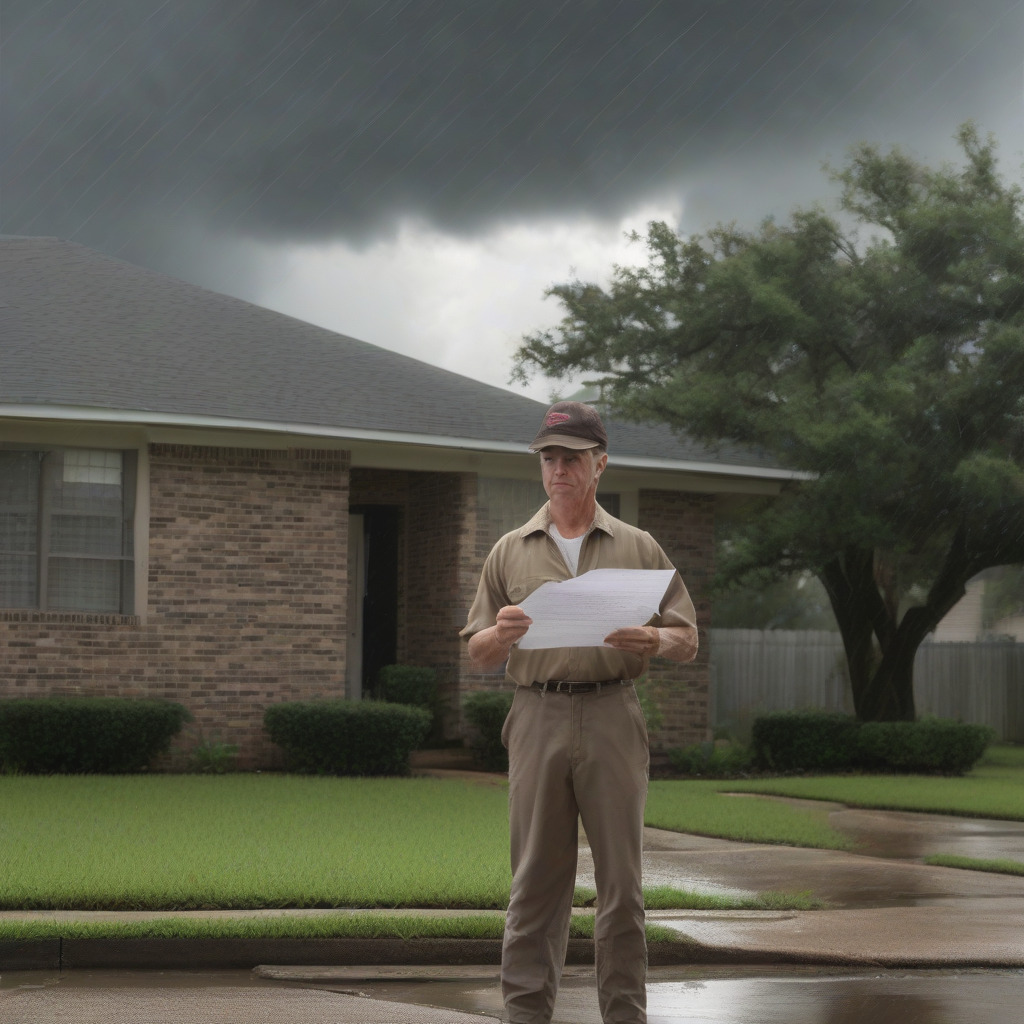
Renewal season is here. Several carriers have stopped writing in Harris County. Here’s what residents in Clear Lake, Meyerland, Spring Branch, and Katy are actually being quoted — and what to do if you’ve been dropped.
If you own a home in the 77025 ZIP code, in Meyerland, you already know that homeowners insurance has become a source of real dread. Three major flood events since 2015. Neighbors comparing notes at the mailbox. Renewal envelopes sitting unopened for days. What you might not know is the exact number your neighbor is paying, or why your premium diverged from theirs after Harvey even though your houses look identical from the street.
Here’s the short answer for anyone reading this in October with a renewal quote in hand: Houston-area homeowners insurance has risen roughly 20 to 35 percent since 2022, depending on neighborhood and construction type. The statewide averages on national comparison sites are close to meaningless here. A standard single-family home in Harris County — roughly 2,000 square feet, built before 2000, no pool — now runs $3,800 to $5,500 annually in the standard insurance market, when standard coverage is even available. In the highest-risk ZIP codes, the question is no longer how much it costs. It’s whether you can get it.
This piece covers the decision window you’re in right now: post-hurricane-season, fall buying season, renewal season. Real premium ranges by neighborhood. Named carriers. TWIA eligibility rules. What happens to your mortgage if coverage falls through.
What Houston Homeowners Are Actually Paying in 2026
The national figures you’ll see on sites like ValuePenguin or Bankrate reflect the statewide blend and have limited relevance to a buyer under contract in Friendswood or a Meyerland homeowner whose carrier just filed a non-renewal. Texas statewide averages run $3,500 to $4,200 per year. Houston runs higher.
These ranges come from quotes reported by local independent agents and buyers who closed in 2025 and 2026:
A home in Spring Branch with older construction and a roof in the 10-to-15-year range will be quoted materially above the statewide baseline. Several standard carriers will decline it outright. A comparable home in the Energy Corridor or Memorial — similar square footage, better construction vintage, updated roof — comes in closer to $3,400 to $3,800. Clear Lake and Nassau Bay homeowners in the 77058–77059 corridor sit near the Gulf and in or adjacent to flood zones. When they can get standard-market quotes at all, they’re toward the top of the Houston range. Some are being redirected to the surplus lines market, where premiums run significantly higher.
The 20 to 35 percent increase since 2022 is real. In the highest-exposure ZIP codes, that figure is conservative. October is when this bites hardest. Policies renew, new quotes arrive, and buyers already stretched on a down payment discover mid-contract that insurance will add hundreds of dollars a month to their carrying costs — or that their lender can’t close without a binder their agent can’t obtain. Buyers navigating these costs alongside purchase prices should also review what Houston builder incentives actually look like this summer and how to evaluate them — the math on new construction sometimes pencils differently once insurance is factored in.
What Your ZIP Code Is Worth to an Underwriter
Houston’s geography creates wildly different underwriting profiles within the same city. The specifics are worth knowing.
Clear Lake and Nassau Bay (77058–77059). Gulf wind exposure and proximity to Galveston Bay make standard coverage difficult. Flood zone overlap compounds the problem. Several carriers active here as recently as 2023 have stopped writing new policies or declined renewals on properties within a certain distance of the water. Homeowners in TWIA-eligible portions of this corridor often carry three separate policies — which raises total cost significantly and makes claims management genuinely complicated. More on that below.
Meyerland (77025–77096). Flood history is the dominant factor. Carriers now apply what amounts to a repeat-flood penalty that persists even for homeowners who elevated their structures after Harvey. The insurance market has a long memory, and Meyerland’s runs deep. Some homeowners who were non-renewed and couldn’t find standard coverage landed in the surplus lines market at premiums running 40 to 80 percent above what they’d been paying.
Spring Branch (77055–77080). The underwriting concern here is hail loss history combined with older housing stock — a significant share of Spring Branch was built between the 1960s and 1980s. Carriers are flagging roof ages aggressively. A homeowner with a pre-2010 roof in 77055 should expect difficulty in the standard market. Surplus lines may be the only option.
Pearland and Friendswood (77581–77584). Harvey’s footprint extends here. Carriers have internalized the drainage risk along the Brazoria and Harris County borderland. New construction fares better, but older stock faces scrutiny. The memory of 2017 shapes underwriting decisions even for homeowners whose properties escaped damage entirely.
Katy and Cinco Ranch (77494). More breathing room here than in the flood corridors to the south and east. Newer construction generally fares better, and the standard market is more accessible. But some carriers are quietly capping new policy counts in Harris County broadly, not ZIP by ZIP. A Katy buyer can be declined simply because the carrier has hit its exposure ceiling for the county. That’s not a knock on your house. It’s just math.
Energy Corridor and Memorial (77077–77079). Something closer to a baseline. Better construction vintage than Spring Branch, less direct flood exposure than Clear Lake or Meyerland, more carrier options. Expect $3,400 to $3,800 depending on specific block, roof age, and coverage levels. Even here, the increase since 2022 has been significant.
A coverage map showing standard-carrier concentration by ZIP code should accompany the digital version of this piece. Harris County has dead zones where options have simply disappeared. They don’t track neatly onto flood maps, which is part of what makes this so hard to navigate.
Which Carriers Have Stopped Writing in Harris County
Farmers Insurance has significantly reduced its Texas market footprint over the past 18 months — non-renewing policies in high-risk territories and restricting new business in portions of Harris County. Agents who were Farmers-affiliated describe the carrier as effectively closed to new business in flood-adjacent areas.
AAA / CSAA has issued non-renewals in coastal and near-coastal Texas markets, including portions of the Clear Lake and Galveston Bay corridor. Some existing policyholders received non-renewal notices without significant warning.
State Farm has stopped writing new homeowners policies in some high-risk Texas territories. Existing policyholders have been retained in some cases, but new applicants in flood-adjacent or high-hail-exposure ZIP codes are being declined. The company’s internal underwriting criteria aren’t published. Independent agents report consistent rejections in 77025, 77055, and near-coastal areas.
Allstate has filed rate increases and restricted new business in parts of Harris County. Current policyholders shouldn’t assume renewal is automatic in the highest-risk ZIP codes. The company appears to be managing down its Texas exposure rather than exiting entirely — but for new applicants, the practical effect is the same.
Hippo Insurance, founded in Texas and marketed heavily to Houston homeowners, has shifted its underwriting posture significantly. The company has reduced appetite for high-risk Texas properties, which surprised some policyholders who chose Hippo specifically for its Texas roots and early reputation for competitive pricing. The “local company, understands Texas” pitch is worth less than it used to be when the underwriting decisions start looking like everyone else’s.
Progressive remains active in Texas but applies strict roof-age cutoffs — generally 10 to 15 years depending on construction type. A roof approaching or past that threshold in 77055 may disqualify the property. For homeowners whose only issue is roof age, Progressive quotes are possible. Multiple underwriting problems and they decline.
USAA remains available and competitively priced for its eligible population: active military, veterans, and their immediate family. If you qualify, USAA is the best option in this market right now. The company hasn’t adopted the same aggressive restrictions other major carriers have, and that matters.
Amica Mutual is one of the standard-market carriers showing genuine growth in Texas and worth contacting directly. The company takes a more detailed approach to Texas underwriting than some national carriers, which creates pockets of availability where others have exited.
Chubb is active in the high-value home segment and applies more individualized underwriting than a standard carrier. That can actually work in favor of a well-maintained older home in an otherwise difficult ZIP code. Chubb’s pricing reflects its underwriting depth and isn’t competitive on all properties — but for complex older homes that mainstream carriers have declined, it can sometimes find a path.
Kin Insurance has been growing in the Texas market and is worth a quote in areas where standard options have narrowed. Its track record on Texas claims is shorter than the legacy carriers — the company was founded in 2015. Something to keep in mind when you’re deciding how much to trust a company with your largest asset.
Before signing anything, check TDI’s public complaint ratio and rate filing database at tdi.texas.gov. The complaint ratio — complaints per 1,000 policies — is more useful than premium comparisons alone. A carrier that saves you $400 a year but handles claims poorly costs more in the end. Spend 20 minutes there before you renew.
The Roof Trap Generating Non-Renewals Across Houston
This one surprises homeowners in neighborhoods they don’t think of as high-risk. Spring Branch is the clearest example, but it’s happening in Acres Homes, the Gallería area, parts of Pasadena, and throughout Houston’s older housing stock. A homeowner calls to ask why their 77080 renewal was declined — only to realize the answer was sitting on top of their house the whole time.
Hail events are routine in Houston, and a significant share of the city was built between the 1960s and 1980s. Many carriers have updated their underwriting guidelines to decline or non-renew properties with roofs older than 10 to 15 years, depending on carrier and material. Asphalt composition shingles age faster than architectural shingles or metal. The practical effect is the same: if your roof is 12 years old, you’re in the window where carriers start flagging age.
When your policy comes up for renewal and your carrier orders a roof inspection — now standard practice for many carriers — and the inspector flags age, deterioration, or storm damage, you’ll receive either a conditional renewal or a non-renewal notice. Conditional renewal requires documented roof replacement within 30 to 60 days. It gives you a path forward, though the timeline is brutal. A non-renewal notice does not.
Texas Insurance Code requires at least 30 days’ notice for mid-term cancellations and 60 days’ notice for non-renewals at policy expiration. That’s your working window. Don’t spend the first two weeks in shock. Start shopping immediately — there are still carriers that will underwrite a property where roof replacement is pending or in process.
Here’s the catch: replacing the roof doesn’t automatically solve the problem if you’re in a ZIP code a carrier is quietly exiting. In those cases, roof condition is the documented reason they can give you while the underlying decision is geographic. A new roof helps in the standard market broadly but may not reopen a carrier that has made a territorial decision.
Before your next renewal date, know your roof’s age. Don’t wait for the insurer’s inspector to tell you. If your roof is 12 years or older, treat renewal as an active process. Start shopping 90 days out — not 30 days after the non-renewal arrives. Get quotes before your carrier issues its renewal notice. If roof age is a concern, have a roofing contractor’s assessment ready to show underwriters. Understanding what a thorough home evaluation covers is also worth your time — as covered in our home & property coverage, roof condition is one of several factors buyers and owners often don’t fully scrutinize until it becomes urgent.
How TWIA Actually Works and Who in Harris County Actually Qualifies
TWIA is a residual wind-and-hail insurer of last resort for coastal Texas. Eligibility in Harris County is limited to properties in TDI-designated catastrophe areas — generally the coastal communities: Clear Lake, Seabrook, Kemah, La Porte, Shoreacres, Morgan’s Point, and Galena Park waterfront areas. Properties inside Beltway 8 broadly do not qualify. That includes almost all of Meyerland, all of Spring Branch, and all of Katy. If you live in those areas and someone tells you to “just get TWIA,” they’re wrong.
For homeowners who do qualify geographically, TWIA covers wind and hail damage only. No flood. No fire. No theft or liability. This layering requirement genuinely surprises many new buyers in the TWIA zone. A Clear Lake or Seabrook homeowner typically ends up carrying three separate policies: TWIA for wind and hail; a standard HO-3 policy written specifically to exclude wind (you can’t carry duplicate wind coverage) for fire, theft, liability, and other non-wind perils; and NFIP flood insurance through the National Flood Insurance Program.
The combined annual cost for this three-policy stack runs substantially higher than a single standard policy. A homeowner used to paying $4,200 for one policy might find themselves paying $1,400 for TWIA, $1,800 for the wind-excluded HO-3, and $1,200 for flood — $4,400 total, for what is, honestly, inferior and fragmented coverage. Three claims processes. Three deductibles. Three renewal dates. It’s a lot, and the claims experience reflects it.
The TWIA deductible is 2 percent of insured value for wind losses. On a $400,000 home, that’s $8,000 out of pocket before TWIA pays a dollar. TWIA has taken cumulative rate increases of roughly 10 to 15 percent since 2023, and the board has signaled further increases are likely.
For properties constructed after 2009, TWIA requires a WPI-8 inspection certificate confirming the structure was built to windstorm-resistant standards. Without it, a post-2009 property can’t get TWIA coverage. Buyers of newer homes in TWIA zones should verify WPI-8 status before closing — treat it as a title-adjacent issue. A seller who can’t produce the certificate may need to hire an inspector and cover the cost out of proceeds.
What Happens to Your Mortgage If You Can’t Get Insured
Buyers under contract in difficult ZIP codes are asking this question in real time, and the answer isn’t reassuring. Federal mortgage requirements for loans backed by Fannie Mae, Freddie Mac, FHA, or VA mandate homeowners insurance equal to at least the replacement cost value of the structure or the loan amount, whichever is less. Without a valid insurance binder, the lender won’t issue a clear-to-close. No exceptions.
This is happening in Harris County right now. Mortgage brokers and agents report that insurance-related closing delays of 30 to 60 days have become routine in flood-adjacent neighborhoods and areas with aging housing stock. The sequence is ugly: buyer and seller are in contract, inspection period closes, and the buyer discovers no standard carrier will write the property. Now the buyer must either absorb the surplus lines premium, negotiate a seller credit to cover the difference, or walk. Some contracts have died outright — the buyer couldn’t secure coverage at a cost that kept the purchase financially viable and walked away. In a market where sellers are already navigating longer days on market, a buyer’s insurance failure can be the difference between a sold sign and a re-listing.
If a borrower closes and coverage later lapses, the lender imposes force-placed insurance — coverage the lender buys on your property and charges back to you. It typically costs two to four times a standard policy. It covers only the lender’s interest in the structure. Not your personal property. Not your liability. Not the full replacement value from your perspective. Force-placed coverage is a penalty, not a solution — one that can add $1,000 to $3,000 annually to your mortgage payment while leaving you personally uninsured.
The practical implication: more Houston real estate professionals now advise clients to treat insurance as a due-diligence item on par with inspection and title. Get an insurance commitment before going under contract in any neighborhood carrying elevated risk. In Meyerland, Clear Lake, older Spring Branch, and Pearland, the insurance question is no longer a post-inspection formality. It’s part of offer strategy.
Agents who aren’t having this conversation with clients before contract are doing them a disservice. The closing delay data suggests it needs saying plainly.
The Surplus Lines Market: Where More Houston Homeowners Are Landing
The surplus lines market is where standard carriers send risks they won’t take. A growing share of Houston homeowners are being placed there, sometimes without a clear explanation of what that means.
Surplus lines carriers aren’t licensed by TDI in the standard sense. They’re placed through licensed surplus lines agents under a separate regulatory framework, and they’re not bound by TDI’s standard rate and form requirements. Policy language can vary significantly from the HO-3 form most homeowners know. One policy might exclude water damage from sources other than wind-driven rain. Another might cap coverage on certain high-value items. A third might require higher maintenance standards than a standard policy does. Read the policy. All of it.
The price differential is significant. Surplus lines premiums in Houston run 40 to 80 percent above standard market equivalents for comparable coverage — where comparable coverage is even available. A homeowner quoted $4,000 in the standard market might receive a $6,400 surplus lines quote, or find that the surplus lines policy carries higher deductibles or lower liability limits to bring the price down at all.
The claims-handling difference matters most. If a standard-market carrier in Texas mishandles your claim, TDI can force a carrier to pay a denied claim or pursue disciplinary action. If a surplus lines carrier mishandles your claim, TDI’s standard complaint process doesn’t apply the same way. You have contractual rights and can pursue the claim through arbitration or litigation, but the regulatory backstop is weaker. That’s a real difference, not a footnote.
Locally active surplus lines brokers include AmRisc, one of the larger surplus lines underwriters in the Texas coastal market, and Burns & Wilcox Houston, which places both residential and commercial surplus lines coverage and has significant Harris County volume. You typically access them through an independent agent who holds surplus lines licensing.
If you receive a policy from a carrier you’ve never heard of at a premium significantly above what you expected, ask directly: is this a standard carrier or a surplus lines placement? You have a right to know. TDI maintains a public list of licensed surplus lines agents in Harris County at tdi.texas.gov. Before signing a surplus lines policy, verify your agent’s license and ask to see the carrier’s AM Best financial strength rating. In a market where your options are limited, knowing whether the company holding your policy can actually pay a claim is not optional.
What to Do If You’ve Been Non-Renewed in Houston
You have a defined window and a specific sequence to work through.
Know your timeline first. Texas law requires 60 days’ notice for non-renewals at policy expiration. That’s your working window. Open the envelope the day it arrives and start shopping.
Use an independent agent, not a captive agent. A State Farm or Allstate agent can only offer their carrier’s product. An independent agent represents multiple carriers and can shop your risk across several companies simultaneously. Ask explicitly which standard carriers they represent in Harris County and which they’ve successfully placed Houston properties with in the last 90 days. An agent who can’t answer that question isn’t the right agent for this situation.
Get the reason for non-renewal in writing. Carriers are required to provide one. If the reason is roof condition, a documented replacement may reopen standard market options. If the reason is location-based underwriting — which the carrier may not state as directly — a new roof will help but won’t resolve the problem. A roof issue is solvable. A ZIP code issue is not, at least not quickly.
Request quotes from Amica, Chubb (if your home is high-value), and Kin. These are standard-market carriers currently showing appetite in parts of the Houston market. Don’t assume that because your current carrier non-renewed you, the standard market is closed entirely. The carrier that declined you may have drawn a line based on specific factors that another carrier weights differently.
If the standard market is closed to you, go to surplus lines with eyes open. Burns & Wilcox Houston and brokers with AmRisc access are good starting points. Understand the premium difference. Read the policy carefully. Note the claims-recourse difference. Don’t accept a surplus lines placement without understanding why no standard carrier would write the risk.
For homeowners in TWIA-eligible areas: if you’re in a designated catastrophe area in Harris County and you’ve been non-renewed on wind coverage, contact TWIA directly at twia.org or through a licensed agent. TWIA processes applications over several weeks, so don’t delay. And understand going in what it covers — wind and hail only — and what you’ll still need to arrange separately for fire, liability, and flood.
If you believe the non-renewal was improper, contact TDI. A non-renewal that doesn’t follow the required notice timeline, lacks a legal basis under your policy terms, or appears discriminatory can be challenged at tdi.texas.gov. TDI doesn’t resolve coverage disputes but does investigate carrier conduct. File the complaint. It creates a record.
The homeowners insurance market in Harris County in 2026 is a genuinely different market than it was three years ago. Carriers who were routinely quoting Spring Branch bungalows and Clear Lake ranches in 2022 are making different decisions today. The reasons are understandable to actuaries and infuriating to homeowners, and both things can be true simultaneously. A run of hurricane seasons and catastrophic hail has redistributed the risk load. Carriers have priced accordingly. They’re not doing it to be difficult. They’re doing it because the numbers tell them to.
That doesn’t make the renewal envelope any easier to open. But knowing your specific situation — your ZIP code’s underwriting profile, your roof’s age, your carrier’s financial posture, your rights if you’re non-renewed — matters now in a way it didn’t before. This is no longer background knowledge. It’s as essential to property ownership in Houston as knowing your flood zone.
Open the envelope.
For TDI’s carrier complaint data, rate filing database, and licensed surplus lines agent list for Harris County, visit tdi.texas.gov.