How to Protest Your Harris County Property Tax Appraisal in 2026
Harris County homeowners have a narrow window to fight their appraisal values. Here's the process, step by step, including what evidence moves the needle and when paying a firm beats doing it yours…

Harris County homeowners have a narrow window to fight their appraisal values. Here’s the process, step by step, including what evidence moves the needle and when paying a firm beats doing it yourself.
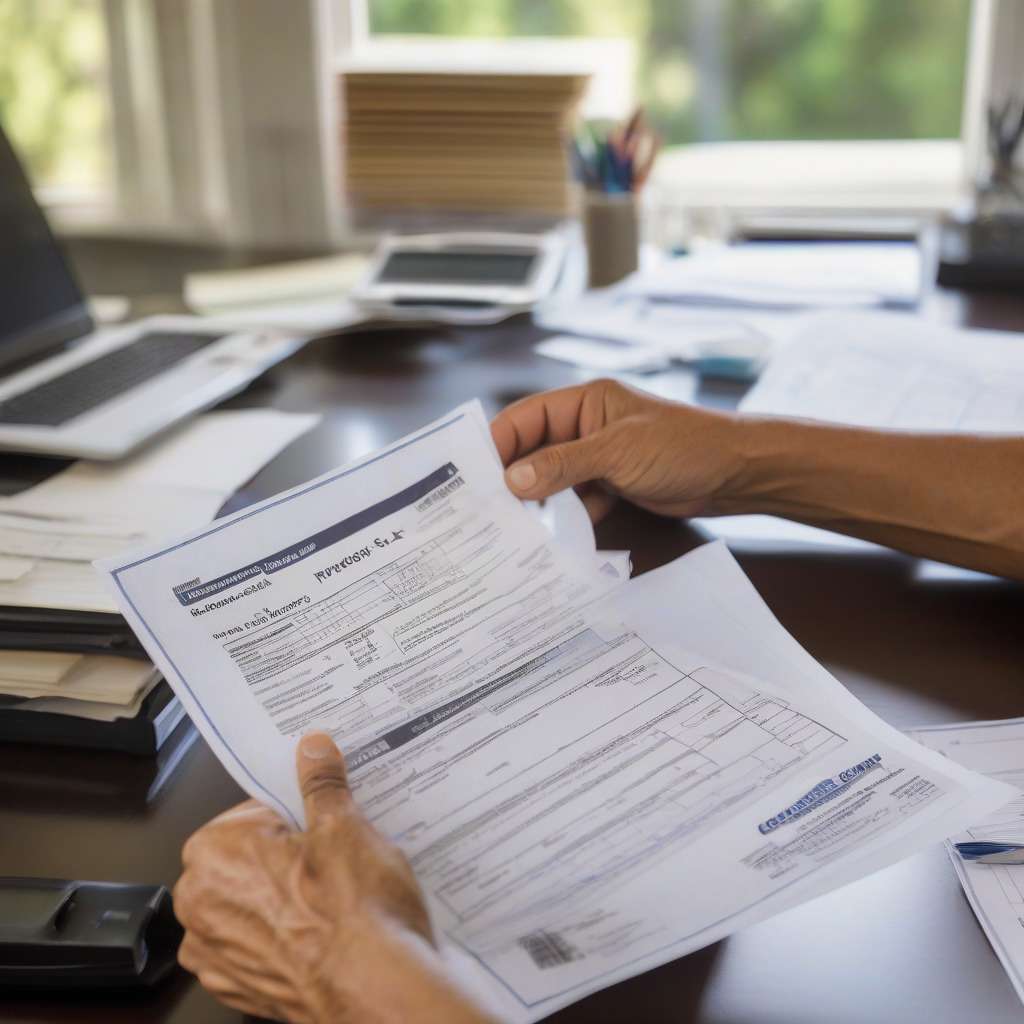
When HCAD’s appraisal notices land in Houston mailboxes this spring, most homeowners will glance at the new value, wince, and do nothing. That’s a mistake. It often costs hundreds of dollars, sometimes more.
A homeowner whose property is appraised at $350,000—roughly the Harris County median—faces an annual tax bill somewhere around $7,000 to $9,000 depending on their jurisdiction’s combined rate. A successful protest can shave tens of thousands off that appraised value. This happens every cycle, to ordinary homeowners who spent a few hours preparing.
The Texas Legislature built the protest right into the Tax Code. But the window is short, the process has specific rules, and the evidence that actually works looks nothing like what most homeowners instinctively bring.
The 2026 Deadline and What Happens If You Miss It
The statutory deadline to file a protest with the Harris County Appraisal District is May 15, 2026, or 30 days from the date printed on your appraisal notice—whichever is later. HCAD typically mails notices in April. If your notice is dated April 10, your 30-day window runs to May 10, and the statutory floor of May 15 takes over. If your notice is dated April 20, your 30-day window extends to May 20, which clears the floor.
Verify your specific deadline at hcad.org once your 2026 notice arrives. The dates above reflect Texas Tax Code §41.44, but HCAD’s mailing schedule shifts, and your notice date controls your personal deadline.
Missing the deadline is effectively final. Texas law offers no general extension. The narrow exceptions involve specific circumstances: HCAD had a bad address on file and you never received a notice, or a clerical error affected your account. In those cases you file a late protest under §41.44(c) and make a factual case to the Appraisal Review Board. Those requests are evaluated individually and granted sparingly. Don’t build your strategy around that option.
District court gets mentioned sometimes as an alternative path. Technically it is one, but it means hiring a property tax attorney, filing suit against HCAD, and carrying litigation forward. For a homeowner disputing a $30,000 overvaluation on a $350,000 house, the legal bills swamp any realistic recovery. District court is for commercial owners and large portfolios. The protest process is the right arena for residential owners—and honestly, it works better than most people expect.
Before You File—Separate the Homestead Exemption From the Protest
A common mistake trips up many Houston homeowners: conflating two independent actions with different deadlines and different effects on the tax bill.
The homestead exemption reduces the taxable value of your primary residence. Under HB 3, passed in 2023, the state general exemption removes $100,000 from the school district portion of your appraised value, with additional exemptions available from some local jurisdictions. For most owners, filing is a one-time action that carries forward automatically. But if you purchased a home in 2025 and haven’t filed yet, your deadline is April 30, 2026.
Filing a protest does not file a homestead exemption. Filing a homestead exemption does not file a protest. These are separate forms, separate processes, separate deadlines. Before doing anything else, check your account at hcad.org to confirm your exemption status. You can submit Form 50-114 online at hcad.org or by mail to HCAD at 13013 Northwest Freeway, Houston, TX 77040.
How to File Your Protest Through the HCAD iFile Portal
Filing online is faster than mail and generates a confirmation number you can track. The process below reflects how HCAD has structured the portal—verify each step against the live 2026 version at hcad.org before submitting, since the interface gets updated periodically.
Your appraisal notice includes a unique iFile number printed on the front. You’ll need this to log in. Without it, you’ll need to file another way (see below). Go to hcad.org, navigate to the iFile protest portal, log in with your property account number and iFile PIN, and confirm the property details match your address.
Texas law requires you to state the basis for your protest. The two most useful grounds are: value is over market value, or value is unequal compared to other properties. Select both if applicable. You can argue both at the hearing, and checking only one box may close off your options. Don’t select only “unequal appraisal” if you also have market value evidence.
Upload your evidence through the portal, which accepts PDFs. Comps, contractor estimates, a recent purchase contract—include anything you have. Evidence submitted before the informal hearing gives the staff appraiser something to review before you speak, which can move the process considerably faster.
The system will generate a confirmation number and, eventually, a scheduled date for your informal hearing. Save both. You’ll also get instructions on whether your hearing is virtual, by phone, or in person.
If you don’t have your iFile PIN, file using Form 50-132 (the Notice of Protest form from the Texas Comptroller’s office), submitted by mail or in person to HCAD at 13013 Northwest Freeway. The office is open weekdays. Call 713-957-7800 to confirm current hours for the 2026 season.
What Evidence Actually Wins—and What Wastes Your Time
This is where most homeowners make their second major mistake, after missing the deadline. They bring emotion or anecdote to a process that runs on data.
Comparable sales filtered by HCAD neighborhood code. Texas law evaluates residential properties against a “market area” or neighborhood code—not a geographic radius drawn around your house. HCAD assigns each property a neighborhood code, visible in your account at hcad.org. When you pull comps, filter by that specific code. Properties two blocks away in a different HCAD neighborhood code are not valid at your hearing, and a staff appraiser will tell you so immediately. Properties in your code are.
Pull sales data from HAR.com (the Houston Association of Realtors public portal), filtered for closed sales in the 12 months before January 1, 2026—the statutory valuation date. You want closed sales, not list prices, of properties similar in size, age, and condition. Three to five that show a market value below HCAD’s appraised number make a solid case.
The unequal appraisal argument under Texas Tax Code §41.43 is the most underused tool available to Houston homeowners, and what makes it powerful is that HCAD’s own published data becomes your evidence. You can argue that your property is appraised at a higher percentage of market value than comparable properties in the same neighborhood code—even if the absolute value seems defensible. Pull several similar properties from HCAD’s property search, compare their appraised values to known sale prices, and calculate the appraisal-to-sale ratio. If your ratio is higher than your neighbors’, you have a case. This argument doesn’t require you to prove HCAD’s value is wrong—only that it’s inconsistent. That’s a meaningful distinction, and it’s one most homeowners never make.
A recent purchase price below the appraised value. If you bought your home in 2024 or 2025 at a price below HCAD’s 2026 appraised value, your closing documents are your strongest evidence. Texas law presumes an arm’s-length sale reflects market value. Bring the HUD-1 or closing disclosure, the sales contract, and be prepared to confirm it was a standard market transaction. Foreclosures, family sales, and distressed transactions don’t carry that presumption, and HCAD will look.
Contractor estimates for condition issues—but only on letterhead. If your property has physical damage, you need professional documentation. Photos alone and verbal descriptions carry no weight. A written estimate on a licensed contractor’s letterhead, describing specific damage and projected repair cost, is the standard. Houston’s conditions frequently support these arguments: foundation damage is common in the clay-soil areas and subsidence-prone neighborhoods like Meyerland, parts of Pasadena, and northeast Houston neighborhoods near the Ship Channel; flood damage is still a factor in properties near Brays Bayou and other channels where post-storm repair costs remain deferred or moisture issues persist; in new-construction suburbs like Katy, Cypress, Pearland, and the Conroe-area master-planned communities, builder incentives—rate buydowns, closing cost contributions, lot premiums, upgrades—can inflate the contract price relative to true cash-equivalent market value, and that gap is worth documenting.
What doesn’t work. Zillow Zestimates. ARB panels disregard automated valuation outputs entirely—the methodology is opaque, applies no neighborhood-code logic, and carries no professional certification. Complaints about the tax rate get you nowhere either; the ARB and HCAD appraisers have no authority over rates set by HISD, Harris County, MUD districts, or any other taxing jurisdiction. Affordability arguments have no legal standing. “I can’t afford this bill” and “I’ve lived here 30 years” are understandable grievances, but the ARB is evaluating exactly one question: Is the appraised value accurate and equitable under Texas law? That’s the only question. Every minute spent on something else is wasted.
The Informal Hearing—What to Expect and How to Handle It
Most coverage of the HCAD protest process treats “the hearing” as a single event. It’s actually two distinct stages, and most owners never reach the second one.
Stage 1 is the informal hearing—a 15 to 30 minute session with an HCAD staff appraiser. This is not an ARB member, not a quasi-judicial proceeding, and not on the record in any formal sense. It’s a conversation with a district employee who has authority to offer a value reduction on the spot.
Since COVID, HCAD has offered informal hearings by phone or video conference, and many owners handle this stage without going downtown. Whether virtual hearings continue in 2026 is worth confirming—call 713-957-7800 or check hcad.org. It’s a procedural detail that changes between cycles.
Come in with a specific counter-value, not a general complaint. “I think you’ve overvalued my house” is an opener, not an argument. “Based on three closed sales in HCAD neighborhood code [X] between April and December 2025, the supportable market value is $287,000, not $318,000” is an argument. The appraiser will pull your property on their screen, review your submitted evidence, and either agree to a reduction or counter.
If the appraiser’s offer is acceptable, you sign the agreement and the case closes. Your revised value flows through to your tax bill when Harris County calculates the levy later in the year. If you reject the offer—or if the appraiser won’t budge—your case automatically advances to the ARB.
The majority of protested cases in Harris County settle at the informal stage. Treat this as the main event, not a warmup. Walk in prepared to close the case here.
The ARB Hearing—When Informal Settlement Doesn’t Work
If the informal hearing doesn’t produce an acceptable number, your case goes to the Appraisal Review Board—a separate, independent body whose members are appointed by the local administrative district judge, not by HCAD. That matters. The ARB is not HCAD staff, and its members are not HCAD employees. They function as a neutral panel between you and the district.
ARB hearings are conducted by a three-member panel. You’ll receive a scheduled date and location; hearings are typically held at HCAD’s facility or satellite locations during peak protest season. The formal hearing runs 15 to 30 minutes. The panel hears hundreds of cases across the season. Organize accordingly—this is not the moment for a narrative about how long you’ve owned the house.
Open with one sentence: “The appraised value of $318,000 exceeds the market value supported by comparable sales and exceeds the appraised value of comparable properties in the same neighborhood, and I’m asking for a reduction to $287,000.” Present your comps in a one-page summary—address, square footage, sale price, sale date, price per square foot. Don’t make the panel read through printouts. If you’re using the unequal appraisal argument, bring a separate one-page table showing appraised-value-to-sale-price ratios for comparable properties. Two copies of everything: one for the panel, one for the HCAD representative present to argue the district’s case.
The panel will deliberate and issue an order. Check HCAD’s most recent published annual report at hcad.org for current outcome data—success rates fluctuate by year, property type, and submarket, and any figure I cite here will be stale by the time you read it.
If you lose at the ARB and believe the ruling was wrong, escalation options exist: binding arbitration, a hearing before the State Office of Administrative Hearings (SOAH), or district court. Each step up involves meaningfully higher costs and longer timelines. If you’re considering escalation, get to a property tax attorney immediately after the order arrives. Post-order deadlines are strict and vary by path.
DIY vs. Hiring a Protest Firm
This isn’t a question with a clean universal answer. It depends on your property’s value, your submarket, and how much time you’re willing to spend.
Most Houston protest firms charge a contingency fee—typically 25 to 40 percent of the first-year tax savings from a successful protest. If a firm reduces your appraised value by $40,000 and your combined rate is 2.3 percent, that’s $920 in savings; the firm takes $230 to $368 of it. Some also charge a flat annual enrollment fee—often $75 to $150—regardless of outcome. Read the contract before signing, and confirm current fee structures directly with any firm. These terms change.
Several active firms operate in Houston. O’Connor & Associates (oconnorptc.com) is the highest-volume residential operation, filing protests automatically for enrolled clients and handling both the informal and ARB stages. This suits owners who want full-service, hands-off handling. Ownwell (ownwell.com) uses a technology-driven model with automated comp analysis and more transparent online pricing—worth comparing for properties in data-rich submarkets. Texas Protax (texasprotax.com) is a regional firm with local staff covering both residential and commercial accounts, generally more hands-on than the highest-volume shops.
If your property is under $400,000 and you have three to five clean comps in the same HCAD neighborhood code showing a lower market value, do it yourself. The process takes roughly three to five hours total—pulling and organizing comps from HAR.com, filing through iFile and uploading evidence, and handling the informal hearing. You keep 100 percent of the savings. The contingency math rarely favors giving a third of that away when your case is straightforward.
A firm earns its fee on higher-value properties, particularly in fast-appreciating submarkets where the comp picture gets complicated: the Heights, Montrose, River Oaks, EaDo, Midtown, Bellaire. It also makes sense if you own multiple properties and can’t manage individual protests realistically, or if your case turns on unequal appraisal analysis—assembling ratio data across multiple properties is time-intensive work that firms do in bulk with systems you don’t have at home.
One thing worth knowing: a prepared homeowner with well-organized, neighborhood-code-specific evidence is genuinely competitive with what a firm produces, which is a consistent theme in our home & property coverage. The firms’ advantage is volume and data infrastructure, not exclusive access to the process or any inside track with HCAD.
After the Hearing—Timeline and Next Steps
If you settle at the informal hearing, the agreed value is recorded and you’ll receive written confirmation. The reduction flows through to your tax bill when Harris County and the other taxing jurisdictions calculate your levy—typically October through November for most accounts.
If your case went to the ARB, review the written order carefully. Confirm the certified value matches what was stated at the hearing, and confirm your homestead and any other exemptions are correctly applied. Errors happen.
If you’re pursuing escalation, get to an attorney immediately. Post-order deadlines are strict.
For most owners, the process ends at the informal or ARB stage. The tax bill arrives in the fall, the reduced value is applied, and the adjusted amount is due by January 31, 2027 (subject to standard Texas property tax payment deadlines for the cycle). If you pay through escrow, your mortgage servicer will adjust your monthly impound payment to reflect the new bill—sometimes with a one-cycle lag.
Resources
HCAD
- hcad.org — property search, iFile protest portal, exemption applications, annual reports
- Main phone: 713-957-7800
- Office: 13013 Northwest Freeway, Houston, TX 77040
Comparable Sales Data
- HAR.com — filter by neighborhood code and sale date for the most HCAD-relevant comps
Texas Comptroller
- Comptroller.texas.gov/taxes/property-tax — Form 50-132 (Notice of Protest), Form 50-114 (Homestead Exemption application), full Texas Property Tax Code
Protest Firms
- O’Connor & Associates: oconnorptc.com
- Ownwell: ownwell.com
- Texas Protax: texasprotax.com
All deadlines and fee figures reflect the Texas statutory framework and Houston-area market norms as of publication. Verify your specific 2026 notice date and filing deadline at hcad.org once your notice arrives. Confirm whether virtual informal hearings continue in 2026 by calling HCAD at 713-957-7800 or checking hcad.org. Verify firm fee structures directly before signing anything.