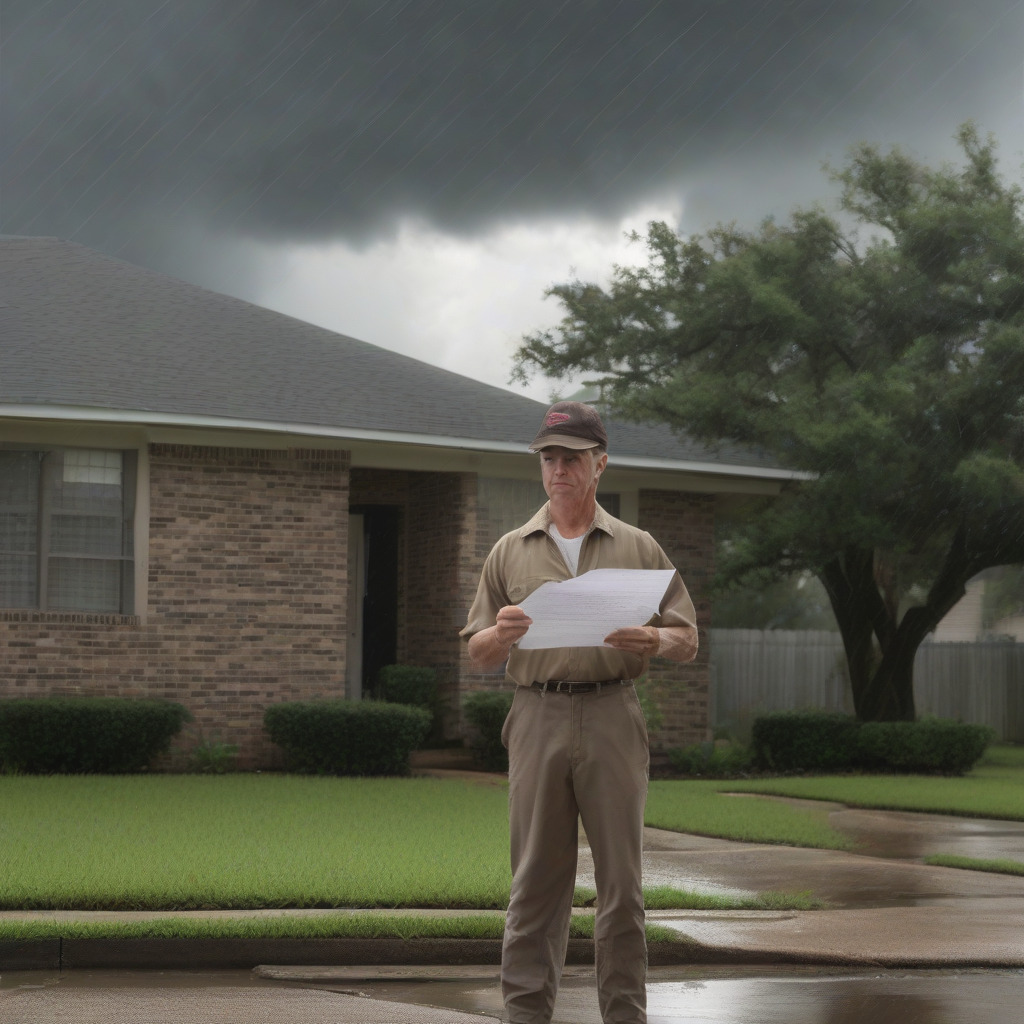
How to Spot Mold in a Houston Home Before It Becomes a Major Problem
With dew points pushing 75°F and AC systems running nine months a year, Houston homes have specific mold vulnerabilities that national advice doesn't cover. Here's how to check yours, what a real i…

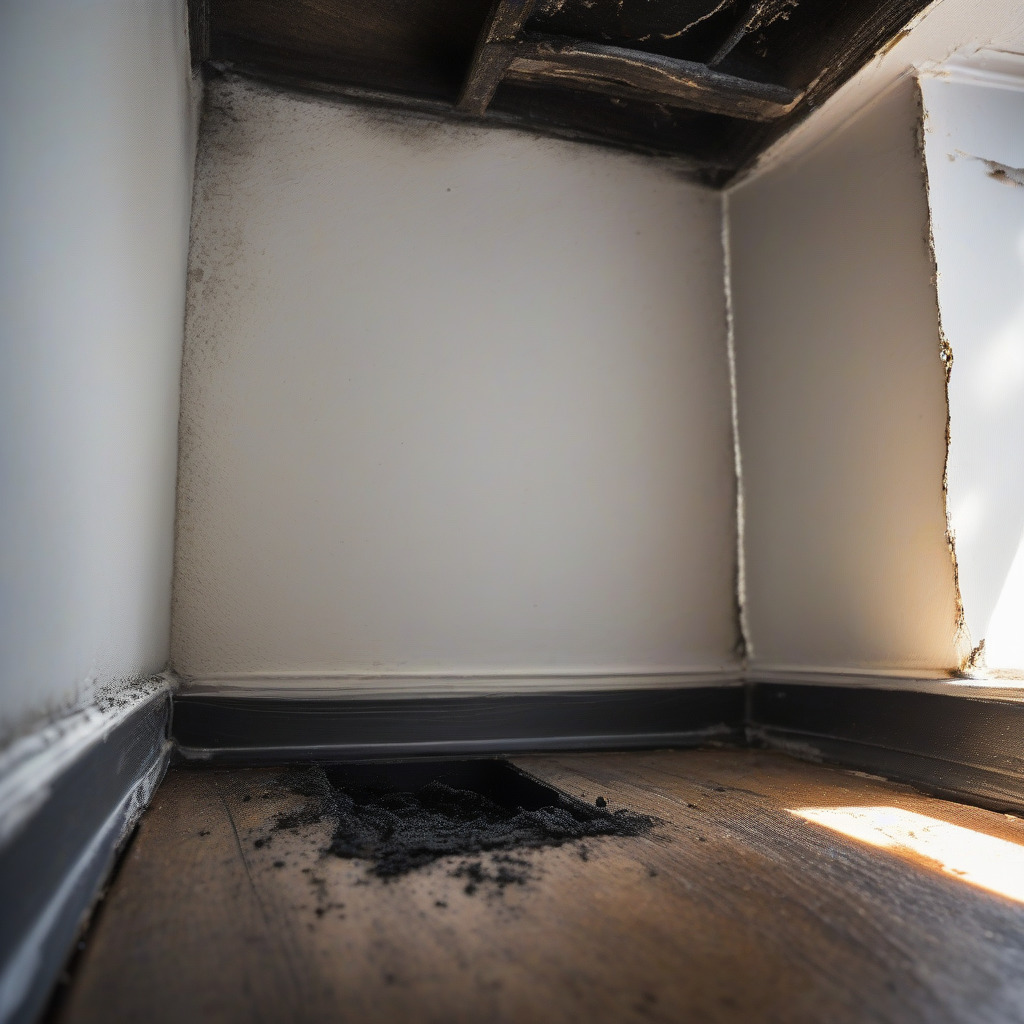
With dew points pushing 75°F and AC systems running nine months a year, Houston homes have specific mold vulnerabilities that national advice doesn’t cover. Here’s how to check yours, what a real inspection involves, and what remediation actually costs locally.
If you’ve been relying on national home-maintenance advice to protect your house from mold, you’ve been working from the wrong manual. Most of it assumes a climate where mold risk is seasonal — a wet spring, a cold basement, a leaky roof. Houston doesn’t work that way. Here, the mold season runs year-round. The threat comes from inside as much as outside. And the building conditions that make mold likely are baked into how this region’s homes were constructed decades before anyone worried much about it.
Here’s how to actually inspect a Houston home before summer turns a small moisture problem into a remediation bill that exceeds your insurance sublimit.
Step 1: Understand Why Houston’s Summer Conditions Create Mold Risk Other Cities Don’t Face
Houston’s dew points regularly hit 70 to 75°F through the summer — levels that rank among the highest recorded in any major American city, putting it in the same atmospheric category as coastal Louisiana and South Florida, but with a housing stock that hasn’t always been built to match. At a 75°F dew point, any surface below that temperature pulls moisture directly from the air. That’s why your bathroom tile sweats after you’ve dried off, and why unconditioned attic framing stays chronically damp through the night.
The air conditioning system that’s supposed to protect your home is also one of its primary mold delivery mechanisms. When a central AC unit runs in Houston’s climate, the evaporator coil drops indoor air below the dew point to remove moisture, producing condensate as a byproduct. That water has to go somewhere. When it doesn’t — because the drain pan is cracked, the condensate line is clogged, or the coil housing has a slow leak — it goes into your ceiling, your wall cavity, or your subfloor insulation. Quietly. Often for weeks before anyone notices.
When the system cycles off, the problem inverts. Indoor humidity climbs, and any surface cold from hours of cooling becomes a condensation target. The attic takes this hardest. Roof deck surfaces reach extreme temperatures on summer afternoons, then cool rapidly after sunset while outdoor humidity rises. Moisture infiltrates through soffits and ridge vents. What was a superheated, dry surface in the afternoon is damp by early morning. This repeats most nights from May through October.
Step 2: Know the Houston-Specific Spots Where Mold Actually Hides
Generic mold checklists tell you to check bathrooms and under sinks. Those aren’t irrelevant, but they’re not where Houston’s structural mold problems typically start.
The air handler is the highest-risk spot in most Houston homes — the indoor HVAC unit, almost always crammed into a closet, utility room, or attic. The drain pan beneath the evaporator coil catches condensate and channels it to a drain line, but pans crack, and lines clog with algae in Houston’s warm conditions. Overflow events happen quietly, often inside a wall. If your air handler sits in an attic, an overflow can soak insulation and sheathing for weeks before it’s visible anywhere. Any home more than 10 years old without a documented HVAC service history should treat the air handler as a prime suspect. This single component causes more moisture intrusion into Houston homes than leaking roofs or plumbing failures, and it’s often the last thing anyone checks.
Attic roof decking presents a separate problem. Because of the temperature and humidity cycling described above, the underside of the roof sheathing in many Houston attics develops mold — not from a roof leak, but from nighttime condensation. This is especially common in homes where ridge or soffit ventilation was partially blocked during insulation work, a finding that turns up constantly in 1970s and 1980s ranch-style homes throughout Spring Branch, Memorial, and Clear Lake. Attic mold of this type goes undetected for years because homeowners rarely go up there, and it doesn’t produce odor at the living-space level until it’s severe. By the time you smell something, the project is bigger than you were hoping for.
Wall cavities in pre-2000 construction carry a specific vulnerability tied to how vapor barriers were installed — or whether they were installed at all. In Texas residential construction, vapor barriers weren’t required or consistently applied before roughly 2000. In some cases, the barriers that were installed went on the wrong side of the wall assembly entirely. In Houston’s climate, vapor diffuses from the hot, humid exterior toward the cool, conditioned interior. An interior vapor barrier traps that moisture inside the cavity. The result is wall cavity mold that’s invisible from either surface — and it’s sitting in aging ranch homes throughout Spring Branch, the Memorial Villages, and Clear Lake’s older neighborhoods right now.
Pier-and-beam subfloors in the Heights, Montrose, and parts of Eastwood carry their own crawl space problem. Without a ground vapor barrier — and many of these homes either lack one or have one that’s degraded — moisture wicks up through the soil, saturates the crawl space air, and attacks the subfloor framing from below. The musty smell that seems to be coming from one corner of an older wood-floored room is usually coming from underneath the whole structure.
Older concrete slabs in pre-1980 Montrose and Garden Oaks homes were often poured without adequate vapor barriers beneath them. Groundwater migrates through the slab and evaporates at the surface, where it gets trapped under flooring. Vinyl tile, carpet, and wood flooring installed directly on older slabs can develop mold on their undersides for years before buckling or odor gives it away.
Harvey-area homes deserve a separate paragraph. A portion of the homes flooded in August 2017 were remediated under time and financial pressure that led to incomplete dryout — wall cavities opened but not fully dried, flooring replaced over subfloor assemblies that still held moisture. Seven-plus years later, that latent mold is still surfacing in some of these homes, often triggered by a second moisture event. These are families who went through the remediation process, did what they were told to do, and are now discovering the job wasn’t finished. If you bought a Harvey-area home after 2017, the seller disclosure and remediation documentation deserve close scrutiny. Some of what’s appearing now traces directly to remediation that prioritized speed over quality in 2017 and 2018.
Step 3: Walk Your Own House — What to Look For Before Calling Anyone
A homeowner with a couple of hours and the right attention can gather meaningful evidence before spending money on a professional. None of these checks require opening walls.
Musty odor near supply registers. If a room smells musty specifically when the AC is running and the odor concentrates near supply vents or the return-air grille, the HVAC system is involved — ducts, air handler, or coil. Musty odor in a specific room without that HVAC correlation points more toward a localized wall or floor issue. The distinction matters: the first scenario calls for an HVAC service call before remediation, the second points to structural moisture. Don’t assume all musty odors are the same problem.
Staining around ceiling registers and return-air grilles is commonly dismissed as dust. In Houston, it can indicate something more specific: supply air overcooled relative to the ceiling surface causes brief condensation that deposits particulates and, in some cases, mold spores. Dark organic staining around the edges of a return-air grille — not just light dust — is worth flagging for an HVAC technician.
Warped baseboards and buckled flooring near exterior walls signal moisture that’s been active long enough to deform materials. Pay attention to north and east exposures, and in pier-and-beam homes, exterior walls closest to grade. This isn’t a cosmetic issue. It means the moisture has been there long enough to do structural work.
Efflorescence at the slab line is a white crystalline deposit at the bottom of interior walls where they meet the slab — mineral residue left behind by evaporating moisture. Common in older Heights and Montrose homes, it means moisture is actively moving through the slab right now, not years ago.
A handheld pin-type moisture meter ($20 to $40 at any hardware store) becomes useful when you suspect a problem in a specific area. You don’t need to interpret percentages precisely. What matters is readings that are significantly higher in one spot than on adjacent surfaces — that locates a moisture source without opening the wall. It’s a genuinely satisfying diagnostic tool.
Indoor humidity above 60 percent RH with the AC running is straightforward to measure with a basic digital hygrometer, available for under $15. A properly sized AC system should pull indoor relative humidity below 60 percent during normal operation. If readings stay persistently above that with the system running, the AC isn’t removing moisture effectively — and that’s a mold risk regardless of the cause.
Thermal imaging, if you want to go further: cameras are available for rent at some Houston-area equipment rental centers, and smartphone-compatible attachments are sold by several manufacturers. Thermal imaging detects temperature differences through walls and ceilings that can indicate moisture. One Houston-specific caveat: readings taken in late afternoon, when the attic is radiating heat through the ceiling, can produce false positives that look like moisture signatures. Run thermal equipment in the morning after the AC has operated overnight. This is the kind of detail that doesn’t make it into the generic YouTube tutorials.
Step 4: What a Real Mold Inspection Involves and How to Avoid a Sales-Call Assessment
The mold inspection industry in Houston is not uniformly regulated, and “free inspection” is commonly used by remediation contractors as a sales entry point.
Texas Department of Licensing and Regulation (TDLR) licenses mold assessors and mold remediators as separate credential categories. The same firm generally cannot both assess and remediate the same job — Texas law establishes this conflict-of-interest separation to prevent the obvious incentive problem. It’s a genuinely good rule. Most homeowners don’t know it exists, and some contractors count on that. If a company offering a free mold inspection also wants to sell you remediation, that arrangement warrants skepticism and a TDLR license check before you sign anything. Verify credentials at tdlr.texas.gov. No exceptions.
A legitimate assessment from a licensed mold assessor includes a visual survey of the full structure, moisture mapping with calibrated meters, and air sampling using spore trap cassettes or viable culture plates. Lab turnaround runs 24 to 72 hours depending on method. The assessor should deliver a written report with moisture readings, sampling locations, and specific findings — not a verbal summary that leads conveniently to a remediation estimate from their affiliated company.
What a standard assessment doesn’t include: destructive investigation, internal HVAC inspection (that’s a separate service call), or mold species identification for medical purposes, which requires a different sampling protocol. If a physician needs species data for a symptomatic occupant, specify that requirement before hiring. Don’t assume it’s included.
Step 5: What Mold Testing and Remediation Costs in Houston Right Now
These are honest ranges based on current local market conditions, not ballpark figures from a national database.
Professional mold assessment from an independent licensed assessor with no remediation affiliation: $300–$600 for a single-family home, covering visual survey and moisture mapping.
Air quality and spore testing: $150–$400 depending on sample count. A standard residential protocol involves at least one outdoor baseline and two or three indoor samples. Larger homes require more.
Small-area remediation (under 10 square feet of surface mold on accessible materials — a bathroom ceiling, a section of drywall around a window seal): $500–$1,500. Typically done in a day or two.
Single-room or wall-cavity work: $1,500–$5,000. This covers situations where affected area extends into wall cavities, requires full containment and negative air pressure, and involves drywall removal and replacement. The variation depends on how many linear feet of wall need opening — a number that tends to grow once work starts.
Full attic treatment: $3,000–$10,000-plus. The lower end covers HEPA vacuuming, antimicrobial treatment, and encapsulation of affected roof decking. The high end applies when decking has deteriorated enough to require replacement, which means coordinating a roofing contractor alongside the remediator. Attic work often surfaces secondary issues once the space is properly accessed.
Post-flood full-home remediation at Harvey scale, involving multiple rooms, structural materials, and extended dryout protocol: $10,000–$30,000-plus. These figures reflect projects done correctly and in full. The difference between cut-rate remediation and proper remediation often becomes apparent within two or three years — and that’s a painful lesson to learn the second time.
The “free inspection” from a remediation firm is the opening move in a sales call. The $300–$600 assessment cost is what real protection looks like.
Step 6: What Texas Homeowner’s Insurance Actually Covers for Mold
The current Texas homeowner’s insurance structure for mold is a direct product of crisis. In the early 2000s, Texas experienced a wave of mold litigation — most notoriously the Ballard v. Fire Insurance Exchange case — that prompted insurers to sharply restrict coverage and the Texas Department of Insurance to establish new regulatory parameters. Knowing that history makes the coverage gaps feel less arbitrary. They were deliberate industry responses to very expensive claims.
Standard Texas HO policies now carry a mold sublimit — a separate, lower cap on mold-related claims, well below the full dwelling coverage limit. Common sublimits run $5,000 to $15,000. That sum disappears quickly in anything beyond minor remediation. Confirm your specific sublimit with your broker before you need to file a claim. This is the policy detail that sits unread in a filing cabinet until it matters enormously.
The coverage trigger matters more than the dollar amount. Mold is covered under a standard Texas HO policy only when it results from a sudden and accidental covered peril — a burst pipe, an appliance malfunction, an acute water release. Mold that developed through long-term humidity accumulation, chronic AC condensate leakage, or gradual moisture wicking through an aging slab falls under maintenance exclusions. Insurers hire their own adjusters to assess the age and progression of a mold problem, and the “sudden and accidental” standard is applied more tightly than most homeowners expect. A claim involving gradual accumulation faces a serious exclusion defense, and you should not assume your adjuster’s assessment is the final word.
Harris County homeowners dealing with Harvey-related mold face a separate layer of complexity. Harvey was a flood event, which means National Flood Insurance Program policies — not standard HO coverage — and NFIP has its own mold provisions and exclusions. If Harvey-related mold has resurfaced years later, the question of which policy applies and whether late discovery bars the flood claim is one for a Texas insurance attorney, not an adjuster working for the insurer.
For coverage disputes, the Texas Department of Insurance consumer complaint process gives homeowners a formal channel for disputing claim denials. TDI can investigate claim handling practices, and a formal complaint creates a documented record that can support legal action if a claim is wrongly denied.
Step 7: Why May Is the Right Month to Act on This
Houston’s climate cycle creates a practical window for mold inspection and remediation that closes faster than most people realize. In May, before sustained 90-degree temperatures lock in and before contractor demand peaks, you can run a self-inspection, schedule a professional assessment within a reasonable timeframe, and complete remediation work before the hottest months arrive. By July, licensed remediation contractors are operating at near-capacity on emergency calls. Any contractor with immediate August availability should prompt some questions about why.
The practical sequence: walk the house yourself using the checklist in Step 3 now. If you find elevated moisture readings in drywall, indoor RH above 60 percent with the AC running, visible staining around registers, or efflorescence at the slab line, book an independent licensed assessor before the end of May. Not a free inspection from a remediation firm. If the assessment comes back clean, you’ve spent $300–$600 for documented baseline data — and that documentation has real value if a future insurance claim requires you to establish when a condition did or didn’t exist.
Owners of rental properties where units sit vacant over summer face urgency rather than just timeliness. An unoccupied home with the thermostat set high to save money loses its dehumidification effectiveness and can develop significant attic and HVAC mold over a single season. The same applies to snowbird owners who leave Houston homes unoccupied from June through September. The cost of a professional assessment in May is considerably less than what months of unchecked moisture produces — and considerably less than the insurance complications that follow. For more guidance on protecting Houston properties from seasonal maintenance risks, follow our home & property coverage for reporting on inspections, insurance, and local contractor markets.
CityDesk Houston recommends verifying any mold assessor or remediator license at tdlr.texas.gov before signing a contract. For coverage questions, consult Texas Department of Insurance consumer resources at tdi.texas.gov.