How Much Does a Pool Permit Cost in Harris County and How Long Does It Take
Getting a pool permit in Greater Houston is not one process. It's two or three, depending on exactly where your property sits. The cost, timeline, and inspection requirements differ significantly d…

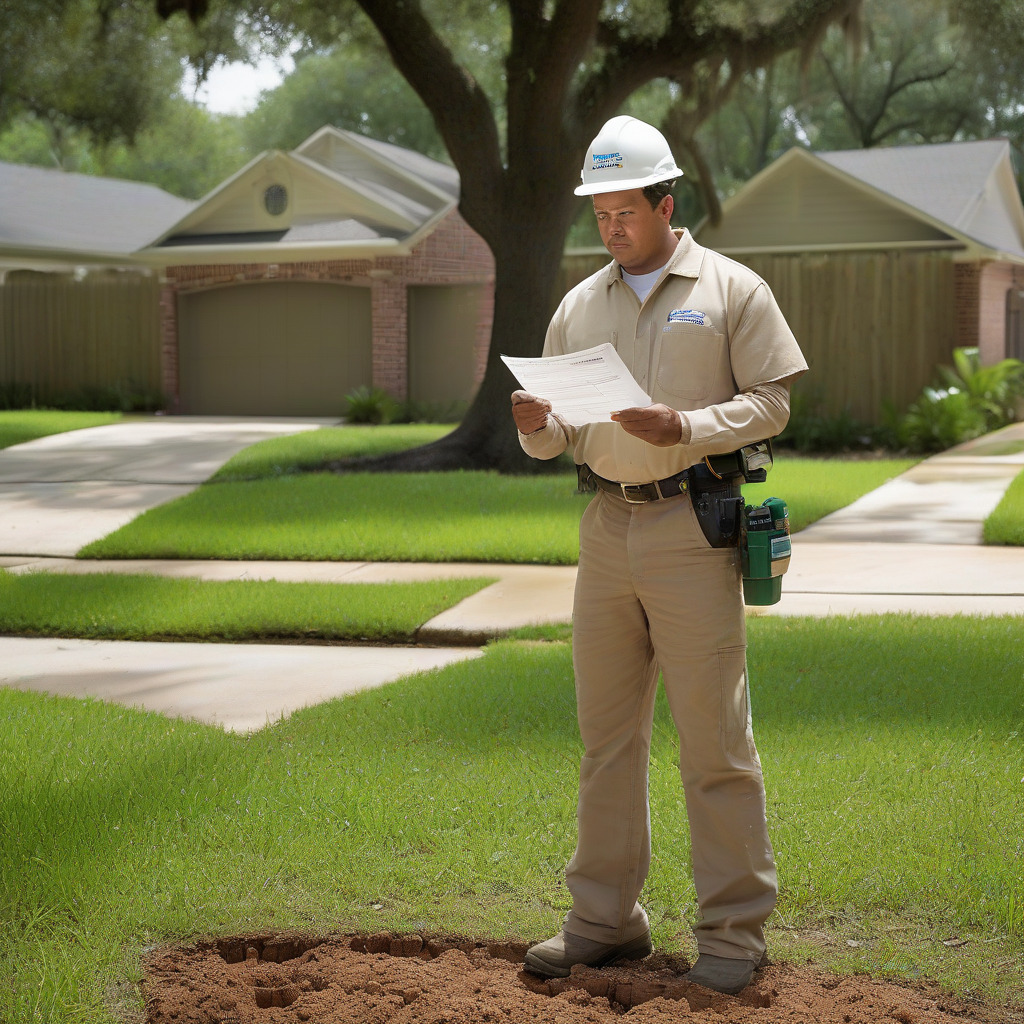
Getting a pool permit in Greater Houston is not one process. It’s two or three, depending on exactly where your property sits. The cost, timeline, and inspection requirements differ significantly depending on whether you’re dealing with the City of Houston’s Development Services Department, the Harris County Engineering Department, or one of the smaller incorporated municipalities that run their own shops. Homeowners who don’t sort this out first waste weeks calling the wrong office, submitting fees to the wrong portal, and occasionally signing contracts with pool builders who got the jurisdiction wrong too.
Here’s what the process actually looks like, jurisdiction by jurisdiction — what things cost, how long they take, what gets submitted, and why so many first applications come back rejected.
Confirm Your Jurisdiction Before You Do Anything Else
A Harris County address is not a Houston address. This is the single most consequential thing to understand before you call a contractor or look up a fee schedule. It sounds obvious. It trips people up constantly.
The City of Houston’s Development Services Department issues permits for properties inside Houston’s city limits. The Harris County Engineering Department handles unincorporated Harris County — the large swath of the county that sits outside Houston and outside the smaller incorporated cities. But there are also independent municipalities embedded in the county: Bellaire, West University Place, Hedwig Village, Hunters Creek Village, and Piney Point Village — the group commonly called the Bubble cities — plus Pasadena, Jersey Village, and others. Each runs its own permit office with its own fee schedule.
The right way to confirm jurisdiction: run the property address through the Harris County Appraisal District property search at hcad.org. The parcel record will show jurisdiction. You can also use the City of Houston’s address lookup tool at houstontx.gov to confirm whether an address falls within city limits. Do both before calling any permit office and before accepting a contractor’s assumption about which authority governs. I’ve seen homeowners a month into the process realize they’d been talking to the wrong office the entire time.
What a Pool Permit Costs in Houston vs. Unincorporated Harris County
Pool permit fees in both jurisdictions aren’t a flat number. They’re based on project valuation and what’s being reviewed.
In the City of Houston, Development Services calculates permit fees on a valuation-based sliding scale. For a typical residential in-ground pool with a project valuation in the $50,000–$80,000 range — which covers most mid-range gunite or fiberglass pools in this market — the combined permit and plan review fee generally runs between $400 and $900. The two fees are assessed separately; both are required. Additional line items may appear if your project includes an attached spa, a deck structure requiring separate structural review, or a gas line extension. Pull the current Residential Fee Schedule directly from houstontx.gov/permitting before budgeting. Those figures reflect publicly available rate tables but should be confirmed at time of application.
Unincorporated Harris County has historically charged less — something in the $150–$400 range for a standard in-ground pool. This reflects a different fee structure and the fact that unincorporated Harris County does not enforce a mandatory residential building code. No enforced building code means a lighter inspection regime, different structural and electrical accountability, and a permit fee that funds a narrower scope of review. That lower number is worth some skepticism. I’ll get to why. Confirm current Harris County Engineering fee schedules at eng.hctx.net before budgeting.
For smaller incorporated cities like Bellaire or West University Place, call the municipal permit office directly. Fees are set by city ordinance on their own schedule.
| City of Houston | Unincorporated Harris County | |
|---|---|---|
| Permitting authority | Development Services Dept. | Harris County Engineering Dept. |
| Fee basis | Project valuation, tiered | Flat or tiered |
| Estimated range (typical pool) | $400–$900+ | $150–$400 |
| Residential building code enforced | Yes | No |
| Inspection stages | 5 | Fewer, lighter |
| Floodplain documentation required | Yes, where applicable | Yes, HCFCD |
The Documents You Actually Need to Submit
Most first-submission rejections happen because the submittal package is incomplete. Reviewers won’t approve a partial package — they send it back and you start the queue over. This is also where good contractors separate themselves from mediocre ones. The contractors who’ve done this dozens of times know exactly what reviewers want to see.
A complete residential pool application requires:
A site plan showing the pool’s footprint relative to all property lines, with accurate setback measurements. This is where most applications fail first. The site plan must also identify easements (utility, drainage, access), overhead utility lines, and the location of any septic system on the property. Missing any of those elements generates an immediate correction notice.
Pool construction drawings must show pool dimensions, depth, wall thickness, reinforcement schedule, and all structural connections — enough for a plan reviewer to evaluate structural adequacy. Not a sales rendering from the pool company’s design software. There’s a meaningful difference between those two things, and reviewers can tell.
Houston’s history with flooding means drainage and grading plans get intense scrutiny. Reviewers examine where excavation spoil goes, how deck drainage works, and whether the project creates new impervious cover affecting stormwater runoff to adjacent properties. A drainage plan showing water sheeting toward a neighbor’s yard will come back. Finished grades, drainage arrows, and discharge points all need to be there.
The electrical plan needs GFCI and bonding details: all pool equipment, conduit routing, GFCI protection locations, and — critically — the bonding conductor layout. Texas requires equipotential bonding around pools per NEC Article 680. A lot of first submissions show GFCI protection but omit the bonding conductor details entirely. That fails review every time.
Texas Health & Safety Code Chapter 757 requires a permanent barrier at least 48 inches high, with self-latching, self-closing gates that open away from the pool. The barrier plan must show fence locations, gate hardware specifications, and how the barrier connects to the house structure if the house wall serves as part of the enclosure. This is a state requirement. It applies whether you’re in Houston or unincorporated Harris County, and there are no exceptions.
The pool contractor must hold a current TDLR Pool and Spa Contractor license. That number must appear on the permit application. If the license has lapsed or the contractor listed doesn’t cover the scope, the application fails.
A current property survey — not the mortgage survey from your closing documents — is required. That boundary sketch tucked in your closing folder typically lacks the dimensional precision reviewers need. You need a survey prepared by a licensed Texas land surveyor showing monuments and measured distances. If the property has been subdivided or had any lot adjustments, the survey must reflect the current legal description. This mismatch trips up more applications than homeowners realize.
Finally, if any portion of your property sits in or adjacent to a FEMA Special Flood Hazard Area — and a significant share of Harris County residential properties do, particularly near Brays Bayou, Buffalo Bayou, Cypress Creek, and Greens Bayou — you need Harris County Flood Control District documentation. This is not the same as the general drainage plan. HCFCD may require a no-rise certification, floodproofing documentation, or elevation data depending on your specific FIRM panel. Check your property’s flood zone status at msc.fema.gov before assuming this step doesn’t apply to you.
The Five Inspection Stages for City of Houston Pool Permits
Houston’s Development Services requires inspections at defined construction milestones. Each stage must pass before the next begins. A failed inspection halts the project until the deficiency is corrected and re-inspected — not just that stage, but everything after it.
The pre-pour or steel inspection happens after excavation and before gunite or shotcrete is applied. An inspector verifies the reinforcing steel layout against the approved structural drawings. This is the last chance to catch structural deficiencies before they’re encased in concrete. Once the gunite goes on, you’re not going back.
The gunite or shotcrete inspection verifies that the applied shell meets approved drawings for thickness and coverage. Some jurisdictions combine this with the steel inspection; Houston has historically treated them as sequential.
The rough plumbing and electrical inspection covers underground plumbing runs, equipment pad rough-in, conduit installation, and bonding conductor installation before anything is backfilled or covered. This is where electrical deficiencies — particularly incomplete bonding — show up in the field.
The barrier inspection must be passed before water goes into the pool. Houston takes this requirement seriously, and rightly so. The fence must be fully installed, gates operational and self-latching, and the barrier must close the perimeter completely. Inspectors will fail a barrier inspection for a gate that swings toward the pool, latch hardware that doesn’t meet height requirements, or any gap in the fence line. Whether you swim in September or October often comes down to when this inspection gets scheduled and passed. It’s worth tracking as its own milestone.
The final inspection covers all remaining work: equipment installation, electrical connections, deck surfaces, finished grading, and overall compliance with approved drawings. The permit doesn’t close until this passes. Confirm exact inspection stage names and sequencing with Houston Development Services at 832-394-8800 or houstontx.gov/permitting, since inspection protocols get revised periodically.
For unincorporated Harris County, the inspection approach is materially different. Without a mandatory residential building code, the county’s inspection authority is narrower. This has real consequences for structural and electrical accountability — and here’s where that lower permit fee starts to look less like a bargain. If you’re building in unincorporated Harris County, have a direct conversation with your contractor about what third-party inspections make sense to fill the gap that lighter code enforcement leaves open.
How Long This Actually Takes and Why June Is the Worst Month to Apply
For City of Houston residential pool permits, plan for 6 to 12 weeks of plan review, with the slower end of that range common from March through June when spring construction volume surges. A permit application submitted in the first week of June carries a realistic plan review completion date of late August or early September. That’s just review. Add contractor scheduling on top and you’re looking at a pool that gets water in October at best.
The review queue builds from February onward as contractors submit ahead of summer. By May and June it’s at its deepest. If you want to swim in July, the application needs to be in by late March or early April at the latest — and the submittal package needs to be complete on first submission. A correction notice doesn’t pause your spot in line; it resets it. People don’t fully grasp this until it happens to them.
Houston uses the ProjectDox electronic plan review platform for residential permit submittals. Submittals go in digitally; reviewer comments come back through the portal. This has reduced some logistics delay, but it hasn’t touched review queue time. A third-party plan review option exists for some project types in Houston — whether it’s available and worth the cost premium for your specific permit should be confirmed with Development Services directly.
Harris County Engineering has historically moved faster, somewhere in the 2-to-4-week range for residential pool reviews. The lighter code environment is part of why — there’s simply less to evaluate. That said, Harris County isn’t immune to spring volume spikes, and turnaround can stretch during peak season.
For the smaller incorporated cities, call the permit office directly for a current estimate. Bellaire and West University Place run small but functional permit offices and generally process residential permits on reasonable timelines, but their capacity is limited. Don’t make schedule commitments based on guesses.
Eight Reasons Pool Permit Applications Come Back Rejected
Most of these are avoidable. That’s the frustrating part.
Incomplete site plans are the most common rejection. They’re usually missing easements, don’t note overhead utilities crossing the property, or omit the septic system location. Easements matter because they affect where construction can legally occur. Overhead utilities create clearance questions. Reviewers flag every missing element, and each one requires a revised submittal.
Incorrect setback dimensions show up when the pool doesn’t meet minimum setbacks from property lines, structures, and easements — or when the submitted dimensions measure to the edge of the deck instead of the pool shell. The fix requires re-dimensioning with the correct measurement reference point.
Electrical plan deficiencies break into two patterns. First, GFCI protection is noted but the circuit topology isn’t shown clearly enough for a reviewer to verify coverage. Second, and more commonly, the bonding conductor layout is absent or sketched too vaguely to evaluate. NEC Article 680 bonding requirements are detailed and specific. The electrical plan needs to show the bonding grid, conductor size, and connection points to all metal within the bonding zone. This is one of the most consistently cited deficiencies, and it’s entirely avoidable with a competent electrical drawing.
Missing or non-compliant barrier plans fail automatically. A fence height shown below 48 inches fails. Gates drawn opening toward the pool fail. An incomplete perimeter — a house wall used as a barrier without showing door alarm or self-closing hardware compliance — fails. The correction requires a fully detailed barrier plan meeting Chapter 757.
Missing drainage and grading plans are arguably the most sensitive item for Houston reviewers, given everything this city has been through with flooding. A submittal without a drainage plan, or one showing positive flow toward an adjacent property, gets rejected. The corrected submission must show finished grades, swales, and drainage discharge to an approved outlet.
Expired or missing TDLR license numbers cause rejection when the contractor’s Pool and Spa license number isn’t current or doesn’t appear on the application. Licenses expire. A license that was valid when you got the quote may have lapsed by the time the application is filed. Verify the contractor’s current license at tdlr.texas.gov the day you file, not when you sign the contract.
Survey mismatches occur when the survey used for the site plan doesn’t match the current legal description of the property — because of a lot split, an addition to the legal description, or because someone used that mortgage survey boundary sketch. Setback calculations come back wrong. The correction requires a current survey matching the current deed description.
Finally, missing FEMA Special Flood Hazard Area documentation triggers rejection for bayou-adjacent properties. Submitting without it — or without checking whether the property is in an SFHA — leads to a correction requiring HCFCD documentation and potentially a no-rise analysis. Check the FEMA Flood Map Service Center before filing. This city has learned the hard way what happens when floodplain rules get treated as optional paperwork.
HOA Approval and City Permits Are Two Separate Clocks
The City of Houston does not require HOA approval as a condition of issuing a building permit. The city and the HOA operate entirely independently. But that independence cuts both ways. You can receive a city permit and still be prohibited from starting construction if your HOA’s Architectural Review Committee hasn’t approved the project. Starting construction without ARC approval in a deed-restricted community exposes you to a stop-work order under the deed restrictions, which the HOA can seek to enforce in civil court. A stop-work order mid-construction — with excavation open and materials on site — is significantly more expensive than a planning delay. This is not a hypothetical; it happens.
ARC calendars in major Harris County master-planned communities move slowly. Bridgeland, Towne Lake, Cinco Ranch, and Gleannloch Farms have ARC committees that meet on monthly or biweekly cycles. Miss the submission deadline for the March meeting and the next opportunity may be April or May. That’s 4 to 6 added weeks during the stretch of the calendar when contractor availability and permit review backlogs are already at their worst.
File both your permit application and your ARC submission simultaneously, as early as possible. Don’t wait for one approval before starting the other. In a well-run project, permit review and ARC review run in parallel.
One note for unincorporated Harris County residents: the county does not enforce deed restrictions. That enforcement is left entirely to the HOA, whose legal remedies are civil rather than governmental. This affects how quickly — and at what cost — those remedies can actually be used.
Above-Ground Pools, Flood Zones, and the Questions That Come Up Most
Do above-ground pools require a permit in the City of Houston? Generally, smaller above-ground pools below certain depth and capacity thresholds don’t require a building permit, but the threshold is specific and has been revised over time. Don’t rely on contractor guidance alone here — I’ve seen this go wrong. An unpermitted above-ground pool that technically required a permit creates title and insurance complications that surface at the worst possible moment, usually when you’re trying to sell. Confirm the current threshold at houstontx.gov/permitting or by calling Development Services at 832-394-8800.
What if the property is in a FEMA Special Flood Hazard Area? Houston’s bayou system — Brays, Buffalo, Greens, Cypress Creek — puts an unusually large share of Harris County residential properties in or near FEMA-designated floodplains. If your property’s FIRM panel shows Zone AE, Zone AO, Zone A, or any Special Flood Hazard Area designation, additional documentation is required. This typically involves Harris County Flood Control District review, a floodplain development permit, and potentially a no-rise certification from a licensed engineer demonstrating that pool construction won’t raise the base flood elevation for neighboring properties. This is a distinct step from the standard drainage plan; it involves HCFCD, not just the building permit office, and it adds time. Look up your FIRM panel by address at msc.fema.gov before submitting anything.
One more thing worth flagging: since Winter Storm Uri in 2021, some Houston plan reviewers have flagged pool equipment installations for freeze protection measures — particularly equipment placement relative to exposed areas and whether freeze protection specs appear in the equipment schedule. This isn’t uniformly codified, but it’s worth asking your contractor to address in the equipment specifications. Given what February 2021 looked like in this region, that’s a reasonable ask regardless of what the permit technically requires.
What to Verify Before You File and Where to Look It Up
Before submitting a pool permit application in Houston or Harris County, confirm each of the following from the authoritative source. Not from your contractor. Not from a neighbor who built a pool three years ago.
Confirm jurisdiction using the HCAD property search at hcad.org and the City of Houston address tool at houstontx.gov.
Pull the current fee schedule from the City of Houston at houstontx.gov/permitting (navigate to the current Residential Fee Schedule), or from Harris County Engineering at eng.hctx.net. If you’re in a Bubble city or other municipality, call the permit office directly.
Verify your contractor’s TDLR license at tdlr.texas.gov. The license must be current at time of application.
Check your flood zone at the FEMA Flood Map Service Center: msc.fema.gov. If the property is in an SFHA, contact Harris County Flood Control District at hcfcd.org before submitting the permit application. As part of our home & property coverage, we track how flood zone designations affect construction timelines and permit requirements across the region.
Direct contacts:
- City of Houston Development Services: 832-394-8800 / houstontx.gov/permitting / submittals through ProjectDox
- Harris County Engineering Department: eng.hctx.net
- TDLR Pool and Spa Program: tdlr.texas.gov
For a June swim date, the complete permit package needs to be in by early April — and it needs to be right on first submission. Every correction notice adds weeks in a review queue that has no interest in your construction timeline. The contractors who consistently get permits approved on the first try treat the submittal package as carefully as the construction itself. If yours doesn’t, that’s worth knowing before you sign anything.