What Flood Zone AE Actually Means for Your Houston Mortgage and Insurance Bill
FEMA's designation affects neighborhoods from Meyerland to Kingwood. Here's what it costs a real buyer in real Houston neighborhoods — and what tools you actually have.

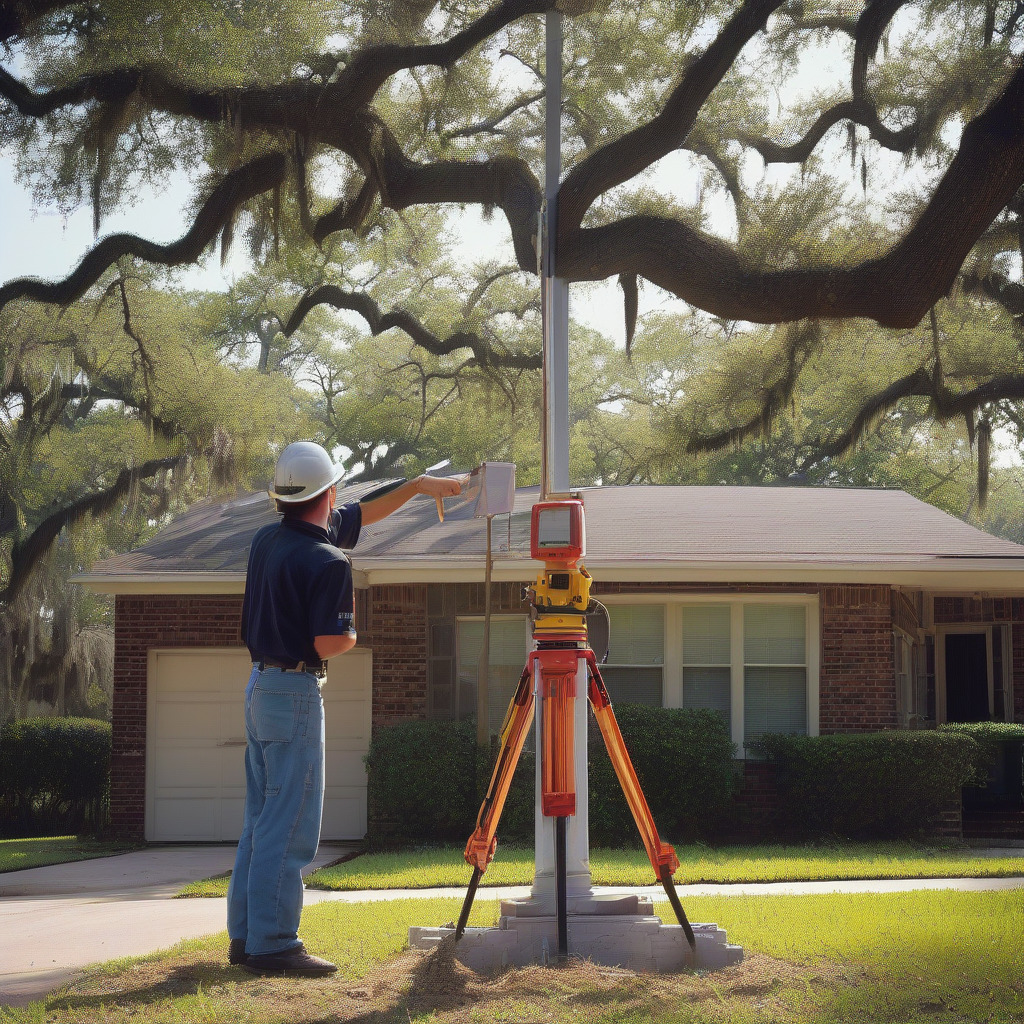
FEMA’s designation affects neighborhoods from Meyerland to Kingwood. Here’s what it costs a real buyer in real Houston neighborhoods — and what tools you actually have.
Hurricane season opened June 1, and if you’re under contract on a house in Meyerland, Friendswood, or Kingwood, there’s a decent chance you’re about to get some unwelcome news. Somewhere between the inspection period and the closing table, your lender is going to tell you the property sits in FEMA Flood Zone AE. You are legally required to carry flood insurance before they’ll fund the loan.
For buyers who didn’t budget for it, the number lands hard. A Meyerland slab home at or below Base Flood Elevation can run $3,000 to $5,500 a year in NFIP premiums — call it $400 a month tacked onto a payment that probably already stretched the budget. Unlike property taxes, there’s no homestead exemption to soften it.
FEMA’s website will tell you what AE means technically. This article tells you what it costs in specific Houston zip codes, why your lender has no flexibility on the requirement, and which tools — elevation certificates, private carriers, map amendments — can actually move the number.
What the Flood Zone Labels Mean in Plain Terms
FEMA classifies flood risk in tiers, and the distinction between them carries real financial consequences.
Zone AE is the designation most Houston buyers will encounter. It’s the Special Flood Hazard Area: land with a 1% annual chance of flooding, the so-called “100-year floodplain.” The “E” means FEMA has calculated a Base Flood Elevation (BFE) for the parcel — a specific elevation in feet above sea level that floodwater is expected to reach during that event. AE runs along Houston’s bayou corridors and is the designation that triggers the federal mandatory purchase requirement for insured mortgages.
Zone X is where most buyers want to be. It covers moderate- to low-risk areas. No lender mandate, no required premium. In Harris County, Zone X and Zone AE can share the same block — sometimes the same street — because topography along the bayou corridors changes dramatically over very short distances.
Zone VE applies to coastal areas subject to wave action, primarily the Bolivar Peninsula and Galveston Island. The physics are more violent. So are the premiums.
The phrase “my neighbor is in X” offers no comfort in Houston. FEMA’s Flood Insurance Rate Maps draw lines by parcel, and a property that straddles the AE boundary is treated as AE. In Kingwood, where lot-to-lot elevation along the West Fork San Jacinto can swing by several feet, adjacent homes on the same cul-de-sac can sit in entirely different flood zones. I’ve talked to buyers who found this out at the closing table. It’s not a conversation anyone enjoys.
One important thing about how AE pricing works changed in October 2021, when FEMA rolled out Risk Rating 2.0. Before that, NFIP premiums were largely zone-based — if you were in AE, you paid roughly what your AE neighbor paid, regardless of your specific structure’s elevation or how close you sat to the bayou. Risk Rating 2.0 replaced that with property-specific pricing built on four variables: flood frequency, flood type (riverine vs. coastal vs. surface water), distance to the nearest water source, and cost to rebuild. Two homes in Meyerland with identical square footage can carry meaningfully different premiums depending on how their individual profiles score. The old NFIP rate tables are useless for projecting what you’ll actually pay, which means any agent or lender who quotes you a flat “flood insurance usually runs about X here” deserves real skepticism.
Which Houston Neighborhoods Carry the Heaviest AE Concentration
Houston’s AE burden follows the bayou system — 2,500 miles of waterways draining the region — and concentrates in neighborhoods that grew up along those corridors before modern flood mapping existed.
Meyerland (77096) sits squarely in the Brays Bayou floodplain. A substantial portion of the housing stock has flooded multiple times: Allison in 2001, the Memorial Day and Tax Day storms in 2015 and 2016, then Harvey. The neighborhood has a high concentration of FEMA Severe Repetitive Loss properties — a designation with its own insurance consequences, covered below. Most original slab construction in Meyerland sits at or near Base Flood Elevation, the worst possible position under Risk Rating 2.0.
Kingwood (77339 and 77345) is more complicated. The community was built over rolling terrain along the West Fork San Jacinto, so elevation varies dramatically from one lot to the next. Harvey was the defining event here — flooding reached streets that had never flooded before, and subsequent remapping pulled additional parcels into AE. Some Kingwood properties were elevated post-Harvey, which affects both insurance cost and LOMA eligibility. “Kingwood” isn’t a flood zone. A street address is.
Friendswood (77546) straddles Harris and Galveston counties along the Clear Creek corridor, which creates an unusual administrative wrinkle: buyers may be dealing with two counties’ worth of flood map records and elevation certificate history. Friendswood has a more varied elevation profile than Meyerland. Some properties sit well above BFE, and that variance translates directly into a wider premium range.
Secondary corridors often get overlooked: zip code 77033 (Sims Bayou, south of the medical center), 77049 (Greens Bayou along I-10 East), and 77338 (Humble, along Greens Bayou’s upper watershed) all carry significant AE concentrations. These neighborhoods rarely come up in headline flood-risk conversations, which is part of why buyers there get blindsided. For any specific address, use the Harris County Flood Control District flood map viewer at HCFCD.org rather than FEMA’s national flood mapping database. The HCFCD maps are locally maintained and updated more frequently — FEMA’s national database can lag by years behind remapping Harris County has already processed.
What NFIP Flood Insurance Actually Costs in These Neighborhoods
The following premium estimates are based on Risk Rating 2.0 rating factors applied to a 2,000-square-foot home with $250,000 in building coverage. Treat them as working figures, not guarantees. Get an actual quote from a licensed independent agent before using any number for financial planning.
Meyerland, slab at or near BFE: Expect $3,000 to $5,500 per year. At the top of that range, you’re adding roughly $460 a month to carrying cost. Homes elevated on fill or piers after prior flooding score better. A significant portion of original Meyerland construction has not been elevated.
Friendswood, lowest floor two feet above BFE: Properties with this elevation profile typically run $1,200 to $2,800 per year. A two-foot freeboard — lowest floor sitting two feet above Base Flood Elevation — reduces expected damage substantially, and NFIP’s model prices that reduction in. The elevation certificate is what proves it.
Kingwood, by lot elevation: The spread here is wide, $1,500 to $3,200 per year, reflecting genuine elevation variance across the community. A post-Harvey elevated home sitting three feet above BFE will price very differently from a low-lying lot adjacent to the West Fork that barely clears BFE.
In mortgage-payment terms: at a $4,000 annual premium, you’re adding $333 to your monthly payment before escrow adjustments. Buyers who get pre-approved without accounting for flood insurance are consistently surprised by what it does to their debt-to-income ratio. That surprise has killed more than a few Houston closings.
The Lender Mandate and Why You Cannot Negotiate Around It
The Flood Disaster Protection Act of 1973, as amended, requires that any federally backed mortgage — Fannie Mae, Freddie Mac, FHA, VA — on a property in a Special Flood Hazard Area must carry flood insurance before the loan funds. This is federal statute, not bank policy. Lenders who fail to enforce it risk losing their federal banking authority. There is no waiver process for the buyer, no grace period, and no negotiating around it.
The coverage floor: you must insure for the lesser of the outstanding loan balance, NFIP’s maximum building coverage limit of $250,000, or full replacement cost of the structure. For most Houston homes priced above $300,000, carrying the full $250,000 NFIP building policy is the practical floor. Most local community banks writing conventional portfolio loans apply the same standard to their own underwriting, so the mandate effectively covers the full mortgage market.
The specific Houston problem is timing. In a market where buyers routinely waive or compress the option period, the flood insurance requirement often surfaces late — sometimes when the commitment letter arrives, sometimes not until the final closing disclosure. At that point, buyers have almost no time to shop for coverage, compare private alternatives, or evaluate whether the premium changes their willingness to close. Most just pay whatever the number is. That’s exactly the wrong approach, and the rest of this article is about how to avoid it.
The Elevation Certificate — The Document That Can Actually Change Your Premium
An elevation certificate is a licensed surveyor’s formal measurement of your structure’s lowest floor elevation relative to the Base Flood Elevation on FEMA’s maps. It’s the document that allows NFIP and private carriers to price your actual risk rather than the average risk for your zone. When your structure sits above BFE, the difference in premium can be several hundred to over a thousand dollars a year.
A new elevation certificate from a Texas Society of Professional Surveyors-licensed surveyor runs $500 to $900, depending on lot complexity and surveyor availability. Turnaround is typically two to four weeks. If you think you’ll need one, order it at the start of the due diligence period. Ordering it on day 28 of a 30-day option period is not useful.
Before paying for a new survey, check whether Harris County already has one on file. Contact HCFCD or Harris County’s permit records office and ask. If the current owner elevated the structure after Harvey, obtained a floodplain development permit, or was required to produce an EC during a prior sale, one may already exist. A valid existing EC can be used directly — saving you $700 and two weeks of calendar time.
The math is straightforward. On a $5,000-per-year policy, a $2,000 annual reduction pays back the survey cost in the first year and keeps paying for as long as you own the house. It’s one of the few due diligence expenditures in a real estate transaction that almost always pencils out.
If the EC shows that the lowest adjacent grade — the ground around the foundation, not the floor elevation — sits at or above BFE, the property may qualify for a Letter of Map Amendment, which formally removes it from AE designation. FEMA charges no fee to process a LOMA. A successful one eliminates the mandatory purchase requirement entirely. This is a realistic option for certain Kingwood and Friendswood properties where the lot sits above BFE but FEMA’s mapping placed it in AE based on surrounding terrain. It is generally not applicable to Meyerland, where most lots in the Brays Bayou floodplain genuinely sit inside the hazard area and the elevation data confirms it.
Private Flood Insurance — What It Saves and Where It Falls Short
The private flood insurance market in Houston has grown substantially since Harvey. Neptune Flood, Palomar Specialty, and Wright Flood’s private-market products are active here. For complex risk profiles, surplus lines brokers can access Lloyd’s syndicates and other London market capacity. An independent Houston insurance agent who specializes in flood — not a captive agent whose company doesn’t write private flood — is the right person to run these comparisons. Ask specifically.
For elevated homes with no prior loss history, private carriers often price 20 to 40 percent below NFIP on comparable coverage. On a $3,000 NFIP policy, that’s real money annually. The advantage is most pronounced for newer elevated construction in Kingwood and better-positioned Friendswood properties. For Meyerland properties with loss history, private carriers price aggressively or decline outright. That’s not a criticism — it’s actuarial reality.
Private policies often include additional living expense coverage, reimbursing hotel and temporary housing costs while damaged property is repaired. Standard NFIP policies do not cover this. Private carriers also move faster on claims. After Harvey, the NFIP claims backlog in Harris County stretched for months — some families were still waiting for resolution well into 2018 while carrying mortgages on homes they couldn’t live in. That matters when you’re deciding which policy to buy.
Not every private flood policy satisfies the Fannie Mae, Freddie Mac, FHA, and VA mandatory purchase requirement. Fannie and Freddie have published standards that private policies must meet — specific policy terms, cancellation notice requirements, coverage continuity provisions. Before purchasing a private policy expecting it to satisfy your lender, get written confirmation from the lender that the specific policy form is acceptable. A verbal “sure, that should be fine” from a loan officer does not protect you if the underwriter disagrees at closing.
Private flood policies through the surplus lines market — which covers most Lloyd’s products — are non-admitted in Texas. The Texas Property and Casualty Insurance Guaranty Association does not back these policies if the carrier becomes insolvent. This is not a reason to automatically avoid surplus lines carriers, but it is a reason to ask your agent about carrier financial strength and to understand the distinction before you bind coverage.
Flood History, Disclosure, and the Resale Question Nobody Wants to Ask
Buying in AE isn’t just a question of what you’ll pay this year. It’s a question of what you’ll be able to sell the property for, and under what conditions. As we’ve tracked in our Houston moving and real estate coverage, flood-zone status increasingly shapes buyer demand and negotiating leverage across the region’s most affected corridors.
Texas law requires sellers using the TREC Sellers Disclosure Notice to disclose whether the property is in a Special Flood Hazard Area and whether it has sustained prior flood damage. The disclosure language has gray areas — particularly around whether a property “was in a flood zone” at the time it flooded, which matters for properties whose map designation changed after flooding occurred. Treat the seller’s disclosure as a starting point. Verify flood history independently through HCFCD records and FEMA’s flood loss database. Sellers don’t always know the complete picture. Occasionally they do know and hope you won’t dig.
Rice University’s Kinder Institute for Urban Research documented measurable resale discounts for flood-disclosed AE properties relative to comparable X-zone homes after Harvey — figures in the range of 5 to 15 percent below comparable non-flood-zone properties in the same market. The discount isn’t uniform. A well-elevated Kingwood home that came through Harvey without damage sells differently than a Meyerland property on its third flood disclosure. For context on where demand and pricing currently stand across the broader Houston market, what the Houston housing market actually looks like at mid-year 2026 is worth reading alongside this. Context matters enormously, and buyers who assume those two situations are equivalent will be wrong in different directions.
FEMA’s Severe Repetitive Loss designation applies to properties that have filed two or more flood claims each exceeding 25 percent of the structure’s value. Harris County has one of the highest concentrations of SRL properties in the country, heavily clustered in Meyerland and along the Sims Bayou corridor. SRL properties carry premiums that can make them effectively unsaleable to any buyer requiring a mortgage. Identify SRL status before making an offer. Your agent can request it through FEMA’s records process. Do not skip this step.
Harris County’s $2.5 billion flood bond program, passed by voters in 2018, is funding channel improvements, detention basins, and buyouts that are actively reducing flood risk in several AE-heavy corridors. Bond-funded Brays Bayou work has been reshaping flood risk in segments that directly affect Meyerland’s profile. As each project phase completes and FEMA processes the updated hydraulic modeling, some parcels will see their BFE recalculated downward or their designation changed from AE to X. This doesn’t eliminate current-year insurance costs — but a Brays Bayou-adjacent property bought at an appropriate discount today might look genuinely different on a flood map in ten years. Since Harvey, HCFCD has purchased more than 3,000 flood-prone properties through its buyout program; remaining adjacent parcels are worth monitoring as bond work progresses.
Before You Make an Offer — A Houston-Specific Checklist
Look up the address on the HCFCD flood map viewer before you schedule a showing. HCFCD.org. The HCFCD maps reflect more recent remapping than FEMA’s national database. If the property is in AE, you want to know before you’re emotionally committed. That’s the right order of operations.
Check for an existing elevation certificate before paying for a new survey. Contact HCFCD or Harris County’s permit records office and ask whether an EC is on file for the address. If the current owner elevated the structure, pulled a floodplain development permit, or refinanced post-Harvey, there’s a real chance an EC already exists. Use it if it’s valid — $700 saved is $700 saved.
Ask your lender in writing whether they accept private flood policies. Do this before you shop for coverage, not after. Ask which policy form standards they require and whether they’ve approved the specific carrier you’re considering.
If the property looks like it might qualify for a LOMA, consult a licensed floodplain manager before the option period expires. A Certified Floodplain Manager can evaluate eligibility quickly. FEMA’s LOMA process has no filing fee, but it takes roughly 60 days — relevant if you want the designation changed before closing.
Get an actual flood insurance quote — not an estimate — during due diligence. Call an independent Houston agent who writes flood policies across multiple carriers. Ask for a formal quote on both NFIP and applicable private market options for the specific address. This number belongs in your financial analysis before you remove the financing contingency.
The buyers who get hurt in AE aren’t necessarily the ones who buy there — plenty of people make it work. The ones who get hurt are the ones who treat flood insurance as a detail to resolve at closing rather than a number to price into the offer. By the time you’re at the closing table, you’ve lost all your leverage and most of your options. That’s also why what a Houston home inspection should cover matters earlier in the process than most buyers expect — flood-related structural and foundation issues can surface there well before insurance becomes the conversation.
Premium figures cited are estimates based on NFIP Risk Rating 2.0 methodology applied to sample properties and should be verified with a licensed insurance professional before use in financial planning. Flood zone designations should be confirmed via the HCFCD flood map viewer and FEMA’s Flood Map Service Center for any specific address.