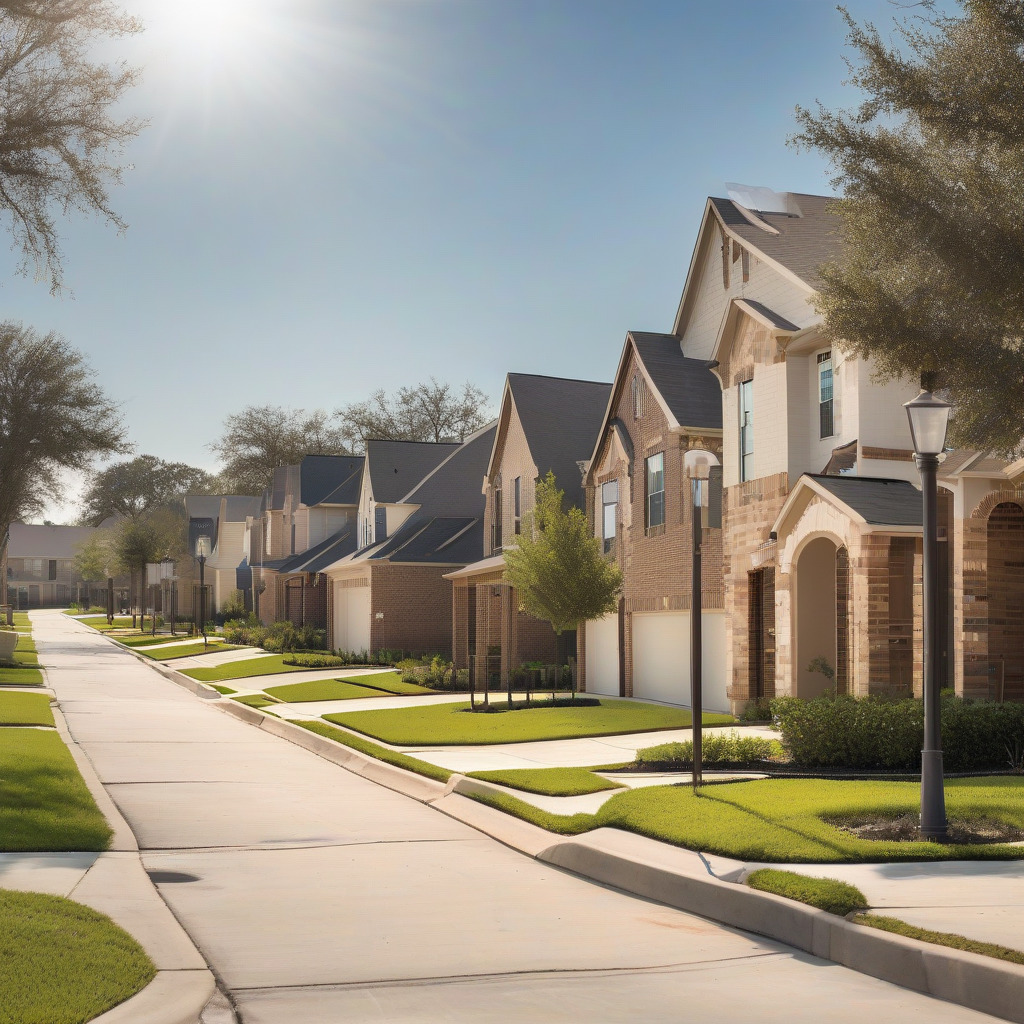
How Houston's Harris County Flood Buyout Program Actually Works for Homeowners
Harris County runs the largest voluntary home buyout program in the country. Here's what eligible homeowners need to know — and what the program brochure won't tell you.

Harris County runs the largest voluntary home buyout program in the country. Here’s what eligible homeowners need to know — and what the program brochure won’t tell you.
The Harris County Flood Control District has acquired roughly 3,000 properties since the early 1990s, converting flood-prone lots along Brays Bayou, Hunting Bayou, White Oak Bayou tributaries, and the San Jacinto West Fork from occupied housing into open floodplain. By parcel count and acreage, it’s the largest county-level voluntary acquisition program in the United States. After Hurricane Harvey hit Harris County in August 2017, the program expanded dramatically and hundreds of millions in federal money arrived through two separate funding streams.
If you own a flood-prone home here, you’ve probably heard about the buyout program from a neighbor, a council member, or a flyer left on your door. What you probably haven’t gotten is a straight account of how it actually works: the timeline, the offer mechanics, the hidden deductions, what happens to the land afterward, and what staying means if you decide not to sell. This piece covers all of it.
What This Program Actually Is
The HCFCD buyout program is a federally regulated real estate acquisition. Not a disaster relief payment. Not something that moves on a disaster timeline. Every major step — eligibility determination, environmental review, appraisal, title work — runs on federal program rules that take as long as they take, regardless of how urgently a homeowner needs to move. That mismatch between a family’s urgency and the program’s pace is where most of the real frustration lives, and the program’s own materials don’t prepare you for it.
Two primary federal funding streams drive the program, and most summaries just skip past the distinction. The funding source affects your timeline, your paperwork burden, and sometimes which deductions come out of your proceeds.
The first is FEMA’s Hazard Mitigation Grant Program (HMGP), which activates after a federal disaster declaration. It carries strict federal regulatory requirements, including a mandate that offer prices be based on pre-disaster fair market value — what the home was worth before it flooded, not its current damaged condition. HMGP has been the backbone of Harris County acquisitions for three decades.
The second stream, activated specifically after Harvey, is HUD’s Community Development Block Grant — Disaster Recovery (CDBG-DR) program, administered in Texas through the General Land Office. The GLO allocated approximately $1.176 billion in CDBG-DR funds for Harris County, with acquisitions among the eligible uses alongside infrastructure and housing rehabilitation. CDBG-DR has different income-targeting requirements — a significant portion must benefit low-to-moderate income households — and a different documentation burden than HMGP. Some homeowners qualify for one track but not the other. That distinction alone can determine whether you’re waiting 18 months or three years.
Which Neighborhoods Are Eligible
HCFCD’s acquisitions have concentrated in specific bayou corridors, but eligibility runs deeper than geography.
Meyerland (77096) along Brays Bayou has seen some of the most active acquisition in the county. Drive along South Braeswood Boulevard and the gaps between houses tell the story: lots that once held occupied homes are now grass floodplain. Kashmere Gardens and Trinity/Houston Gardens (77028, 77016) along Hunting Bayou — a historically underinvested corridor that saw severe Harvey flooding — have been targeted by CDBG-DR acquisitions, with LMI income-eligibility requirements central to how those funds get allocated. Inwood Forest (77088) near White Oak Bayou tributaries and Kingwood (77339, 77345) along the San Jacinto West Fork were both heavily flooded in Harvey and have had active buyout interest since 2018. The Bear Creek and Addicks Reservoir spillage zone (77084) experienced pool flooding during Harvey, triggering buyout discussions that, in some cases, are still unresolved.
To be eligible, a property must sit in a FEMA Special Flood Hazard Area — the 100-year floodplain shown on FEMA’s Flood Insurance Rate Maps. It also has to pass a cost-effectiveness analysis: under HMGP rules, the cost of the buyout must be less than the projected cost of future flood damages to that property over time. Flooding in Harvey didn’t automatically put every affected street into an active acquisition round.
The only reliable way to find out whether your property is in an active round right now is to call HCFCD’s Floodplain Management Division directly at 713-684-4000. Rounds open and close. What was inactive in 2021 may be open now. Don’t rely on a neighbor’s secondhand information or an online map with no update date on it.
How the Offer Price Is Calculated — and Whether You Can Push Back
Under HMGP regulations (44 CFR Part 80), the offer price is based on the property’s pre-disaster fair market value. HCFCD hires an independent licensed appraiser who uses comparable sales, structure size, lot characteristics, and neighborhood data. That number becomes the offer letter.
You can hire your own appraiser if you think HCFCD’s valuation is off — and in neighborhoods where comps are scarce or the property has distinctive features, it often is. HCFCD is required to consider a counter-appraisal. If the two diverge significantly, the county can bring in a third party to reconcile them. Condemnation is technically available to the county as a last resort but rarely used.
The ceiling is real: HCFCD can’t exceed appraised fair market value under HMGP. But the appraisal isn’t necessarily final if you can document a reasonable disagreement with the methodology. Buyout prices in Harris County vary widely. Transactions recorded with HCAD and reported in prior Houston Chronicle coverage have generally run from roughly $150,000 to $250,000 per parcel, with outliers in both directions — larger Meyerland footprints have closed higher, smaller piers-and-beam homes in older corridors lower. Check current HCAD transaction records for your specific neighborhood before anchoring to any figure.
The Duplicate Benefit Problem Harvey Survivors Need to Know About
This is the detail that catches more homeowners off guard than anything else in the program, and it’s the part that genuinely bothers me about how HCFCD communicates — or doesn’t. Most program descriptions leave it out entirely.
If you received FEMA Individual Assistance payments after Harvey — money for temporary housing, home repair, anything disaster-related — or if you received a National Flood Insurance Program payout for flood damage, those amounts may be deducted from your buyout proceeds as duplicate benefits. Federal regulations prohibit receiving compensation twice for the same loss. A homeowner who got $40,000 in IA payments and $60,000 in flood insurance proceeds could see $100,000 subtracted from a $180,000 buyout offer. That leaves $80,000 at closing.
People who accepted that initial assistance in good faith, spent it on repairs, and enrolled in the buyout program years later have been blindsided by this. Nobody connected those dots when the money was first accepted. The deduction applies regardless of whether you still have the funds. Before you sign anything, consult a real estate attorney familiar with Harris County flood transactions. They can help you reconstruct your disaster assistance records, understand the specific offset calculation being applied to your case, and determine whether any documented expenditures might affect the number.
What many homeowners never claim — because nobody told them to ask — is assistance under the federal Uniform Relocation Act (49 CFR Part 24). This includes reimbursement for actual documented moving costs or a fixed-schedule payment, plus a Replacement Housing Payment to help cover the gap between your buyout proceeds and the cost of a comparable home in the area. These benefits exist. They require documentation and a claim. Do not assume the purchase price was all that was available.
The Real Timeline
HCFCD’s program materials describe the buyout as a sequence of steps. What they don’t convey is how long each step actually takes in practice.
Property identification and initial interest: Weeks to a few months. HCFCD identifies target properties; homeowners can approach the district as well. This establishes a waitlist, not a commitment.
Eligibility and cost-effectiveness determination: One to three months. The district reviews FEMA flood maps, damage history, and runs the required cost-benefit analysis. Properties that fail the test are eliminated here.
Environmental and historical review: Two to six months, frequently longer — and the phase most homeowners don’t see coming. Federal regulations require environmental and historic preservation reviews before the program can proceed to appraisal. If a property has features requiring extended consultation, the review extends further. HCFCD cannot order an appraisal until that clearance comes through. There’s no workaround.
Appraisal: Two to four months. If you commission your own counter-appraisal, factor in additional time for delivery and any reconciliation.
Offer and acceptance window: Once you receive an offer letter, you typically have 30 days to accept or reject. If you need more time, document a request for extension. Don’t let the deadline pass without a decision.
Title and closing preparation: Thirty to sixty days after acceptance — title search, lien clearance, mortgage payoff coordination. If you carry a mortgage, your lender gets paid from proceeds at closing.
Post-closing occupancy: Up to 90 days. Use it. HCFCD allows this period so you can arrange relocation. It’s not open-ended.
Demolition: Contracted separately by HCFCD, typically six to twelve months after closing. Your former house will not be down within weeks.
A homeowner entering the program today should plan for 18 to 36 months from initial enrollment to closing, assuming nothing unusual surfaces. Post-Harvey CDBG-DR cases frequently ran longer. Harris County community meeting records and Houston Chronicle reporting documented homeowners who waited three or more years to close — living in damaged homes the entire time, unable to commit to repairs, unable to make plans. The program is real. The timeline is not within HCFCD’s power to dramatically accelerate, and anyone who suggests otherwise is guessing.
What Happens to the Land After HCFCD Buys It
Once HCFCD acquires a parcel under HMGP funding, federal conditions restrict that land to open space use permanently. No residential development. No commercial redevelopment. No structures except those related to flood control or recreation. A deed restriction enforces this through any future ownership transfer.
Bought-out parcels have followed a few paths. Some have been excavated and configured as dry detention basins — holding stormwater during rain events, draining between storms. Others remain as naturalized floodplain, maintained minimally by HCFCD as grass and scrub. A significant number of Brays Bayou parcels have been folded into the Brays Bayou Greenway, developed in coordination with the Buffalo Bayou Partnership — the trail network now used by joggers and cyclists who may have no idea they’re running over former residential foundations.
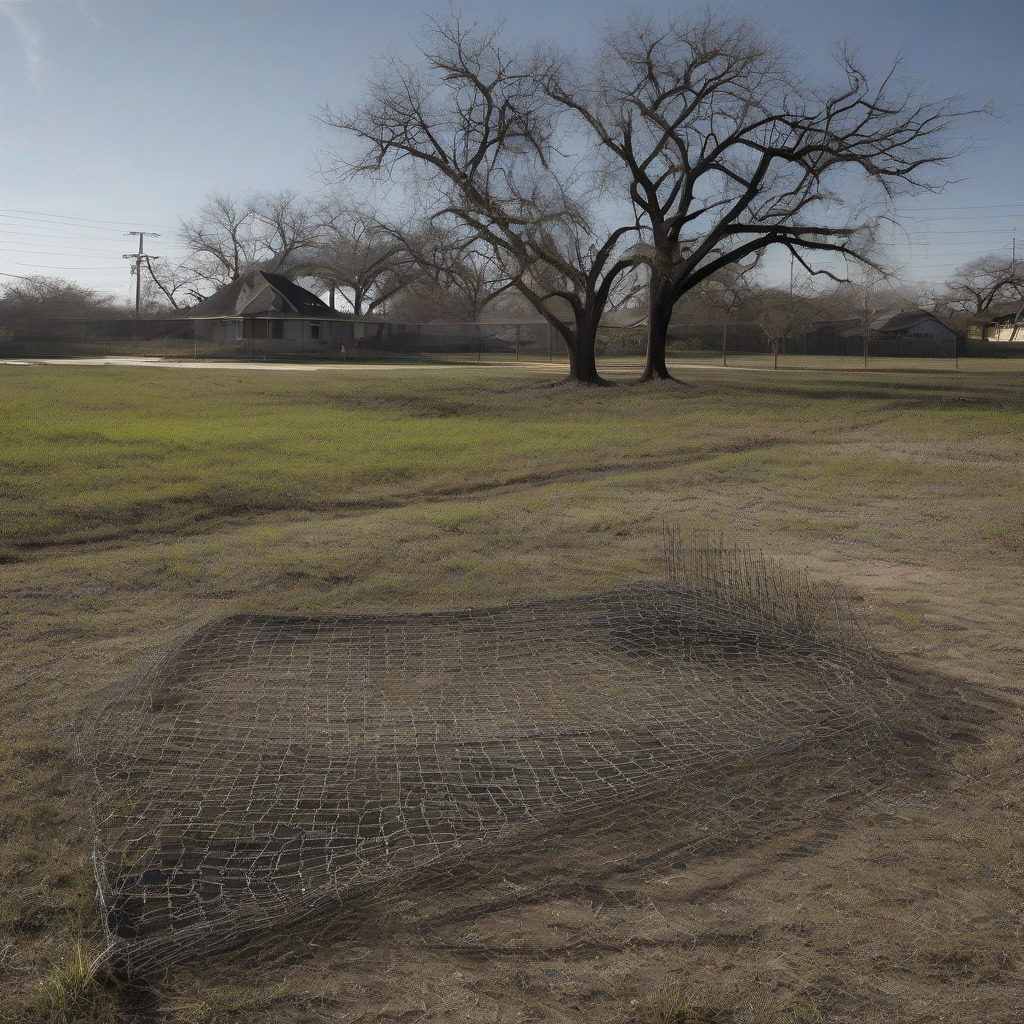
In Meyerland, stretches along South Braeswood Boulevard and Imogene Street that appear in HCAD records as HCFCD-owned have been converted to open grass. Structures are demolished. Slabs may or may not be removed depending on whether demolition funding covered full extraction — that varies by contract. In some acquired blocks, concrete pads of former houses are still visible beneath the grass.
Drive through a heavy acquisition corridor and the transformation is visible block by block: a gap where a house used to be, then another, then a stretch where the whole block is empty and the bayou runs behind it. It’s not quite nature and not quite neighborhood. It’s what flood mitigation actually looks like from the street.
Voluntary — With Limits: What Happens If You Stay
Participation is genuinely voluntary. You can’t be forced to sell outside a condemnation proceeding, and HCFCD rarely pursues condemnation. If you decline an offer or live in a corridor where no active round ever opened, you can stay.
Staying in a heavy buyout corridor carries real consequences. Neighbors who sell leave you increasingly isolated. On some blocks along Brays Bayou, a homeowner who declined to sell is now the only occupied structure on a street that is otherwise HCFCD-owned open land. Buyers for those homes are scarce, and the ones who do appear understand exactly what they’re looking at.
If your property sits in the floodway — the channel portion of the floodplain that must stay clear to carry the 100-year flood — you face particularly tight restrictions on improvements. Under HCFCD regulations and City of Houston ordinances, a structure that sustains substantial damage (repair costs exceeding 50 percent of pre-damage market value) must be brought into full compliance with current floodplain regulations before a permit issues. For many homes in the floodway, that means elevation that costs more than the home is worth. The program literature doesn’t describe this as a bind. That’s what it is.
Renters in buyout-eligible properties get the least coverage in most accounts of this program. If your landlord accepts a buyout offer, you will receive relocation assistance under the Uniform Relocation Act — not the full homeowner-level benefit, but real assistance for moving costs and a replacement housing differential. If you’re a tenant in a flood-prone neighborhood and your landlord has mentioned the buyout program, ask directly whether they’ve been approached. Then call HCFCD and ask what your rights are. Nobody is going to raise this unprompted.
If a Buyout Isn’t Available: The Actual Alternatives
Not every flood-prone property in Harris County is in an active acquisition round. Not every homeowner wants to sell. Real options exist.
HCFCD’s Home Elevation Program provides cost-share grants to raise a structure above the Base Flood Elevation on its existing foundation. Funding availability fluctuates — confirm current status and whether applications are open by calling 713-684-4000. Not all structures or neighborhoods qualify.
NFIP Increased Cost of Compliance (ICC) coverage is available through a standard flood insurance policy for homes officially declared substantially damaged. ICC provides up to $30,000 toward elevation, demolition, relocation, or floodproofing. It’s one of the most underused benefits in the entire flood insurance system. If you have a flood policy and your home was substantially damaged in Harvey or any subsequent event, ask your insurance agent specifically about ICC. A lot of policyholders don’t know it exists because FEMA’s post-flood communications almost never mention it.
FEMA’s BRIC program (Building Resilient Infrastructure and Communities) is applied for by local governments, not individual homeowners. But it matters because it’s one channel through which Harris County and Houston can apply for additional mitigation funding, including drainage improvements that reduce flood risk at the neighborhood scale. If your area is pushing for a drainage project that hasn’t gotten funding, BRIC is a lever your council member or county commissioner can actually pull.
HCFCD’s structural drainage improvement projects have measurably reduced flood risk in some corridors. Not every bayou has equivalent infrastructure investment. It’s worth finding out whether your neighborhood is in a project area that may change your property’s risk profile over the next decade — because that answer could affect whether staying makes sense long-term.
Selling on the open market is always available, with clear eyes about the math. Texas Property Code §5.008 requires sellers to disclose flood history to buyers. Flood-prone Houston homes do sell — the market hasn’t abandoned these corridors — and for broader context on how price and inventory are moving across the city right now, what the Houston housing market actually looks like at mid-year 2026 gives useful ballast. Buyers factor flood history into offers, though, and prices reflect it. A real estate agent with specific experience in flood-affected neighborhoods will give you a more accurate read than a Zillow estimate, which in these corridors can be nearly useless.
How to Start — and What to Bring to That First Call
Call HCFCD’s Floodplain Management Division at 713-684-4000. Ask whether your address is in an active acquisition round. If not, ask how to be notified if one opens. Get a name.
Before that call — and certainly before any meeting — gather these documents: your flood insurance policy including the declarations page and any ICC coverage details; FEMA Individual Assistance records from Harvey or any prior disaster declaration including dollar amounts and assistance categories; your current mortgage payoff statement; any prior appraisals or elevation certificates; and your deed and property tax records from HCAD (hcad.org).
If you receive an offer letter, consult a real estate attorney before signing. The duplicate benefit offset rules — the FEMA IA and NFIP deduction calculations — are complicated enough that professional review of your specific records before you accept could materially change what you net at closing. That’s not a precaution for its own sake. It’s a real number that moves based on your specific history. Readers navigating related financial decisions around their property may also find our moving & real estate coverage useful as a reference point.
The program is real. For homeowners in the right corridor at the right moment, a buyout can be a rational exit from a situation that isn’t getting better. It’s also slow, complicated, and full of details the program’s own materials don’t surface. The people running the program aren’t hiding anything — the federal rules are just genuinely complex, and nobody at HCFCD is going to walk you through the parts that might cost you money at closing. That’s on you to find out first.
Reporting note: CityDesk Houston is working to confirm current active acquisition rounds with HCFCD’s Floodplain Management Division, pull current GLO Action Plan Amendment figures for buyout-specific allocations, and source firsthand homeowner accounts from Meyerland and Kingwood. This piece will be updated as that reporting is completed. Readers with direct experience in the HCFCD buyout process are encouraged to contact the newsroom.