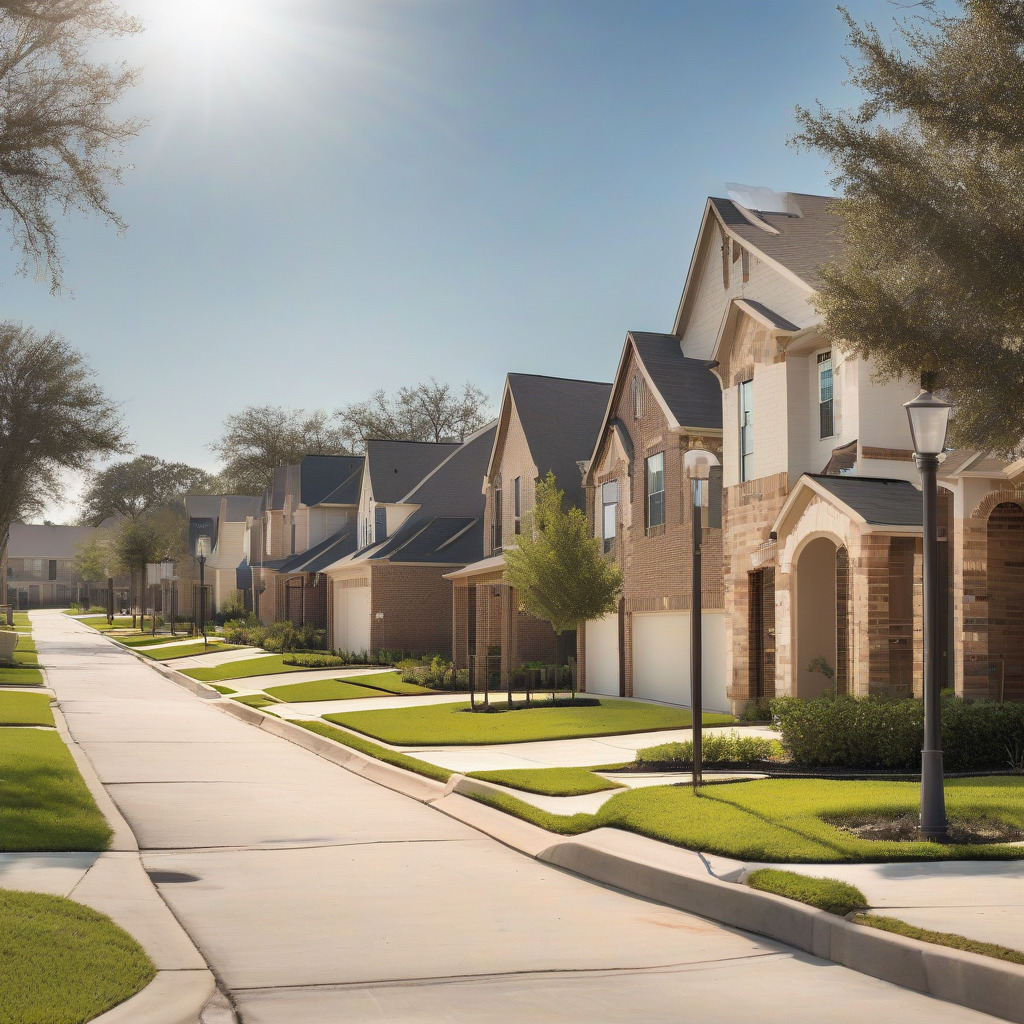
What Houston Condo Buyers Need to Know in 2026 That the Listing Won't Tell You
Special assessment notices are landing now. Insurance costs have reshaped what HOA fees actually mean. And whether Texas SB 168 is fully in effect — and whether your building has complied — is an o…

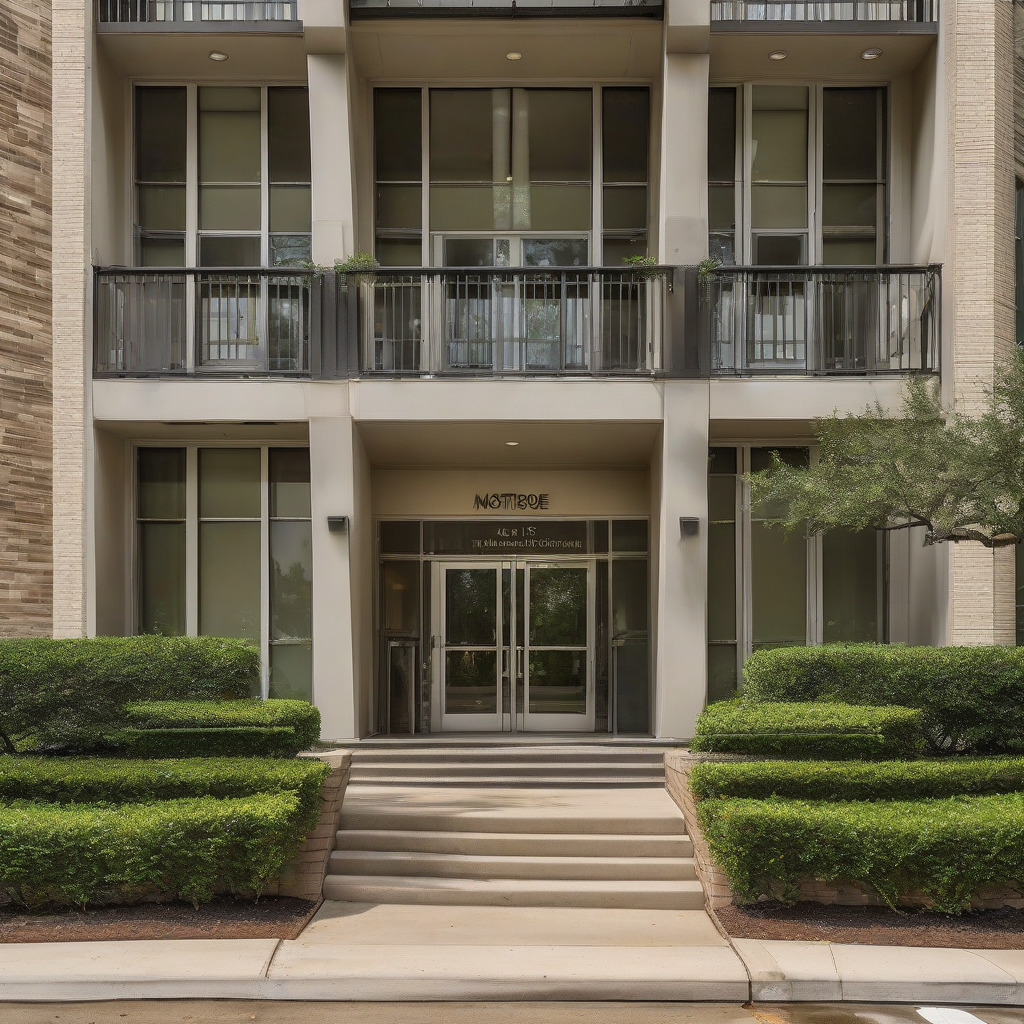
Special assessment notices are landing now. Insurance costs have reshaped what HOA fees actually mean. And whether Texas SB 168 is fully in effect — and whether your building has complied — is an open question buyers need to resolve before making an offer.
The HAR listing looks clean. Photos are good. Price per square foot tracks with the neighborhood. But the listing omits three things that matter: whether the building has completed a structural inspection and reserve study, whether the reserve fund holds enough money to replace the roof or elevator cab, and whether the association has already approved a special assessment the seller isn’t volunteering.
In 2026, those omissions carry more financial weight than they did even two years ago. Three separate forces are hitting Houston’s condo market at once, and most buyers — frankly, many agents — aren’t tracking all three.
First: Texas Senate Bill 168, which aims to impose structural inspection and reserve study requirements on condo associations. Buyers must verify its current enactment status and compliance deadlines directly with a Texas condo attorney or the Texas Department of Licensing and Regulation, because the law’s implementation status remains unsettled in publicly available sources. Second: Hurricane Beryl’s July 2024 landfall reopened the commercial property insurance wound that had barely started healing after Harvey, sending master policy premiums higher and pushing some associations onto surplus lines carriers with thinner consumer protections. Third: Houston’s older building stock — the 1970s-through-1990s vintage concentrated in Montrose, the Greenway Plaza corridor, and the Museum District — has reached the point where deferred maintenance is becoming impossible to defer. Some of those boards are only now realizing it.
None of this appears on any listing page.
What You’re Actually Paying in Houston HOA Fees, and Why
The monthly HOA fee on a Houston condo listing is not fixed. It bundles building maintenance, amenity staffing, exterior insurance, reserve contributions, and sometimes utilities. The ratio of those components has shifted sharply since 2023, and not toward buyers.
As a rough working baseline for 2026: Midtown high-rises with doorman service, pool, fitness center, and structured parking run around $600 to $1,200 monthly, sometimes higher. Museum District mid-rises with elevator, controlled access, and attached garage tend to fall in the $400 to $750 range. Montrose and Neartown low-rises — three to five stories, no doorman, surface parking, older common areas — generally run $250 to $500. These figures come from publicly listed resale units and disclosure documents. Your specific building will vary based on amenity load, age, and what the board has decided to fund.
High-rise associations saw estimated fee increases of 15 to 30 percent between 2023 and 2024, often with no visible improvement to the building. The explanation is almost entirely insurance and reserves. If a building raised fees 20 percent last year, that increase was not arbitrary — it likely reflects a master insurance premium spike, a board decision to increase reserve contributions, or both. The question worth asking is whether the increase was enough, or whether another increase — or a special assessment — is coming. Sometimes the answer is both, and the board already knows it.
The Insurance Line Item Buried in Your Monthly Fee
Houston’s condo master insurance market took a hit after Hurricane Harvey in 2017, partially stabilized, absorbed another blow from Hurricane Ida’s regional effects in 2021, and then Beryl hit in July 2024. For commercial property carriers underwriting master policies on multi-unit residential buildings, each event triggers a re-underwriting cycle. Those premiums flow directly into HOA fees. It’s a clean, punishing chain.
For a typical Midtown high-rise, brokers working the Houston market estimate the embedded insurance cost per unit runs somewhere in the $100 to $400 monthly range in 2025 and 2026, depending on building age, construction type, roof condition, and claims history after Beryl. For older mid-rise stock in the Museum District — 1980s and 1990s buildings with flat or modified-bitumen roofs — expect to be toward the higher end. Insurers are pricing the age and wind vulnerability of those roofs based on what those roofs actually did during recent storms.
The more consequential problem for some associations is the shift to surplus lines carriers. When standard admitted carriers decline to renew a building because of claims history or deferred maintenance, the association has to go to the surplus lines market. Surplus lines carriers carry thinner consumer protections. If the carrier fails, admitted carriers are required to contribute to state guarantee funds that step in — surplus lines carriers aren’t. That’s not a technicality. That’s the difference between a covered claim and a very bad year.
If you don’t know which type of carrier is writing your building’s master policy, you don’t really know what you’re buying.
Beyond the master policy, you’ll owe two additional premiums as a condo owner. Your HO-6 policy covers personal property, interior fixtures, and the portion of your unit not covered by the master policy — budget roughly $800 to $2,000 annually in Houston depending on floor, unit value, and coverage limits. If the building is in a FEMA-designated flood zone — relevant for lower floors near Brays Bayou or Buffalo Bayou — you’ll need separate flood coverage through NFIP or a private carrier. The association’s master policy almost certainly does not cover interior flood losses.
Ask the seller for the current master policy declarations page and the carrier name. If it’s a company you’ve never heard of, spend ten minutes with an independent insurance broker before you proceed. They read declarations pages for a living. Ten minutes, and you’ll actually know what you’re buying into.
Special Assessments, Houston’s Older Buildings, and Whether You Inherit the Bill
A special assessment is a charge levied on unit owners outside the regular monthly fee, typically because the reserve fund can’t cover a capital repair or an emergency expense — a post-Beryl roof replacement, say — exceeded what was budgeted. Texas law does not require a condo association to maintain reserves at any particular percentage of its annual budget. Read that again, because it matters.
Buildings constructed in the 1970s through 1990s in Montrose, the Greenway Plaza corridor, and the Museum District are now 30 to 50 years old. Roofs, elevators, parking structure decks, fire suppression systems, and plumbing chases in buildings of that era are at or past expected replacement cycles. If the association has held reserve contributions artificially low to keep monthly fees competitive, there may be a substantial deferred maintenance backlog quietly waiting for whoever closes next. Beryl accelerated some of those conversations in an unplanned and expensive way.
One Museum District mid-rise collected a $25,000 per-unit special assessment in early 2025 for emergency roof repairs. The building had been carrying a reserve fund equal to roughly 6 percent of its annual budget. The board had deliberately held the line on reserve contributions to keep fees from rising. When Beryl hit and the roof damage exceeded the insurance deductible by $600,000, there was nothing to absorb it. That board made a choice, and the unit owners paid for it. Special assessments for major structural or mechanical projects in similar Texas urban markets have run $5,000 to $50,000 or more per unit. These figures aren’t indexed in any central database — they live in resale certificates and board meeting minutes, not on HAR — but any building with a Beryl-era claim and a reserve fund below roughly 10 percent of annual budget should be treated as elevated risk.
Montrose associations are frequently small, under 30 units, which means fewer owners splitting the bill when a special assessment hits. A twelve-unit building facing a $60,000 parking deck repair pays $5,000 per unit. A 150-unit building pays $400. Size matters here in ways that don’t show up on any listing.
The legal question buyers most often miss: can you inherit a special assessment that was board-approved before closing but not yet collected? Under Texas Property Code Chapter 82, the resale certificate must disclose any “assessments approved by the board of directors that are not yet payable.” If the board voted to levy an assessment before your closing date, that fact should appear in the resale certificate. If it doesn’t appear and you didn’t ask, you may close owning the obligation. This happens. Get the resale certificate, read the line items, and if the language is unclear, pay a real estate attorney to read it with you. The fee will be a fraction of what an undisclosed assessment could cost you.
Texas SB 168: Verify the Status Before You Rely on It
Texas Senate Bill 168 was introduced to address structural safety of condominium buildings, motivated in part by national attention following the 2021 Surfside, Florida collapse. The legislation aims to require structural inspections and reserve studies for condo buildings above certain age and height thresholds, with results disclosed to prospective buyers.
Here’s the problem: the exact enactment status, effective dates, applicable building thresholds, and compliance deadlines under SB 168 require independent verification with a Texas condo attorney or the Texas Department of Licensing and Regulation. Do not rely on any secondhand characterization of what the law currently requires — including anything you read here. Texas has not historically passed Surfside-equivalent legislation at the same stringency as Florida, and the implementation status of SB 168 is a fact that must be confirmed from primary sources. If an association tells you it is complying with SB 168, ask to see the actual inspection report and reserve study. If an association says SB 168 doesn’t apply to its building, verify that independently.
What’s true regardless of the law’s current status: Texas has no Florida-style mandatory reserve funding requirement. Associations can legally maintain near-zero reserves. Request the association’s most recent reserve study — a formal engineering analysis of the building’s physical condition and projected capital expenditure needs — and ask when it was completed and by whom. A reserve study from 2017 cannot predict 2026 capital needs in an aging building. If the association can’t produce one, or the last one is more than five years old, that’s a meaningful gap.
If SB 168 is not yet in full effect for a given building type, that fact is important buyer-beware context. It means the building hasn’t been legally compelled to commission an inspection or reserve study. What you want to know is whether the board chose to do it anyway. That choice — or the absence of it — tells you a lot about the people managing the building you’re about to buy into.
Before making an offer, ask in writing: Has the association completed a structural inspection and reserve study? When? By whom? Are the findings reflected in the current or proposed budget? A well-run association will have documents ready. One that can’t answer these questions is telling you something. Pay attention to it.
Your Legal Rights Before Closing Under Texas Law
Texas law gives buyers real protections. They only work if you use them.
For condominiums created after January 1, 1994, your rights are governed primarily by Texas Property Code Chapter 82, the Texas Uniform Condominium Act. For condominiums created before that date — which covers a substantial portion of the Montrose, Museum District, and River Oaks condo stock — Chapter 81 applies, with different and often weaker disclosure requirements. Buyers in older buildings need to be more aggressive about what they request, because in a Chapter 81 building, the seller isn’t always required to hand you information unprompted. You have to know what to ask for.
Under Chapter 82, a seller must provide a resale certificate before closing. It must include the current regular assessment and any special assessments, the reserve fund balance, any board-approved assessments not yet collected, a summary of current master insurance coverage, any pending litigation involving the association, and any rule violations attributable to the unit being sold. The seller must deliver the certificate within a statutory timeframe after a written request, and the buyer has a right to cancel within a specified period after receiving it. Your agent should be coordinating this. The timing matters because it intersects with your TREC option period — if your option period expires before you’ve received and reviewed a complete resale certificate, you’ve lost a protection you can’t recover.
Beyond the resale certificate, Section 82.116 entitles unit owners to inspect association books and records: financial statements, current budget, reserve fund balances, and meeting minutes. Request the last two years of board meeting minutes as part of your due diligence. Meeting minutes often contain discussions of pending repairs, deferred maintenance, or insurance renewal problems that never surface on the resale certificate. They also tell you whether the board is actually paying attention to the building’s condition or just approving budgets and adjourning. Some boards are genuinely on top of things. Others clearly aren’t, and the minutes will show you which one you’re dealing with.
For buildings governed by Chapter 81, consult a Houston condo attorney about what you’re entitled to request and what the seller is required to disclose. The rules differ, and the gap in protections is real. For additional context on what building inspections should cover in Houston’s housing stock, what a Houston home inspection should cover that many inspectors skip is worth reading before your due diligence process is complete.
What Houston Title Companies Are Actually Seeing in Resale Certificates
Escrow officers at Houston-area title companies review condo resale certificates constantly. The problems follow predictable patterns.
A reserve fund below 10 percent of annual budget is almost never a good sign. There’s no universally agreed threshold for a healthy reserve fund, but a fund holding less than 10 percent of the association’s total annual budget is almost certainly underfunded relative to actual capital needs. For a building with $2 million in annual HOA revenue, a reserve fund of $150,000 isn’t a cushion. It evaporates in one elevator replacement.
Mid-claim insurance status warrants real scrutiny. If the resale certificate reflects an open post-Beryl claim that hasn’t been resolved, ask exactly what it covers, what the deductible situation is, and whether any repair work is still incomplete. A building in the middle of a significant insurance claim is a building whose financial picture isn’t settled. You may be closing into a situation where the special assessment discussion is already underway at the board level.
Approved assessments not yet collected are not technicalities. They are money you will owe.
Elevator inspection deficiencies show up in board minutes more often than in resale certificates — which is another reason to request those minutes. A building with overdue elevator inspection certifications may face imminent repair costs that will hit the reserve fund or trigger an assessment. Fire suppression deficiencies carry both safety and insurance implications. Older Houston high-rises and mid-rises that haven’t been retrofitted with modern sprinkler systems, or that have systems with outstanding inspection deficiencies, may face carrier pressure to upgrade or risk non-renewal. This is particularly relevant in 1970s and early 1980s buildings.
When any of these flags appear, the next step isn’t automatically to walk away. It’s to get specifics, get the financial projections, and figure out whether the price reflects the risk. A building with a modest reserve fund might still make sense if the monthly fees are low and major capital needs are years out. A building with an open major claim and a depleted reserve fund is a different calculation — and the difference between those two situations won’t announce itself in the listing.
The Questions to Ask Before You Make an Offer
Put these in writing to the seller or the association management company before submitting an offer. A seller who can’t or won’t answer is telling you something worth hearing.
Reserves: What is the current reserve fund balance? What percentage of annual budget does it represent? When was the last reserve study completed, and by whom? Is the reserve contribution rate expected to change next year? Has the board voted to waive reserve contributions at any point in the last five years?
Structural inspections: Has the association completed a structural inspection and reserve study? Can you provide copies? If not, what is the timeline? Are any inspection findings reflected in the current or proposed budget?
Master insurance: Who is the current carrier — admitted or surplus lines? What was the premium at last renewal, and what was the change from the prior year? Are there open claims against the master policy, including any post-Beryl claims? What is the wind and hail deductible?
Special assessments: Are there any assessments currently outstanding against this unit? Has the board approved any assessments not yet collected? Is the association currently in any discussion about capital expenditures that could produce a future assessment?
Litigation: Is the association currently a party to any litigation? Has it been involved in any litigation in the last three years?
Records: Can you provide the last two years of board meeting minutes, the most recent annual financial statement, and current year-to-date budget-versus-actual?
Houston’s condo market in 2026 has sound buildings and well-run associations at reasonable prices across Midtown, the Museum District, and Montrose. It also has buildings where the deferred maintenance bill is about to come due and the reserve fund can’t pay it. The gap between those two situations is wider than it’s been in years, and the financial consequences of landing on the wrong side can reach tens of thousands of dollars within the first year of ownership. Readers researching their broader purchase decision may also find our moving & real estate coverage useful for context on the Houston market overall.
The listing won’t tell you which one you’re looking at. The resale certificate will — if you know how to read it and you insist on receiving it before your option period expires. Start there.