What to Expect From a Summer Home Inspection in Houston
From AC tonnage math to cracked Gumbo clay, here's what to watch—and what inspectors commonly miss—when you're under contract in Harris County between May and September.

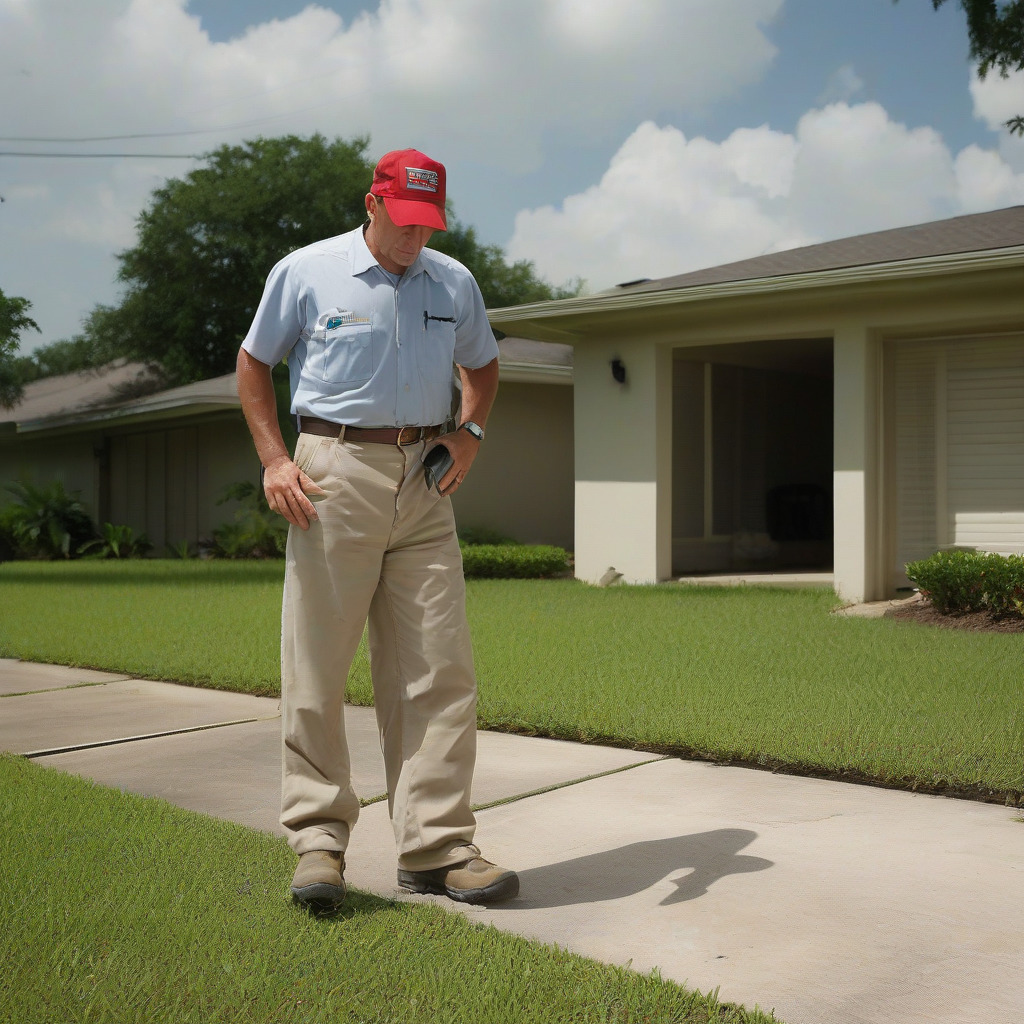
From AC tonnage math to cracked Gumbo clay, here’s what to watch—and what inspectors commonly miss—when you’re under contract in Harris County between May and September.
A Houston home inspection in July is not the same exercise it is in February. That distinction matters more than most buyers realize when they’re sitting in an Austin-based lender’s office reviewing a contract for a house in Meyerland or Cypress—often half-distracted by the stack of disclosure documents they’ve just been handed.
Between May and September, Harris County operates under conditions that turn a routine inspection into a genuine stress test. Heat index values reach 105 to 110°F on a typical afternoon. Dew points hover at 70 to 75°F. The air conditioning season runs eleven to twelve months out of the year. Those aren’t background details for atmospheric color. They’re the reason a 10-year-old AC unit here has logged roughly three times the operating hours of its peer in Chicago, and why the expansive clay beneath half the slabs in Houston can drop an inch or more over a single dry summer.
When conditions like these are active during your walkthrough, they compress real financial risk into a two-and-a-half to four-hour window that most buyers attend underprepared.
What follows is a step-by-step guide to what actually matters in a summer inspection in Harris County, written for buyers, not inspectors.
Before You Schedule: Frame This as a Heat-Stress Audit
Stop thinking of the inspection as a checklist exercise. Think of it instead as a stress test.
Summer in Houston means the systems that kill you financially are all under real operational load. HVAC. Attic envelope. Foundation. Moisture control. The AC is running. The attic is cooking. The soil is either cracking open or recovering from a wet spring. This gives a summer inspection genuine diagnostic value that a February inspection simply can’t replicate—and I’d argue it’s one of the few advantages buyers in a Houston summer market actually have.
It also means there are failure modes invisible until November, when the first electric bill arrives or a ceiling stain reappears after the first cold front. Part of using a summer inspection well is knowing which findings surface now and which ones you need to design around through specific add-on services. A TREC-licensed inspector active in Harris County can walk a buyer through what’s operationally testable on the day of the inspection, what requires laboratory work, and what falls outside the Standards of Practice entirely. When you’re vetting inspectors, that conversation—about what they will and won’t be able to tell you in summer conditions—is itself diagnostic.
Step 1: Verify Your Inspector’s TREC License Before You Do Anything Else
Texas requires all professional home inspectors to hold an active license issued by the Texas Real Estate Commission. You can verify it online at trec.texas.gov. Harris County adds no additional licensing layer. The TREC search takes about ninety seconds. Do it.
When outdoor ambient temperatures exceed 65°F—a condition Houston meets every day from April through October—TREC SOP requires the inspector to operate the cooling system and report on it. That’s not a courtesy; it’s a regulatory obligation. During a winter inspection, an inspector can defer AC testing with a notation about ambient conditions. In summer, that deferral isn’t available.
Beyond the license itself, ask specifically about thermal imaging capability. Thermal cameras aren’t required by TREC SOP, but they change what an inspector can see in summer conditions. At supply registers where condensation forms inside ductwork. At attic penetrations. At wall cavities where moisture intrusion isn’t visible to the naked eye. An inspector who carries a thermal imager and knows how to interpret it in Houston’s humidity regime offers something meaningfully different than one who doesn’t.
Attic entry deserves its own question. Attic temperatures in a poorly insulated Houston home on a July afternoon can reach 130 to 160°F. Some inspectors will conduct only a head-and-shoulders visual inspection from the hatch rather than a full attic walk—which is understandable from a personal-safety standpoint, but limits what they can document about insulation depth, roof deck condition, and HVAC equipment in the attic space. Find out before you book whether a full attic entry is their standard practice. If thermal imaging is substituting for physical entry, ask how they document insulation depth, because thermal cameras measure surface temperature, not R-value.
Certifications from ASHI (American Society of Home Inspectors) or InterNACHI carry continuing education requirements and peer accountability that TREC licensing alone doesn’t mandate. They’re not guarantees of quality, but they’re useful secondary filters when you’re comparing inspectors at similar price points.
Step 2: Put the AC System at the Top of Your Checklist, Not the Middle
In Houston, the HVAC system is the single highest-stakes item in any summer inspection. It’s the most expensive repair. It’s the most common renegotiation lever. It’s the one system genuinely under load and testable at the exact moment the inspector is present. If you pay attention to nothing else in this guide, pay attention to this section.
Start with sizing. The local rule of thumb—a rough heuristic, not an engineering standard—is approximately 1 ton of cooling capacity per 400 to 600 square feet of conditioned space, adjusted for ceiling height, solar exposure, insulation quality, and window area. The correct standard is a Manual J load calculation. A properly sized home will have documentation of one if the system was installed or replaced in recent years. Ask to see it.
The reason sizing matters in both directions cuts against common sense on one side. An undersized unit runs continuously, drives up electricity costs, and struggles to dehumidify adequately on a Houston summer afternoon. An oversized unit seems like an upgrade until you realize it short-cycles—reaching the thermostat’s setpoint quickly, then shutting off. The house stays cool enough, but the system doesn’t run long enough to remove moisture from the air. Indoor relative humidity stays above 60%. In a city where the outdoor dew point is already 72°F, that 60% threshold is where mold becomes a growing concern, literally.
The metric an inspector can and should test is the supply-return air temperature differential. With the system running in summer conditions, a properly functioning central AC should produce a differential of 16 to 22°F between supply air coming out of registers and return air being pulled back into the air handler. Below 16°F suggests a refrigerant issue, an airflow restriction, or a failing compressor. Above 22°F can indicate airflow restriction through the evaporator coil. The temperature differential gives buyers a real-time signal about system performance that justifies calling an HVAC contractor for a full diagnostic before the Option Period expires.
Here’s something worth sitting with: in Houston, a system that runs eleven months a year has logged roughly three times the operating hours of a peer unit in a northern climate by the time it’s 10 years old. When an inspector reports a 12-year-old unit, that’s not a 12-year-old unit in any sense that buyers from other climates would recognize. Budget accordingly in your repair request or price negotiation.
The inspector should document the condensate drain line, the float switch, and the condition of the secondary drain pan. The float switch shuts the system down before the drain pan overflows. Failed float switches are responsible for a significant share of the water damage claims in Houston homes during summer. Confirm the inspector tested it.
Step 3: Read the Foundation Differently Depending on Whether It Rained This Spring
Houston’s dominant soil is Beaumont clay—called Gumbo clay locally—with a plasticity index that commonly runs 40 to 60 or higher in Harris County. That range puts it squarely in the “high shrink-swell potential” category. It moves significantly depending on whether it’s wet or dry.
During wet springs and winters, the clay swells and lifts. During dry summers—and the 2022–2023 drought was a severe recent example—it shrinks and drops. When the shrinkage is uneven across a slab, which it almost always is, differential settlement follows. This seasonal cycle has driven Houston’s active foundation repair industry for decades, and if you’ve spent any time in this city you’ve probably noticed the foundation company billboards every quarter-mile on the Beltway. There’s a reason for that.
On a slab foundation, the summer warning signs of significant differential movement are specific. Interior doors stick at the top or drag at the bottom. Diagonal drywall cracks appear at the corners of door and window openings, cracking at 45 degrees from the corner, not straight down. Gaps open between baseboards and flooring. In more advanced cases, visible slope in floor surfaces or separation at ceiling-wall junctions becomes apparent. The one-inch differential settlement threshold is the common red flag for structural engineer follow-up. Your home inspector can note the presence of cracks and measure approximate differential with a zip level or manometer, but TREC SOP does not require a structural engineering opinion. If the inspector flags differential settlement, the appropriate next step is a PE evaluation, not a foundation company’s free assessment—which carries an obvious sales incentive. I want to be clear about that distinction because it matters enormously in how you interpret what you’re told.
Pre-1960s neighborhoods in Houston—Montrose, the Heights, and much of Midtown—commonly have pier-and-beam construction rather than slab. The failure modes differ significantly. In dry summers, the crawl space under a pier-and-beam home can lose moisture rapidly, causing wood beams to dry and separate from masonry piers, or causing shifts in pier position on softened or dried clay. In the Heights and Montrose specifically, wood rot in crawl spaces is a perennial finding because seasonal moisture cycles never fully dry between wet periods. An inspector should document crawl space access, pier condition, beam-to-pier contact, and moisture damage to framing.
One practical question buyers frequently overlook: ask whether the current owner uses a soaker hose system around the foundation perimeter. Perimeter irrigation—running a soaker hose on a timer during dry periods—is the most common method Houston homeowners use to maintain consistent soil moisture around the slab and reduce seasonal differential movement. If the owners don’t know what a soaker hose system is, that’s useful information about how the foundation has been managed during dry periods. Not a dealbreaker on its own, but worth noting.
Photograph drywall crack patterns at door and window corners. Document any sticking doors by photographing the gap pattern. These photographs become part of your negotiation record if you’re requesting a price adjustment or structural engineer evaluation as a contract contingency.
Step 4: Test the Attic Insulation Against Houston’s Actual Climate Zone Numbers
Houston sits in DOE Climate Zone 2. The minimum attic insulation level recommended for this zone is R-38, and Energy Star’s recommendation for new construction and major retrofits is R-49 to R-60.
In practical terms, an inspector should document insulation depth and type at multiple points, not just at the hatch. Insulation settles and compresses over time, and installers sometimes pile it high near the access point and thin it out toward the eaves—a trick that photographs well and performs poorly. Ask the inspector where they measured and whether depth was consistent across the attic floor.
A radiant barrier—a reflective foil layer applied to the underside of the roof deck—is a separate question from insulation R-value. In a Climate Zone 2 attic that regularly hits 140°F on a July afternoon, a properly installed radiant barrier can reduce attic temperature by 20 to 30°F. This meaningfully reduces cooling load and extends shingle life by lowering the temperature differential driving expansion and contraction cycles in the roofing material. Its presence or absence should be documented in the report.
Attic ventilation works in combination with insulation and a radiant barrier. Ridge vent, soffit vent, any gable vents or powered ventilators—they all work together. Inadequate net free area—the actual open area available for air movement—allows heat to stack in the attic space, accelerates asphalt shingle granule loss, and increases the thermal load on both the AC system and the attic insulation. It’s not an emergency finding, but it’s a real financial variable that buyers in an energy-cost-conscious city should understand before closing.
Step 5: Scrutinize the Roof for Summer-Specific Stress, Not Just General Age
Houston’s roof environment is genuinely unforgiving. UV intensity at this latitude, combined with the thermal expansion and contraction cycles of an attic that swings dramatically between a cool November morning and a July afternoon, degrades asphalt shingles faster than calendar age alone suggests.
Overlay that with hail exposure. Houston leads Texas in insured hail losses. The northwest corridor from Cypress through Katy sits in a particularly active hail track. A February inspection report that’s clean doesn’t account for a March or May hail event—and that’s a genuine, not hypothetical, scenario for buyers who go under contract after hail season has already begun.
The two most common shingle types in Harris County are 3-tab shingles, with a typical lifespan of 15 to 20 years in Houston’s climate, and architectural (dimensional) shingles, which run 25 to 30 years. An inspector should be able to identify the type and estimate age, but the more useful field data is in the gutters. Granule accumulation at downspouts and in gutter channels is a direct measure of shingle degradation that correlates with remaining lifespan. Heavy granule loss in an otherwise mid-life architectural roof is worth flagging for an insurance company’s roofer, not just the TREC inspector.
Thermal lifting—where tab edges curl slightly from heat—is common in summer inspections and is often cosmetic rather than structural. Ask the inspector specifically whether they’re observing thermal lifting or structural tab failure. If the inspector flagged potential hail damage, the appropriate follow-up is an insurance claim inspection, not a roofing contractor’s free estimate.
Step 6: Treat Moisture and Mold as a Separate Line Item, Not an Afterthought
Houston’s average summer relative humidity runs 75 to 90%. The dew point—the actual measure of atmospheric moisture content—regularly sits at 70 to 75°F from June through September, placing it among the highest dew point averages in the continental United States. If you’ve moved here from somewhere like Denver or Phoenix, the first summer genuinely recalibrates your understanding of what “humid” means.
Condensation forms on any surface that drops below the dew point. Inside ductwork. At poorly insulated supply registers. In air handler closets with inadequate vapor barriers. In pier-and-beam crawl spaces where moisture has no drainage path. These are the locations an inspector should document specifically, not just note as “evidence of prior moisture.”
For homes with any flooding history, moisture and mold assessment should be treated as a separate inspection, not a line item in the base report. The Brays Bayou corridor—Meyerland and Bellaire among the most affected neighborhoods—has experienced repeated major flood events. Many homes in that corridor have been remediated and resold. Remediation quality varies enormously, and a standard visual inspection cannot determine whether hidden mold growth persists behind replaced drywall. A dedicated mold assessment with lab sampling is the appropriate tool for those neighborhoods. The cost is modest against the liability it addresses.
Even outside the known flood corridors, ceiling drywall staining should trigger a specific moisture investigation rather than a general notation. Ask the inspector whether the staining pattern indicates active leakage or a historic event, and what the moisture reading at the drywall is. A moisture meter reading that’s elevated even in a stain that “looks old” is a red flag worth taking seriously. “It’s probably old” is not an engineering opinion.
Step 7: Know the Add-On Services Worth Ordering Before You Close
A standard Harris County home inspection for a single-family home in the 1,500 to 2,500 square foot range currently runs approximately $375 to $550, depending on the inspector and any premium services included. That base fee covers the TREC SOP scope and nothing else.
Sewer scopes cost $125 to $175 and are nearly routine in neighborhoods with pre-1970s construction. The Heights, Montrose, and much of Midtown frequently have aging cast-iron sewer lines that have corroded, shifted on the clay, or been infiltrated by tree roots. A visual inspection cannot assess what’s underground. A sewer scope provides camera footage of the line from the cleanout to the city connection and is worth ordering before close on any home in these neighborhoods. Skip it and you’re guessing.
Mold assessment runs $200 to $400 for visual work alone, or $400 to $700 with lab sampling. Any home with visible ceiling staining, a flooding history, or an air handler in a poorly conditioned closet warrants this. The visual assessment alone is useful for documentation. Lab sampling gives actionable data on species and concentration if the visual assessment flags active growth.
Pool and spa inspection costs $75 to $125 and matters because Houston’s outdoor pool season runs long enough that a non-functional pool heater or a failing pump is a real near-term cost. Pool equipment is outside TREC SOP for the general inspector. If the property has a pool, add this.
Foundation evaluation by a licensed PE costs $400 to $800 and becomes the appropriate next step when the inspector flags differential settlement of an inch or more, or documents significant diagonal cracking at door and window corners. The correct path is an independent structural engineer evaluation, not the foundation company’s free assessment. A foundation company’s assessment is a sales call dressed up as a technical opinion. A PE’s report carries engineering authority that’s useful both for the negotiation and, if you proceed, for establishing a baseline before any repairs.
Frame each of these as risk management, not upselling. The individual costs above are a rounding error against the purchase price of any Harris County property. The information value is asymmetric—and I’d argue this is the most underappreciated part of the entire inspection process.
Step 8: At the Inspection, Know What to Ask and What to Photograph
Every buyer in a Houston summer transaction should be present at the inspection. Showing up at the end to flip through the report is the second-best option. Being there for the full two-and-a-half to four hours is how you learn what the house is actually telling you, rather than what a PDF summary translates it as. There’s no substitute for watching an inspector’s body language when they open an attic hatch.
On the AC unit, ask: “How do you assess this system’s effective age given Houston’s operating season?” A unit installed in 2015 has logged roughly three times the operating hours of a peer unit in a northern climate. Ask what the temperature differential reading is at the supply and return registers, and what a normal range looks like for this system size and home. On the condensate system, ask specifically: “Is the float switch present and did you test it?” The inspector should be able to describe what they did to verify the float switch function, not just note that it’s present.
For foundation concerns, ask: “Did you measure differential settlement across the slab, and what’s the reading?” An inspector equipped with a zip level or manometer should be documenting actual measurement, not estimating from visual observation alone.
On the attic: “Did you enter the attic fully, and what did you find regarding insulation depth and radiant barrier condition?” If the answer is that they didn’t fully enter due to temperature, ask how they documented insulation depth at points away from the hatch.
What to photograph for your own records, independent of the inspector’s report: diagonal drywall crack patterns at door and window corners (photograph the full crack, including its angle and extent, not just a close-up); gaps between doors and frames (photograph with a business card or ruler for scale); granule accumulation in gutters and at downspout outlets; any visible staining at ceiling drywall; pier-and-beam crawl space conditions including pier contact with beams and any visible moisture or rot at wood framing. These photographs exist for one purpose in a Texas real estate transaction. They’re your negotiation evidence during the Option Period.
After the Report: How to Use Houston-Specific Findings at the Negotiation Table
Texas buyers aren’t legally required to obtain a home inspection. The Option Period under the TREC One to Four Family Residential Contract is the window in which a home inspection has contractual leverage. After the Option Period expires, a buyer can still terminate for loan-related reasons, but the broad termination right the Option Period provides is gone. That window closes fast, and it closes permanently.
Summer inspections in Houston have a specific informational advantage that buyers in other seasons don’t enjoy. The AC is running under real load conditions. HVAC findings that are undetectable in a winter inspection are testable and documentable in July. An undersized unit that’s genuinely struggling to hold temperature at 4 PM on a July afternoon is a finding with dollar-denominated consequences that translate cleanly into a repair credit or price adjustment request.
Foundation findings from a summer inspection—particularly in a dry year—carry both greater diagnostic clarity and greater urgency than findings from a wet-season inspection. A slab that has moved an inch or more during a drought period may recover partially when soil moisture returns, but it may not. A PE evaluation during the Option Period gives you a professionally defensible basis for requesting either repairs or a price adjustment that reflects the engineering report, rather than the seller’s foundation company’s opinion.
Attic insulation findings translate into a specific, quantifiable request. The documented gap between current R-value and Climate Zone 2’s R-49 minimum Energy Star recommendation is a reasonable basis for a closing credit, with the inspector’s measurements as documentation.
The broader principle is that a Houston summer inspection, done properly with appropriate add-on services, produces findings that have specific local financial consequences. Not generic observations about deferred maintenance. Buyers who understand what they’re looking at, and who show up to the inspection rather than waiting for the report, are in a qualitatively better position at the negotiation table. For more context on the current purchase environment, our moving & real estate coverage tracks conditions across Harris County neighborhoods.
The heat index in Houston in July routinely reaches 105 to 110°F. The house you’re about to buy has been living in that heat for decades. The inspection is your chance to find out how well it’s held up—and what it’s going to cost you to keep it that way.