What Houston Parents Should Know When Buying a First Car for a Teen Driver
Buying a first car for a teenager is stressful anywhere. In Houston, it's different. The used-car market still carries flood-damaged vehicles from Hurricane Harvey. Summer heat turns a broken AC in…

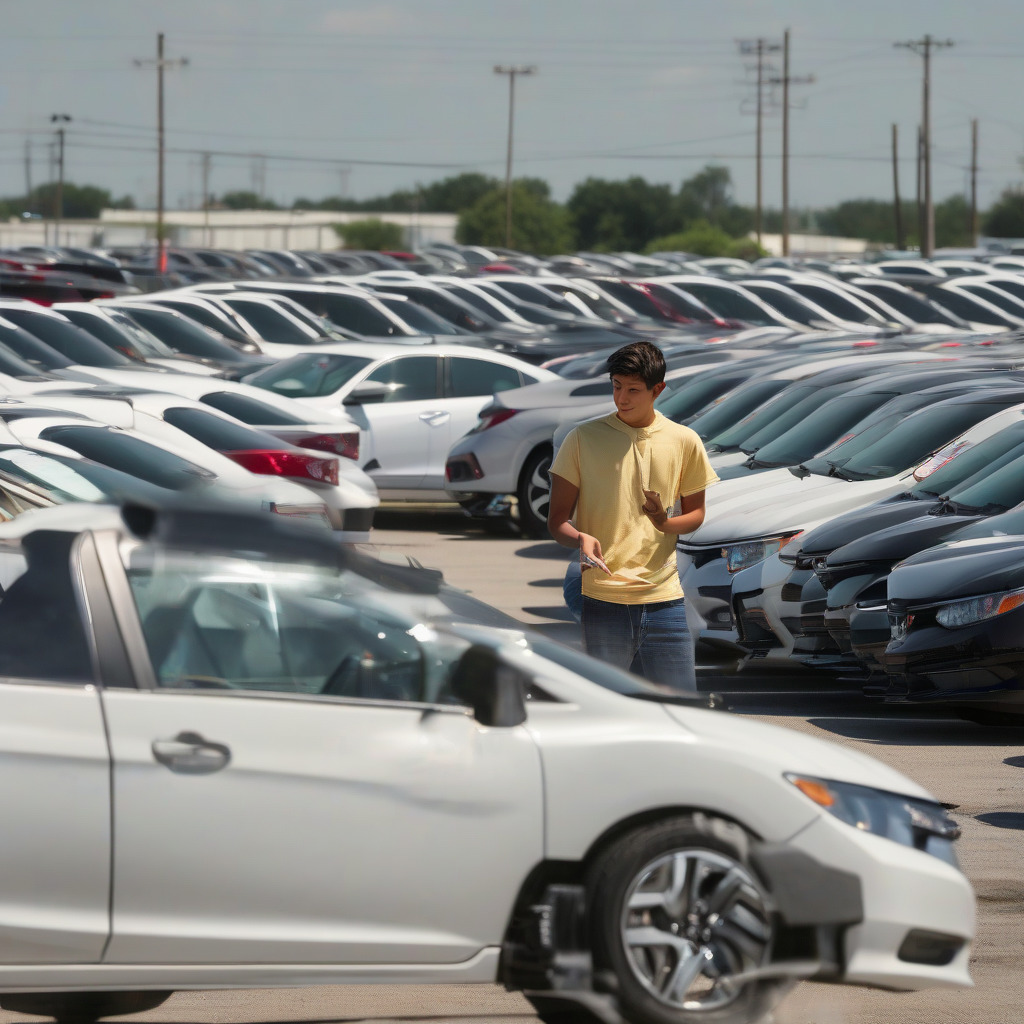
Buying a first car for a teenager is stressful anywhere. In Houston, it’s different. The used-car market still carries flood-damaged vehicles from Hurricane Harvey. Summer heat turns a broken AC into a genuine safety crisis. Insurance rates shock even prepared parents. And families face a compressed buying window — late May through mid-August — that pushes them toward rushed decisions. National car-buying guides don’t account for any of this. Here’s what actually matters if you’re doing this in the Houston metro.
Why This Decision Is Harder Here Than Almost Anywhere Else
Houston parents shopping for a first car are working against several forces at once. HISD’s school year ends in late May and restarts in mid-August. That’s roughly 10 to 11 weeks of chaos: summer schedules overlap with DPS appointment backlogs for learner’s permits, and the used-car market heats up the moment graduation season begins.
The flood-vehicle situation is real and persistent. Hurricane Harvey damaged an estimated 500,000 or more vehicles in the Houston metro in 2017. Many were totaled. Many others were not — they were dried out, detailed, and cycled through out-of-state title processes before returning to Texas dealer lots and private sales. Seven years later, those vehicles still circulate, and they concentrate right in the price range where first-car buyers are shopping. That’s not bad luck. That’s the market.
Then there’s the heat. Houston averages more than 100 days per year above 90°F. A teen stranded on the Southwest Freeway in August because an AC compressor failed isn’t experiencing a minor inconvenience. Any parent walking onto a Houston lot without a specific checklist for this market is at a structural disadvantage — and honestly, the lots are counting on it.
Set Your Budget Before You Set Foot on a Lot
The functional target for a first car in Houston right now is $8,000 to $18,000. Below $8,000, you’re shopping where flood-damaged vehicles concentrate most heavily. Deferred maintenance compounds. Older drivetrains — particularly CVTs on certain Japanese brands — are approaching the mileage at which expensive failures become likely. A $6,000 car that needs a $3,500 transmission repair in year one isn’t a bargain. It’s a financial trap that also leaves a teenager without transportation. I’ve seen that math play out enough times that I’d rather argue about it now than have you experience it in February.
Above $18,000, you’re paying for features and model years that offer marginal improvements over well-selected 2016–2020 vehicles. You’re also handing a new driver a car that costs significantly more to repair and insure. Regional listings on CarGurus and AutoTrader consistently show the recommended models in this guide available in that model-year range in the $10,000–$16,000 window in Houston zip codes. Find the cleanest, lowest-mileage, best-documented vehicle in that window. That’s the whole job.
The Flood Title Problem Nobody Warns You About
This is the section that separates Houston-specific guidance from anything a national car-buying guide will tell you.
Post-Harvey flood vehicles remain in active circulation in this market, disproportionately priced in the $6,000 to $12,000 range — directly overlapping with first-car shopping territory. The mechanism is title washing: a vehicle that would be flagged as salvage or flood title in Texas gets transported to a state with looser titling requirements, retitled there, and returns to Texas with a clean-looking history. It sounds elaborate. It isn’t. It’s routine.
Every candidate vehicle needs VIN verification through three sources, not one. CARFAX is the starting point, but it’s not sufficient on its own. Cross-reference with the National Insurance Crime Bureau’s free VINCheck tool at nicb.org, then run a title check directly through the Texas Department of Motor Vehicles at txdmv.gov. A vehicle that appears clean on CARFAX but shows ownership gaps or out-of-state titling detours in the mid-2017 to 2018 period warrants immediate suspicion. That timing is not a coincidence.
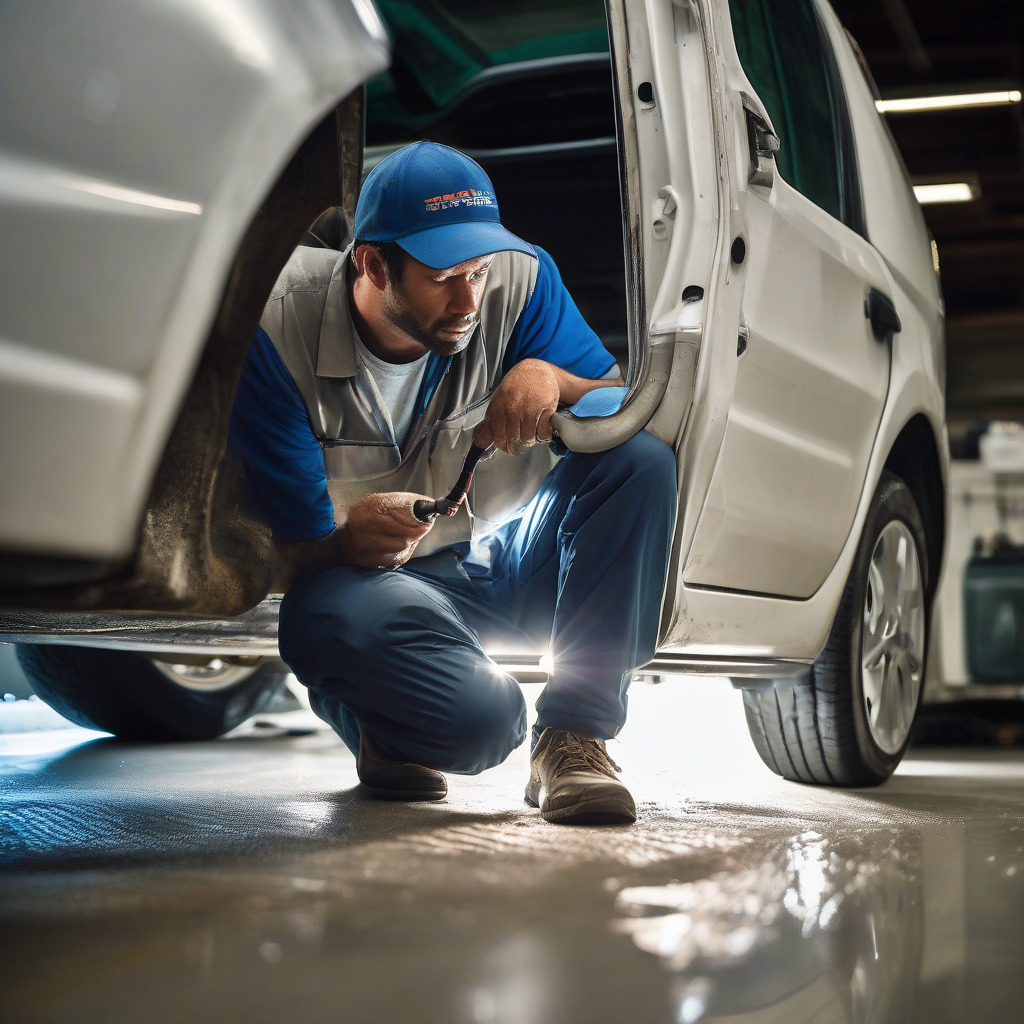
For physical inspection, here’s what to check yourself before spending money on a mechanic: mismatched or recently replaced upholstery in isolated sections on an otherwise older vehicle. Rust or discoloration on seat-rail bolts on the floorboard. Water staining in the trunk well or under the spare tire compartment cover. A musty or chemical odor that doesn’t match the apparent cleanliness of the interior. Corrosion on fuse-box connections under the hood or in the cabin fuse panel. Sediment or grit in the door jambs and along the bottom edges of the A-pillar. If any of these appear, walk away. The supply of clean vehicles in the $10,000–$16,000 range is sufficient that you don’t need to gamble on an ambiguous one.
Private-seller vehicles on Facebook Marketplace and Craigslist Houston carry the highest flood-vehicle risk with the least legal recourse. Any private sale requires an independent pre-purchase inspection at a shop you select — not one the seller recommends — before money changes hands. No exceptions.
The Short List of Models That Hold Up on Houston Roads
The following vehicles were evaluated against criteria specific to this market: safety ratings from IIHS and NHTSA relevant to high-speed freeway driving on corridors like I-45, I-610, and I-10; AC system reliability given Houston’s heat load; and current availability on Houston lots in the $8,000–$18,000 range.
Toyota Camry (2016–2020). The Camry has a reputation here for good reason. AC systems on these model years are durable, the drivetrains are bulletproof, and it’s one of the two most-listed models in the $10,000–$17,000 range in Houston at any given time. Budget $10,000–$17,500 for a clean example.
Honda Civic (2016–2020). Consistently strong safety ratings across this generation and among the most-listed models in Houston’s used-car market. The Civic’s AC holds up well under real Houston conditions. Budget $9,500–$16,000.
Toyota Corolla (2016–2020). Slightly more conservative than the Civic — which is actually a feature, not a flaw, for a first-time driver. Strong safety ratings, low AC failure rates, and Toyota’s drivetrain durability mean less drama overall. Budget $9,000–$15,000.
Mazda3 (2017–2019). Often overlooked in this category, which is genuinely puzzling. The Mazda3 has an IIHS Top Safety Pick history and a reliability record that matches or exceeds the Civic for this generation. The Skyactiv engine runs efficiently in heat and has a strong track record. Budget $9,000–$14,000.
Honda CR-V (2016–2018). If the family is open to a small SUV and the budget allows the higher end of the range, the CR-V is worth serious consideration. It’s especially useful for teens commuting longer distances on Houston freeways, where its slightly larger mass provides additional crash energy management. The CR-V’s ground clearance also provides a practical margin during Houston street flooding — and if you’ve ever driven through a Brays Bayou overflow situation, you know that margin is not hypothetical. Budget $13,000–$18,000.
One category to avoid entirely: Nissan Sentra and Altima models with pre-2019 CVT transmissions. The CVT on these vehicles has a well-documented failure pattern, and replacement runs $3,500–$5,000 at a Houston transmission shop. That’s a catastrophic repair cost on a $9,000 car. These vehicles are everywhere on Houston lots at prices that look attractive. The pricing reflects the risk. Chrysler 200 and Dodge Avenger models also warrant a hard pass — poor reliability scores across their production runs, declining parts availability, and for a car a new driver might stress with minor incidents, they’re simply poor candidates.
Air Conditioning Is a Safety Issue, Not a Comfort Option
Houston averages more than 100 days per year above 90°F, with heat index values that routinely climb well beyond that in July and August. A teen driver whose AC fails on a congested freeway faces a situation that can escalate quickly. This is not a comfort question. For more on what AC repairs actually run when systems do fail, our car AC repair cost coverage for Houston breaks down current shop rates and what to expect.
Sustained heat and humidity also accelerate specific failure modes in older vehicles: battery degradation, AC compressor failure (systems that cycle constantly under heavy load wear faster), and rubber seal deterioration throughout the engine compartment and climate system.
When evaluating any candidate vehicle, require documented AC service history. This means an actual service record — not the seller’s verbal assurance — showing that refrigerant level and compressor function have been checked in the past 12 to 18 months. If no documentation exists, budget for a pre-purchase inspection that explicitly includes AC system evaluation, and factor any flagged issues into the price negotiation. “It blows cold” is not documentation.
What Adding a Teen Driver Will Actually Cost You in Texas
Texas has one of the highest uninsured motorist rates in the country — the Texas Department of Insurance has reported figures near 20 percent. That makes uninsured/underinsured motorist coverage essential for any Houston driver, let alone a new one. The state minimum liability limits of 30/60/25 are inadequate for a city where a single-vehicle incident can easily generate damages that exceed them. State minimums are a floor, not a plan.
For a first car in this price range, a practical minimum coverage structure in Harris County: 100/300/100 liability, $500 deductible comprehensive and collision, and UM/UIM coverage at matching limits. Adding a 16-year-old driver to an existing policy in Harris County will typically increase the annual premium by $1,500 to $2,500 or more, depending on the carrier, the vehicle, and the teen’s driving record. Harris County is one of the highest-rated insurance territories in Texas due to traffic density, accident frequency, and weather. Get the actual number from your carrier before you budget — not after.
USAA remains the benchmark for military families. If you’re in a household with current or veteran military service — including the substantial population near Ellington Field — USAA’s teen driver rates are consistently among the most competitive available.
State Farm’s Drive Safe & Save and Progressive’s Snapshot both offer telematics-based discounts with a secondary benefit beyond savings: actual data on driving behavior. For families with a new teen driver, knowing how the car was driven last week has real value independent of any premium reduction. Whether your teenager knows you’re checking is a separate parenting decision.
Good-student discounts are available at most major carriers for teens maintaining a B average or better. The discount can reduce the teen driver surcharge meaningfully — verify the specific GPA threshold and documentation requirement with your carrier. Driver education completion also triggers a discount at most carriers, and Texas requires a driver education course for teens under 18 anyway, so confirm your carrier has the paperwork on file. Call at least three carriers for quotes before making any decision. Rates in Harris County vary enough between carriers — same driver, same vehicle, same coverage levels — that comparison shopping produces real savings, not marginal ones.
Texas GDL Rules and What They Mean for Your Insurance
Texas operates a graduated driver licensing system with restrictions that also affect how insurance is written. At 15, a teen can obtain a learner’s permit and must hold it for six months before advancing. At 16, after passing the road skills test, a restricted license arrives with conditions: no driving between midnight and 5 a.m. without a licensed adult, and no more than one passenger under 21 who isn’t a family member for the first year. Full licensure without GDL restrictions is available at 18.
The insurance implication: a teen on a restricted license should not be listed as the primary driver on the vehicle’s policy. Your agent should structure the policy to reflect actual usage pattern and licensing status accurately. Misrepresenting this to lower the premium is insurance fraud and can result in a denied claim at the exact moment you need it most — right after your teenager has been in an accident. That’s not a technicality. That’s the whole point of the coverage.
The DPS appointment backlog is a practical factor families consistently underestimate. Getting a DPS appointment for a driving test in the Houston area during summer months has historically involved significant waits. If you’re planning to have a licensed teen driver by mid-August, the permit and skills test appointment process needs to start in May or early June — not July when demand peaks. Check the DPS scheduler at dps.texas.gov for a realistic current timeline before you commit to any purchase date. The car can wait. The DPS calendar cannot.
Where to Buy in Houston
There are four realistic purchase channels in this market and they are not equal.
CarMax (locations on the Katy Freeway and Southwest Freeway areas) offers no-haggle pricing, a 30-day return window, and full vehicle history documentation. Inventory is inspected and flood-vehicle risk is lower than in the private market. Prices run at or slightly above regional market rates. For families who want a straightforward process and don’t mind paying a modest premium for it, CarMax is a legitimate first stop — especially if spending a July Saturday haggling over a car sounds like a form of punishment.
AutoNation certified pre-owned programs include warranty coverage that directly reduces repair-risk exposure for first-time buyers. CPO vehicles pass multi-point inspections and carry remaining powertrain coverage. The pricing is dealer-level, but for a family buying a first car for a new driver, the warranty backstop has real value.
Facebook Marketplace and Craigslist Houston private sellers often list vehicles 10–15 percent below dealer ask for equivalent condition and mileage. The savings are real. So is the risk. Private sellers offer no warranty, no return policy, and the least-documented inventory in the market — which means the highest flood-vehicle exposure. Every private-market purchase requires an independent pre-purchase inspection at a shop you select and full VIN history checks as described above. Don’t skip either step. The $150 inspection fee is the cheapest insurance you’ll buy in this entire process.
Buy Here Pay Here dealers, concentrated in east Houston, Pasadena, and around Greenspoint, are a specific warning. Inventory tends toward older, higher-mileage vehicles with limited documentation, BHPH dealers aren’t required to make the same disclosures as franchise dealers, and their flood-vehicle exposure is among the highest in the market. If a buyer can qualify for credit union financing — and most can — there is no scenario in which BHPH makes sense in this price range.
Get Pre-Approved at a Credit Union Before You Walk Onto Any Lot
Dealer financing is convenient. It’s also frequently not competitive. TDECU and Houston Federal Credit Union both offer first-time and young-buyer auto loan programs with rates that regularly undercut dealer-arranged financing. More importantly, arriving with a pre-approval letter removes the financing lever from the salesperson entirely. The negotiation becomes about the vehicle price — not a confusing mix of purchase price, interest rate, and loan term that dealers use to obscure actual cost. If you’ve ever sat in a finance office watching a salesperson work a four-square sheet, you know exactly what I mean.
Tell the dealer you have financing arranged and ask for their best out-the-door price. If they come in below your credit union rate, use their rate. Otherwise, use your pre-approval. Both TDECU and Houston Federal Credit Union have branch locations and online applications. Get pre-approved before you begin serious shopping. It costs nothing, doesn’t significantly affect your credit score if done within a focused window, and changes the entire dynamic when you walk onto a lot. For a broader look at how local credit unions compare to the big banks on auto loans and other products, our Houston credit union and bank comparison covers the numbers in detail.
Why Late July May Be the Right Time to Buy
The compressed Houston buying season creates a predictable price curve. From mid-May through early July — graduation season — used-car demand surges as families of new graduates and rising high schoolers all shop simultaneously. Dealer inventory tightens. Private sellers list at optimistic prices. The urgency of getting a car before summer activities begin hands pricing leverage to sellers.
Families who can wait until late July often find meaningfully better pricing as dealers move remaining summer inventory. End-of-month sales targets also tend to create favorable conditions in the final days of July. It’s not a guarantee, but the calendar tends to work in your direction.
The practical constraint is licensing. If your teen doesn’t yet have a permit, or hasn’t completed the required six months of holding it, a late July purchase may mean the car sits in the driveway for weeks. Work backward from your teen’s actual licensing timeline — not from when you’d like to buy — and start the DPS permit process accordingly.
The Checklist Before You Sign Anything
Set a firm budget and don’t shop below $8,000. Run every VIN through TxDMV, CARFAX, and NICB before taking any vehicle seriously. Physically inspect for flood indicators: seat-rail rust, trunk-well staining, mismatched upholstery, corrosion in the fuse box. Require documented AC service history as a condition of serious consideration. Stick to the recommended model list — Camry, Civic, Corolla, Mazda3, CR-V in the 2016–2020 range — and avoid the Nissan CVT vehicles and Chrysler products entirely.
Get pre-approved at TDECU or Houston Federal Credit Union before stepping onto any lot. Call your insurance carrier for an actual quote before you buy, and structure coverage with UM/UIM at adequate limits. Start the DPS permit scheduling now, not in July.
The families who get burned are almost always the ones who skipped one step because it felt like overkill. It never is.
For more local coverage, explore our Automotive section.