How to Buy a Used Car in Houston After a Hail or Flood Season
A flood or major hail event can put thousands of damaged vehicles back into the retail market within 60 to 90 days. Here's how to protect yourself at any Houston dealership, from the lot to the tit…

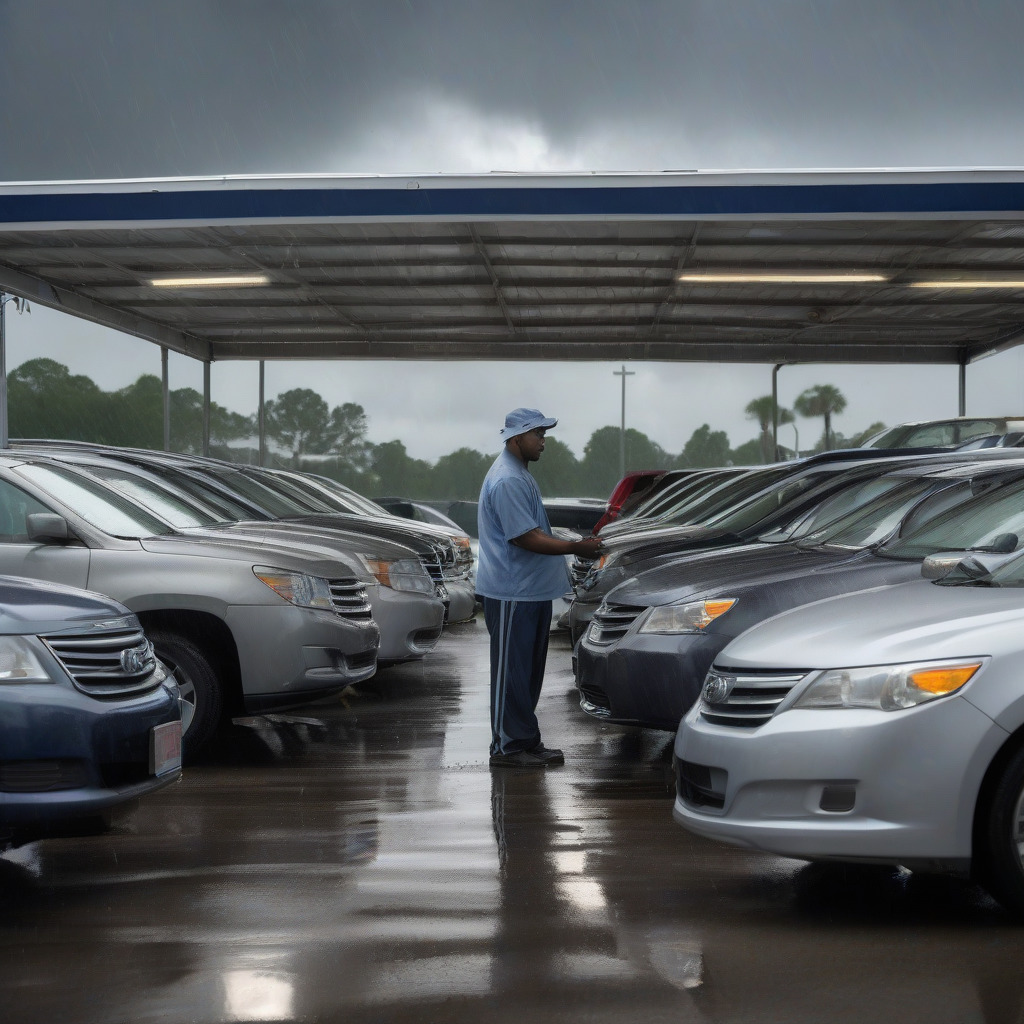
A flood or major hail event can put thousands of damaged vehicles back into the retail market within 60 to 90 days. Here’s how to protect yourself at any Houston dealership, from the lot to the title database.
Why Right Now Is the Riskiest Time to Buy a Used Car in Houston
Most American cities have a bad used car market. Houston’s is structurally dangerous.
Harris County has been designated by FEMA as a repetitive-loss flood zone — a federal classification that reflects what every longtime Houstonian already knows from experience. The county flooded catastrophically in 2015 (the Memorial Day Flood), 2016 (the Tax Day Flood), 2017 (Harvey), 2019 (Imelda), and 2021 (Nicholas). Between those named events came dozens of localized bayou overflows that don’t make national news. That’s roughly one major flood event every eighteen months for a decade.
Then there’s hail. An April 2024 storm system moved through the Houston area and kept insurance adjusters working weekend appointments for weeks. Hail totals aren’t as dramatic as flood totals, but they matter. A vehicle with compromised roof structure, a cracked sunroof seal, or poorly repaired dents can develop water intrusion that shows up as electrical failure 18 to 24 months after purchase — long after you’ve driven off the lot feeling good about your deal.
What makes Houston’s used car market specifically risky — more so than Dallas or San Antonio — is the combination of flooding frequency, the volume of low-lying residential inventory that gets submerged before owners can move it, and the city’s sheer density of independent dealerships. When you have this many vehicles damaged this often, the auction-to-retail pipeline runs hot. A buyer in Tucson worrying about a flood car is mostly worrying about a car that flooded somewhere else. In Houston, that car might have flooded two miles from the lot it’s sitting on.
How Storm-Damaged Cars Get From the Bayou to a Houston Lot in 60 to 90 Days
When an insurer totals a flood or hail-damaged vehicle, ownership transfers to the insurer, which sends it to a salvage auction. In the Houston metro, the dominant players are Copart and IAA (Insurance Auto Auctions). Copart operates a major facility near the Katy/I-10 corridor — a yard that swelled visibly in the weeks after Harvey and processes storm inventory from every subsequent event. IAA runs a Houston-area facility as well. Both are accessible to licensed dealers and, through Copart’s public auction arms, to the broader public in limited circumstances.
Licensed dealers who buy at these auctions are supposed to disclose a vehicle’s branded title status to any retail buyer. Many do. Some don’t. Unlicensed resellers — curbstoners in industry parlance — buy flood or hail cars at auction, do cosmetic repairs, and sell them person-to-person on Craigslist, Facebook Marketplace, and off rented lots. Curbstoning after a major flood event is illegal under Texas law. TxDMV enforcement resources are finite, and the volume of post-storm transactions makes it difficult to catch every instance. That’s not an excuse for skipping your homework — it’s just the market you’re shopping in.
The retail corridors where storm-damaged inventory shows up fastest after a Houston weather event are the Harwin Drive corridor in southwest Houston (one of the densest concentrations of independent used car lots in the state), the Katy Freeway/I-10 West corridor, the Gulf Freeway south toward Webster and League City, and I-45 North toward Spring and the Conroe area. This isn’t a blanket indictment of every dealer on these streets. It’s a description of where independent dealers cluster and where post-storm inventory historically churns fastest. The closer a lot is to a major Copart or IAA facility, the faster vehicles cycle from auction to retail.
Cosmetic reconditioning — shampooing carpets, replacing floor mats, treating visible rust — can be done quickly. A vehicle flooded in late April can be retail-ready by early June. The title record in the TxDMV database is supposed to reflect the flood brand by then, but processing delays, out-of-state retitling, and private-sale transactions before insurance claims are filed can all create windows where the title looks clean and the car isn’t.
How to Check a VIN Before You Step Onto a Houston Lot
The single most important thing a Houston used car buyer can do takes about three minutes and costs nothing. There’s really no excuse for skipping it.
Go to txdmv.gov and find the Motor Vehicle Inquiry tool under the Consumer section. Enter the 17-character VIN from the window sticker, the door jamb placard, or the dashboard where it meets the windshield on the driver’s side. The TxDMV record will show the current title status, any brands on the Texas record — Flood, Salvage, Non-Repairable — and the number of prior Texas title holders.
This record is more authoritative than Carfax or AutoCheck for Texas vehicles. Those commercial services pull in insurance-reported data and state DMV records, but their Texas flood data depends on the insurer having filed a claim and that claim having been processed and reported. Here’s the gap: if a vehicle was flooded, the owner sold it privately without filing a claim, the buyer did cosmetic work, and the second buyer is now selling it to you — that entire transaction chain may not appear in a Carfax report. The TxDMV record reflects what happened to the title in Texas, not what was reported to an insurance database.
One specific limitation: the TxDMV record only captures what happened to the title in Texas. A vehicle flooded in Texas, retitled in another state, and brought back to Houston will not show a flood brand if the other state’s title is clean. That’s the title-washing problem, covered below.
After the TxDMV check, run the VIN through safercar.gov, NHTSA’s consumer portal. This search surfaces consumer-filed complaints about specific vehicles, including water intrusion, electrical problems, and mold. It won’t tell you whether the car was flooded — it’s not a title database — but it will show whether other owners of that exact VIN have reported problems consistent with flood damage. Two minutes. Worth it.
Then run Carfax or AutoCheck as a supplementary check. Accident reports, odometer readings, service records at participating shops — useful. A clean Carfax is partial reassurance. It is not clearance.
The Title-Washing Problem and Why a Clean Title Is Not Enough
After Harvey, investigators and journalists documented a fraud vector that remains active after every subsequent flood event: title washing. It’s not complicated, which is part of what makes it effective.
A flooded Texas vehicle receives a Flood brand on its Texas title. The owner or dealer then retitles the vehicle in a state with looser branding requirements — Louisiana and Georgia were the most commonly cited post-Harvey examples in Texas AG documentation — where the flood brand may not carry over to the new title. The vehicle returns to Texas with a clean out-of-state title. No flood disclosure is required on the face of the document.
Texas Transportation Code §501.091 et seq. requires dealers to disclose a branded title and prohibits sale of a vehicle with an undisclosed salvage or flood brand. But if the brand was successfully washed through another state’s title system, a Texas dealer may be working from a genuinely clean document, whether or not they know the history. Some know. The Texas AG’s Consumer Protection Division pursued multiple DTPA actions in the years after Harvey. Press releases from 2017 through 2019 named specific dealers and individuals charged with misrepresenting flood-damaged vehicles. Those press releases are publicly searchable at texasattorneygeneral.gov/news. Before you write a check anywhere, search the dealer’s name alongside “flood” or “storm damage” in that database. It takes five minutes and occasionally turns up something that should stop the whole transaction.
The DTPA — the Texas Deceptive Trade Practices Act — is the primary legal tool the state uses against dealers who misrepresent storm damage. It provides for actual damages, up to three times actual damages for knowing violations, and attorney’s fees. The legal framework exists. But it requires discovering the fraud first, which is why pre-purchase verification matters far more than post-purchase legal remedies. Winning a DTPA case is cold comfort when you’ve been driving a car with a corroding electrical system for two years and fighting over what “knowing violation” means.
Curbstoning is a related risk. An unlicensed reseller who buys a flood car at auction and sells it privately is not legally operating as a dealer and is therefore not subject to dealer disclosure requirements, even though what they’re doing is illegal. TxDMV’s enforcement division handles curbstoning complaints and takes them seriously — but enforcement is reactive by nature. A buyer on Facebook Marketplace has far weaker legal protections than a buyer at a licensed dealership. The burden of due diligence is correspondingly higher.
The Inspection Checklist for Flood and Hail Damage
No VIN check replaces a physical inspection. Cosmetic reconditioning can’t fully hide what water and hail do to a vehicle, and if you know where to look, it doesn’t have to.
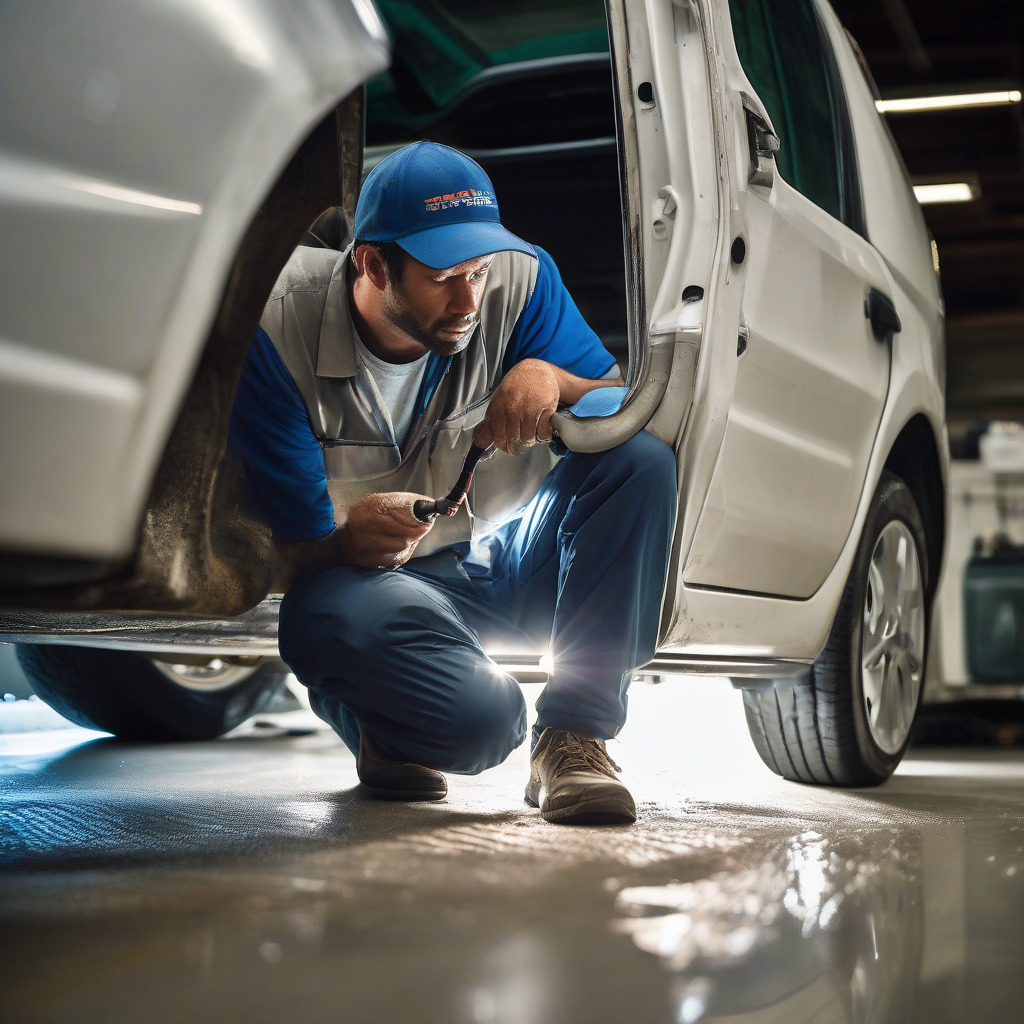
Open the trunk and pull up the spare tire cover. The spare tire well is one of the last places a quick reconditioning job reaches — there’s no cosmetic reason to clean it up, so it gets skipped. Look for dried silt, mud residue, or rust inconsistent with the vehicle’s age and mileage. Check the door jamb sill plates (the metal strip at the base of each door opening) for rust or discoloration at the waterline. Pull back the edge of the floor carpet near the door sills on both front and rear seats. Post-flood carpet replacement is common, but the seam where old carpet was cut and new carpet laid is often visible. Look for rust on engine bay ground straps, on seatbelt pretensioner housing, and on brake rotor faces. Surface rust on rotors from sitting is normal. Rust on caliper brackets, seatbelt hardware, and electrical ground points on a recent-model vehicle is not.
Turn the HVAC to maximum A/C, recirculate mode, and let it run for two full minutes with the windows up. A musty or mildew smell from the vents is a serious flag. In Houston’s humidity, mold colonizes the evaporator coil and heater box faster than anywhere in a dry climate, and it’s expensive to remediate correctly. If you smell it, walk away. The salesperson will have an explanation. It won’t be good enough.
For the electrical check, spend around $30 on a Bluetooth OBD-II reader before you go car shopping. Available at any AutoZone or O’Reilly in Houston, these plug into the OBD-II port under the driver’s dashboard and connect to your phone using a diagnostic app. You can then read stored and pending fault codes. Flood-damaged vehicles frequently carry stored codes in the body control module, ABS module, airbag/SRS controller, and transmission control module. These codes may not light up a dashboard warning but are recorded in the module memory. Stored codes pointing to moisture-sensitive control units should stop any negotiation cold until an independent mechanic can explain them.
Hail damage on small stones — quarter-size or smaller — is primarily cosmetic and can often be addressed affordably with paintless dent repair (PDR). Golf-ball-size hail is a different matter. Check the roof structure for dents that have distorted the panel rather than just the surface metal. Open the sunroof if equipped and look at the seal and drainage channels. Compromised seals allow water intrusion that shows up as electrical problems months later. Look for mismatched paint across adjacent body panels or for the texture difference between factory paint and a repainted panel. Overspray on door rubbers, trim pieces, and the underside of hood edges is a sign of rushed bodywork. Ask the dealer for PDR documentation — a reputable shop will hand over a repair receipt without hesitation. Reluctance to produce one is its own answer.
A pre-purchase inspection (PPI) by an independent mechanic is the single best investment you can make before buying any used car in Houston right now. Not the dealership’s mechanic. Not the “certified” inspector the dealer recommends — their guy. An independent shop you find yourself. In Houston, shops advertising used car PPIs are concentrated along Westheimer through Montrose and the Galleria area, in Midtown, and in the Heights. AAA Houston maintains a list of approved repair facilities. When you call to schedule a PPI, ask specifically whether they check for flood indicators and whether they have a lift available — an undercarriage inspection is not optional. Do not let a dealership pressure you out of taking the car to an independent mechanic before purchase. A dealer who refuses that request is telling you something important. Believe them.
Are Certified Pre-Owned Programs Actually Reliable Protection After a Storm Season?
The honest answer: CPO raises the floor, but it doesn’t raise it enough to skip your own due diligence.
CPO programs from Toyota, Honda, Ford, GM, and other manufacturers require vehicles to pass a multi-point inspection before the designation can be applied. These inspections cover mechanical systems, safety components, and visible cosmetic condition. They are conducted by trained technicians, and the programs back vehicles with extended warranties. What they do not include is a standardized electrical moisture-intrusion test. CPO inspectors check for visible water damage — staining on carpet, rust on accessible components, water marks in the trunk. They’re not running diagnostic checks on moisture levels inside control modules or looking for corrosion on internal connector pins. A flood vehicle that’s been thoroughly reconditioned can pass a visual CPO inspection and still carry latent damage in its electrical architecture.
CPO legally cannot be applied to a vehicle with a branded title. That’s real protection. But title washing means a flooded vehicle can return to the Houston market with a clean out-of-state title, and if it passes visual inspection, nothing in the CPO process flags it.
If you’re choosing between a CPO vehicle at a franchised dealer and a cash-and-carry deal on Harwin Drive, yes — the CPO is the better bet. The warranty is real and the accountability is higher. But CPO is one layer, not a complete answer. Run the VIN checks. Get the independent PPI. In this market, as we note in our automotive coverage, a CPO sticker is not a reason to skip either.
What the Public Record Shows About Houston Dealer Complaints
The Texas AG’s office has been the most active state enforcement body on storm-damage fraud in the Houston market. After Harvey, the AG announced multiple actions against dealers and individuals for DTPA violations related to flood vehicle nondisclosure. Those actions — with named defendants and outcomes — are searchable at texasattorneygeneral.gov/news. Search for “flood vehicle,” “storm damage,” “undisclosed salvage,” and specific dealer names you encounter. This is a public database, it’s genuinely useful, and most buyers never check it.
The NHTSA consumer complaint database at safercar.gov allows VIN-specific and model-specific searches. Consumer-filed complaints about water intrusion, mold, and electrical failure after purchase are present for many Houston-market vehicles. These are self-reported, not verified — keep that in mind. But patterns across multiple complainants on a specific VIN or model year are worth paying attention to.
TxDMV maintains enforcement records for curbstoning violations and dealer license actions. The agency’s enforcement division can be reached at 888-368-4689, and their complaint portal is at txdmv.gov. Dealer license suspensions and revocations are public record. If a specific dealer has drawn multiple AG actions and TxDMV enforcement actions, that’s a finding that should make you walk. If the record is thin, that’s reassuring — though it means the dealer has avoided documented complaints, not necessarily that no complaints exist. Worth knowing either way.
Your Legal Rights If a Houston Dealer Sold You a Car With Undisclosed Storm Damage
Your primary legal tool in Texas is the DTPA — the Texas Deceptive Trade Practices Act.
To bring a DTPA claim against a dealer, you generally need to show three things: you are a consumer, the dealer made a false, misleading, or deceptive act or practice, and that act caused your damages. For knowing violations — where the dealer knew about the flood history and chose not to disclose it — the DTPA provides up to three times actual damages. Attorney’s fees are also recoverable, which matters because consumer protection attorneys can pursue DTPA claims on contingency when the facts are strong. Ask about fee arrangements at any initial consultation.
The private-party gap matters in practice. DTPA protections apply differently when you buy from a non-dealer. If a private individual misrepresented the vehicle, you may have a claim if they made knowing misrepresentations — but the legal path is harder and practical recovery is often limited. This is one concrete reason to be more cautious about private purchases after a storm season.
If you discover storm damage after purchase, document everything immediately. Photograph the damage in detail. Write down exactly what the seller told you about the vehicle’s history at the time of sale — all of it, while it’s fresh. Preserve the contract, the title, and any advertising representations. Take the vehicle to an independent mechanic and get a written inspection report. File a complaint with the Texas AG’s Consumer Protection Division at texasattorneygeneral.gov/consumer. File with TxDMV at txdmv.gov if the seller is a licensed dealer. Then consult a consumer protection attorney. Many offer free initial consultations on DTPA matters, and given that attorney’s fees are recoverable, ask specifically about contingency arrangements when the facts support it. If you’ve been through this process and want broader financial context, a mid-year financial checkup for Houston small business owners covers related ground for anyone whose vehicle purchase touches a business.
Fast-Reference Card for Buying a Used Car in Houston Right Now
Pull this up in the dealership parking lot before you step onto the lot.
1. Run the TxDMV VIN lookup first Go to txdmv.gov → Motor Vehicle Inquiry → enter the 17-digit VIN. Look for any flood, salvage, or non-repairable brand. Three minutes, costs nothing. Most authoritative check for Texas-titled vehicles. Do this before you do anything else.
2. Run the NHTSA complaint check Go to safercar.gov, enter the VIN. Look for consumer complaints about water intrusion, electrical problems, or mold. Not a title check — but it catches patterns a DMV record won’t.
3. Run Carfax as a supplementary check Clean Carfax = partial reassurance, not clearance. It misses private-sale transactions and uninsured damage. Still worth running for accident history, odometer data, and service records.
4. Do the physical walk before you negotiate Spare tire well, door jamb sills, floor carpet seams, HVAC smell on max recirculate, OBD-II code read. Buy an OBD-II reader before you go car shopping — around $30 at any AutoZone. No exceptions.
5. Schedule an independent PPI before you sign Independent shop, not the dealer’s mechanic. In Houston’s post-storm market, this is not optional — no VIN check, no clean Carfax, and no CPO sticker replaces a lift inspection by a mechanic who works for you.
Have a tip on a dealer selling flood cars without disclosure? The Texas AG Consumer Protection Division is at texasattorneygeneral.gov/consumer. TxDMV consumer protection is at 888-368-4689. Both accept complaints.