How Houston's Summer Heat Kills Car Batteries and What to Do About It
With a seven-month heat window and humidity that corrodes terminals year-round, Houston drivers face a battery lifespan far shorter than the national average. Here's what local mechanics are seeing…

With a seven-month heat window and humidity that corrodes terminals year-round, Houston drivers face a battery lifespan far shorter than the national average. Here’s what local mechanics are seeing, what you’ll pay, and how to get a replacement today without leaving your parking lot.
It’s a Tuesday afternoon in July. Someone’s sitting in a Texas Medical Center surface lot watching the heat shimmer off the asphalt. They’ve been in the same spot since 7 a.m. They turn the key and get a grinding half-crank, then silence. The car is four years old. The battery is original. The temperature is 97°F, and the under-hood air hasn’t moved in nine hours.
This is one of the most common ways Houston drivers find out they have a battery problem: not on a cold morning with some warning, but in the middle of the day, in the middle of summer, with no warning at all. The failure probably began in June of the previous year.
Houston’s climate kills car batteries through a different mechanism than the cold-weather failures most automotive maintenance advice is written around. It also does it faster. Most battery guidance is calibrated to northern climates, so Houston drivers routinely get blindsided at year three or four — which is already past the local expiration date. Nobody’s writing those guidebooks with a Katy parking lot in August in mind.
How Heat Actually Kills a Battery — and Why Seven Months of It Is a Different Problem
The standard story goes like this: cold weather kills batteries. That’s true in a narrow sense. Cold slows the electrochemical reactions that generate current, making it harder to turn over an engine in January. But cold doesn’t actually damage a healthy battery. It exposes weakness that already exists. When a northern-climate car fails in winter, the battery was already compromised before the temperature dropped.
Heat is different. Heat damages batteries directly, permanently, and progressively.
Lead-acid car batteries contain sulfuric acid electrolyte and lead plates. When ambient temperatures rise, chemical reactions inside the battery accelerate. That acceleration speeds up self-discharge — the battery drains faster even when it’s not being used. More damaging, sustained heat causes the electrolyte water to evaporate through the battery’s venting system. As water evaporates, the lead plates become exposed to air rather than acid. Exposed plates oxidize. That oxidation produces lead sulfate crystals, a process called sulfation, and sulfation is what makes heat damage permanent. Once those crystals harden on the plates, that portion of the plate can no longer participate in generating current. The battery’s capacity is reduced, and it doesn’t come back when temperatures cool down.
Every Houston summer takes a percentage of your battery’s capacity that it never recovers.
The city’s core heat window — sustained daily highs in the 94–97°F range — runs June through August. But the damage window is wider. Houston’s heat stress effectively runs April through October, roughly seven months, far longer than most northern cities. Under-hood temperatures matter more than ambient air for the battery specifically. A parked vehicle in direct July sun at Houston’s latitude can hit under-hood temperatures of 140–160°F. That’s not an unusual event. In a Houston summer, it’s a daily occurrence for any vehicle parked outdoors. Batteries in those conditions age months for every week of exposure. I find that figure genuinely alarming every time I see it — months per week.
Then there’s humidity. Houston’s average relative humidity runs 75–90% through summer. Humidity doesn’t damage the cells themselves, but it accelerates corrosion on the battery terminals — the connectors through which current actually flows. Corroded terminals create resistance, so the battery works harder to deliver the same current, so it discharges faster, so the heat damage compounds. In cooler, drier climates, terminal corrosion is a maintenance item drivers notice every few years. In Houston, it can show up within the first twelve months. Two separate climate problems, stacking quietly on each other.
How Long Your Battery Actually Lasts Here
The national average battery lifespan is commonly cited as three to five years. That figure is accurate for Minneapolis or Denver. The Battery Council International’s heat-zone adjusted figure for the southeastern United States drops it to two to three years.
Houston mechanics report numbers at the lower end of that range — and shorter for specific situations. Vehicles parked outdoors year-round at Galleria surface lots, Energy Corridor corporate parks, or the suburban office corridors along the Katy Freeway show the sharpest attrition. Local mechanics see original batteries in those vehicles fail in the 18–24 month range with some regularity, particularly when the vehicle has no covered parking at home either. A battery that never gets a break from heat exposure doesn’t get the overnight recovery time that a garage-parked car does.
Two failure windows are specific to Houston’s seasonal pattern. The first is late April through May, when the first serious heat wave arrives. Batteries already weakened by the previous summer but functional through the mild winter finally give out under their first sustained stress of the new season. Drivers interpret this as a sudden random failure, not recognizing that last summer set it up — the winter just paused a slow-motion process. The second window follows hurricane season. Extended power outages mean some vehicles sit unused for days or weeks; deep discharge from inactivity combined with the heat can finish off a battery that still had some life left under normal use. After Harvey, local shops were slammed for weeks with exactly this.
The practical implication: if you’re using the three-to-five-year national guideline to decide when to think about your battery, you’re already late in Houston. Two years is when a proactive test makes sense here.
Warning Signs to Watch for in Houston’s Heat
Battery failure rarely comes with zero warning, but the warnings are easy to miss in summer because drivers attribute them to general heat effects rather than specifically to the battery. You figure it’s just hot, the car’s sluggish, everything’s sluggish in August.
Slow engine crank on a hot morning. After a vehicle has been parked overnight, the engine turns over more slowly than normal before starting. That sluggishness is reduced battery capacity. In a northern climate, the equivalent is a slow cold-morning crank. In Houston, a slow hot-morning crank deserves the same response: get the battery tested immediately. Don’t wait to see if it happens again.
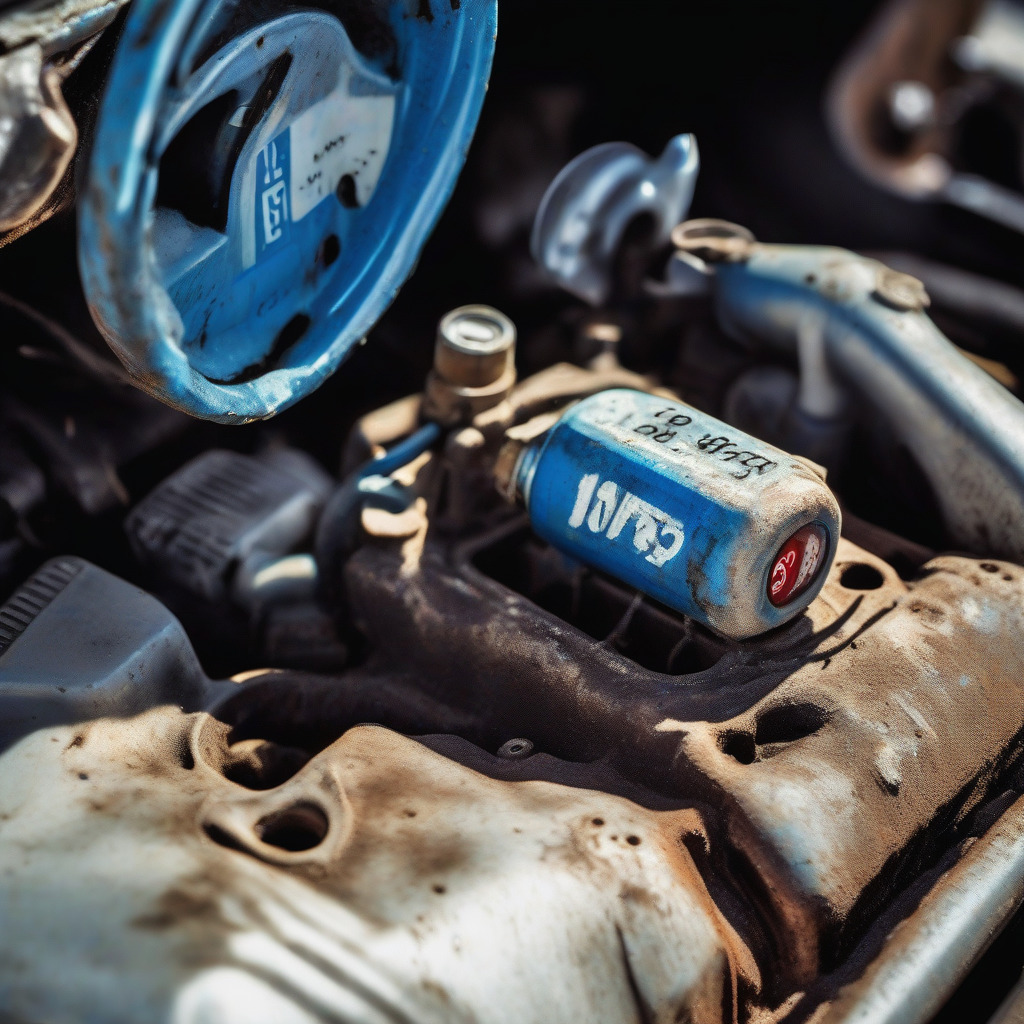
A swollen or bloated battery casing. This is heat-specific and has no real cold-climate equivalent. Chronic overheating causes gases to build up inside the casing and the plastic to bulge outward. If your battery looks rounded on the sides rather than flat, that’s a battery in advanced heat stress. Stop driving the vehicle and replace it. A swollen battery can leak or crack. This is visible in thirty seconds — pop the hood and look at the battery from the side. If you haven’t done that recently, do it now.
Terminal corrosion that keeps coming back. Some white or blue-gray crusty buildup around terminals is normal. Heavy buildup that returns quickly after cleaning indicates either an overcharging condition or a battery gassing excessively — both signs of a battery in distress. Terminal corrosion alone isn’t a reliable failure indicator in Houston because humidity accelerates it independently. But heavy recurrent corrosion combined with any other symptom on this list is a meaningful signal.
Electrical gremlins after heat soak. Flickering interior lights, sluggish power windows, infotainment systems that reset, erratic backup cameras — these point to a battery struggling to recover voltage after hours of sun exposure plus the constant parasitic draw from modules and computers that run even when the ignition is off. A depleted battery can handle normal driving but fail to maintain adequate voltage through a full day on an outdoor lot. If your backup camera started acting weird in June, don’t assume it’s a camera problem.
The battery warning light. This means the charging system isn’t maintaining proper voltage, which could be a failing battery, a failing alternator, or a serpentine belt issue. Don’t assume it’s the alternator without testing. Free testing will tell you which one.
The Houston threshold: battery older than two years, parks outdoors regularly — get it tested now. The test is free. The cost of waiting is a tow, a missed afternoon, and a replacement bought under pressure at whatever price someone quotes you in a parking garage. This kind of climate-specific maintenance decision comes up across our automotive coverage, where Houston’s conditions routinely rewrite the national advice.
What Battery Replacement Costs in Houston
Prices below reflect current market conditions across the metro and vary by battery group size and chemistry. Verify current pricing directly; battery costs fluctuate with materials pricing.
AutoZone (multiple Houston locations): $120–$220, with free parking lot installation included. No separate labor charge. Installation is done by a store employee, not a mechanic, and nobody’s checking your alternator or inspecting related components. For a straightforward swap on a standard vehicle, this is strong value. Call ahead to confirm the free-installation policy at your specific location — it can vary.
O’Reilly Auto Parts: $110–$210, same model as AutoZone. Same caveats. Same call-ahead advice.
Costco (Katy, Stafford, Cypress) and Sam’s Club (multiple metro locations): $80–$130 for members, no installation service. Costco carries Interstate-brand batteries — genuinely competitive product with strong warranty terms, not just a budget option. If you’re comfortable self-installing or willing to pay a shop’s labor charge separately, this is the best cost structure in the market. If neither of those describes you, skip this tier.
Walmart Supercenter locations: EverStart batteries at $80–$150, no installation. Self-install or take the battery to a shop.
Independent Houston shops: $180–$280 all-in, parts and labor. Inner Loop shops run toward the top of that range; shops in Pearland, Sugar Land, and Katy are often more competitive. The reason to pay the premium over a big-box lot swap is service — an independent mechanic doing your battery is also in a position to test the alternator, check charging voltage, inspect cables and terminals, and flag anything related. For a vehicle showing electrical symptoms, that full-system check has real value and is worth the extra $60 over AutoZone’s lot installation. I’d push anyone with a slightly complicated situation toward an independent shop for exactly this reason.
Dealerships (Gulf States Toyota, Courtesy Chevrolet, and others): $250–$400-plus. For most vehicles, the premium over an independent shop doesn’t buy meaningfully better battery chemistry or installation quality. The exception is vehicles where the battery integrates with a start-stop system or requires OEM part recognition by the ECU — increasingly common in European brands and some newer domestics. If that’s your vehicle, the dealership may be the right call technically. Call the service department directly to confirm current pricing and whether your specific model requires it.
Free Battery Testing in Houston — Where to Go Before You Spend Anything
Before buying anything, get a free test. AutoZone and O’Reilly Auto Parts offer free battery and alternator testing at Houston locations, no purchase required. Pull up to the service bay and ask. The test takes about ten minutes and covers load testing — drawing current while measuring voltage drop — plus a reading of cold-cranking amps output versus the battery’s rated spec. The technician will typically also check alternator output voltage.
Some Firestone Complete Auto Care locations across the metro include battery checks as part of a broader vehicle inspection. Call ahead to confirm availability at your nearest location.
There is no reason to skip this step. It costs nothing, takes minutes, and gives you a specific number to act on rather than a guess.
Mobile Battery Replacement — Getting a New Battery Without Driving Anywhere
For drivers already stranded, in a time crunch, or dealing with a battery too weak to drive safely across town, mobile replacement is a real option in the Houston metro.
Wrench operates in Houston and offers app-based mobile mechanic service including battery replacement. All-in pricing runs approximately $200–$320 depending on battery type and vehicle. The technician comes to your location — home, office, parking garage — with the battery and tools. Booking is through the app; same-day service is typically available. For someone stranded at an Energy Corridor office park at 5 p.m., that same-day availability is worth a lot. Verify current Houston service area and pricing in the app before booking.
YourMechanic also lists Houston in its service area for battery replacement. Confirm current availability and pricing directly through the platform, as coverage areas for app-based services shift.
AAA Houston members can request roadside battery replacement through the service network. Trucks carry a battery selection and perform the swap on-site. Member pricing is competitive given the mobile service premium. If you’re not a member and you’re stranded, it’s worth running the math on a one-year membership plus roadside service versus a la carte emergency pricing before you call a tow truck.
Individual mobile mechanics via Thumbtack or Yelp Houston can often be booked same-day at $150–$300, with wide variance depending on who you’re contacting, what battery they carry, and how far they’re traveling. Look for operators with substantial Houston-specific reviews and confirm before booking that they’re bringing the right battery for your vehicle’s group size and chemistry. The vetting step matters more here than with app-based services that carry their own accountability layer.
Which Battery to Buy for Houston’s Climate
Standard flooded lead-acid batteries are the conventional option — cheapest at every retail tier, what most vehicles came with originally. They work. In Houston, though, they suffer most from heat-driven electrolyte evaporation. They’re adequate for a vehicle with covered parking and a short, predictable daily commute. For everyone else, there’s a better choice.
AGM (Absorbent Glass Mat) batteries are the right call for most Houston drivers who park outdoors. In an AGM battery, the electrolyte is absorbed into fiberglass mat separators rather than floating free. This dramatically reduces electrolyte loss under heat stress, handles high sustained temperatures better, and manages repeated partial discharges — exactly what happens when a vehicle sits in the sun all day with parasitic electrical draws running. AGM batteries cost more. That’s the honest tradeoff. They’re also required for vehicles with factory start-stop technology; install a flooded battery in a start-stop vehicle and you’ll shorten its life sharply and probably trigger warning lights.
On brands: Interstate, available at Houston Costco locations and through AAA, has strong warranty terms and consistent real-world reviews. Costco’s Interstate pricing is the best per-dollar value in the market for members willing to self-install or arrange separate installation. Optima, available at AutoZone Houston locations and through many independent shops, makes a spiral-cell AGM with a track record in hot climates. It’s priced at the premium end. For a vehicle that bakes outdoors every weekday on a surface lot, Optima is a defensible choice if budget permits. EverStart at Walmart is the low-cost option and it’s fine for a vehicle with covered parking and a short daily commute — but it’s the wrong tool for a car that sits in full sun in the Energy Corridor from 7 a.m. to 6 p.m. every weekday. That’s not a knock on EverStart; the conditions are just genuinely harder than the product is built for.
Don’t buy on price alone here. A battery that costs $40 more and lasts eighteen months longer in your specific conditions isn’t the more expensive choice.
What to Do Now
Find out how old your battery is. Look for a date code sticker on the battery itself. If you bought the car used and don’t know, treat it like a two-year-old battery until you can confirm otherwise.
If it’s two or more years old and parks outdoors regularly, get it load-tested this week at the nearest AutoZone or O’Reilly. Free, ten minutes, specific result. Don’t wait until it doesn’t start.
If the test shows significant degradation, replace it now. Match your situation to the pricing tiers above: warehouse club pricing plus installation if you want the best cost; big-box retailer for free lot installation; independent shop if your car has electrical symptoms and you want a mechanic to check the full charging system; dealership if your vehicle has specific OEM battery requirements.
If you’re already stranded, Wrench, YourMechanic, AAA roadside service, or a vetted Thumbtack mobile mechanic can reach you same-day. Confirm Houston availability and get a quote before committing, and make sure whoever you call is bringing the right battery for your vehicle.
In Houston, a battery check belongs on your April calendar — alongside the AC inspection, not on the list of things you deal with after a breakdown. The driver stranded in that Texas Medical Center lot isn’t there because batteries are unpredictable. They’re there because nobody told them the national guidelines don’t apply here. The battery that failed in July started dying the previous June.