What Houston Drivers Should Know About Catalytic Converter Theft Right Now
Catalytic converter theft never stopped in Houston. It changed.

Catalytic converter theft never stopped in Houston. It changed.
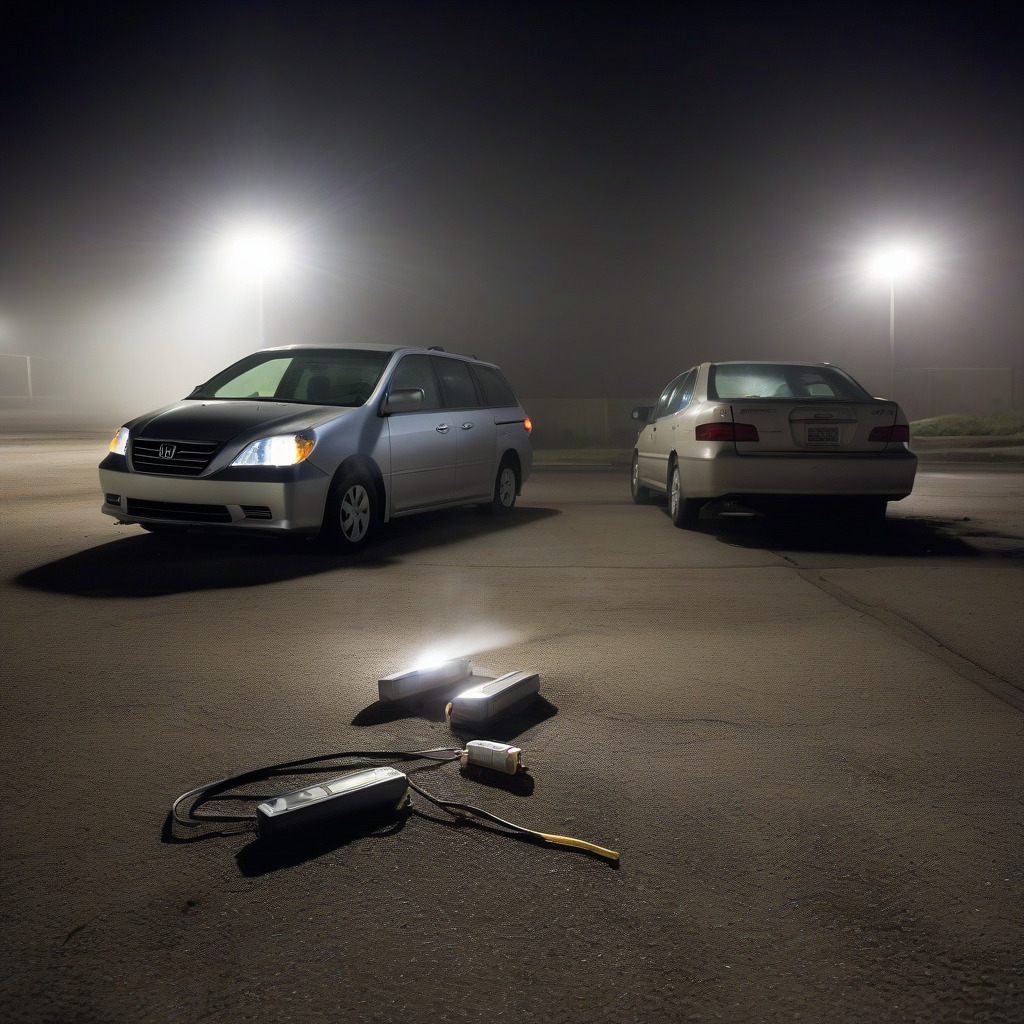
A 2004 Toyota Prius sitting overnight in a surface lot off Jensen Drive in the Near Northside can lose its converter in under 90 seconds. The repair bill can reach $2,500 or more on a car worth maybe $6,000 on a good day. Across the city, theft volume has held stubbornly high even as Texas’s new scrap metal law, Senate Bill 224, cleared its first full year of enforcement. The law changed the paperwork. The theft rate hasn’t followed.
New legal tools exist. The street-level problem persists. This piece reports out that tension — where thieves are working right now, which vehicles are getting hit, what SB 224 actually does in practice, and what it costs to protect your car or replace a stolen converter.
Where Thieves Are Working: HPD District and ZIP-Code Patterns
HPD’s Auto Theft Division breaks vehicle crime by patrol division, and the concentration is not remotely even across the city. The Midwest, North, and Northeast divisions have historically accounted for a disproportionate share of reported incidents. Four ZIP codes keep surfacing in HPD’s historical property-crime data: 77016 (Greater Greenspoint/Settegast), 77028 (Galena Park/Pleasantville), 77033 (South Park/Sunnyside), and 77091 (Acres Homes/Shepherd Forest).
The geographic pattern ties partly to proximity to the Ship Channel scrap corridor. In 77033, incidents skew toward apartment complex parking lots and street parking on major commercial corridors. In 77091, older residential streets with minimal garage infrastructure concentrate the risk. None of this is accidental — the geography and the economics line up almost perfectly.
CityDesk Houston has filed a Texas Public Information Act request for current 2024–2025 catalytic converter theft counts by patrol division and ZIP code. Readers wanting confirmed current figures should direct requests to HPD Public Affairs.
Inside the Loop, elevated risk clusters differently. Montrose has dense urban layout and heavy street parking; incidents tend to concentrate on blocks without lighting or foot traffic after midnight. EaDo sits at the intersection of street parking, surface lots serving bars and venues, and proximity to industrial corridors. Third Ward and Near Northside carry similar profiles: older housing stock, minimal covered parking, high rates of overnight street exposure.
One reporting caveat worth knowing: catalytic converter theft is frequently filed under broader vehicle-tampering or vehicle-burglary codes depending on the responding officer. Aggregate counts likely understate actual volume, possibly by a significant margin.
Why Houston’s Exposure Is Unusually High
National catalytic converter theft statistics are real. They don’t explain why Houston specifically remains one of the most persistently targeted cities in the country. The reasons aren’t going away.
Houston is flat, sprawling, and built around surface lots. Older residential neighborhoods have limited garage parking and few covered alternatives. Unlike cities with hard winters, Houston offers no seasonal break — no months when thieves pivot to other crimes because ice and cold make outdoor parking less attractive. It’s outdoor parking, every night, year-round.
Then there’s the Ship Channel. The stretch of industrial scrap and recycling operations along Clinton Drive and Market Street has historically provided fast cash turnover on stolen metal. Even with SB 224’s documentation requirements, the proximity of a dense scrap-buying corridor to high-theft ZIP codes compresses everything. A converter can move from a Settegast parking lot to a receiving dock before dawn.
METRO Park & Ride lots in Katy, Pearland, and Sugar Land present a soft target that gets almost no coverage. The logic is straightforward: vehicles park at 7 a.m. and don’t move until 6 p.m. Thieves doing reconnaissance don’t have to guess at windows. Apartment complex parking in Pearland, Pasadena, and Humble works differently — thieves identify complexes with surface lots and bad lighting and come back on multiple nights. CityDesk Houston is seeking theft incident data from METRO Police to confirm the scope of activity at these facilities.
Which Vehicles Are Being Hit
The 2004–2009 Toyota Prius is the highest-value target and it’s not particularly close. The hybrid-generation converters from those model years contain significantly higher concentrations of platinum, palladium, and rhodium than converters on conventional vehicles. Houston’s unusually large rideshare Prius fleet amplifies this locally — more on that below.
In the truck and SUV tier, Houston diverges sharply from national averages. Ford F-250 and F-350 (particularly diesel models), Toyota Tacoma, Toyota Tundra, Chevrolet Silverado, Tahoe, and Suburban all appear regularly in HPD incident clusters. Trucks and large SUVs sit high off the ground — a thief with a battery-powered reciprocating saw doesn’t even need to jack the vehicle. The converter is accessible from a crouching position. Houston’s enormous truck market means more targets, full stop.
Lexus RX and GX models appear regularly because converter placement and metal content combine to make them attractive relative to time invested. Among Honda models, the Element and older Accord configurations see disproportionate targeting relative to their share of the local fleet.
Vehicle targeting data above reflects nationally documented patterns. HPD and local body shops are the appropriate sources for Houston-specific confirmation, which CityDesk Houston is pursuing.
If you own a 2004–2009 Prius, Ford F-250/F-350, or Toyota Tundra and you park on the street overnight in 77016, 77028, 77033, or 77091, your risk is concrete. Not theoretical. Elevated risk also applies to Tacoma, Silverado 1500/2500, Tahoe, Suburban, Lexus RX/GX, and Honda Element owners in those same corridors.
The Rideshare Driver Problem
Houston’s Uber and Lyft driver population is large and disproportionately Prius-heavy. Fuel economy explains it. The downside is that these drivers own the single most targeted vehicle type in the city, often park on residential streets overnight, and frequently carry insurance structures that leave them exposed to exactly this loss.
Rideshare drivers on tight margins often drop comprehensive coverage on older vehicles. A high-mileage Prius insured only for liability and collision means a stolen converter is entirely out of pocket — $1,000 to $3,500 depending on vehicle and shop. Then there’s the time off the road, which is lost income on a platform where margins are already thin.
This is a recurring concern in Houston’s TNC driver community and it has received no organized response at the association or platform level. Neither Uber nor Lyft has published any guidance on this for Houston drivers. That’s a genuine failure. These companies know what their drivers are driving and where they’re parking.
Texas SB 224: What the Law Says and Whether It’s Working
Senate Bill 224 took effect September 1, 2023. Anyone selling a catalytic converter to a scrap dealer must provide proof of ownership — typically a vehicle title or registration — plus a government-issued ID. The purchaser must record that information. Cash payment is prohibited; payment must go by check or electronic transfer. Dealers who purchase converters without documentation face a Class A misdemeanor; trafficking provisions elevate penalties to felony level.
The intent is sound. The enforcement picture is murkier, and I’ll be direct: I don’t yet have enough on-record data to tell you confidently whether the law is bending the theft curve in Harris County. HPD’s Auto Theft Task Force has enforcement tools it didn’t have before September 2023. Whether those tools have been deployed in active operations along the Ship Channel corridor, and what prosecution outcomes have resulted, are questions CityDesk Houston is pursuing directly with HPD and the Harris County DA’s office. Neither had provided on-record responses at publication time.
What’s happening at scrap yards operating below the radar is harder to assess. Some established Ship Channel operations have invested in compliant record-keeping. Smaller or informal buyers present a more variable picture, according to sources familiar with the corridor. And a theft ring with any organization can simply route material to buyers in jurisdictions with lighter enforcement. The law creates real paper-trail exposure that didn’t exist before 2023. Whether that’s enough to meaningfully reduce theft in Harris County, without precinct-level incident data showing a trend line, is an open question. Anyone who tells you definitively that it has is getting ahead of the evidence.
Anti-Theft Devices: What Works and What It Costs
Most thieves working a parking lot are optimizing for speed. They’re not trying to defeat every possible security measure; they’re trying to be done in 90 seconds and gone. Add three or four minutes to the job, and many will move to the next vehicle. That’s what anti-theft hardware actually buys you — not security, friction.
In our automotive coverage, we’ve noted consistently that mechanical deterrents work best when layered with smart parking habits — the same principle applies here.
CatClamp wraps a cable cage around the converter and attaches to the vehicle frame. Bolt cutters won’t work; a reciprocating saw takes longer and makes more noise. Installed cost runs $150–$250 depending on vehicle. Several exhaust shops in the Greater Greenspoint and Northside areas install them, but call ahead — stock availability varies.
MillerCAT and Cat Security welded shields are steel plate systems that bolt or weld over the converter. For trucks and SUVs where the converter sits accessible from ground level, these add real friction. Installed cost runs $200–$400. Get quotes from at least two Houston exhaust shops and confirm current pricing directly.
Catstrap is a lower-cost cable or strap system — less protection than a welded shield, but at $75–$150 installed it makes sense for vehicles in moderate-risk tiers where full fabrication feels like overkill relative to the car’s value.
Custom fabricated exhaust cages from Houston muffler shops are the most protective option for high-value targets. Call ahead with your year, make, and model for a quote; cost varies widely based on materials and complexity.
VIN etching gets offered by some Houston Toyota dealers as a deterrent. Etching the VIN onto the converter makes it harder to resell without grinding off the marking. A thief working fast at 2 a.m. is not checking for etchings, though. Don’t treat this as your primary defense.
Parking matters as much as hardware. A Prius with a CatClamp in a well-lit garage beats a Prius with nothing in a dark surface lot. If you have parking choices, make them deliberately.
What Replacement Costs and Whether Your Insurance Covers It
Replacement in Houston currently runs $1,000 to $3,500 and up, depending on the vehicle, whether you use a dealer or independent shop, and whether an OEM or aftermarket converter is installed. The dealer-versus-independent gap can run $500–$1,000 on the same job. For most vehicles, an independent shop with verifiable credentials is a reasonable call. Get the warranty terms in writing before authorizing work.
One distinction that trips people up at the worst moment: comprehensive coverage covers catalytic converter theft. Collision does not. An owner who dropped comprehensive to reduce premiums on an older vehicle — common among early-generation Prius owners and high-mileage truck owners — has no coverage for this loss, regardless of what else they’re carrying.
The deductible math matters too. If your comprehensive deductible is $500 and the repair costs $900, filing a claim nets you $400 before any premium impact. A lot of owners in that position absorb the cost out of pocket. If you do that, still file a police report. It creates a record, is required for any future claim, and contributes to the data HPD uses to allocate Auto Theft Task Force resources.
To file with HPD, use the department’s online reporting portal for non-emergency property crimes at hpdcarjacking.org — verify the URL is active before filing, as HPD periodically updates its portal addresses. You can also report in person at any HPD substation. Get a copy of the incident report number; your insurance company will require it.
What to Do If It Happens to You
You walk out and your car sounds like a dragster, or won’t start because a sensor in the exhaust system has been severed. Here’s the sequence.
Confirm the theft first. Look under the vehicle or have a shop check before calling in a theft — occasionally what sounds like a converter problem is a different exhaust issue. This takes two minutes.
Call HPD and file a report. Use the non-emergency line or the online portal. Get an incident number before you do anything else.
Notify your insurance. Call your agent or carrier’s claims line. Have your incident number, vehicle information, and the name of the shop where you plan to take the car. Do not authorize repairs before speaking with your adjuster if you’re filing a claim.
Get quotes from at least two shops. The spread on this repair between shops can be significant on the same vehicle.
If you drive for Uber or Lyft, notify the platform through the app that your vehicle is temporarily out of service and document the downtime. That record matters if you’re ever trying to quantify the loss.
Where Things Stand
SB 224 is a real law with real enforcement infrastructure. It created paper-trail exposure that makes large-scale cash transactions at established scrap yards riskier than they were two years ago. That’s a genuine change, worth acknowledging.
What it hasn’t done is fix the structural problem. Houston is still flat, sprawling, and built around surface lots. The Ship Channel scrap corridor is still there. The rideshare Prius fleet is still there. Year-round outdoor parking is still there. Enforcement is improving but uneven, and organized theft rings have routing options that can run around SB 224’s reach. The law raised the floor. It didn’t change the ceiling.
If your vehicle is in the high-risk tiers, a welded shield or cable cage is worth the money. Not because it makes theft impossible, but because it shifts the cost-benefit calculation for a thief working a parking lot at 2 a.m. Combined with deliberate parking choices, hardware meaningfully reduces your odds.
The neighborhoods at highest risk are specific and identifiable. If you park regularly in the 77016, 77028, 77033, or 77091 corridors, or use a METRO Park & Ride in Katy or Pearland, your exposure is real and current. HPD’s Auto Theft Division and the Harris County DA’s office are the right sources for data on how SB 224 enforcement is translating into arrests. Whether current enforcement is actually bending the theft curve is a question the year-end data will answer. We’ll report it when it’s in.
CityDesk Houston filed a Texas Public Information Act request with HPD’s Auto Theft Division for 2024–2025 catalytic converter theft counts by patrol division and ZIP code. Data cited reflects historical HPD property-crime reporting patterns; current confirmed figures are pending. Readers seeking updated incident counts should direct requests to HPD Public Affairs.