A Pre-Road Trip Maintenance Checklist for Leaving Houston This Summer
The flat, sun-baked stretch from Columbus to San Antonio breaks down more cars than most Houstonians realize. Here's what actually matters, corridor by corridor.

The flat, sun-baked stretch from Columbus to San Antonio breaks down more cars than most Houstonians realize. Here’s what actually matters, corridor by corridor.
If you’re leaving Houston this summer for the Hill Country, San Antonio, or anywhere north on I-45, your car is already working harder than you think before it reaches the Katy Freeway on-ramp. June ambient temperatures in Houston run in the mid-90s with heat indices above 105°F. Your cooling system, battery, and belts are operating near their thermal limits at idle in your driveway — not just at highway speed, not just when something goes wrong. The stress starts before you pull out of the garage.
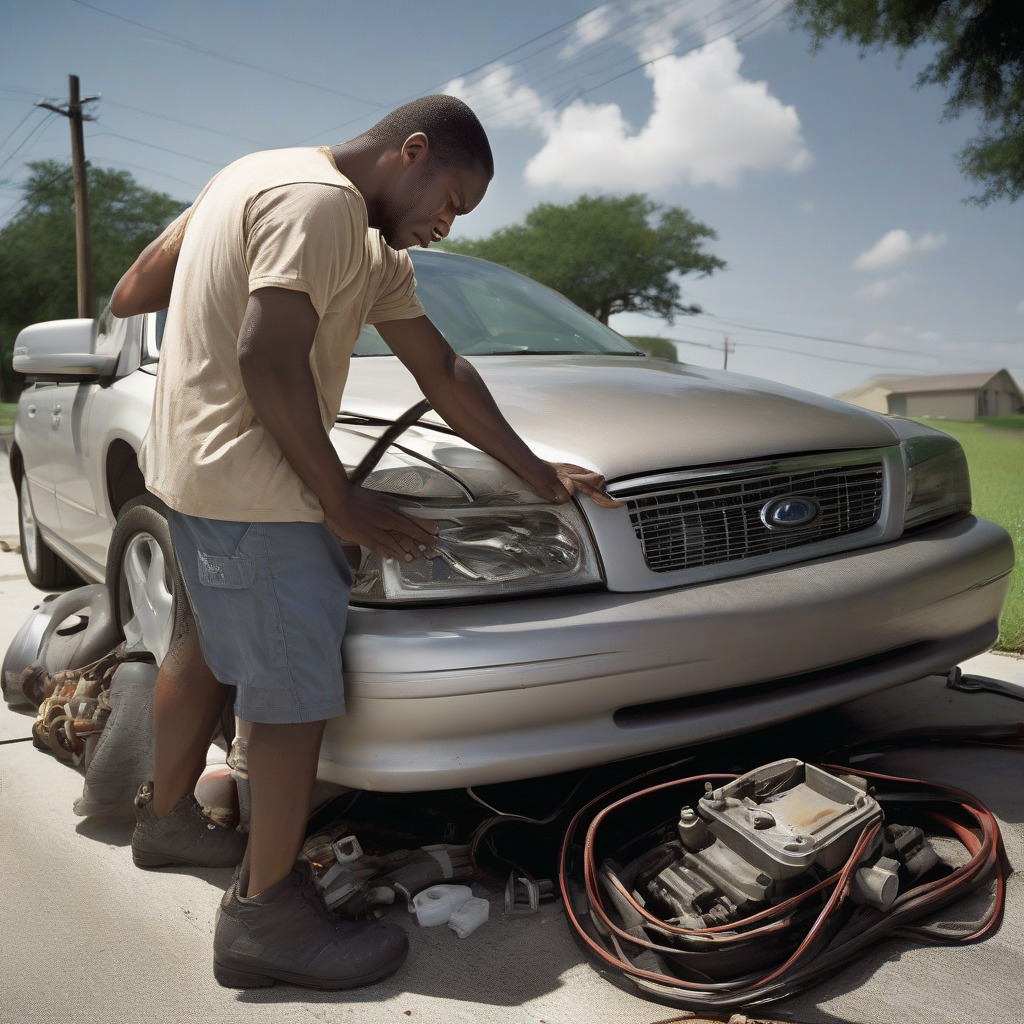
The I-10 West corridor amplifies that problem in a specific way most drivers don’t appreciate until they’re on the shoulder. West of Columbus, you’re looking at roughly 150 miles of exposed, flat highway: minimal shade, limited services, and cell coverage that grows genuinely patchy west of Seguin. A marginal radiator hose that would’ve gotten you home from a Costco run in Katy will not get you to San Antonio in late June. This guide is organized around that reality — what breaks on these specific corridors, which maintenance items matter most in Houston’s summer conditions, where to get the work done quickly before you leave, and what to carry for a breakdown that no shop can prevent.
Why Houston Is Already a Worst-Case Departure Point
Most national car-care guides assume you’re leaving in morning cool and returning the same day. Houston summer departures don’t work that way. On a late June morning, pavement surface temperatures on I-10 can exceed 150°F. Your vehicle’s coolant has been running through hot-start cycles. Your battery has been discharging and recharging in heat that cuts lead-acid capacity measurably. Your tires — if you haven’t checked them in a few weeks — are already running above their cold-inflation spec just from sitting outside.
None of this is catastrophic in isolation. But combine it with a five-hour highway run in direct sun, a full load of passengers and luggage, possibly towing a boat trailer, and the Katy construction corridor before you’ve even cleared the metro, and a borderline maintenance item becomes a roadside breakdown between mile marker 500 and nowhere.
The standard advice to “get a quick oil change before you go” misses what Houston-specific conditions actually require. You shouldn’t avoid driving. You should avoid driving unprepared. There’s a meaningful difference between those two things.
The Five Things That Actually Break Down on I-10 West and I-45 North
Not all car failures are equal. The ones that strand people on these two corridors in summer follow a predictable pattern — and if you’ve ever driven past a car steaming on the I-10 shoulder near Flatonia, you know exactly what we’re talking about.
Cooling system failure is the top culprit on I-10 West, consistent with AAA national data on summer highway breakdowns. Radiator hoses degrade from the inside out. Rubber that’s been through four or more Houston summers — alternating between extreme heat and the occasional hard freeze — can look fine externally while being dangerously soft or brittle inside. A blown upper radiator hose at 80 mph between Seguin and San Antonio, in 98°F heat, with no shade and weak cell service, means a potential engine loss. Not a bad afternoon. An engine.
Tire blowouts are a major cause on both corridors. Texas highway pavement on I-10 can hit surface temperatures above 150°F in June and July. An underinflated or aged tire on a vehicle already at the high end of its load rating will fail. I-10’s long unbroken run at highway speed gives heat nowhere to go.
Battery failure tends to cluster at departure — the car won’t start Friday afternoon — or on return legs after the battery has been running AC and accessories hard for three days. Houston heat cuts battery life sharply. A battery that tests marginal in April will fail outright in July. “I’ll deal with it when I get back” is genuinely the wrong call here.
Serpentine belt failure can take out power steering, the alternator, and the AC compressor in a single event, depending on your vehicle’s configuration. Belts showing cracking or glazing in a visual inspection should not go on a summer highway run.
AC compressor failure is its own category on I-45 North, where the humidity load through Conroe and The Woodlands means your compressor runs at higher duty cycles just to keep cabin air tolerable. A system low on refrigerant labors harder, heats the compressor, and fails faster. And in a vehicle without working AC in Texas summer, you’re not dealing with discomfort — you’re dealing with real heat risk for children, elderly passengers, and pets. That’s a safety issue, not a comfort complaint.
The Pre-Trip Maintenance Checklist, Ranked by What Actually Matters
Ordered by the realistic consequences of skipping each item — not alphabetically, not the way it appears in your owner’s manual.
1. Coolant flush and full hose inspection. If your coolant hasn’t been flushed in the last two years, or your hoses are more than four years old, do this before you leave. Houston mechanics consistently flag four-year-old hoses as suspect for summer highway runs even when they look externally fine. Ask for a cooling system pressure test — often bundled into a pre-trip inspection fee — which catches hoses and the radiator cap. The radiator cap fails more often than people expect.
2. Battery load test. Not just a voltage check. A load test that simulates actual draw. Most shops do this free or fold it into a pre-trip fee. If the battery is more than three years old and tests at reduced capacity, replace it before you go. I’ll be direct about the alternative: you won’t get a second chance to start the car in a Fredericksburg HEB parking lot on Sunday afternoon, and Fredericksburg does not have a great selection of auto parts stores open at 7 p.m.
3. Tire inspection, including the spare. Tread depth, sidewall condition, age (tires over six years old are suspect regardless of how much tread remains), and pressure. The spare is the item most commonly skipped in pre-trip inspections — only for the driver to discover it’s flat or cracked when they need it on a shoulder. Check the spare every time. It’s the one item that will absolutely wreck your day if you skip it.
4. Serpentine belt visual and tension check. Any cracking, fraying, or glazing means replacement before departure. At around $100 to $175 installed at a Houston independent, it’s one of the cheapest insurances on this list. A belt that looks questionable in a quiet driveway will fail on a hot highway.
5. AC system performance check. Find a shop that can verify refrigerant level, check compressor cycling, and confirm adequate vent temperature output. On I-45 heading north in June humidity, a struggling AC is both a mechanical problem for the compressor and a safety issue for whoever’s in the back seat. For context on what full AC repair can run if the compressor is already failing, car AC repair costs in Houston range widely depending on the component.
6. Brake inspection, especially if you’re towing. Anyone pulling a boat trailer to Canyon Lake, a horse trailer to Hunt or Bandera, or a camper to Garner State Park needs a full pad and rotor check. Towing significantly increases stopping distances and heat buildup in your brakes. Pads with six comfortable months of city driving left can be marginal under repeated trailer-load stops on Fredericksburg’s hills. The terrain change matters.
7. Air filter. Houston’s air quality and construction dust load filters faster than national averages suggest. A badly clogged filter reduces fuel efficiency on a long run and stresses the engine. This is quick and cheap. You can defer it if the filter isn’t visibly choked — it’s the lowest-stakes item on the list.
8. Wiper blades. If you’re heading for the Hill Country in summer, you will drive through a thunderstorm. Probably at dusk, on a two-lane road, at speed. Houston UV and heat destroy wiper rubber faster than most climates, and this is the cheapest fix on the list. You already know if yours streak. Replace them.
What Actually Happens to Your Tire Pressure Between Houston and Fredericksburg
This deserves its own section. It’s specific, counterintuitive, and something most drivers don’t think about until they’re staring at the tire placard on the door jamb in a Fredericksburg parking lot wondering why the numbers don’t match.
Tire pressure increases roughly 1 PSI for every 10°F increase in ambient temperature. Leave Houston at 98°F and arrive in Fredericksburg — elevation 1,740 feet, possibly 15°F cooler — and your tires may read slightly lower than they did at home. Not because you lost air. Because the air inside contracted. This trips people up every summer.
Here’s the protocol that works: Check pressure cold in Houston before 9 a.m., before the car has moved. Set each tire to the manufacturer’s recommended cold spec on the door placard — not the number molded into the sidewall, which is the maximum, not the target. Don’t add extra pressure “for the heat.” That’s a misapplication of the relationship.
On the highway, once tires have been running hot for an hour, they’ll read 4 to 6 PSI above cold spec. Don’t bleed pressure from hot tires to bring the reading down. You’ll be underinflated when they cool. The morning after you arrive, check cold again. If tires have dropped a couple PSI from your Houston reading, add air. Many Hill Country gas stations have working air compressors, but a portable 12V inflator fits in any trunk and costs about $30 at any auto parts store. Worth it.
Leaving Fredericksburg for home in cooler morning air and arriving back in Houston’s evening heat, pressure will read higher on arrival. That’s normal. Only check and adjust cold. It’s the one physics detail that catches most drivers off guard, and it takes about 30 seconds to understand once you’ve seen it once.
The Friday Afternoon Departure Problem, and What Towing Changes
Here’s the scenario Houston drivers actually face: it’s 3:30 p.m. Friday, the Katy Freeway interchange is mid-reconstruction, ambient temperature is 97°F, you have two kids in the back, and you’re towing a 23-foot bass boat on a single-axle trailer.
Every risk on this list compounds. The Katy construction zone means slow-and-go traffic, which means your cooling system isn’t getting airflow and your engine runs hotter at low speed than at highway cruise. Towing a boat multiplies your braking distance, heats your transmission, and puts your trailer tires — which most people haven’t inspected since they backed the boat into the water in April — into service on a hot highway. If you’re heading to Canyon Lake, you’ve got a 3.5-hour run minimum, and you’ll clear Houston in peak evening heat.
Trailer tires sit outdoors year-round, take no load during the off-season, and age under UV faster than passenger tires. Replacing a cracked trailer tire before departure is cheap. Replacing a blown one on I-10’s shoulder in Saturday morning heat is expensive and genuinely dangerous for whoever’s standing on that shoulder. Add these to your pre-trip list if you’re towing anything: trailer tire condition and pressure, trailer light function, ball mount torque and coupler latch, and brake controller operation if applicable. Most shops doing pre-trip inspections don’t automatically check trailer gear. You have to ask specifically. They won’t volunteer it.
On timing: if you can leave Thursday evening or early Friday before 9 a.m., you avoid both the Katy construction peak and the day’s worst heat. If you’re locked into a Friday afternoon departure, make sure your coolant system and AC have both been verified. Those are the two systems that make a slow Katy crawl survivable.
Where to Get a Thorough Pre-Trip Inspection in Houston
Not all options are equal. Which tier you use should depend on how much time you have and how much uncertainty you’re carrying about your vehicle’s condition.
Discount Tire offers a free tire inspection at their 15-plus Houston metro locations. They check pressure, tread depth, sidewall condition, and age, and they’ll tell you honestly if your spare is compromised. This covers your single highest-frequency breakdown risk in about 15 minutes, usually no appointment needed on weekday mornings. It’s not a full vehicle inspection, but it’s the right starting point — and it’s free.
Valvoline and Jiffy Lube locations across Houston offer multi-point checks bundled with oil changes. Useful for catching obvious fluid and filter issues, not the right choice for coolant system diagnosis or AC performance verification. If your car is newer and well-maintained, that’s fine. If you have any real uncertainty about your cooling system or battery, it’s not enough.
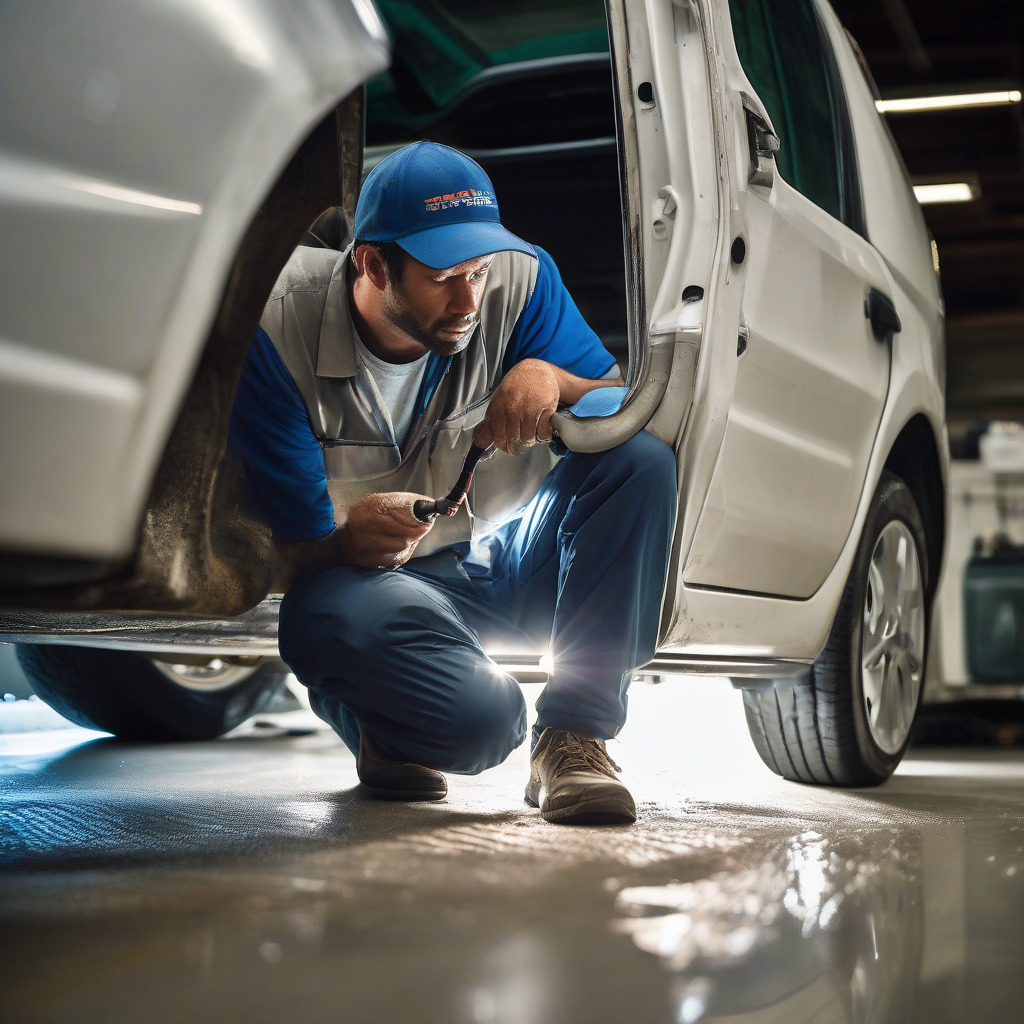
Christian Brothers Automotive is the strongest same-day option for a genuine pre-trip inspection. Locations in Katy at Mason Road and Cinco Ranch, Sugar Land, The Heights, Clear Lake, and Pearland, among others. Most CBA locations can accommodate a pre-trip inspection with a same-day appointment and will give you a written report on flagged items. That written documentation matters — not just for peace of mind, but because you can show it to a shop in Kerrville if something goes wrong. For more on the broader automotive services landscape in Houston, our automotive coverage tracks what local drivers are paying and where they’re taking their vehicles.
Before booking anywhere, ask one question: “Will I get a written multi-point inspection report, or just a verbal assessment?” A written report means the shop is accountable for what they found and what they missed. A verbal-only assessment is, to be blunt, less useful if you end up in a dispute.
Gillman Auto Group operates Honda, Nissan, and Subaru locations in Southwest Houston and Rosenberg and offers pre-trip inspections for vehicles in their service network — call directly to confirm same-day weekday availability. AutoNation has multiple Houston locations with multi-point inspections available, though same-day scheduling varies; call ahead. Dealerships are worth using specifically if your vehicle is still under powertrain warranty and you want any flagged items documented in the manufacturer’s service records. That matters if you need a warranty claim after a breakdown.
What These Services Should Cost in Houston Right Now
Current price benchmarks at Houston independent and franchise shops:
- Basic multi-point inspection bundled with oil change at a quick-lube chain: free to $30
- Standalone multi-point inspection with written report (independent or franchise): $50 to $120
- Coolant flush: $80 to $150 at most Houston independents
- Battery replacement, installed: $150 to $250 depending on group size and brand
- Serpentine belt replacement, labor included: $100 to $175 at an independent
- AC recharge (refrigerant plus labor): $100 to $200; a leak diagnosis or compressor repair is a separate estimate and can run significantly higher
Some items can wait. If your brakes have substantial pad life and you’re not towing, a brake service may not be urgent. A dirty but not clogged air filter can often nurse to the next scheduled service. Wiper blades are cheap enough that evaluating them is pointless — just replace them.
What you shouldn’t defer on a summer I-10 run: cooling system check, battery load test, tire inspection with the spare. Those three items cover the majority of summer breakdowns on this corridor. Getting all three done at an independent shop with a written report, assuming nothing needs replacing, runs around $80 to $150. One hour on a flatbed tow truck will cost you more than that. The math is easy.
What to Carry If Something Goes Wrong on the I-10 Shoulder in July
This isn’t paranoia. It’s a function of where you are. Cell coverage is inconsistent through parts of I-10 West between Columbus and San Antonio. There is no shade. In July, a wait for a tow truck on an exposed highway shoulder becomes dangerous fast for children, elderly adults, and pets. I’m not being dramatic — this is a real and specific risk on that stretch of road.
Water. More than you think you need. A gallon per person is not excessive for a breakdown scenario in triple-digit heat. This isn’t about staying hydrated on the drive. It’s about surviving a 45-minute wait on a shadeless shoulder.
Your roadside assistance numbers written on paper, in the glove box. AAA Texas, your auto insurer’s program, your manufacturer’s roadside line — write them all down. Your AAA card is useless if your phone is dead or has no signal. Paper doesn’t need either.
A phone charger and a power bank. A dead phone on a spotty stretch is a serious problem. Keep a 12V car charger plugged in and a backup power bank in your bag if you own one.
A basic emergency kit. Reflective triangle or road flares, a first aid kit, a flashlight. If you’re not carrying a tire inflator, a can of tire sealant buys you time — it’s not a substitute for a spare, but it can get you to an exit.
Cash. Some rural Texas tow operators prefer it or require it. Having $60 in the glove box removes one variable from an already bad situation.
The I-45 North corridor through Conroe and The Woodlands has better cell coverage and faster service response than I-10 West, but shoulder heat risk in summer is identical. Same preparation applies.
A well-prepped car doesn’t guarantee a breakdown-free trip on Texas summer highways. But the failures that strand the most Houstonians on I-10 between Columbus and San Antonio — cooling system, tires, battery — are also the most detectable in advance. A shop that puts your car on a lift, squeezes your hoses, load-tests your battery, and hands you a written report is worth two hours and $150 before any long summer run on these corridors. That’s the floor. Everything else in this guide builds on top of it.