Where to Get Your Texas Vehicle Inspection Done Fast in Houston
The sticker is gone, and the whole errand can take under 20 minutes — if you go to the right place at the right time.

The sticker is gone, and the whole errand can take under 20 minutes — if you go to the right place at the right time.
If you haven’t gotten a vehicle inspection since Texas passed HB 3297, a lot of what you think you know about the process is now wrong. The windshield sticker is gone. The paper certificate is gone. What’s left is a quick safety check, a digital transmission to TxDMV, and the ability to renew your registration without ever standing in a government office line. That last part still feels a little remarkable.
A note on emissions testing in Harris County: Harris County was historically one of the last counties in Texas requiring emissions testing beyond the state safety minimum. Whether emissions testing has been fully eliminated for all vehicle classes under the reformed program — including transitional rules that may still apply to older vehicles — requires confirmation with TxDMV before you assume your vehicle is exempt. If you drive a pre-1996 vehicle or a diesel, call a station before you go.
The experience varies enormously depending on which station you choose, what corridor you’re on, and what time of day you walk in. This guide covers the Houston corridors where inspection stations cluster: Westheimer, Richmond Avenue, the Gulf Freeway south toward Clear Lake, and FM 1960 in North Houston. Use it to find the fastest option for your part of the city, understand what the inspection actually covers, and avoid the failures that catch Houston drivers off guard.
How HB 3297 Changed Everything
Texas House Bill 3297 restructured the state’s vehicle inspection program. The most visible change: no more physical sticker on your windshield. Inspection results now transmit electronically from the station directly to TxDMV’s database, which means there’s no paper certificate to carry to the tax office, no sticker to peel and re-apply, no separate paperwork step between passing your inspection and renewing your registration.
This genuinely simplifies the process. The friction is no longer paperwork — it’s station congestion and wait time. The inspection itself is quick. Your actual errand time depends almost entirely on when you arrive relative to when everyone else is trying to get the same thing done.
What the Texas Safety Inspection Actually Covers
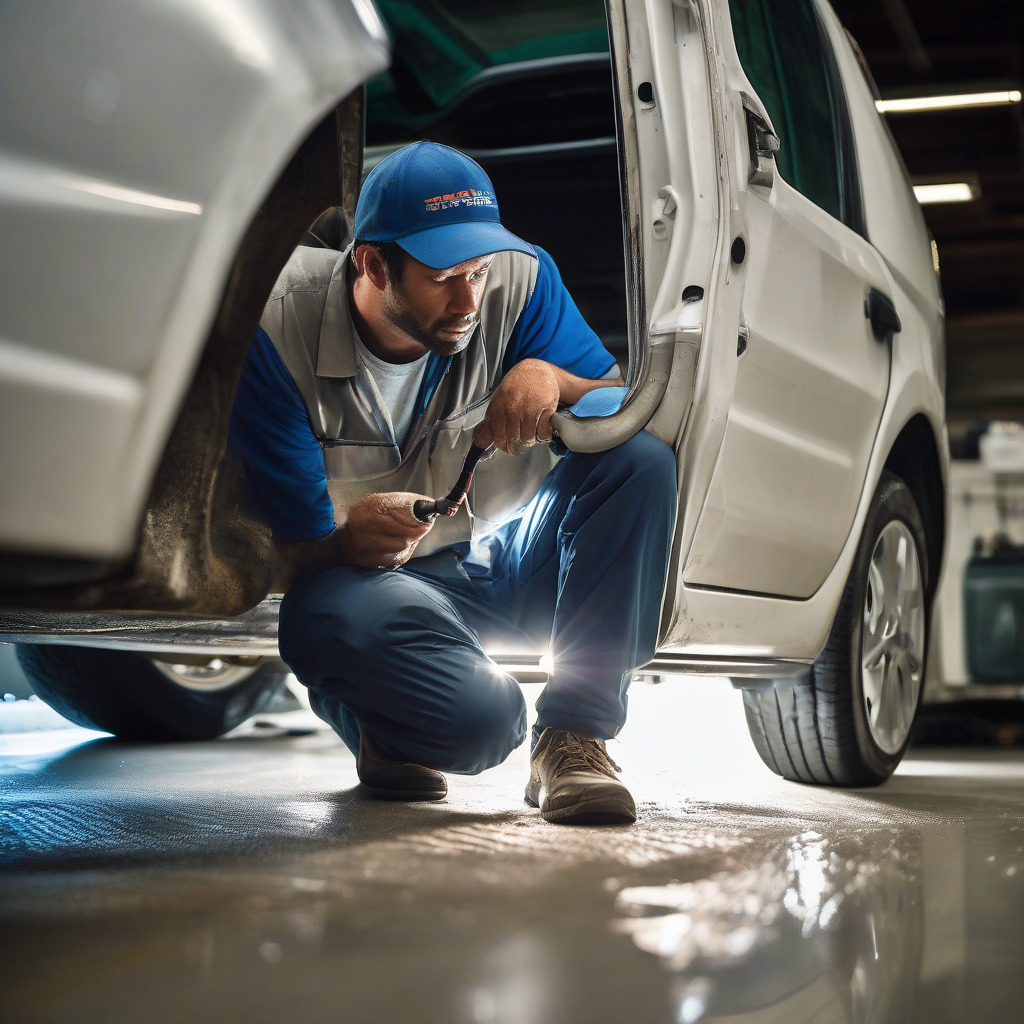
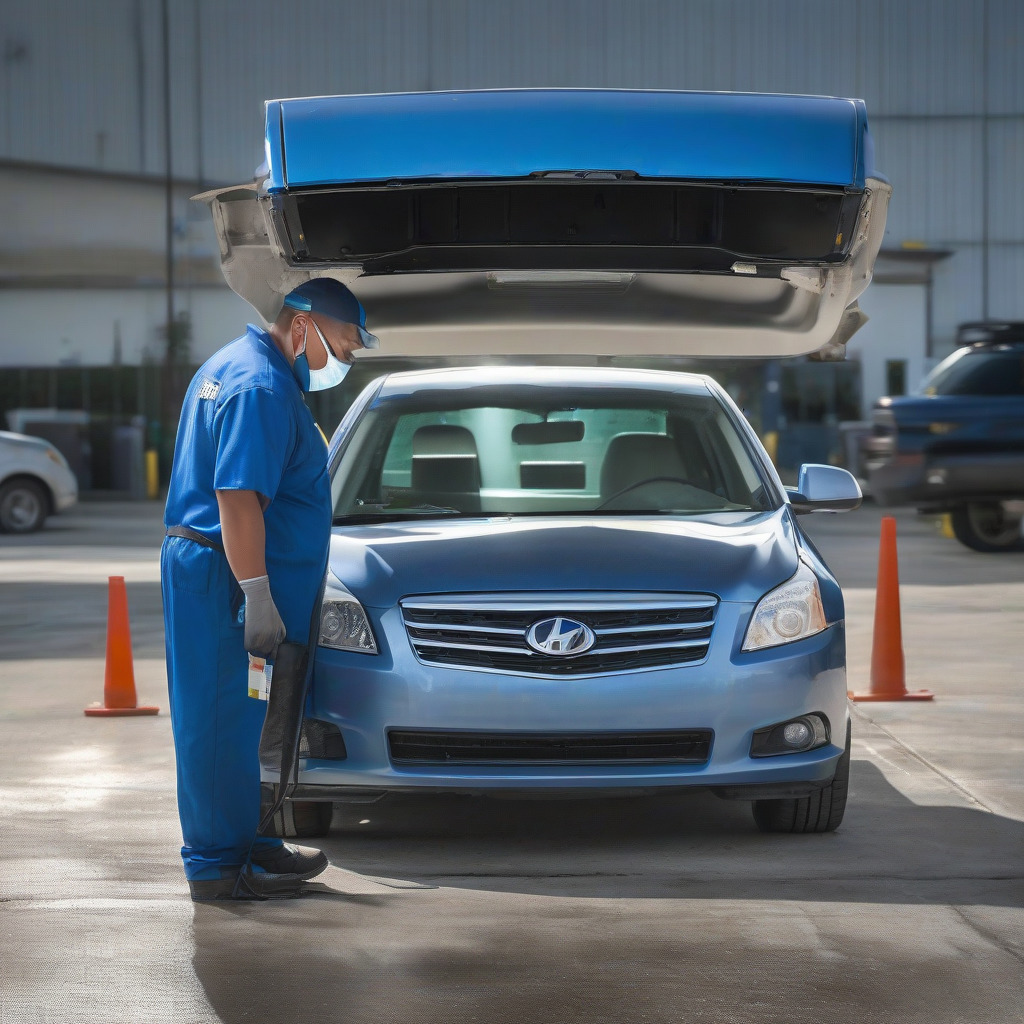
The reformed inspection is a safety-only check. A licensed inspector will examine:
- Lights: headlights (low and high beam), brake lights, reverse lights, turn signals, hazard flashers, and license plate illumination
- Horn: Texas requires functional horn testing; many other states do not
- Windshield wipers: front wipers must clear effectively
- Mirrors: driver’s side mirror and at least one additional mirror providing rear visibility
- Tires: tread depth (minimum 2/32”) and visible structural condition
- Brakes: pedal response; inspectors check brake lights as part of this
- Steering: play and response
- Seat belts: all positions the vehicle was manufactured with must be present and latching
- Window tint: front side windows must meet Texas’s 25% visible light transmission minimum
Whether inspectors continue scanning the OBD-II port for readiness monitor status now that emissions requirements have changed is worth verifying with a station directly — some retain the scan as part of their workflow regardless. Worth asking if you’re driving something older.
A vehicle that passes runs through in under 20 minutes. Most take closer to 10 or 15. The variable is the wait before the inspector touches your car. The corridor sections below address that directly.
Westheimer Corridor: Dense Competition, Tight Lots, and the Morning Window
Westheimer Road between Montrose and Westchase has one of the highest concentrations of inspection-capable stations in Houston. Independent shops, Jiffy Lube locations, Valvoline Instant Oil Change outlets, and dedicated quick-lube operations all hold state inspection licenses along this stretch, and the competition keeps service moving. For more on how business options cluster across Houston’s commercial zones, see our coverage of professional services and business districts.
The cross-street clusters worth knowing: Westheimer and Gessner, Westheimer and Hillcroft, and the Montrose-Shepherd stretch between Dunlavy and Shepherd Drive. The Westheimer and Gessner area is a practical nexus — close enough to the Galleria zone to draw heavy traffic, and a short drive from the Harris County Tax Office branch on Westheimer, which matters if you need to handle registration in the same trip.
[Reporter verification required: confirm specific station names, current hours, and phone numbers for the Westheimer and Gessner, Westheimer and Hillcroft, and Montrose-Shepherd clusters before the sidebar publishes.]
The 7 to 9 a.m. weekday window is consistently the fastest on this corridor. Stations that open at 7 or 7:30 a.m. will take your car immediately. By 10 a.m., especially on Fridays, you’re looking at 30- to 45-minute waits at the busier chains. Lunch hour — roughly 11:30 a.m. to 1:30 p.m. — produces another backup as people try to squeeze the errand into a midday break. You know who you are.
If you drive a pickup truck or full-size SUV, skip the Montrose end of Westheimer. Lot access between Montrose and Shepherd is tight, and maneuvering a long-bed through a quick-lube bay is more hassle than it’s worth. Go to the Gessner or Hillcroft clusters instead.
Richmond Avenue: The Lower-Traffic Alternative Running Right Beside It
Most Westside residents default to Westheimer for any automotive errand because it’s the commercial spine they know. That’s exactly why Richmond Avenue, running parallel to Westheimer roughly a mile south, consistently has shorter inspection waits.
Richmond doesn’t carry the same retail foot traffic. Stations draw from a smaller area. A Westheimer backup is often just an opportunity to reroute three minutes south and walk right in. The Richmond and Fountainview and Richmond and Hillcroft areas are the primary clusters worth calling ahead.
[Reporter verification required: confirm station names, current hours, and walk-in policies for Richmond and Fountainview and Richmond and Hillcroft locations before publication.]
Think of Richmond as your contingency plan. Before leaving home for a Westheimer station, pull up Google Maps on those locations. If you see reported wait times above 20 minutes — or it’s a Friday afternoon — the Richmond parallel will almost certainly move faster. The drive difference between the two corridors is negligible from Montrose, West University, or Meyerland. There’s really no reason not to check.
Gulf Freeway South: The Clear Lake and Hobby Area
Readers in Clear Lake, Webster, Friendswood, and the Hobby Airport corridor are dealing with a somewhat different inspection situation. This is where standalone, inspection-primary stations are more common — operations that aren’t trying to sell you an oil change or alignment while the car is up. For an inspection-only visit, that usually means faster service. The bay isn’t shared with multi-service customers.
The concentration around NASA Road 1 (also signed as NASA Parkway) and El Camino Real near the Johnson Space Center is the primary cluster for Clear Lake residents. Stations here have historically served a weekday-heavy base of NASA contractors and commuters whose schedules align with early-morning inspection runs — which, if you’re in that area, is actually useful to know.
The I-45 corridor between Hobby Airport and League City is the zone to canvass for the broader South Houston population. Numerous independent stations sit in commercial strips along frontage roads here. Because it doesn’t have the density of Westheimer, lot access is easier and turnover faster.
[Reporter verification required: specific station names, hours, and whether any locations along NASA Road 1, El Camino Real, or the I-45 frontage between Hobby and League City accept same-day walk-in registration processing.]
One thing Clear Lake and Webster residents should sort out in advance: if you need both inspection and registration renewal in the same area, verify whether the nearby Harris County Tax Office branch or a TxDMV-authorized dealer can complete the registration after your inspection transmits. The digital transmission is instantaneous in most cases, but same-day registration walk-in availability varies by branch. Don’t assume the transmission speed means the branch is ready for you.
FM 1960: Suburban Volume and Specific Timing Rules
The FM 1960 corridor — from Humble in the east through North Houston, Cyfair, and out toward Willowbrook — presents a different challenge than the inner-loop corridors. This is high car-ownership suburban Houston, and on the wrong day at the wrong time, the stations here are completely backed up.
The cross-street clusters worth verifying: FM 1960 and Kuykendahl and FM 1960 and Veterans Memorial. Both sit in the heart of the Northwest Houston suburban belt and serve the Cy-Fair, Willowbrook, and Champions-area populations.
The Willowbrook Mall cluster deserves specific attention. Multiple stations within a short drive of each other sounds like good news for availability, and sometimes it is. But Thursday through Saturday, shared retail traffic in that zone creates compound congestion. Before driving to any Willowbrook-area station on a weekend, check Google Maps live wait data. The difference between stations in that cluster on a Saturday morning can be 40 minutes. That’s not a small thing when all you needed was a 15-minute inspection.
Before 10 a.m. on a weekday is the best window on this corridor. If you can drop the car off when the station opens and return 30 minutes later, you’ll beat the mid-morning wave. Thursday through Saturday are the worst days regardless of time. Monday and Tuesday mornings are the best.
August makes this worse. Station waits on FM 1960 in mid-August run significantly longer than the rest of the year as drivers get vehicles in order before fall. If your renewal falls in August and you’re anywhere near Cy-Fair or Klein, get there early or plan for a wait.
Can You Inspect and Register in the Same Stop?
You can handle them in the same trip, but not necessarily the same building unless you plan ahead.
When your vehicle passes inspection, the station’s system transmits results electronically to TxDMV. That typically completes within minutes. Once TxDMV’s system reflects the passed inspection, you can renew your registration online, by mail, or in person at a county tax office branch.
The paper-certificate-to-tax-office trip that Houston drivers have been making for decades no longer exists. You don’t need to carry anything from the inspection station to the registration office. What you need is for the transmission to have processed before you walk in.
The Harris County Tax Office maintains branches throughout the city. The Westheimer branch near Westheimer and Gessner serves the Galleria and Westside population — one of the busier locations. The North Channel branch serves East Houston and Channelview. The Bayou City branch downtown serves central Houston and the Heights.
[Reporter verification required: confirm exact addresses, current hours, and whether each branch accepts same-day walk-in registration before publication. Branch availability and hours have changed in recent years.]
For title-plus-registration same-day needs — if you’ve just bought a used vehicle — the TxDMV Regional Service Center on Gessner is the Houston-area office with the broadest same-day transaction capability. If you have a complex title situation (out-of-state title, lienholder), go to the TxDMV regional office, not the county tax office. It’s a more reliable one-stop.
Some independent stations in Houston hold tag agent authority, meaning they can process your registration renewal on-site after your inspection clears. Worth asking about when you call ahead, particularly if the tax office is out of your way. Not every station advertises it.
What Fails Houston Drivers That Doesn’t Fail Everyone Else
Texas’s safety inspection catches the same categories of failures it catches everywhere. Houston’s climate and road conditions just push certain failures harder.
Windshield wipers are the one that probably shouldn’t surprise anyone but still does. Houston’s UV index is brutal, and blades degrade faster here than in nearly any northern market. Blades that look structurally intact will streak or skip under a real rain test — and inspectors check for effective clearing, not just presence. If your wipers have been on the same set for more than 12 months, replace them before you go. They’re cheap, and failing on wipers is an entirely avoidable re-inspection.
Window tint catches used-car buyers who inherited illegal tint from a previous owner, and anyone who had tint applied at a shop that doesn’t calibrate to the Texas standard (25% visible light transmission on front side windows). If you’re not sure whether yours is compliant, a reputable tint shop can test it with a meter before you go for inspection.
The horn. Texas tests it. A lot of states don’t. Drivers who moved here from out of state sometimes have a broken horn they’ve literally never thought about. Walk to the front of your car and give it a press before you leave the house. The fix is usually inexpensive, but it’s a peculiarly embarrassing re-inspection.
Brake lights and turn signals. Houston’s road surfaces — particularly in older inner-loop neighborhoods — produce enough vibration to work bulb sockets and wiring connectors loose over time. A brake light that was working six months ago may not be working now. Have someone press the pedal while you walk around the car before you head to the station. Replacement bulbs at a parts store cost less than at the station.
Cracked windshields. Spring hail season runs roughly April through June, and a hail event that dents your hood may also chip or crack your windshield. A crack in the driver’s line of sight is a failure. Check before scheduling. Small chips can sometimes be repaired; larger cracks require replacement.
Tire tread. Highway heat accelerates wear significantly. Texas’s minimum is 2/32” depth. If your tires look visually thin, check tread depth before scheduling. The penny test works (insert a penny into the tread with Lincoln’s head facing down — if you can see the top of his head, you’re below 2/32”), though a tread depth gauge is more reliable.
What You’ll Pay
Texas’s inspection fee has two components. The state-mandated base fee is set by statute and is identical at every licensed station in the state.
[Reporter verification required: confirm the exact post-HB 3297 state fee amount before publication. The fee structure was subject to revision under the reform legislation.]
On top of that, stations charge an unregulated service fee. In the Houston market, this has historically run between $12 and $25, producing all-in costs that have generally landed somewhere around $18 to $40. Those figures require verification against current posted prices.
The state fee is fixed. No station has discretion over it. If a station quotes you something that seems unusually high, ask for an itemized breakdown. A legitimate station will have no problem providing one. If you’re quoted significantly more than $40 total for a standard passenger vehicle, push back.
Re-inspection fees vary. Many stations charge a reduced fee or nothing if you return within a set window after a failure. Ask before you commit to a station, especially if you’re driving an older vehicle.
When to Go: Houston’s Seasonal Timing Guide
Spring (March through May) is simultaneously the season with the most failures — post-hail windshield damage spikes in April and May — and one of the peak renewal periods. Saturday mornings from March through May are among the worst times to attempt a walk-in inspection anywhere in Houston. If your renewal falls in this window, go on a Tuesday or Wednesday morning.
August and September compound two problems: heat accelerates wiper and tire degradation, raising failure rates, and back-to-school traffic adds volume to FM 1960 and the Katy/Cypress corridor stations specifically. Drivers in Cy-Fair, Klein, and Humble should plan accordingly.
December and January produce the year’s longest lines at both inspection stations and Harris County Tax Office branches. Year-end registration deadlines drive a surge in the last two weeks of December that the system is not built to absorb gracefully. If your registration expires in December, going in the first two weeks of the month will save you real time. This is one of those things that’s easy to say and apparently very hard for people to actually do.
Hurricane season (June through November) occasionally produces post-storm inspection surges when wind or debris damage requires inspection before a vehicle is legally drivable. After a major storm, station waits across Southeast Houston can be elevated for days. If your vehicle wasn’t damaged and your inspection is coming due during storm season, complete it before any named storm makes landfall. The Houston Homeowner’s Hurricane Season Prep Checklist covers how to get ahead of storm-related vehicle and property tasks before the season peaks.
Quick-Reference Corridor Guide
All station names, addresses, phone numbers, hours, and wait-time figures require reporter verification before publication.
| Corridor | Key Cross Streets | Best Window | Timing Tip |
|---|---|---|---|
| Westheimer | Gessner; Hillcroft; Montrose-Shepherd | 7–9 a.m. weekdays | Large trucks: skip Montrose end; use Gessner or Hillcroft |
| Richmond Ave | Fountainview; Hillcroft | Weekday mornings | Use as Westheimer backup when waits exceed 20 minutes |
| Gulf Freeway / I-45 South | NASA Road 1; El Camino Real; I-45 frontage Hobby–League City | Early weekday a.m. | Ask about same-day tag agent services |
| FM 1960 | Kuykendahl; Veterans Memorial; Willowbrook cluster | Before 10 a.m. Mon–Wed | Check Google Maps live waits before driving to Willowbrook |
The inspection itself was never the hard part. Under HB 3297, it’s gotten simpler. The errand now lives or dies on timing and corridor choice — and on whether you show up with wipers, tires, and tint that’ll pass the first time.
For more local coverage, explore our Automotive section.