What to Do If Your Car Flooded in Houston
Your car is sitting in a foot of water. Here's exactly what to do next—in order—and what the insurance company isn't required to tell you unless you ask.

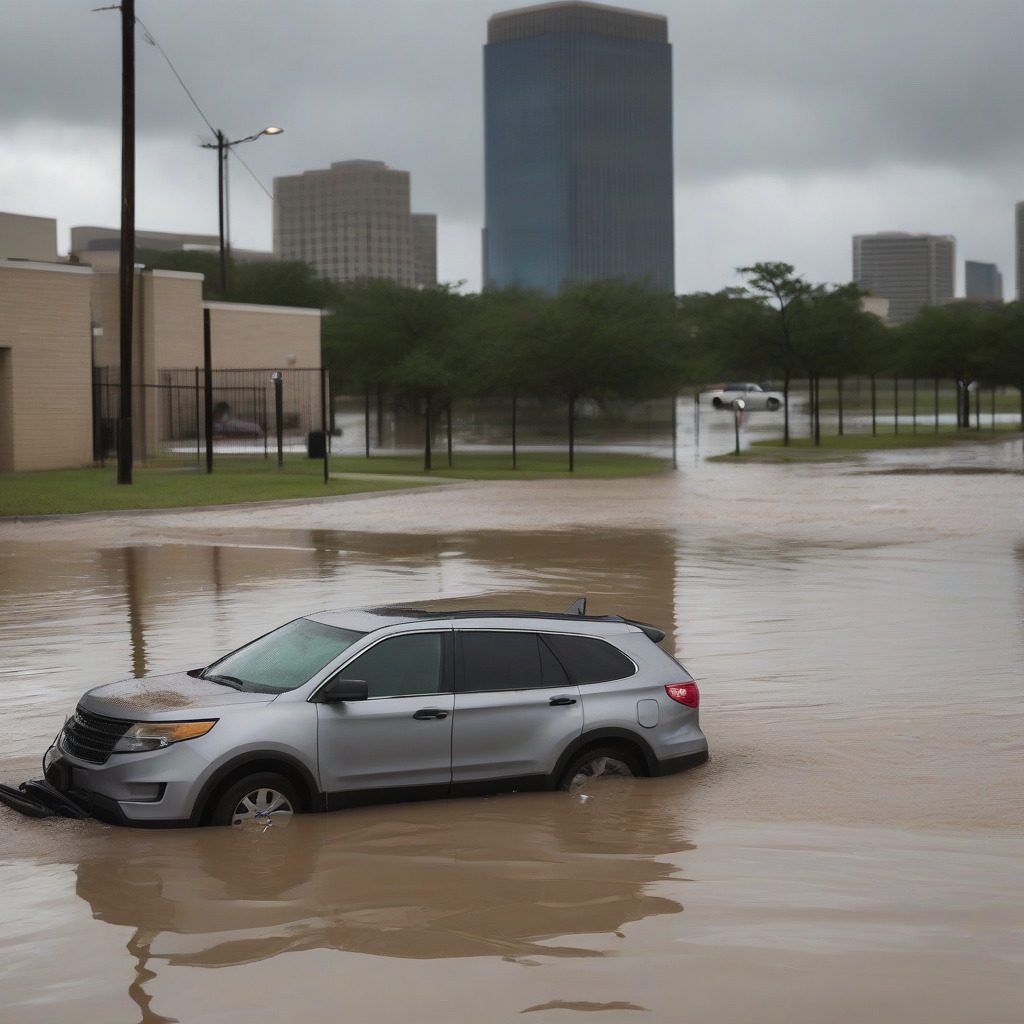
Your car is sitting in a foot of water. Here’s exactly what to do next—in order—and what the insurance company isn’t required to tell you unless you ask.
Do Not Turn the Key
Before anything else: step away from the ignition.
This is the most consequential decision you’ll make in the next five minutes. If water has entered the engine, cranking the starter can destroy it in seconds through hydrolock. Water doesn’t compress the way an air-fuel mixture does. When a piston tries to compress a water-filled cylinder, the connecting rod bends or snaps. Don’t start the engine. Don’t try to drive it out. If the water is still rising, get yourself to high ground and leave the vehicle.
Then pull out your phone and shoot a full walk-around video, narrating as you go. Record the water line on the door panels, the hood, the wheel wells. Note the time and location. The waterline tells an adjuster something critical: whether the flood reached the interior floor, the dashboard, or the firewall. Those are materially different claims. Shoot it before the water recedes—once it does, you’ve lost your evidence.
Make the Right Calls Before You Leave
Once you’re safe, call your insurer. Most major carriers—State Farm, USAA, Allstate, Farmers—operate 24-hour claims lines. Get a claim number before you leave. When you call, use the phrase “comprehensive claim due to flood damage.” That wording matters because flood damage falls under the comprehensive portion of a Texas auto policy, not collision. If you dropped comprehensive to save money on an older paid-off vehicle—common, and understandable until the bayou comes up—you have no coverage for flood damage. The National Flood Insurance Program and the Texas Windstorm Insurance Association cover structures, not cars. Your only protection is the comprehensive line on your auto declarations page.
When you call a tow company, explain the situation. A driver who treats a flooded car like a routine breakdown and drops it in an uncovered impound lot—or leaves it sitting partially wet—creates additional damage the insurer may dispute. Ask specifically for dry, covered storage. If you don’t have roadside assistance through your insurer, confirm the storage situation before you authorize the tow. A flooded car sitting in an open lot for a week compounds in ways that are genuinely hard to reverse.
What “Totaled” Actually Means Under Texas Law
Most of what you’ll find online about total-loss thresholds is wrong. The 80% rule cited on generic insurance websites doesn’t exist in Texas law.
Under Texas Administrative Code Title 43, Part 1, Chapter 217, a vehicle is a total loss when the cost to repair plus the vehicle’s salvage value exceeds its actual cash value. That’s the formula—no fixed percentage. An insurer can total a vehicle at a lower percentage of ACV if salvage value is high, or keep it on the repair track at a higher percentage if salvage value is low. Worth knowing before you assume that 79% repair estimate means you’re keeping the car.
You have rights in this process that insurers aren’t required to volunteer. Under Texas law, you can request the insurer’s written ACV calculation—and they must provide it. That document shows the comparable vehicles used to establish value, the adjustments made for mileage and condition, and the resulting ACV figure. If the comparables are wrong—wrong trim level, wrong market—you can dispute it. An independent appraisal is the most effective tool for doing so.
One distinction that trips people up: the Texas Department of Insurance licenses public adjusters separately from independent adjusters. An independent adjuster works for the insurance company. A public adjuster is licensed by TDI and works for you, typically on a percentage of the settlement. The Texas Association of Public Insurance Adjusters maintains a member directory at tapia.org.
If your claim stalls or the ACV calculation seems off, TDI’s complaint portal is the right move. TDI also offers a formal arbitration option for undervalued total-loss claims. Filing is free, and the complaint becomes part of the insurer’s regulatory record. TDI has real enforcement authority—it’s not just a comment box.
Why Flood Damage Is Worse Than It Looks
A flooded car that dries out and starts is not the same vehicle it was before. This is the point most people find hardest to accept, especially if the interior dried and the engine turned over fine. The damage is electrical and mechanical, and it unfolds over months.
Modern vehicles carry dozens of electronic control units—engine, transmission, ABS, airbags, climate control, and more. These ECUs sit throughout the car: under seats, inside door panels, behind dashboards. Water wicks into wiring harness connectors and sits there. Corrosion that causes no problem today can produce cascading electrical failures six months from now. Harvey-era vehicles were still generating electrical complaints years afterward. That’s not anecdote—Houston shops were tracking it.
Initial insurance estimates, written under time pressure with the vehicle still wet, miss specific damage patterns routinely. Water splashing a hot catalytic converter causes thermal shock cracking to the ceramic substrate inside. Factory carpet padding and the foam underlayer beneath floor mats hold water for weeks even after the interior appears dry, which sustains mold growth and accelerates rust in the floor pan. That rust may not be visible at initial inspection—it surfaces during disassembly, after the claim has closed. These aren’t edge cases. They’re predictable, and the estimates don’t account for them.
Where to Get a Certified Flood Inspection in Houston
Flood inspection isn’t a standard service that every shop handles competently. When evaluating a facility, look for ASE certifications in A6 (Electrical/Electronic Systems) and A8 (Engine Performance)—these address the two failure categories most likely to be missed in a visual once-over. For structural issues, I-CAR Gold Class certification indicates ongoing training in collision and structural repair, which matters if the floor pan or subframe is involved. Readers researching shop quality can find additional context in our automotive coverage across Houston repair and purchasing topics.
The I-CAR shop locator at i-car.com covers the Houston area. For adjuster credentials, TDI’s license-lookup tool at tdi.texas.gov lets you verify any adjuster’s current Texas license status. The Harris County Automobile Dealers Association has historically compiled post-storm referral resources—worth a direct call after any significant flood event to ask whether a current list exists.
For late-model vehicles still under manufacturer warranty, go to the OEM dealership. A Ford dealer running a full IDS scan on a flooded F-150 will pull fault codes across every module in a way a generic OBDII reader at an independent shop won’t catch. For out-of-warranty vehicles, an ASE A6-certified independent shop is usually more cost-effective, but the certification matters more than the price.
Before you bring a vehicle anywhere or pay a deposit, call the shop and confirm certification status and flood inspection protocol directly. Certifications lapse. Staff turns over. Call first.
Working Your Claim From Adjuster Assignment to Settlement
After you file, your insurer dispatches an adjuster. After major storms, backlogs stretch—Harvey and the Tax Day Flood both produced multi-week waits, and if you’ve been through either, you know how grinding that stretch is when you’re figuring out how to get to work. The adjuster photographs the vehicle, documents damage, and produces an estimate. For severe flood damage, that estimate feeds into the total-loss formula described above.
If the vehicle is totaled, Texas Transportation Code §501.091 through §501.100 governs what happens to the title. The insurer takes ownership of the vehicle and the title is branded salvage. If a subsequent owner repairs and submits it for state inspection—Texas requires a physical inspection before a salvage-branded vehicle can be re-titled—the vehicle receives a rebuilt salvage brand that follows it permanently through TxDMV records.
Here’s something genuinely worth knowing: the Texas salvage-to-rebuilt inspection verifies the vehicle is safe to operate. It doesn’t require independent mechanical certification, and it doesn’t require full disclosure of pre-repair damage. A vehicle with active corrosion in wiring harnesses can pass a rebuilt salvage inspection. This is a documented pathway through which thousands of Harvey-era vehicles re-entered retail inventory.
If your claim stalls or you receive a settlement that seems low, the TDI complaint portal at tdi.texas.gov is your escalation point. TDI can compel insurer response. Filing is free.
Harvey Flood Vehicles Are Still Out There
The risk isn’t historical. It’s current, and it’s specific to this market.
When Harvey flooded the Houston metro in August 2017, the National Insurance Crime Bureau estimated more than 500,000 vehicles flooded based on claims data. Many were declared total losses, sold through wholesale auction, repaired to varying standards, passed the rebuilt salvage inspection, and returned to retail supply. The primary auction points in the region—Manheim Houston in Humble and ADESA Houston—moved substantial salvage volume in fall 2017. Rebuilders bought vehicles, fixed them enough to pass inspection, and put them back on lots.
The Texas Attorney General’s Consumer Protection Division issued consumer fraud alerts regarding Harvey-era flood vehicles in fall 2017 and received thousands of complaints. Those records are public. The rebuilt salvage mechanism is legal. The fraud occurs when a seller misrepresents title status—fails to disclose the salvage brand, or in cases where title washing happened across state lines: a vehicle declared a total loss in Texas, re-titled in a state with weaker branding requirements, then returned to Texas carrying a clean title.
Seven years on, Harvey-era vehicles are in their second and third retail transactions. A Houston buyer purchasing a 2016 or 2017 model-year vehicle today may be several owners removed from the flooding, with the title history obscured by time if not actively checked. The supply chain is still moving them.
How to Check Any Used Car Before You Buy in Houston
Do this in order, before any money changes hands.
The Texas DMV provides a free title-history check at txdmv.gov—search “title check” on their homepage. It pulls the Texas title record and shows salvage and rebuilt-salvage brands. Run it from your phone before you go to the lot. A seller who won’t give you the VIN before you arrive is telling you something.
Run NICB VINCheck at nicb.org/vincheck. Free, no account required, checks against the National Insurance Crime Bureau’s database of vehicles reported as total losses. Harvey-era flood vehicles that went through insurance total-loss processing show up here. Carfax and AutoCheck aggregate from their own sources rather than pulling NMVTIS data in real time, which means gaps exist. Use them as a supplement. If you’ve been paying $40 for a Carfax and calling it due diligence, you’ve been leaving something on the table.
In person, look for musty or mildew odor in the rear seat area and trunk—it persists after detailing. Check for rust or sediment in body seam welds along the lower rocker panels, trunk floor, and spare tire well. Look for fog, moisture residue, or water staining inside instrument cluster lenses or the infotainment screen. Open the hood and look at the braided ground straps connecting the battery negative to the chassis—corrosion there is a reliable flood indicator. New upholstery or door panels on a high-mileage vehicle, without a clear explanation, is worth pressing on directly.
Get a pre-purchase inspection from an ASE A6-certified shop—not one the seller recommends. A full diagnostic scan plus physical inspection is the only way to find corrosion inside wiring harnesses. The money you spend on the inspection is nothing compared to what a missed flood vehicle costs you later.
Houston’s Flood Geography—Know Your Risk Before the Next Storm
Flood risk here isn’t limited to named hurricanes. The Tax Day Flood of April 2016 and the Memorial Day Flood of May 2015 produced mass vehicle flooding without a hurricane making landfall. Houston receives close to 50 inches of rainfall annually—more than Seattle, more than New York—and most of it falls on clay-dominant soil that doesn’t absorb it, draining through more than 2,500 miles of bayou channels across 22 Harris County watersheds. If you’ve lived here long enough, you already know a bad Thursday afternoon can flood a street faster than a named storm.
Some areas carry more exposure than others.
Meyerland (77096) flooded five times in three years between 2015 and 2017. The neighborhood sits at low elevation along a narrow reach of Brays Bayou, and vehicles in driveways and garages flooded repeatedly across those events—a pattern that still hasn’t fully changed how some residents think about where they park.
Kashmere Gardens (77020) is low-lying near Greens Bayou and has historically received less drainage investment relative to its flood exposure.
Kingwood (77339) experienced its worst flooding during Harvey not from bayou overflow but from the controlled release of Lake Houston—a deliberate decision to protect dam integrity that sent a rapid surge through neighborhoods that had barely flooded in prior storms. Residents woke up to water that wasn’t there the night before.
The Bear Creek and Barker Cypress corridors—zip codes 77084 and 77094—were inundated by deliberate releases from the Addicks and Barker reservoirs during Harvey. The Army Corps released water when the reservoirs exceeded design capacity to prevent uncontrolled dam failure. Subdivisions that had never flooded before were underwater for weeks.
The Brays Bayou corridor through Meyerland, Fondren Southwest, and Westbury floods in events well below hurricane intensity. For a broader look at how drainage investment has shifted neighborhood-level risk since Harvey, see our coverage of which Houston neighborhoods have improved their flood risk after Harvey’s drainage projects.
Harris County Flood Control District maintains flood risk mapping at harriscountyfloodcontrol.org. If your regular parking spot—home garage, apartment lot, workplace garage—sits in a mapped floodplain or at low elevation near a drainage channel, that’s information worth having before the storm, not after.
CityDesk Houston will update this article following any major flood event in the Houston metro. Readers with documented complaints about flood-vehicle fraud at specific Houston dealers should contact our newsroom. Confirm all shop certifications, TxDMV tool URLs, and adjuster contacts directly before relying on any resource listed here—certification status changes, and businesses close.