Houston Food Hall Report Card for 2026
The last honest roundup of this city's food halls was written before half of them changed. Here's what's actually open, what's inside, and whether any of it makes financial sense.

The last honest roundup of this city’s food halls was written before half of them changed. Here’s what’s actually open, what’s inside, and whether any of it makes financial sense.
Most of what Google returns when you search “Houston food halls” dates from 2021 to 2023. Before The Conservatory closed. Before Finn Hall weathered the slow bleed of downtown vacancy. Before POST Houston figured out what it actually was. Those pieces still name vendors that have been gone for years. They still recommend halls you can no longer walk into.
This piece was reported on-site in 2026. The goal: tell you which halls are open, what’s actually inside them right now, and whether any of them have cracked the economics. I’ll be honest about what I don’t know, too.
The Conservatory Is Closed and Has Been for a While
Start here because it keeps coming up.
The Conservatory at 1010 Prairie Street — Houston’s first underground food hall — is permanently closed. Shuttered during the pandemic. Never reopened. This still needs to be said in 2026 because the hall keeps surfacing in active listicles, city guides, and Google results, some of them updated as recently as 2024, describing it as a functioning destination. People have shown up and found a locked door. One phone call or site visit would have prevented that.
The Conservatory opened in the basement of a downtown office building as a subterranean beer garden and food hall. A novel idea. What killed it was a set of structural problems the pandemic accelerated rather than created.
Underground food halls depend on workers and pedestrians who choose to descend deliberately. No street-level window. No casual walk-in from someone who wasn’t already planning to eat. That model requires dense, reliable weekday office traffic. Downtown Houston’s office population was uneven before the pandemic; when it collapsed, the Conservatory’s customer base went with it. It didn’t come back.
There is no version of the Conservatory reopening. Any guide listing it as an option is wrong. Full stop.
Finn Hall Is Open but Downtown Is Not Cooperating
Finn Hall at 712 Main Street operates in 2026. That sentence requires more qualification than it should.
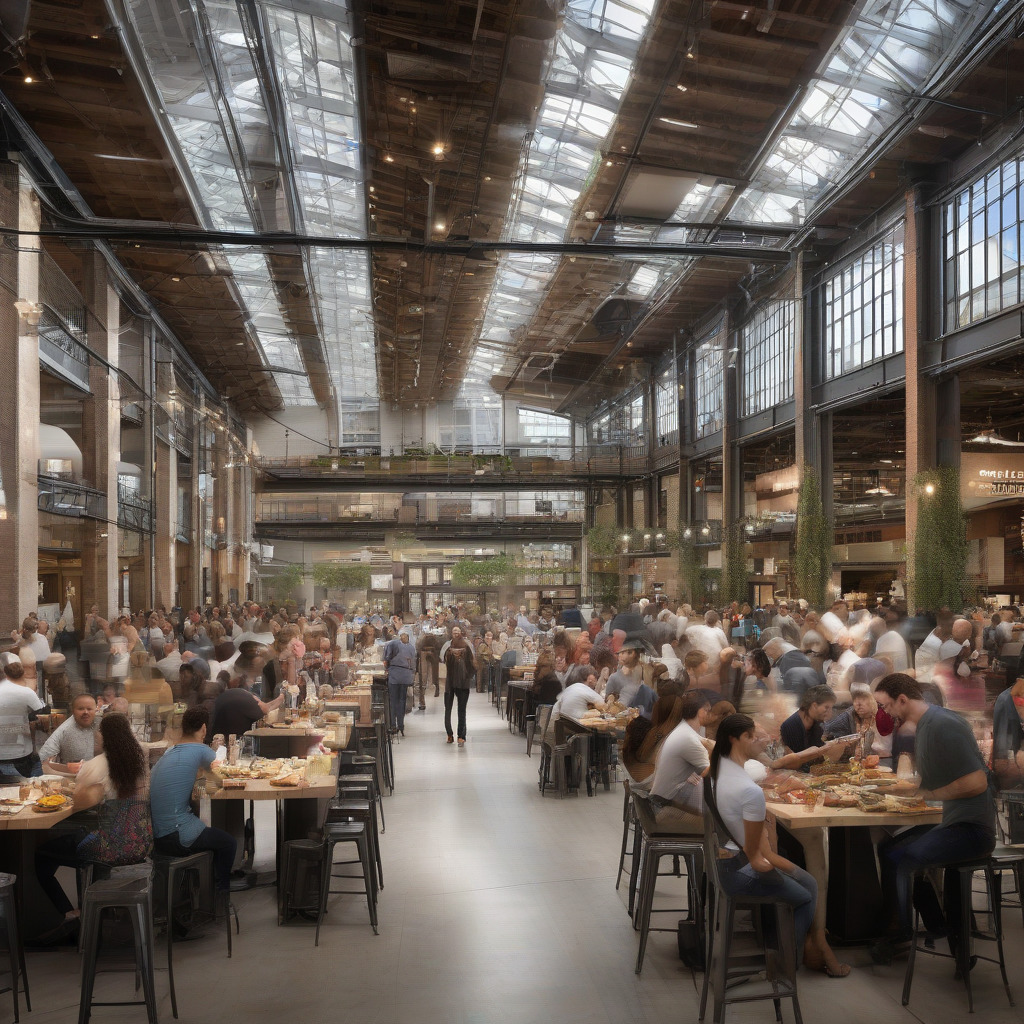
The hall, run by Portman Holdings, was built from the ground up as a weekday lunch destination for downtown office workers — the captive audience that fills a hall from 11 to 2 and mostly disappears by 3. The design is handsome. Good proportions, quality finishes, a vendor selection that at launch leaned genuinely local. On a busy Tuesday it’s easy to see what the vision was.
The problem is simple math. Houston’s CBD office vacancy has hovered between 25 and 28 percent through 2025 and into 2026. For a food hall built entirely around workers commuting to offices within a few blocks, that vacancy rate isn’t background noise. It’s the operating condition.
At full downtown occupancy, Finn Hall’s lunch rushes would have supported a healthy vendor roster. At 25 to 28 percent vacancy, they don’t. Several stalls from the original lineup have closed. The hall has cycled through vendors in ways that leave visible gaps some days. You notice it.
Portman has tried to program Finn Hall beyond lunch — evening events, expanded bar service, private bookings. But downtown Houston after 6 p.m. is not Montrose. Foot traffic from residents or recreational visitors is thin, and anyone coming specifically for Finn Hall at night has to want to make the trip. Some nights they do. A lot of nights they don’t.
None of this puts Finn Hall in crisis. It operates well below its design intent — which is a diplomatic way of saying it hasn’t become what it was supposed to be. If downtown’s office occupancy recovers, Finn Hall is well-positioned to benefit. Until then, it’s worth visiting for a weekday lunch when the hall shows its best version. Vendors considering the space should be clear-eyed: the foot traffic is thinner than the leasing materials will imply, and recovery depends on downtown occupancy trends nobody at the hall controls.
POST Houston Has a Ground Floor Problem
POST Houston at 1700 Texas Avenue is one of the most ambitious adaptive reuse projects Houston has pulled off recently — the former Barbara Jordan Post Office transformed into a live music venue, rooftop park (Skylawn), and food hall. Press coverage focuses almost entirely on the concert venue and the rooftop. The rooftop is great. But the ground-floor food hall deserves a more direct look than it usually gets.
At launch, POST Houston’s market arrived with a vendor roster that was plausibly exciting. Several of those operators have since departed. The current vendor count runs well below the launch-day total and some stalls remain vacant or in visible transition. Lovett Commercial has pointed to the overall campus activation — events, coworking tenants, rooftop traffic — as evidence of success. That’s fair on those terms. But the food hall floor operates on different economics than the concert venue above it.
Here’s the traffic logic problem: when Skylawn sells out a show, those attendees arrive, move through, and mostly leave without stopping at the ground-floor stalls in any real volume. The building’s routing, event arrival timing, and the basic difference between a ticketed rooftop show and an impulse purchase at a food stall mean venue traffic does not automatically become vendor revenue. Operators who took stalls expecting concert crowds to become their customer base have found reality more complicated.
This isn’t a dismissal of POST Houston as a place to spend time. For visitors already there for an event, the food hall has real options worth exploring. For anyone evaluating it as a business platform: the traffic math requires honest scrutiny, and skepticism about any pitch that leans heavily on Skylawn attendance numbers is warranted.
Post Oak Food Hall Has the Best Location and the Most Interesting Roster Questions
Post Oak Food Hall, in the Galleria-adjacent Uptown corridor, draws a customer mix that most downtown halls would swap for in a second. Higher disposable income. Tourists and hotel guests from the surrounding corridor. Residents of nearby apartment and condo developments who actually go out on weeknights. That demographic advantage is real and it shows in how long the hall has survived.
Post Oak has outlasted The Conservatory and weathered downtown’s vacancy problems by the simple virtue of not being downtown — which sounds obvious, but location is the single most important decision a food hall developer makes in this market. The customer base spreads across dayparts in ways Finn Hall’s doesn’t: office workers at lunch, hotel guests in the afternoon, neighborhood residents in the evening.
The turnover question is real, though. The current roster looks substantially different from the launch lineup. Some of that is normal: concepts that couldn’t hit break-even, operators who underestimated labor costs, a few strong vendors who graduated to standalone spots. Standard attrition. But on recent visits I’ve found the lineup less interesting than it used to be. The Galleria-adjacent demographics attract polished fast-casual concepts and regional franchise plays as readily as they attract independent Houston operators, and the balance has shifted. Visitors who care about supporting independent local food businesses should take a close look at who’s actually running the stalls before they go out of their way.
For vendors: the location is the strongest of the enclosed halls, but turnover has been significant and the lease economics still require serious scrutiny.
Houston Farmers Market Might Actually Have the Model Right
The Houston Farmers Market at 2520 Airline Drive in Near Northside is not, technically, a food hall in the conventional sense. No climate-controlled stalls in a converted historic building. No craft cocktail program. What it has is operational stability that the purpose-built food halls would envy.
The semi-outdoor format and lower rent structure — vendors here operate at cost points nowhere near the $2,500 to $5,000 monthly stall rates that enclosed food halls carry — means break-even looks structurally different. An operator who couldn’t survive at Finn Hall’s cost structure might run a viable business at Airline Drive. The community integration is different in kind, too. The Near Northside location serves a largely Latino neighborhood with deep ties to the market, and the vendor mix reflects that. These are people running neighborhood businesses that happen to share a market campus, not performing a developer’s idea of Houston food culture for visitors. That distinction matters more than it might sound.
Vendor turnover exists here, but the rate is lower than at any of the enclosed halls. A repeat customer base — people who shop there weekly for produce and prepared food as part of a routine — provides a steadier revenue floor than the transactional, first-time traffic that office corridor halls depend on.
The honest risk at 2520 Airline is Houston summer. June through September, heat index readings above 100°F make the outdoor format punishing. Foot traffic compresses hard during these months. October through November and March through April are when the format works in the market’s favor. Plan accordingly.
For visitors, the Farmers Market is the most consistently worthwhile stop on this list if you want independent Houston operators selling food that reflects this city’s actual demographics. For vendors, it’s the most viable entry point in the Houston market for an independent concept that can’t absorb enclosed food hall lease rates.
The Local vs. Chain Question
No one has published a thorough audit of this for the current Houston market, though it comes up repeatedly in our food and hospitality coverage. Based on early 2026 on-site visits, Houston Farmers Market is the strongest performer on the local independent metric — not close. Finn Hall and POST Houston have maintained reasonably local-leaning rosters even through turnover, which is worth crediting. Post Oak, where commercial pressure from the Galleria corridor is real, has shifted toward a more even split. Visitors specifically looking for independent Houston operators: go to the Farmers Market. Visitors who want the enclosed food hall experience with the most local roster: Finn Hall.
What the Leasing Pitch Leaves Out
Every Houston food hall pitch tells the same story. Lower risk than a full restaurant. Built-in foot traffic. Shared infrastructure. Faster path to profitability. The pitch isn’t entirely wrong, but it consistently omits things that operators who’ve been through it flag after the fact.
At $2,500 to $5,000 a month in rent, with some halls also taking a revenue percentage above a sales threshold, the break-even for a food vendor is demanding once you add food cost, labor, and TABC compliance. On a strong midweek lunch at a healthy hall, the numbers work. On a slow Monday or a summer weekend at a hall with foot traffic problems, they don’t.
Food hall alcohol licensing in Texas works one of two ways: the hall holds the license and vendors operate under it, or vendors hold their own license tied to the specific stall. The first is more common but creates dependency on the hall’s compliance record. The second involves reapplication timelines that can create dark periods when a vendor transitions into a space. Texas DSHS food handler permits work similarly: vendor turnover triggers a reapplication cycle that can delay a new operator from serving customers even after the lease is signed and equipment is in. These delays are a recurring operational problem at Houston halls and rarely surface in leasing materials. Ask about it before you sign anything.
The Report Card
Finn Hall — Worth visiting for a downtown weekday lunch, and among the better food hall environments in the city. The roster skews local enough to be interesting. The operating reality is a hall running below its potential because downtown Houston hasn’t provided the office density it was built around. Visitors: B. Prospective vendors: C, improvement contingent on downtown recovery.
POST Houston — Worth visiting as part of a broader campus experience, especially if you’re already there for Skylawn or a show. The food hall floor on its own, without an event draw, can feel underpopulated — and I say that as someone who wanted to like it more than I did. Vendor quality is uneven. Skylawn attendance does not reliably convert to stall sales, and that’s the core business problem for anyone running a concept there. Visitors: B minus. Prospective vendors: C.
Post Oak Food Hall — The most stable of the enclosed halls for foot traffic, and the Galleria-adjacent location delivers a real customer mix across dayparts. The local-versus-chain ratio is worth watching before you go out of your way. Visitors: B plus. Prospective vendors: B minus.
Houston Farmers Market — The most operationally honest concept on this list, and the best choice for visitors who want food made by independent Houston operators serving an actual neighborhood. Go early. Go in the fall. Summer afternoons here are not for the faint of heart. For vendors, the rent structure and community integration make this the most viable entry point in the Houston market for an independent concept. Visitors: A minus. Prospective vendors: A minus.
The Conservatory — Closed. Has been for years. Not worth the trip.
Where the Market Actually Has Room
The honest question for 2026 is whether Houston can absorb more food hall supply when the existing halls are running with visible vacancy and turnover. I’m not sure the answer is yes — not in the formats that have already been tried.
Understory, the food hall concept at Capitol Tower downtown, has had a complicated history of openings, pauses, and re-imaginings. Its current status as of early 2026 requires on-site verification before any firm characterization. It is not a reliable destination as this is written.
Commercial real estate conversations have pointed to Montrose, the Heights, and the East End as candidates for new concepts — neighborhoods with actual residential density, walkable streets, and the demographic mix that food halls need to function. The East End in particular has come up repeatedly, and that one feels plausible to me in a way another downtown enclosed hall doesn’t.
What the existing Houston market shows clearly is that food halls built on reliable weekday office density or the assumption that event-night crowds will wander into food stalls face structural problems. Houston Farmers Market’s comparative stability shows why the neighborhood-anchored, lower-rent model is a different bet. The city’s food scene is deep, diverse, and full of independent talent. That’s not the problem. The problem is an economic structure — lease rates, location assumptions, traffic projections — that was imported from denser, higher-transit cities and hasn’t bent to fit how Houston actually works. The next entrant that reads this market honestly, rather than assuming Houston will conform, has a real opening.
Reported on-site at Finn Hall, POST Houston, Post Oak Food Hall, and Houston Farmers Market in early 2026. Vendor rosters and occupancy conditions reflect observations at time of reporting and are subject to change. CityDesk Houston will update this report as significant vendor changes or new hall openings occur.