How Dangerous Is Houston Summer Heat and Which Neighborhoods Face the Highest Risk
On the morning of July 8, 2024, Hurricane Beryl made landfall near Matagorda Bay as a Category 1 storm and moved northeast through Harris County. By that evening, roughly 2.7 million CenterPoint En…

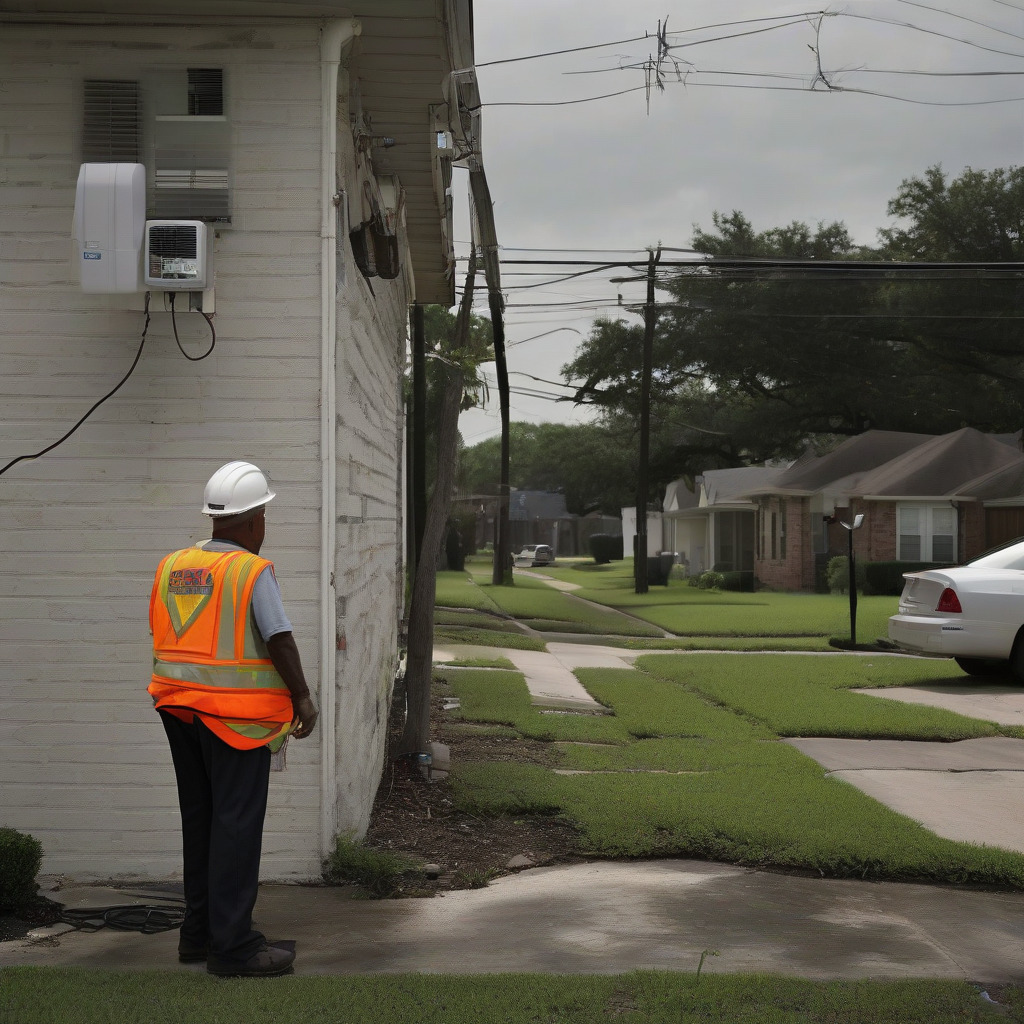
On the morning of July 8, 2024, Hurricane Beryl made landfall near Matagorda Bay as a Category 1 storm and moved northeast through Harris County. By that evening, roughly 2.7 million CenterPoint Energy customers had lost power. The storm itself was manageable. What followed was not.
Over the next twelve-plus days, as CenterPoint struggled to restore service and temperatures stayed in the low-to-mid 90s with no air conditioning to offset them, people died in their homes. They weren’t killed by wind or flooding. They were killed by heat in powerless houses, in a city where grid failure became the proximate cause of death as surely as the temperature outside. Harris County Public Health tracked heat-associated deaths in the weeks following Beryl. Media reports at the time cited at least 5 to 13 fatalities, with the full official count requiring confirmation from HCPH and Texas DSHS vital statistics. The medical examiner confirmed case after case: elderly residents, people living alone, people in older homes with no ceiling fans and no way to cool even one room.
Extreme heat. Infrastructure failure. Concentrated death among the most vulnerable. That’s what Houston’s heat risk actually looks like — not a national statistic applied locally, but something documented, mapped, and to a real degree preventable. This piece works through the data, the neighborhoods, the clinical facts, and the practical information you need before June gets here.
The Body Count: What Harris County’s Heat-Mortality Data Shows
Harris County Public Health tracks heat-associated deaths using ICD coding categories X30 (exposure to excessive natural heat) and W92 (exposure to excessive heat of man-made origin), cross-referenced with medical examiner findings. Confirmed and probable heat deaths — cases where heat was either the primary cause or a contributing factor on the death certificate.
In 2023, which set statewide heat records, the Texas Department of State Health Services counted more than 300 heat deaths statewide — a figure widely acknowledged as an undercount, because many heat-related deaths get coded to cardiac or respiratory causes without heat being explicitly noted. The official numbers are probably the floor, not the ceiling.
The Beryl event produced a distinct post-storm death cluster in July 2024 that health officials tracked separately from baseline summer heat deaths. Harris County Public Health confirmed heat-associated fatalities in the weeks immediately following July 8 that were attributable to the outage conditions rather than any single day’s weather. The full 2024 annual count, incorporating Beryl-related deaths, requires official confirmation from HCPH and DSHS vital statistics. But the pattern was unmistakable: the neighborhoods hit hardest by the power outage were the same neighborhoods where heat deaths accumulated fastest.
Geographically, these deaths cluster with precision. Harris County Public Health data and the county’s heat vulnerability index show consistent concentration in specific ZIP codes: the Fifth Ward (77020), Kashmere Gardens (77028), Settegast (77016), Acres Homes (77088), and the East Houston and Galena Park corridor. Not random. These are the same neighborhoods that show up on every disadvantage map in the city — older housing, lower incomes, higher proportions of elderly residents living alone. During the heat waves of 2023 and the extended power crisis of July 2024, the mortality curve followed the poverty map.
Houston Fire Department EMS data shows the system pressure that precedes each death. During June, July, and August, HFD dispatches for heat-related medical emergencies spike sharply against the baseline from the rest of the year. Heat-illness calls — classified under the department’s hyperthermia medical priority codes — surge during extended high-heat periods and concentrate in the same east and northeast ZIP codes that appear in the mortality data. Each of those calls is someone who reached the threshold where they needed emergency response. The deaths are the cases where that threshold was crossed too late, or where nobody called at all.
The Map That Predicts Risk: Tree Canopy, Heat Islands, and Equity
Urban heat islands are measurable temperature differentials — what a surface thermometer reads on a tree-shaded street in West University Place versus what it reads on an asphalt parking lot in Acres Homes. In Houston, on a summer afternoon, those differentials are not subtle.
The City of Houston Planning Department and the Houston-Galveston Area Council have produced heat-island mapping for Harris County that cross-references land surface temperature with tree canopy coverage by ZIP code. Houston’s citywide canopy sits around 22 to 25 percent, well below the 40 percent benchmark that urban forestry standards recommend for a city this size and climate. The citywide average obscures extreme local variation.
High-income ZIP codes have substantially higher canopy than that average. The Memorial villages. West University Place. Bellaire. Parts of the Heights. Shade trees in those neighborhoods keep rooftops cooler, lower ambient temperatures on sidewalks and streets, and cool the air through evapotranspiration. A 2020 Houston Parks Board survey found that shade trees reduce peak roof temperatures by 15 to 20 degrees Fahrenheit compared to unshaded structures — which matters when your AC is already straining against heat indices above 110°F.
In the ZIP codes where people are dying, the numbers drop sharply. Fifth Ward (77020), Kashmere Gardens (77028), and parts of East Houston and the Galena Park corridor carry canopy well below the city average. Some industrial and near-port ZIP codes in the eastern county fall below 10 percent. These are communities with large impervious surface areas: parking lots, concrete, industrial facilities, aging roadways that absorb heat all day and radiate it through the evening. Overnight recovery is far slower than in leafier parts of the city. Residents experience higher ambient temperatures not just at peak heat hours but during the night, when the body is supposed to shed the day’s accumulated heat load. That’s when the compounding happens. A person without functioning air conditioning in Kashmere Gardens is fighting a different battle than a person without AC in Bellaire.
Stack the demographic data on top and the risk profile gets specific fast. These same ZIP codes have higher proportions of residents 65 and older, higher rates of people living alone, lower median household incomes, and significantly older housing stock — homes built before central air conditioning was standard, sometimes running window units that can’t keep pace with extended triple-digit heat index days. When CenterPoint’s grid failed after Beryl, these were the homes where heat accumulated fastest and where power was restored last. The residents most likely to die in a Houston heat event are older, lower-income, and living in neighborhoods where decades of underinvestment in tree canopy, infrastructure, and housing quality have created a physical vulnerability that shows up, with grim consistency, in the death data. For a deeper look at what HVAC replacement costs when a unit finally fails in this heat, HVAC replacement costs in Houston this summer give a clear breakdown of what homeowners and renters are actually facing.
Heat Exhaustion vs. Heat Stroke: The Clinical Line You Cannot Blur
Heat stroke is a medical emergency. Heat exhaustion is the warning that precedes it. Confusing the two — or treating heat stroke as something manageable at home or with a car ride to urgent care — kills people.
Heat exhaustion presents with heavy sweating, pale or clammy skin, weakness, dizziness, nausea, and headache. The person is depleted but conscious and coherent, and their core temperature, while elevated, hasn’t crossed into the danger zone. Move them to a cool environment immediately. Lie them down, legs elevated slightly. Cool water if they can swallow. Cool wet cloths on the skin. They need to stop what they were doing and cool down. Caught early and treated aggressively, this is manageable outside a hospital.
Heat stroke is different in kind, not just degree. Clinically, it’s defined by a core body temperature at or above 104°F combined with central nervous system dysfunction. The person may be confused, disoriented, slurring their speech. They may stop sweating entirely — a particularly alarming sign, because that means the body’s primary cooling mechanism has shut down. Skin that’s hot and dry in a heat context is a 911 trigger. So is confusion, loss of consciousness, or seizure. You call immediately. You don’t wait to see if they improve. Don’t drive them to the hospital yourself unless EMS is genuinely unavailable — movement in a hot vehicle without active cooling can worsen the situation, and HFD paramedics carry equipment to begin active cooling in the field.
Why Houston specifically compresses the window between exhaustion and stroke: it comes down to dew points. When dew points reach 70 to 78°F — which is routine in Houston from late May through September — sweat evaporates off skin far more slowly than in low-humidity climates. Evaporative cooling is the body’s primary heat-dissipation mechanism. Near-saturated air nearly neutralizes it. A person sweating normally may not be shedding body heat anywhere near the rate their physiology requires. Core temperature rises faster and with less warning than people expect, especially during exertion.
Emergency physicians at Ben Taub and other Harris Health system ERs see this play out predictably every summer: adults over 60, often living alone, sometimes brought in by neighbors or found during welfare checks. A separate patient cluster — construction workers, landscapers, delivery drivers — typically arrives in the early afternoon. Dr. Beau Abar, who has written on heat illness epidemiology, has noted that emergency departments can essentially read the summer heat index from the patient census. The clinical staff at Harris Health could tell you what the heat index was today by looking at who came through the door. That’s how predictable it is.
What “Hot” Means in Houston: Why Summer Heat Here Is Not Summer Heat Anywhere Else
If you’ve ever visited Phoenix in August and found it somehow more tolerable than a Houston July at a lower temperature, you’ve already experienced this. The reason is the same mechanism that determines the heat-stroke timeline.
The heat index — the “feels like” number on weather apps — combines air temperature and relative humidity to approximate the thermal load the human body actually experiences. Houston’s Gulf of Mexico proximity drives persistent moisture into the atmosphere from late spring through early fall. Dew points, a better predictor of heat stress than relative humidity, regularly reach 70 to 78°F during Houston summers. Those readings rank among the highest sustained dew points of any major American city, rivaled only by other Gulf Coast locations.
The average July afternoon heat index at Hobby and IAH exceeds 105°F. That’s not a record-breaking day. That’s Tuesday. The city sees somewhere around 30 to 40 days per summer when the heat index clears 105°F, and that number has trended up in recent years. The extended duration — week after week, not a dramatic single-day spike — is what drives the mortality numbers. A person can get through one brutal day. The human body degrades across multiple brutal days, and the risk compounds.
The Honest Hour-by-Hour Guide: When Is It Actually Safe to Be Outside in June
The safest window for outdoor exercise in Houston in June is before 8 a.m. NOAA climate data from Hobby and IAH shows how the day actually unfolds.
By 7 a.m. in June, temperatures are already 78 to 82°F with dew points at 70°F or above. The usable outdoor exercise window for a healthy, hydrated adult runs roughly 5:30 to 8:00 a.m. That’s not conservative — it’s what the data at Houston weather stations supports.
By 9 or 10 a.m., temperatures have climbed into the mid-to-upper 80s and physical exertion starts pushing into advisory territory for anyone without significant heat acclimatization. By 10 or 11 a.m., heat index is at or above 100°F on most days. Outdoor labor at this point without shade, water, and rest breaks is the scenario that produces heat-exhaustion calls to HFD. Peak heat index hits between 2 and 5 p.m. Meaningful relief doesn’t arrive until 8 or 9 p.m. at the earliest — and in neighborhoods without canopy, pavement and rooftops keep radiating stored heat well past that.
A few specifics: Morning runs should start no later than 6 a.m. Carry water even on short distances. If you feel nauseated or notice you’ve stopped sweating, the run ends — you move to shade or AC. That’s not a suggestion. Dog walks require a hand test of the asphalt: if you can’t hold your palm flat on the pavement for five seconds, it’ll burn paw pads. Walk before 8 a.m. or after 8 p.m.
Texas doesn’t mandate state-level heat breaks for private employers, but OSHA federal heat illness prevention standards apply to outdoor workplaces. Workers who believe their employer is violating those standards can file a complaint with OSHA’s Houston Area Office. The OSHA Heat Safety Tool app, free in English and Spanish, provides real-time heat index guidance and recommended rest periods.
For most healthy adults and children, the brief exposure of walking from a car to a school door isn’t a heat-stroke scenario. The actual risk is prolonged outdoor waiting — standing on asphalt in the carpool line without shade. Stay in the car with AC running as long as possible rather than standing outside. For anyone in our health & wellness coverage, the high-risk ZIP codes without reliable central AC represent a recurring theme: a June day with a heat index above 100°F is a medical situation that requires a plan, not weather to work around.
Where to Go: Cooling Centers, Hours, and What the Website Won’t Tell You
Harris County and the City of Houston operate a network of cooling centers during heat advisories and declared heat emergencies. The primary access point for current locations is 2-1-1 Texas — the statewide health and human services referral line available by phone (dial 2-1-1) or at tx.211.org. The 2-1-1 database updates in real time when new sites open during emergencies and is more reliable than any static list published months in advance. Save the number now.
Harris County Community Services and the City of Houston Parks and Recreation Department operate designated cooling sites — community centers and recreation centers across the county, with concentration in the high-risk ZIP codes identified by heat-vulnerability mapping. All 43 Houston Public Library branches function as daytime cooling access during regular library hours, without formal cooling-center designation, and they’re among the most geographically distributed air-conditioned public spaces in the city. Current 2025 locations and hours should be confirmed against the 2-1-1 database and Harris County Community Services, since sites change annually.
Several things official websites underemphasize actually matter. Most facility-based cooling centers close by 8 or 9 p.m., leaving the overnight hours — when accumulated heat in an uncooled home is still dangerous — as the least-served part of the day. If someone needs overnight relief after the community centers close, 2-1-1 can identify any 24-hour options. These are limited but occasionally include emergency shelter activations.
Many designated cooling centers in high-risk ZIP codes are reachable by METRO bus, but not all, and off-peak schedules cut access further. Before directing an elderly or car-free resident to a specific site, check the route using METRO’s trip planner at ridemetro.org. A cooling center requiring two transfers and a half-mile walk in midday heat isn’t accessible to a 75-year-old without a car. That gap is real.
Most official cooling sites don’t accept pets — which is a documented barrier, because many elderly residents won’t leave home if it means leaving an animal behind. That’s not unreasonable, even if it complicates the public health math. If that applies to someone you know, 2-1-1 maintains referral information for any designated pet-friendly relief options. Animal shelters have occasionally accepted emergency temporary boarding during declared emergencies. The City of Houston and Harris County provide Spanish-language staffing at designated sites in areas with large Spanish-speaking populations, including several sites in the East End and northeast corridor.
When the National Weather Service issues an Excessive Heat Warning, both the City and the County may open additional sites. Those additions are announced through city social media, Harris County emergency management communications, and the 2-1-1 database simultaneously.
What HFD Does During a Heat Emergency and What Happens After You Call 911
Houston Fire Department operates 97 stations across the city on a combined fire-EMS model. During extended heat events, HFD doesn’t just absorb increased call volume. The department uses protocol adjustments that affect how dispatches are prioritized and how units are positioned. Heat-related EMS call surges prompt dispatch to move additional ambulances into geographic areas showing call concentration — pre-positioned closer to the ZIP codes generating the highest heat-illness call rates rather than distributed evenly across the city.
A 911 call for suspected heat stroke is dispatched as a Priority 1 medical emergency, the same category as cardiac arrest. When units arrive, paramedics carry equipment for active cooling in the field: IV fluids, ice packs positioned at the neck, armpits, and groin where major blood vessels run close to the surface, and in some cases ice-sheet cooling protocols. The goal is to begin lowering core temperature before the hospital. Cellular damage from heat stroke is time-temperature dependent. Every minute of sustained core temperature above 104°F represents additional organ-system risk.
During the post-Beryl period in July 2024, HFD documented a surge in heat-related dispatches that strained normal call distribution, particularly in the east and northeast sections of the city where the outage lasted longest and housing vulnerability was highest. The same geographic areas that concentrate heat deaths are also farther from major hospital corridors, have older street infrastructure, and can face longer average response times during peak periods. That’s a structural feature of emergency response across a large city, not a failure specific to HFD. It is, though, an argument for calling 911 earlier — when you first recognize heat stroke symptoms — rather than waiting to see if the person recovers on their own.
Action Checklist: Outdoor Workers, Elderly Residents, and Anyone Without Central AC
What follows is organized around the three highest-risk groups identified in the Harris County mortality data and clinical evidence above.
Outdoor workers in construction, landscaping, and delivery face their highest-risk hours between 11 a.m. and 5 p.m. OSHA’s guidance calls for water, rest, and shade minimums during those hours. Texas doesn’t mandate state-level heat breaks for private employers, but OSHA federal standards apply. If your employer isn’t providing water or shade access, report it to OSHA’s Houston Area Office. Know the difference between heat exhaustion and heat stroke described in the section above — specifically, if a coworker stops sweating, becomes confused, or collapses, call 911 before you do anything else. Don’t put them in a car and drive. Acclimatization is real and protective: the early days of working outside in summer are the highest-risk period. New workers and anyone returning after time off need graduated exposure and closer monitoring.
Elderly residents living alone in 77020, 77028, 77016, 77088, and the East Houston corridor should assess their AC situation now. If a window unit can’t maintain a safe indoor temperature on a heat-index day above 105°F, that’s a medical risk requiring a plan — not something to reassess in August. This is the housing scenario behind the bulk of heat fatalities in Harris County. Know the nearest cooling center before you need it. Call 2-1-1 now, confirm hours, and ask about METRO bus access if you don’t drive. If a welfare check program operates in your area through Harris County Community Services, register for it. Being checked on during a multi-day power outage is not a minor convenience. It’s the mechanism that keeps you from becoming a statistic.
Anyone without functioning central AC should take the overnight heat risk seriously. If your home’s indoor temperature is still elevated well past midnight, that’s a medical risk factor — particularly if you’re elderly or have underlying health conditions. Window units in older, poorly insulated homes in low-canopy ZIP codes with high impervious surface coverage often cannot maintain safe indoor temperatures during a sustained triple-digit heat index period. That’s the honest answer. Plan accordingly, including identifying a family member or friend with functioning AC who can be called in an emergency.
Neighbors of people in all three groups: the demographic profile of who actually dies in Harris County heat events is specific. Adults over 60, living alone, without functioning AC, in the eastern and northeastern ZIP codes, in homes that lose heat protection quickly when the grid goes down. If that describes your neighbor, a welfare check during a heat advisory isn’t intrusive. The Beryl deaths involved people who weren’t found until it was too late. Knocking on a door and asking if someone is all right takes 30 seconds and costs nothing. If you’re thinking about how to prep your car for hurricane season in Houston as part of the same summer planning, extended power outages and heat vulnerability tend to arrive together — and preparation for one overlaps substantially with the other.
Verification note for publication: 2023 and 2024 HCPH mortality counts should be confirmed with the HCPH press office and cross-checked against Texas DSHS vital statistics. HFD heat-dispatch call volume for 2024 requires an Open Records Request. Current 2025 cooling center list should be verified against 2-1-1 Texas and Harris County Community Services. Tree canopy percentages by ZIP code should be confirmed with City of Houston Planning Department and H-GAC. Physician quote requires on-record confirmation from identified source at UTHealth McGovern, Ben Taub, or Memorial Hermann.