What AC Replacement Actually Costs in Houston Right Now and How Long You Will Wait
Real installed prices for 3-ton and 4-ton systems, current summer lead times, CenterPoint and federal rebates, and why Houston's climate makes the repair-vs.-replace math different from anywhere else.

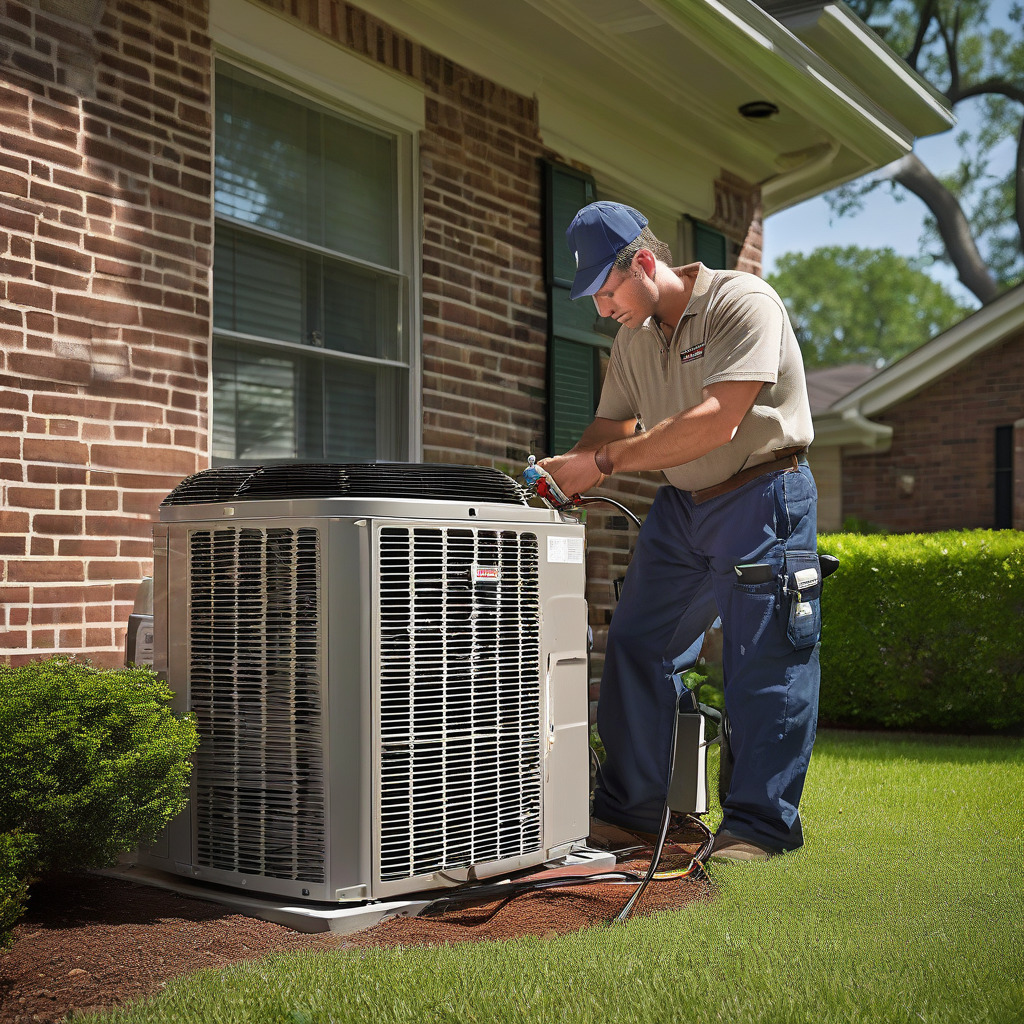
Real installed prices for 3-ton and 4-ton systems, current summer lead times, CenterPoint and federal rebates, and why Houston’s climate makes the repair-vs.-replace math different from anywhere else.
If your air conditioner failed this week, you’ve already discovered that the national averages floating around Angi, HomeAdvisor, and every top-ranking Google result are close to useless for Houston. Those sites cite $3,800 to $7,200 — pulled from national cost databases weighted toward the Midwest and Southeast, where labor is cheaper and the climate doesn’t try to kill you for eight months straight.
Houston is a high-volume, high-demand market with specific equipment requirements, brutal attic conditions, and a coastal humidity load that affects both equipment selection and installation complexity. The number that matters to you is what a licensed Houston contractor quotes for your specific home, in summer 2026, with the equipment your house actually needs.
To build this piece, CityDesk Houston contacted eight licensed HVAC contractors operating across the metro — including Air Experts Houston, Fresh Air LP, Green Valley Cooling & Heating, and five independent TACL-licensed operators serving the Inner Loop, Sugar Land/Katy, Pearland/League City, and the Clear Lake corridor. We asked for current ballpark installed prices on a standard 3-ton and 4-ton split-system replacement with no ductwork work included.
What You Will Actually Pay for an Installed Houston System in 2026
For a standard split-system replacement — existing slab or attic air handler, no ductwork work, standard refrigerant line set in acceptable condition, permit included — contractors quoted by system size. These figures are contractor-reported for summer 2026. Treat them as starting points for your own competitive quoting, not fixed prices.
A 3-ton system covers roughly 1,400–1,800 square feet (subject to a proper Manual J load calculation). Standard complete replacement: expect $5,500 to $8,500. Premium variable-speed or inverter equipment at the same tonnage runs $12,000 to $16,000 installed.
For 4-ton systems covering roughly 1,800–2,400 square feet, standard replacement lands between $7,000 and $11,000. Premium variable-speed equipment again tops out near $16,000 installed.
These aren’t worst-case figures. They assume straightforward residential jobs — no second-story condenser placement, no electrical panel upgrade, no mold remediation, no custom plenum fabrication. Real jobs routinely land above these numbers.
Geographic variation within the metro is real. Contractors serving the Inner Loop — Montrose, Heights, East End, Midtown — price at or above the upper end of these ranges. The reasons are practical: older bungalow construction with non-standard ductwork, tighter site access, and the miserable logistics of working in a 150-degree attic with no pull-down stair. Sugar Land and Katy see more competitive pricing driven by newer tract homes with standardized installations, though that advantage narrows fast if the house has a multi-zone system.
Pearland, League City, and Clear Lake are a different category. Homes within roughly five miles of the bay carry a coastal corrosion premium for coil treatment — a real cost that doesn’t appear in any national average and that homeowners in Friendswood and Webster tend to discover the hard way.
One reason the national aggregator numbers fail so completely: they reflect labor rates in Memphis, Indianapolis, and the Carolinas, combined with equipment prices quoted before the January 2023 federal transition to SEER2 ratings. That regulatory shift raised the minimum efficiency floor for the Southwest region. A legally compliant new system in Houston cannot be sold below 15 SEER2. That single fact eliminates the bottom third of every national price range before you even pick up the phone.
What Drives the Price Above the Base Number
A base quote assumes a cooperative attic, functional ductwork, and a home built in the last twenty years. Most Houston homes don’t check all three boxes.
Houston attic temperatures regularly hit 150°F in July and August. That’s not an exaggeration — it’s a documented working condition that affects crew safety, labor time, and warranty considerations for equipment installed in unconditioned attic spaces. Most contractors building an attic-installation quote are factoring in split crews, shorter work windows per shift, and the sheer logistics of maneuvering a 4-ton air handler through a pull-down attic stair. If you’ve ever tried to move anything larger than a suitcase through one of those openings in July, you understand the labor math. A contractor who quotes the same price for an attic install as a slab installation should be asked specifically what assumptions they’re making about access.
Ductwork condition almost always comes up separately, and it should. If your home has original flex duct from the 1990s, delaminated duct board, or improper sizing for the new equipment, the contractor should flag it before installation — not on installation day when the old unit is already disconnected and sitting in your driveway. A contractor who bundles ductwork replacement into a vague “complete system” price without specifying scope is hiding a real cost variable. Get a separate ductwork line item before you sign.
Homes in Pearland, League City, Clear Lake, and the Bay Area corridor sit in an accelerated corrosive environment. Salt-laden gulf air attacks evaporator coil fins, drain pans, and electrical connections faster than homes ten miles inland. Contractors who know this corridor will specify coil coating and discuss the aluminum-versus-copper coil tradeoff. All-aluminum coils resist corrosion better but are harder to repair when they do leak. If a contractor serving Friendswood or Webster doesn’t mention this, ask why. It’s either an oversight or a sign they don’t do much work down there.
Pre-1970 construction in Montrose, Midtown, and the Heights frequently has duct systems retrofitted after original construction — sometimes in unconventional configurations, sometimes with mixed duct types, sometimes with return-air paths that don’t conform to current code. These aren’t rare surprises; they’re predictable conditions in older Houston residential stock. A straight equipment swap in one of these homes may hit a plenum requiring custom fabrication or a full duct redesign. Get a site visit before accepting a phone quote on any Inner Loop bungalow.
And on equipment: the minimum efficiency requirement for new residential central AC in the Southwest region is 15 SEER2. The cheapest legally compliant equipment in Houston is a better unit than it was three years ago. Good news for your electric bill, bad news for anyone expecting to find the prices that used to exist. Contractors quoting at the very bottom of the range should be asked directly what SEER2 rating that equipment carries.
How Long You Are Waiting Right Now
The most urgent question for a homeowner whose system died overnight isn’t cost. It’s how long they’ll be without air conditioning in July in Houston.
Independent TACL-licensed contractors reported standard installation scheduling of five to twelve business days for a non-emergency replacement. That’s the normal queue for a homeowner who contacts them Monday with a failing system. Emergency same-day or next-day response carries a premium, and availability varies by shop.
The big-box referral channel — Home Depot and Lowe’s HVAC installation programs that subcontract to regional installers — carries a premium of roughly 10 to 15 percent above direct contractor pricing, and scheduling windows tend to run longer. The subcontracting structure means the person who sold you the job isn’t the crew showing up, and warranty service runs through the retailer rather than directly with an installer you can call. That’s a meaningful difference at 11pm when water is dripping from your ceiling.
Houston’s peak AC failure season overlaps directly with Atlantic hurricane season. After a significant storm event — even one that doesn’t make direct landfall — contractor availability compresses fast. Crews booked five days out become booked fifteen days out within 48 hours of a storm. The summer of 2024 made this concrete: Hurricane Beryl generated a surge in HVAC service demand across the metro that caught a lot of people flat-footed. Homeowners who defer a marginal replacement decision into late September should understand that risk is real and has a recent local example attached to it. For a broader look at storm readiness that Houston homeowners track alongside HVAC decisions, our home & property coverage addresses related seasonal preparation topics.
If your system is genuinely failing and your household includes elderly residents, young children, or anyone with heat-sensitive medical conditions, lead with that when you call. Most reputable shops have a triage process for vulnerable households and will prioritize accordingly, sometimes without a formal emergency premium.
Rebates and Tax Credits Available in 2026
CenterPoint Energy serves most of the City of Houston and Harris County, along with portions of Fort Bend and Montgomery counties. Their residential efficiency program has offered rebates on qualifying HVAC equipment tied to SEER2 thresholds — historically ranging from roughly $75 to $300 depending on efficiency tier. Not life-changing money. But too many Houston homeowners never apply at all.
The catch: CenterPoint has paused and restarted these programs before, and funding isn’t unlimited. Before counting on a rebate, verify the program is currently open by checking centerpointenergy.com/save or calling CenterPoint directly at 713-659-2111. Apply immediately after installation. Programs have closed mid-year when funds ran out.
The application window is 90 days from installation date. You’ll need the contractor invoice with equipment model number, SEER2 rating, and installation address, plus a completed application through CenterPoint’s rebate portal. Your contractor should supply all required documentation.
Oncor’s service territory covers portions of the western and northwestern Houston suburbs, including parts of Fort Bend County. If you’re unsure which utility serves your property, check your electric bill — it will name the transmission and distribution utility. Don’t assume based on geography; this trips people up more often than you’d expect. Oncor’s residential rebate program for high-efficiency central AC operates similarly to CenterPoint’s. Confirm current amounts and program status at oncor.com/save.
The federal IRA Section 25C tax credit is not a rebate. It’s a nonrefundable federal income tax credit — it reduces your tax liability dollar-for-dollar but doesn’t generate a refund if it exceeds what you owe. For the 2026 tax year, qualifying central air conditioners meeting SEER2 and EER2 thresholds earn a credit of up to $600. Qualifying air-source heat pumps earn up to $2,000. Verify current 2026 program status at energystar.gov/taxcredits before assuming the credit is intact; given recent Congressional activity, that’s worth a five-minute check rather than a surprise at tax time.
Your contractor must supply the manufacturer’s certification statement confirming the equipment meets qualifying thresholds. Ask for it at installation.
Lennox, Carrier, and Trane run summer promotional financing and rebate programs that can be stacked with utility and federal credits. Terms change frequently. These typically run $100 to $500 and require purchasing through an authorized dealer and submitting documentation within a specified window. Ask your contractor at quote time whether they’re a certified dealer for any manufacturer’s current program — and whether those incentives are already in the quote or require a separate submission you have to track yourself.
Lower-income Houston homeowners — particularly in Third Ward, Sunnyside, Acres Homes, and the Near Northside — may qualify for the federally funded Low Income Home Energy Assistance Program or for BakerRipley’s weatherization services, which can include HVAC replacement assistance. Waitlists run long in summer months. Contact BakerRipley at bakerripley.org before assuming you don’t qualify.
The Repair vs. Replace Calculation Houston Homeowners Actually Face
The generic “5,000 rule” circulating online — repair cost times unit age should not exceed $5,000 — was developed without Houston’s operating conditions in mind. It doesn’t hold here.
A Houston AC system runs roughly 2,800 to 3,200 hours per year in a typical occupied home. A system in a northern climate runs 1,200 to 1,500 hours. A 12-year-old Houston unit has accumulated the functional wear of a 20-year-old unit in Chicago. Mechanical deterioration on compressors, capacitors, and coils tracks runtime, not calendar age. When a Houston contractor tells you a 12-year-old system is near end of life, they’re reading the math correctly.
Systems manufactured before approximately 2010 almost certainly use R-22 refrigerant, which has been fully phased out of production under EPA regulations. What remains is recovered or reclaimed refrigerant, priced between $100 and $200 per pound depending on market conditions and your contractor’s supply chain. A refrigerant recharge on an R-22 system carries substantial refrigerant cost alone — before you’ve diagnosed and repaired whatever caused the leak. That repair doesn’t touch an aging compressor or a corroded evaporator coil that may have contributed to the problem in the first place.
For most homeowners with a pre-2010 R-22 system, a significant repair is paying real money to extend a system that’ll fail again within a few Houston summers. It’s not always the wrong call. But go in knowing that.
Capacitor failure is the most common single-component failure in Houston systems. It’s a relatively inexpensive repair and, on a system under twelve years old, is not by itself a replacement argument. Evaporator coil corrosion is different. A corroded evaporator coil tells you the air chemistry in the home is attacking the refrigerant circuit. Replacing the coil buys some time, but the same conditions keep working on everything else.
Compressor failure on a system over twelve years old is almost always a replacement trigger. Compressors are expensive, and replacing one on an aging system transfers all the risk to every other component that’s been running hard for a decade.
If any of these are true, replacement is the better financial decision in Houston’s operating environment: the system uses R-22; the system is 13 or more years old; the repair required is coil or compressor replacement; or the repair cost represents a substantial fraction of a new-system installed price. A system needing a major component repair after more than a decade of Houston summers isn’t a system you’re extending. You’re funding its final months.
Why Houston Homes Get System Sizing Wrong
The rule of thumb — one ton of cooling per 600 square feet — gets applied so often in Houston that it produces a predictable outcome: oversized systems that cool the house too quickly, shut off before removing meaningful humidity, and leave residents living in a clammy 74 degrees that feels like a damp closet. It’s the most common comfort complaint from Houston homeowners who just had a new system installed.
Houston’s cooling load isn’t primarily a temperature problem. It’s a moisture problem. A system that’s oversized for sensible cooling cycles on and off before doing meaningful work on humidity. The house hits setpoint temperature but feels wrong because relative humidity is running too high indoors.
Under 16 TAC Chapter 75, a contractor installing new HVAC equipment in a residential application must perform an ACCA Manual J load calculation to determine appropriate system size. This is a state regulatory requirement, not a guideline. Manual J accounts for square footage, insulation levels, window area and orientation, ceiling height, infiltration, internal heat gain, and the latent load imposed by the local climate.
A contractor who shows up, looks at your old unit’s nameplate, and says “looks like you need a 4-ton” hasn’t done a Manual J and is not complying with Texas law. They will put in a system that feels wrong for as long as you own the home. This is, unfortunately, not rare.
The practical argument for variable-speed compressors in Houston follows directly from this. A variable-speed system runs at partial capacity for extended periods, moving air slowly through the evaporator coil for longer cycles that pull far more moisture out of the air than a single-speed unit running at full blast in short bursts. In a Houston home where the AC runs eight to ten months a year and humidity control is the difference between comfortable and miserable, that’s a real functional return — not a marketing claim. The premium is real. So is the payoff.
Permits, Licensing, and What Happens If You Skip Them
HVAC replacement in Houston requires a permit. This isn’t optional, it’s not a formality, and the consequences of skipping it extend well past installation day.
A mechanical permit for HVAC replacement is required through the Houston Permitting Center. Fees are structured by project value; verify the current fee at houstontx.gov/permits or by calling 832-394-8800 before finalizing your quote. The permit triggers a required post-installation inspection. Your contractor should pull the permit before the installation date — not after.
Homes in unincorporated Harris County — large portions of west and north Harris, including Cypress and Humble — fall under Harris County Engineering Department permitting, which operates separately from the City of Houston. Confirm with your contractor which jurisdiction applies to your address.
Texas law requires HVAC installation to be performed by a contractor holding a TDLR TACL license. Ask for the TACL license number before signing anything. You can verify it in TDLR’s online license lookup in about ninety seconds. Do it.
The downstream consequences of an unpermitted installation are expensive and poorly timed. A buyer’s inspector will flag it. That triggers a disclosure issue and often a demand for retroactive permit, inspection, or replacement. Homeowners insurance policies in Texas commonly allow claim denial for systems not installed in compliance with applicable codes — meaning a failed condensate line that causes water damage can become a contested claim if the system was installed without a permit. On a refinance, an appraiser or lender underwriter who identifies an unpermitted system may require resolution before closing. I’ve heard from Houston homeowners who discovered this problem a week before closing on a sale. It’s not a theoretical risk.
A contractor who asks you to pull your own permit is a red flag. A legitimate licensed contractor pulls the permit in their own name as the responsible party. If a contractor says you should pull it yourself, they’re either trying to avoid having their license associated with the work or they’re not properly licensed. Either way, walk away.
What to Ask Before You Sign a Houston HVAC Contract
The gap between a good installation and a problem installation usually shows up in the questions a contractor doesn’t answer before you sign.
Will the contractor perform a Manual J load calculation before selecting equipment size? Yes is the only acceptable answer. “We’ll put in what you had” is not compliant with Texas law. If a contractor can’t explain their sizing methodology, they haven’t done the calculation.
Does the quote include pulling the permit and coordinating the inspection? A complete, legitimate quote includes both. If a contractor says permits are “optional” or the homeowner’s responsibility, that’s disqualifying. You should never be managing a municipal inspection for work you hired someone else to perform.
What refrigerant does the new equipment use? New residential HVAC equipment installed in 2026 should use R-454B or R-32 — the lower-GWP refrigerants that manufacturers have transitioned to under EPA phasedown regulations. R-410A systems are still being installed from existing contractor stock in some cases, which isn’t currently prohibited, but asking this question tells you whether the contractor is current on where the industry is heading.
What’s the warranty structure, specifically? Get manufacturer parts, manufacturer labor, and contractor workmanship warranties spelled out as three separate items. If a refrigerant line develops a pinhole from an improper flare fitting six months after installation, that’s a contractor workmanship issue, not a manufacturer defect. Know which door to knock on before you need to knock on it.
What’s the actual scheduling window? Get a specific date range, not “we’ll get you in soon.” In summer, scheduling window is often the deciding factor when your system is limping rather than entirely down.
Is ductwork inspection included? A professional installation should include a visual inspection of accessible ductwork. If the contractor identifies issues, you want to know before installation day — not after the old unit is sitting on your driveway. Ask how they communicate and quote ductwork issues when found. A contractor with a clear process here is experienced with the older housing stock that dominates Houston’s inner-city neighborhoods. If you’re also planning a broader pre-purchase or post-installation assessment, what a Houston home inspection should cover that many inspectors skip explains how HVAC systems get evaluated — and often overlooked — in a full home inspection context.
Red Flags in a Houston HVAC Quote
System size named without a site visit. If a contractor quotes a specific system size over the phone based only on square footage, they’re guessing. The difference in latent load between a 1960s Inner Loop bungalow and a 2015 Katy tract home of identical square footage is enormous. That guess will frequently be wrong.
No mention of a permit. Any contractor who doesn’t proactively raise pulling a permit is either unaware of the requirement or planning to skip it. Neither is acceptable.
R-410A on a brand-new system without explanation. Ask specifically why. It may be legitimate contractor inventory stock. It may not be. The answer tells you something.
A quote delivered by phone or email without seeing the home. Houston’s housing stock is too varied for legitimate quote accuracy without a site visit. A phone quote is a sales opener.
A dramatically low price. If one quote comes in substantially below every other contractor’s figure, the gap is almost always explained by something: unlicensed labor, skipped permit, undersized equipment, no ductwork inspection, a bait-and-switch on equipment tier. It’s not a market deal. It’s a missing line item. Every time.
Houston’s heat doesn’t give you the luxury of leisurely comparison shopping when your system goes down in August. But it doesn’t require you to sign the first contract put in front of you, either. The homeowners who come out of this process with a well-installed system at a fair price are the ones who understand what a complete quote looks like, verify the TACL license, apply for rebates that are sitting there unclaimed, and ask specific questions about their specific home before anyone picks up a wrench. That’s not complicated. It’s just the homework the national aggregator sites were never going to do for you.