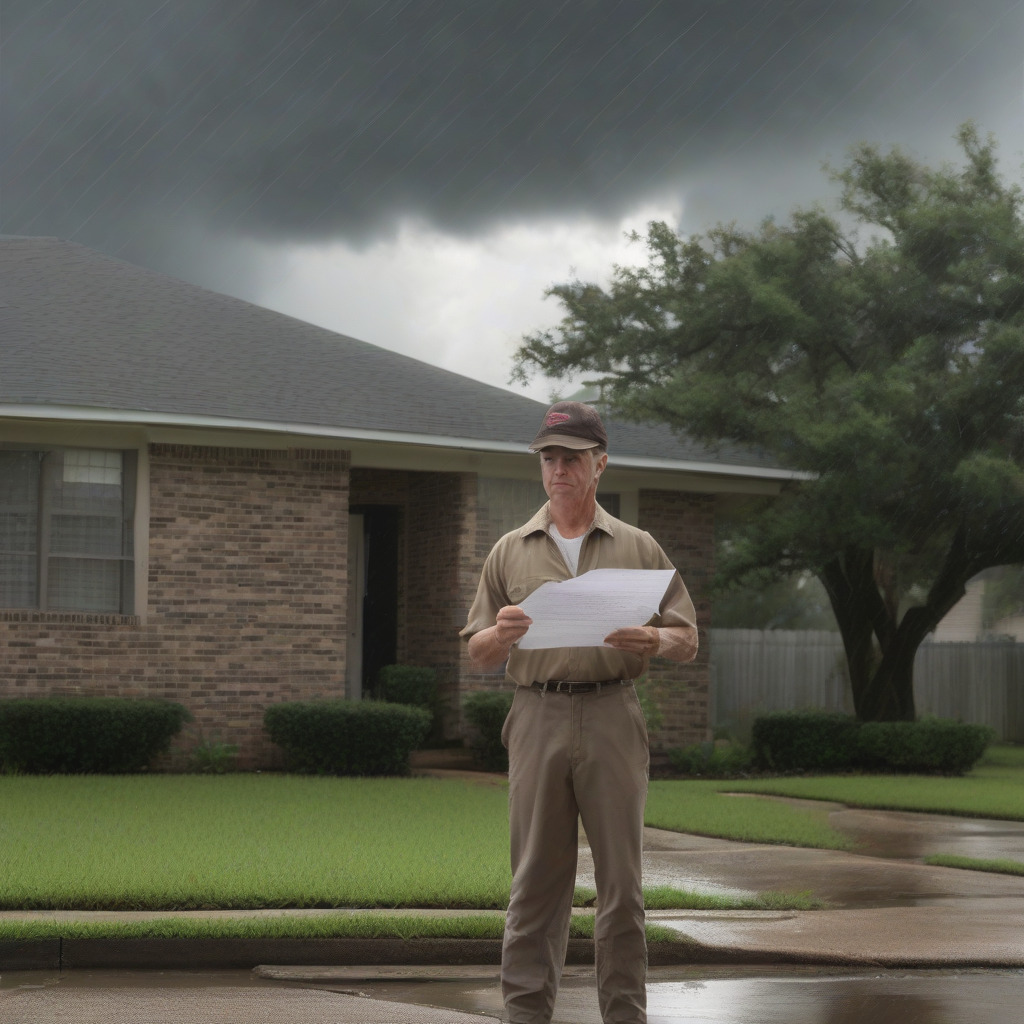
What Houston Home Sellers Are Legally Required to Tell You About Flooding
Harvey-damaged homes are back on the market. Here's exactly what Texas law compels sellers to disclose in writing — and what a buyer can do after closing if a seller lied.

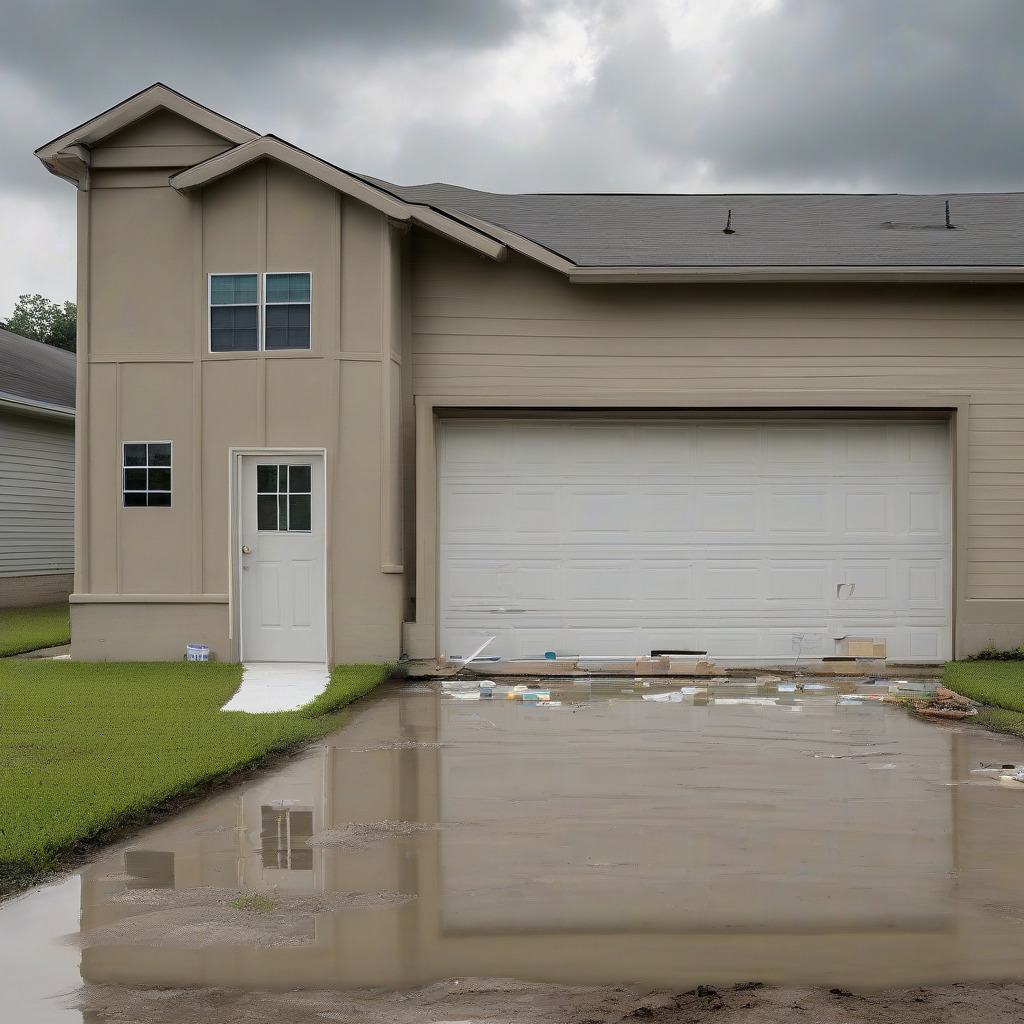
Harvey-damaged homes are back on the market. Here’s exactly what Texas law compels sellers to disclose in writing — and what a buyer can do after closing if a seller lied.
The house looks fine. New flooring, fresh paint, updated kitchen cabinets. The listing says Zone X, which some agents will tell you means outside the flood zone. The seller’s disclosure says “No” next to every flood question.
Then, six months after you close, a neighbor mentions that water came through the front door during Harvey.
This scenario is not hypothetical. Many of the structures that flooded across Harris County in 2017 have since been remediated and resold — some of them more than once. Many buyers received exactly what the law requires: a completed TREC Seller’s Disclosure Notice. Whether what’s written on that form is accurate is a separate question, and one that has generated a steady stream of litigation in Harris County courts and, for buyers who didn’t ask the right questions before closing, some very expensive lessons.
Hurricane Beryl hit Kingwood, Atascocita, and Humble in July 2024, adding another round of flood-affected homes to Houston’s resale market. Sellers and their agents need to understand what the law actually requires — not what they assume it requires, which is often not the same thing. Buyers need to know when a disclosure form is lying to them.
The Law Behind the Form
Texas Property Code §5.008 requires sellers of residential properties with fewer than five dwelling units to deliver a written disclosure notice before the sales contract is executed. If the disclosure arrives after contract execution, the buyer has a seven-day right to terminate without penalty. The disclosure must use the form promulgated by the Texas Real Estate Commission — Form OP-H, the Seller’s Disclosure Notice.
The statute has exemptions that buyers of distressed or investor-flipped properties should understand. Foreclosure sales are exempt. Certain estate and fiduciary transfers — sales by a trustee in bankruptcy, transfers to a spouse or lineal descendant — are exempt. New construction sold by a builder is exempt. These carve-outs matter because post-storm flips often run through exactly these channels: a bank takes back a flooded home, sells it to an investor who rehabilitates it, and the investor resells it as a cosmetically renovated property. The bank’s sale to the investor was exempt, so the investor enters the chain without a disclosure from the prior owner. The investor is still obligated to disclose what they know. But they may know very little — or claim to. That’s a convenient gap, and it’s worth knowing it exists.
In 2019, following the Addicks and Barker reservoir controversy, the Texas Legislature passed Senate Bill 339. Thousands of homeowners in west Houston and Fort Bend County whose homes were inundated not by rainfall but by controlled reservoir releases during Harvey had no disclosure protection when they originally bought. SB 339 amended Form OP-H to add specific questions about reservoir flooding and controlled releases. Those questions are now standard.
The Exact Flood Questions on the TREC Form
Form OP-H includes a dedicated flood and drainage section. Sellers answer each question Yes, No, or Unknown.
The form asks whether the seller has actual knowledge of the property being located in a 100-year floodplain (Special Flood Hazard Area as designated by FEMA); being located in a 500-year floodplain; having flooded due to a natural flood event; having flooded due to a failure or breach of a reservoir or a controlled or emergency release of water from a reservoir; or having experienced previous water penetration into a structure on the property due to a natural flood event. It also asks about drainage issues, standing water, water damage, and whether the seller has received any notice from a governmental agency or court involving flood, drainage, or water intrusion issues related to the property.
What triggers a legally required “Yes”? Actual knowledge from any source — insurance claims the seller filed, contractor invoices for water-damage remediation, FEMA or HCFCD correspondence, notices from the City of Houston or Harris County Flood Control District, or information passed along by a prior seller, a neighbor, or a home inspector. The standard isn’t what a seller can prove happened. It’s what the seller knows, or was told, happened.
“Unknown” is not a safe harbor, and I’d push back hard on any agent who suggests otherwise. Texas courts have examined whether “Unknown” was a plausible answer given publicly available information and the seller’s situation. A seller whose street flooded visibly enough to appear on local news — there are dozens of such streets in Meyerland, Kingwood, and Atascocita — has a serious credibility problem claiming no knowledge. Harris County Flood Control District’s flood extent maps for Harvey, Tax Day 2016, and Memorial Day 2015 are publicly searchable. If a property sits squarely within a documented inundation area and the seller marked “Unknown,” that answer is legally vulnerable.
One more point sellers often miss: if you bought a Harvey-flooded house in 2018 and the prior seller told you it flooded, you must disclose that on your own form — even if you never filed a flood claim yourself. The form asks what the seller knows, not what happened on their watch. The exception that creates the obligation: someone told them about it.
What FEMA Flood Zones Mean on the Disclosure — and What They Don’t
Houston listings routinely include a flood zone designation. Zone AE is the 100-year floodplain — an area with a 1 percent annual chance of flooding. Federal flood insurance is mandatory for federally backed mortgages in AE zones, and a seller of a Zone AE property must answer “Yes” to the 100-year floodplain question on Form OP-H regardless of whether the home has ever actually flooded. Zone AO is a shallow flooding zone, typically sheet-flow, common in areas with poor drainage. Zone X (shaded) is the 500-year floodplain, a 0.2 percent annual flood chance — the form asks about this specifically. Zone X (unshaded) is officially considered minimal flood hazard, with no federally mandated flood insurance and no automatic “Yes” required on the floodplain questions.
Here is the misconception that has cost Houston buyers real money: Zone X does not mean a house has never flooded. It does not relieve a seller of the obligation to disclose actual flood events.
During Harvey, an estimated 75 percent of structures that flooded in Harris County were outside the 100-year floodplain — Zone X or similarly “low-risk” designations. The Addicks and Barker reservoir pools inundated thousands of homes across Bear Creek, Cinco Ranch, Spring Branch, and Royal Oaks — neighborhoods mapped as Zone X. A seller in those neighborhoods cannot point to a Zone X designation as a reason to leave the flood questions blank. The flood happened. The form asks whether the property flooded due to a natural event or a controlled reservoir release. A “No” answer from a seller who was present during Harvey is a false statement.
FEMA flood maps are also outdated in ways that compound the problem. Harris County Flood Control District maintains FEMIT (Flood Education Mapping & Information Tool) at hcfcd.org, which overlays actual flood extents from Harvey, Tax Day 2016, and Memorial Day 2015 on specific addresses. It’s more granular and more current than federal FIRM maps. An address can sit in Zone X on FEMA’s Flood Map Service Center and show clear inundation on HCFCD’s tool. Zone designation is relevant to the floodplain questions. It is irrelevant to the actual-flooding questions. The form treats them as separate, and they are.
How to Check the Flood History a Seller May Not Volunteer
Before you rely on the disclosure, run your own search. This is 45 minutes of homework that could save you from years of litigation.
HCFCD FEMIT tool (hcfcd.org). The single most useful local resource. Search a specific address and see whether it falls within documented flood extents for Harvey, Tax Day 2016, Memorial Day 2015, and other events. The precision is greater than federal tools and directly reflects what HCFCD knows about where water went.
FEMA Flood Map Service Center (msc.fema.gov). The official source for FIRM map designations and flood zone confirmation. Use it alongside HCFCD’s tool, not instead of it.
Harris County Appraisal District (hcad.org). Review a property’s permit and exemption history. HCAD data sometimes reflects prior buyout negotiations on neighboring parcels — a meaningful signal about a street’s flood exposure.
Houston Permitting Center (permits.houstontx.gov). Maintains public records of permits for water-damage restoration and structural repair. A property that received permitted remediation work after Harvey has a record here. That’s documented evidence of the seller’s knowledge, sitting in a public database before you close.
The CLUE Report. This is the one almost nobody mentions. The Comprehensive Loss Underwriting Exchange is an insurance industry database recording prior property insurance claims. As a buyer under contract, you can request the seller’s CLUE report as part of due diligence. It shows any flood or water damage claims filed on the property. If a seller filed an NFIP claim after Harvey and the disclosure says “No” to flooding, the CLUE report is the contradiction in writing. Ask for it. Standard agent guidance almost never brings it up.
A post-flood remediation specialist. A general home inspector isn’t always looking for evidence of prior water intrusion — staining on wall framing, efflorescence on the foundation, inconsistent flooring levels, unusual mold mitigation work. As we cover in our home and property coverage, the gaps in a standard inspection are where flood-damaged houses hide their histories. A specialist focused on post-flood remediation is. Ask your inspector directly whether signs of prior water intrusion are present. If the answer is yes, get a second opinion from someone who does this specifically — and consider reviewing what a Houston home inspection should actually cover before you hire anyone.
What Happens if the Seller Checked “No” and Lied
Texas law gives buyers a civil remedy that doesn’t require proving the seller intended to deceive — which is the part most people don’t realize.
The primary vehicle is the Texas Deceptive Trade Practices Act (DTPA), Texas Business and Commerce Code §17.41 et seq. A seller who checks “No” on a flood question knowing the home flooded has made a false representation in a consumer transaction. Under the DTPA, a buyer can recover economic damages — remediation costs, diminished fair market value, related out-of-pocket losses — plus up to three times that amount if the seller’s conduct was intentional, meaning they knew the representation was false when they made it. Attorney’s fees are also available. That last provision is what makes DTPA cases viable for plaintiffs’ attorneys on contingency. A seller found liable pays the buyer’s legal costs.
Many buyers assume that signing an as-is contract forecloses any post-closing claim. It doesn’t. The as-is clause shifts risk for unknown conditions. It does not protect a seller who made a knowing misrepresentation about a condition they knew existed. Texas courts have been consistent on this. Don’t let anyone tell you otherwise.
In Harris County, the DTPA requires a 60-day written demand letter before filing suit — a statutory prerequisite, not optional. That demand letter, particularly when accompanied by the CLUE report, contractor permit records, and HCFCD flood maps showing inundation at the address, frequently produces a settlement. Sellers and their insurance carriers often prefer to negotiate remediation costs rather than face treble damages at trial.
Full treble damages are awarded less often than the statute might suggest. Courts scrutinize the intentional-conduct standard carefully. Cases where sellers are judgment-proof — no assets, no applicable insurance coverage — are the hardest to pursue regardless of legal merit, which is the real argument for doing the pre-closing research rather than hoping for post-closing justice. The Texas Attorney General has DTPA enforcement authority, but documented public enforcement actions in individual residential transactions are sparse. Most cases settle.
The Statute of Limitations — and Why Discovery Date Is What Starts the Clock
The DTPA statute of limitations is four years. The specific point many buyers — and some attorneys — get wrong: that clock runs from the date a buyer discovered, or in the exercise of reasonable diligence should have discovered, the misrepresentation. Not from closing.
This matters because concealment in flooded houses is often professional-grade. New flooring, fresh drywall, new baseboards, paint. An inspector looking at finished surfaces has no obligation to tear into walls. A buyer who closes in 2019 and discovers in 2022 — during renovation work — that the studs show water-staining and mold remediation from Harvey still has a viable claim. The question is when discovery actually occurred.
Contractor permit records at the Houston Permitting Center don’t disappear. If a water-damage restoration company pulled a permit to gut and replace drywall in September 2017, that record exists today. A buyer who finds it two years after closing has documentary evidence of both the damage and the seller’s prior knowledge — and still falls within the discovery-based limitations period if the concealment was effective.
Document the moment of discovery carefully. Write down the date, the circumstances, what you found. If you engage an attorney immediately, the initial consultation creates a contemporaneous record. This detail matters if a seller later argues the clock ran from closing.
What Title Insurance Won’t Cover
Buyers who discover non-disclosed flood history sometimes wonder whether title insurance covers it. It doesn’t. Title insurance covers defects in the chain of ownership — forged deeds, undisclosed liens, boundary disputes, prior unrecorded interests. A seller lying about flooding is a fraud claim, not a title defect.
After Harvey, a handful of cases attempted to argue that Army Corps of Engineers flowage easements over the reservoir pools constituted undisclosed encumbrances on title. Title insurance carriers rejected those arguments, and courts weren’t receptive. That avenue is closed.
What actually protects you: the CLUE report and permit records before closing. What helps after closing: a DTPA demand letter and an attorney who handles real estate fraud on contingency. The realistic calculus is straightforward — 45 minutes on hcfcd.org and a CLUE report request puts a buyer in a far stronger position than months of litigation after the fact. The pre-closing research isn’t just cheaper. It’s more reliable.
A Note for Sellers — and Their Agents
The disclosure obligation runs to awareness, not certainty. A seller doesn’t need to know precisely how many inches of water entered a home to be required to disclose it. If you were present during Harvey. If you filed an insurance claim. If a neighbor told you the street flooded. If the prior seller told you when you bought. Any of those create a disclosure obligation.
Checking “Unknown” when you have reason to know is not a neutral answer — it’s a legally risky one. Courts apply an objective standard: would a reasonable person in the seller’s position have known? For sellers in Meyerland, which flooded in 2015, 2016, and 2017 and received extensive news coverage each time, the answer is almost certainly yes. Same for sellers in Kingwood after Beryl. Same for sellers in Bear Creek and Cinco Ranch communities specifically named in Army Corps communications about Addicks and Barker releases. A claim of ignorance in those neighborhoods faces serious judicial scrutiny.
The buyers across those transactions are entitled, under Texas law, to know the truth in writing before they sign.
For address-specific flood history: hcfcd.org, FEMIT tool. For FEMA zone confirmation: msc.fema.gov. For prior remediation permit records: permits.houstontx.gov. If you believe a seller withheld known flood history, consult a Harris County attorney who handles DTPA real estate cases — and do it before the 60-day demand-letter window becomes a question.