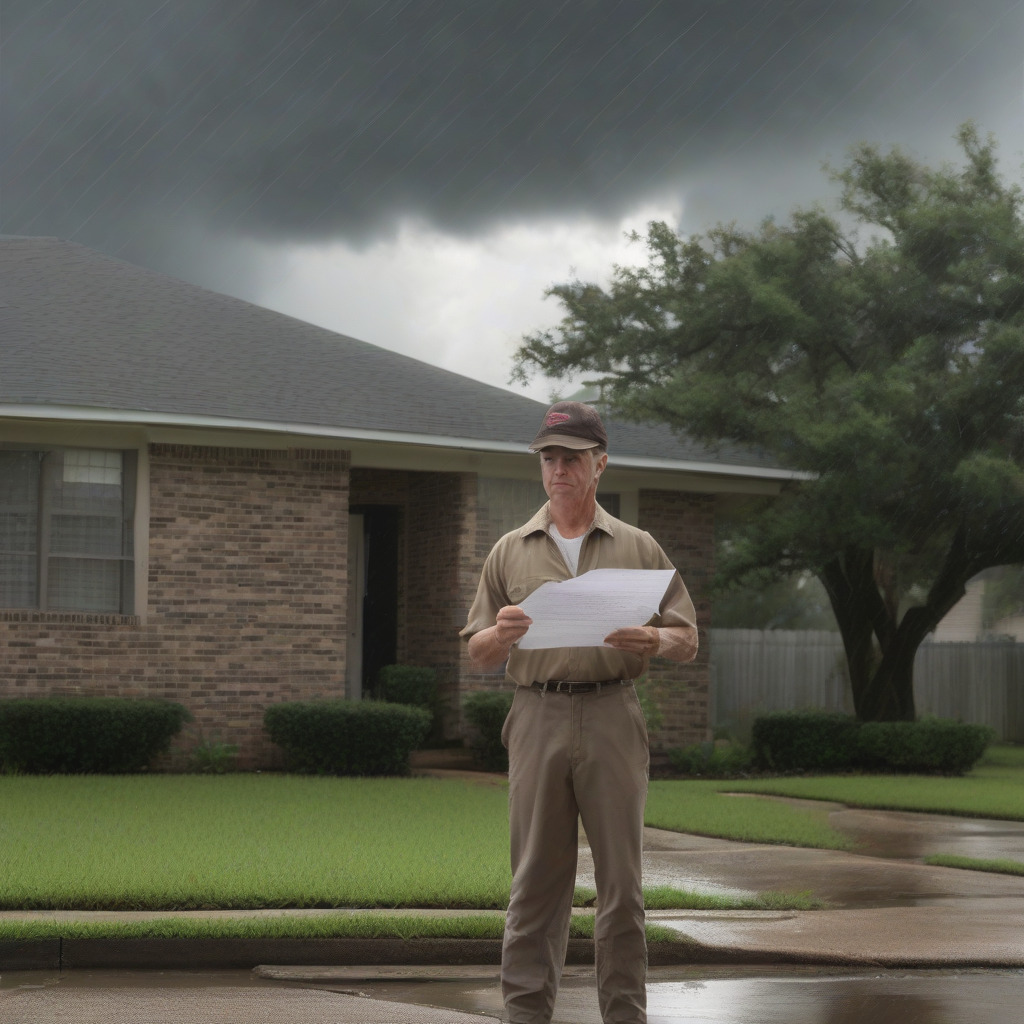
What Texas Law Requires Your Houston Insurer to Do After You File a Storm Damage Claim
If you filed a claim after Beryl or a summer hail storm, here are the exact deadlines your insurer must meet—and what you're owed if they miss them.

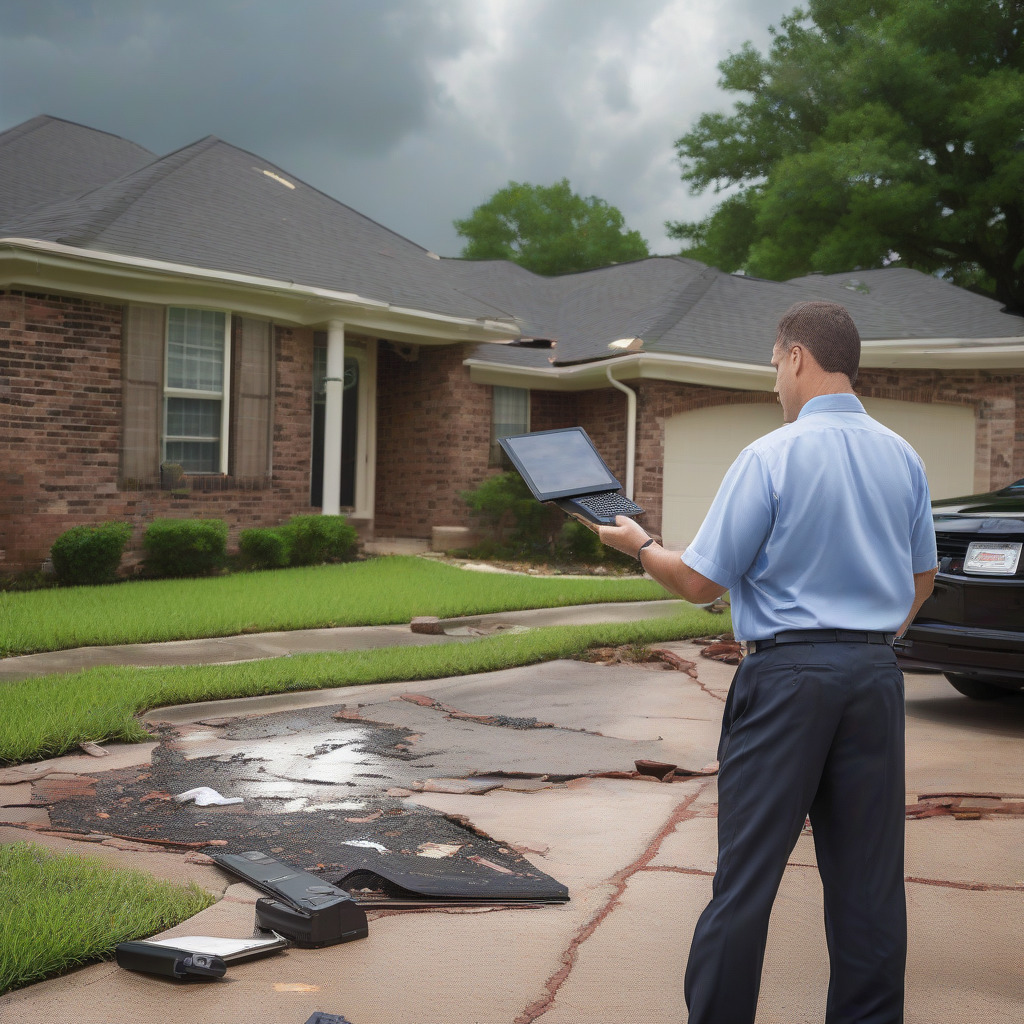
If you filed a claim after Beryl or a summer hail storm, here are the exact deadlines your insurer must meet—and what you’re owed if they miss them.
Houston homeowners who filed storm damage claims after Hurricane Beryl hit on July 8, 2024, or after the May 2024 derecho that knocked out power across most of the CenterPoint service area, are right now moving through a legal timeline most of them don’t know exists. That’s not an accident. Insurers don’t advertise it.
Under the Texas Insurance Code’s Prompt Payment of Claims Act—Sections 542.055 through 542.058—your insurer must process your claim within specific, numbered windows. Miss those windows, and the statute doesn’t just give you grounds for a complaint. It entitles you to 18 percent annual interest on top of your claim amount, plus attorney’s fees, as a matter of law.
This piece lays out those deadlines in plain terms, explains what you’re owed when they’re violated, and gives you a concrete escalation path: from the Texas Department of Insurance complaint process to the appraisal clause buried in your policy’s Conditions section to the pre-suit notice requirement that has killed otherwise valid lawsuits before they were ever heard.
Harris County absorbs multiple hail events in an average year, and named storms compound that exposure. The post-Beryl claim backlog has made insurer delay more likely, not less. If you’re waiting for a check right now, you need to know where you stand on the clock.
The 15-Day Acknowledgment Rule and How the Legal Clock Starts
The Prompt Payment of Claims Act starts the moment you submit written notice of your claim. Under Texas Insurance Code §542.055, your insurer then has 15 calendar days to acknowledge receipt, begin an investigation, and request any additional information it needs from you.
That last part matters more than most policyholders realize. The statute requires the insurer to tell you—in writing, within 15 days—what documents, estimates, or records it needs. If an adjuster calls and asks for photos verbally, that conversation doesn’t satisfy the requirement. The request must be in writing.
Which is why the form of your notice matters just as much. Written notice creates a timestamped record. Certified mail to the insurer’s claims address gives you a return receipt. The online claims portal generates a confirmation page. Email to the adjuster can include a read receipt, or at minimum a reply acknowledging receipt. Any of these work. A phone call to start the clock does not.
Here’s where people constantly get tripped up: an adjuster who tells you “I’ve opened the claim” over the phone is giving you nothing. Follow up every call with a written summary via email: “This confirms our conversation today at [time]. I reported storm damage at [address] and was told claim number [X] has been opened.” Thirty seconds of typing can matter enormously later.
Once you’ve submitted written notice, write the 15th calendar day on your calendar. If you haven’t received written acknowledgment by then—not a phone call, written acknowledgment—the clock for a Prompt Payment violation has already started.
The Accept-or-Deny Deadline and the Catastrophe Exception
After your insurer has received all the information it requested from you, §542.056 gives it 15 business days to issue a written acceptance or rejection of the claim. Not calendar days—business days. That distinction adds roughly two to three weeks to what sounds like a short window.
There’s a significant exception that applies directly to the events most likely to drive your claim. If the Texas governor has declared the triggering event a weather catastrophe or major natural disaster, the 15-business-day window extends to 45 days.
For Hurricane Beryl specifically, confirm whether a governor’s disaster declaration was issued for Harris County. If it was, the accept-or-deny window is 45 days from when the insurer received your complete documentation—not 15 business days. Check the Texas Division of Emergency Management’s records or your insurer’s written communications to confirm.
What must the written acceptance or denial actually contain? An acceptance must state that the claim is covered and indicate the amount the insurer will pay. A denial must cite the specific policy provision, condition, or exclusion the insurer is relying on. “We are unable to pay your claim at this time” is not a compliant denial. It does stop the accept-or-deny clock, though—which is exactly why you should read any denial letter carefully and call a lawyer if the stated reason doesn’t match the language in your policy.
Silence doesn’t pause the clock either. If the statutory window passes, you’ve received a complete file confirmation, and you’ve received nothing in writing, that silence is a Prompt Payment violation. Document it before you take another step.
The 5-Day Payment Rule and the 18 Percent Penalty
Once a claim is accepted, §542.057 requires the insurer to issue payment within 5 business days. Five business days. Not weeks.
If the insurer fails to pay within that window without documented good cause, §542.058 entitles you to the unpaid amount plus 18 percent per annum interest, plus reasonable attorney’s fees. The legislature built in this requirement specifically to stop insurers from using delay as a claims-management strategy. They weren’t subtle about it.
Here’s what that looks like on an actual claim: suppose your roof claim is $40,000 and your insurer accepts it in writing but drags its feet for 90 days past the five-business-day deadline. Eighteen percent annual interest on $40,000 is $7,200 a year, or about $20 a day. Ninety days of delay costs the insurer roughly $1,800 in penalty interest on top of the original claim amount, plus whatever attorney’s fees you ran up pursuing payment. Scale that to a $120,000 claim and the 90-day delay accrues about $5,400 in statutory interest alone. That’s real money, and it’s yours by statute.
The HB 1774 Pre-Suit Notice Trap
Before you can file a lawsuit on a weather-related insurance claim in Texas, you must send your insurer a formal pre-suit notice and wait 60 days. This requirement was established under House Bill 1774, it’s frequently overlooked, and missing it can get a case dismissed before it’s heard—and has.
The notice must include the legal basis of the claim, the specific acts or omissions being challenged, the damages sought including attorney’s fees, and the amount of reasonable and necessary attorney’s fees already incurred. “We plan to sue you” doesn’t cut it. Courts have enforced this statute strictly.
This is not a step to handle yourself. If you believe your insurer has missed a Prompt Payment deadline and you’re thinking about litigation, talk to a Houston-based policyholder-side attorney before sending anything. The 60-day pre-suit window can also be used by the insurer to make a settlement offer—some carriers use it strategically to reduce exposure before a lawsuit lands. How you respond to that offer has real consequences.
HB 1774 doesn’t eliminate the 18 percent penalty under §542.058; it governs the timing of litigation. A Texas insurance attorney can confirm how it applies to your specific claim.
Appraisal Clause vs. Hiring an Attorney
Most Texas homeowners policies contain an appraisal clause in the Conditions section. Most policyholders discover it exists only after a dispute erupts—which is, frankly, the worst time to read it for the first time. This is one area covered in depth in our home & property coverage, where understanding your policy before a storm is at least as important as knowing your rights after one.
If you and your insurer agree that your damage is covered but disagree on the dollar amount, appraisal lets you resolve that without going to court. Each side hires an independent appraiser. Those two appraisers agree on an umpire—or petition a local court to appoint one if they can’t. When two of the three reach a decision, it’s binding on both parties. In the Houston residential market, independent appraiser fees typically run $300 to $800 per day, and complex roof or structural claims can require multiple days of work. Each side pays its own appraiser; the umpire’s cost is split equally. On a large disputed claim, appraisal is still significantly cheaper and faster than litigation.
But appraisal has a hard ceiling on what it can accomplish. It resolves disputes about dollar amounts. It cannot resolve disputes about whether damage is covered under your policy at all.
If your insurer says the damage was caused by maintenance neglect rather than windstorm, or argues that wind-driven rain isn’t covered under your policy’s water exclusion, you need an attorney—not an appraiser. The appraisal process has no jurisdiction over coverage determinations.
A quick framework: Insurer accepts the claim but the dollar amount is significantly below your contractor estimates? Invoke appraisal. Insurer denies the claim entirely or cites an exclusion to reject part of the damage? Consult an attorney before doing anything else. Insurer hasn’t responded within the statutory window? Document everything and talk to an attorney about Prompt Payment violations before invoking appraisal—because invoking appraisal may affect how those claims can later be pursued in court.
Public Adjusters in Houston—What They Cost and When the Fee Makes Sense
A public adjuster is a licensed professional who represents the policyholder—not the insurer—in documenting, measuring, and negotiating a property damage claim. They differ from your insurer’s adjuster, who works for the insurance company, and from an attorney, who can litigate but typically comes in on contingency after a dispute has escalated.
In the Houston market, licensed public adjusters typically charge 10 to 15 percent of the final settlement, with some setting minimum fees of $1,500 to $2,500 on smaller residential claims regardless of what the settlement ultimately totals. On a smaller claim, that fee only pencils out if the PA closes a meaningful gap between the insurer’s initial estimate and the actual repair cost. Review their proposed contract carefully against your own estimate of that gap before you sign anything.
Where do they actually earn their money? Large, complex claims. Major roof replacement combined with interior wind-driven rain damage. Simultaneous wind and structural damage across multiple trades. Claims where the insurer’s estimate is significantly below contractor quotes and the discrepancy lives in line items—labor rates, material unit costs, scope items that simply don’t appear in the insurer’s version. On documentation-heavy losses like damaged HVAC, gutted drywall from water intrusion, or itemized contents claims, a good PA adds real value.
Texas requires public adjusters to hold a TDI license. Before you sign a contract with anyone presenting themselves as a PA, verify their license at tdi.texas.gov/agent/agent-search. It takes about 90 seconds.
The unlicensed-solicitor problem after storms is real and recurring in Harris County. If your neighborhood took a visible hit from Beryl, you’ve probably already seen it firsthand—door-to-door solicitors appearing within days, offering free “claim inspections” and asking homeowners to sign documents before they’ve had time to read them. TDI has issued repeated warnings about this pattern after major storm events. A legitimate public adjuster will not knock on your door three days after a hurricane. If someone can’t be found in the TDI license search, don’t sign anything they hand you.
If Your Carrier Has Left Texas
The rights described in this article apply most directly to admitted carriers—companies licensed by TDI and subject to its rate filings, form approvals, and consumer-protection rules. A growing number of Houston-area homeowners are no longer insured by admitted carriers, and many don’t know it.
In July 2023, Farmers Insurance announced its withdrawal from the Texas homeowners market, affecting approximately 100,000 Texas policyholders. AAA/CSAA stopped writing new homeowner policies in Texas and issued non-renewals. These exits hit hardest in high-claim-frequency areas—League City, Friendswood, coastal Harris County, Meyerland, Kingwood—where storm frequency and flood exposure have made the actuarial math increasingly difficult for standard carriers.
Homeowners displaced from admitted carriers have largely moved to excess and surplus (E&S) lines carriers. E&S carriers are not subject to TDI rate filings, and the regulatory protections available to admitted-carrier policyholders—including certain Prompt Payment provisions—apply differently in the E&S market. If you’re not sure whether your current carrier is admitted or E&S, look for a disclosure on your policy declarations page or check the carrier’s status on TDI’s Company Lookup tool at tdi.texas.gov.
Homeowners in coastal Harris County and near Galveston Bay face additional complexity. Many carry separate Texas Windstorm Insurance Association (TWIA) policies for wind and hail, because their admitted carrier excludes those perils in the first-tier coastal zone. In flood-prone neighborhoods like Meyerland—which has experienced repeated flooding and windstorm losses—a storm like Beryl generates two simultaneous and entirely separate claims: wind damage through the homeowners carrier or TWIA, and flood damage through the National Flood Insurance Program. Those two claims run on different regulatory frameworks, different deadlines, and different adjustment processes. The NFIP has its own strict documentation requirements and proof-of-loss deadlines that have nothing to do with the Texas Insurance Code’s Prompt Payment provisions. If you’re filing both, treat them as two separate projects with two separate paper trails. Managing them as one is exactly where people lose track of deadlines and miss them.
For Houston homeowners weighing whether their current coverage situation still makes sense, what Houston builder incentives actually look like this summer and how to evaluate them offers useful context on how insurability is increasingly affecting new-construction decisions in the area.
(The 100,000-policyholder figure for the Farmers withdrawal reflects reporting from the time of announcement. Confirm the current number through TDI’s market data before citing it.)
How to File a TDI Complaint and What to Include
If your insurer has missed a statutory deadline, denied your claim without the required written explanation, or stopped responding entirely, the Texas Department of Insurance is your first formal escalation point short of litigation.
File online at tdi.texas.gov/consumer/complain.html or call the consumer help line at 1-800-252-3439. Verify that number directly at tdi.texas.gov before dialing.
Gather this before you file: your claim number and policy number, the date you submitted written notice, certified mail receipts or portal confirmations, email timestamps, all written correspondence with the insurer, any contractor estimates you’ve obtained, the insurer’s initial estimate if one was provided, any denial letter with the cited exclusion or policy provision, and notes documenting unanswered calls or emails with approximate dates.
Be specific in your complaint narrative. State the date written notice was submitted, the date the relevant statutory window expired, whether you received acknowledgment, and what has or hasn’t been communicated since. TDI investigators work better with a dated timeline than with general frustration. “They’ve been ignoring me for months” is less useful than a list of every unanswered email with dates attached.
TDI can investigate Prompt Payment violations, improper claims handling, and licensing violations. It can take enforcement action against carriers and fine them. It cannot award you damages, force a settlement, or require the insurer to cut you a check. That’s why a TDI complaint is most effective as a parallel track—not a replacement for—the legal remedies above. It creates a documented record of the violation, which can be valuable in subsequent litigation or pre-suit negotiations.
TDI also publishes complaint ratio data by company through the Company Lookup tool. Look up your insurer’s complaint index—a ratio comparing its complaint volume to its market share. A company with an index significantly above 1.0 generates disproportionate complaints relative to its size. The data is free, publicly available, and tells you whether your experience is an anomaly or a pattern.
If Your Insurer Is Lowballing Your Claim
Get a second or third contractor estimate in writing from licensed Houston-area contractors who have done this type of repair. Document the gap between the insurer’s estimate and those contractor quotes with specificity.
Request, in writing, a copy of the insurer’s itemized estimate—they’re required to provide it. Compare it line by line to your contractor’s scope of work. The discrepancies are usually in the details: labor rates, material unit costs, line items that simply don’t appear in the insurer’s version.
Gap is substantial and the insurer has accepted the claim? Review your policy for the appraisal clause and consider invoking it, or bring in a licensed public adjuster to review the estimate discrepancy before you decide.
Insurer has denied coverage entirely, or cited an exclusion you believe doesn’t apply? Don’t invoke appraisal. Call a Houston-based policyholder-side attorney and review the Prompt Payment timeline to determine whether any deadline violations have already occurred.
Planning to sue? Send HB 1774 pre-suit notice correctly and wait the required 60 days. No shortcuts, no exceptions. File a TDI complaint to create a formal record of any Prompt Payment violations, whether or not you’re also pursuing legal remedies.
Hurricane season runs June through November. If another storm hits Harris County, your timeline starts the day you file written notice—not the day the adjuster calls, not the day the estimate arrives. Keep a log. Send everything in writing. Track the calendar. And if you’re already in this process from Beryl or a summer hail event, count back from the date you submitted your written claim. The clock may already be further along than your insurer has let on.
CityDesk Houston is an independent local publication covering business, policy, and civic affairs in the greater Houston area. This article is informational and does not constitute legal advice. Readers with active insurance claims should consult a licensed Texas attorney and verify all statutory references independently.