How Harris County Probate Court Actually Works When Someone Dies Without a Will
---

The Monday Morning Problem
A parent dies in Acres Homes on a Friday night. She owned a house with a mortgage still on it, a 2018 Toyota Camry, a checking account with about $4,200 in it, and no will. Three adult children survive her. Two of them want to sell the house quickly. The third isn’t sure. None of them have ever set foot inside a probate court.
By Monday morning, none of them have legal authority to do anything with any of it.
They can’t call a realtor. They can’t access the bank account. They can’t transfer the car title. The mortgage servicer will eventually notice the account holder is deceased and refuse to discuss the loan with anyone who can’t produce Letters of Administration or something equivalent. The Harris County Appraisal District doesn’t care who thinks they inherited the property — it will send the next tax bill to the decedent’s name, and the taxes will keep accruing.
This article is not legal advice. It’s the most specific account I can put together of what Harris County families actually face when this situation arrives — which court, which clerk’s window, which forms, which fees, which shortcuts are real and which ones don’t apply when there’s no will. That last point turns out to matter enormously, and it’s where a lot of families lose weeks chasing the wrong path.
Which Court, Which Clerk, and Where to Walk In
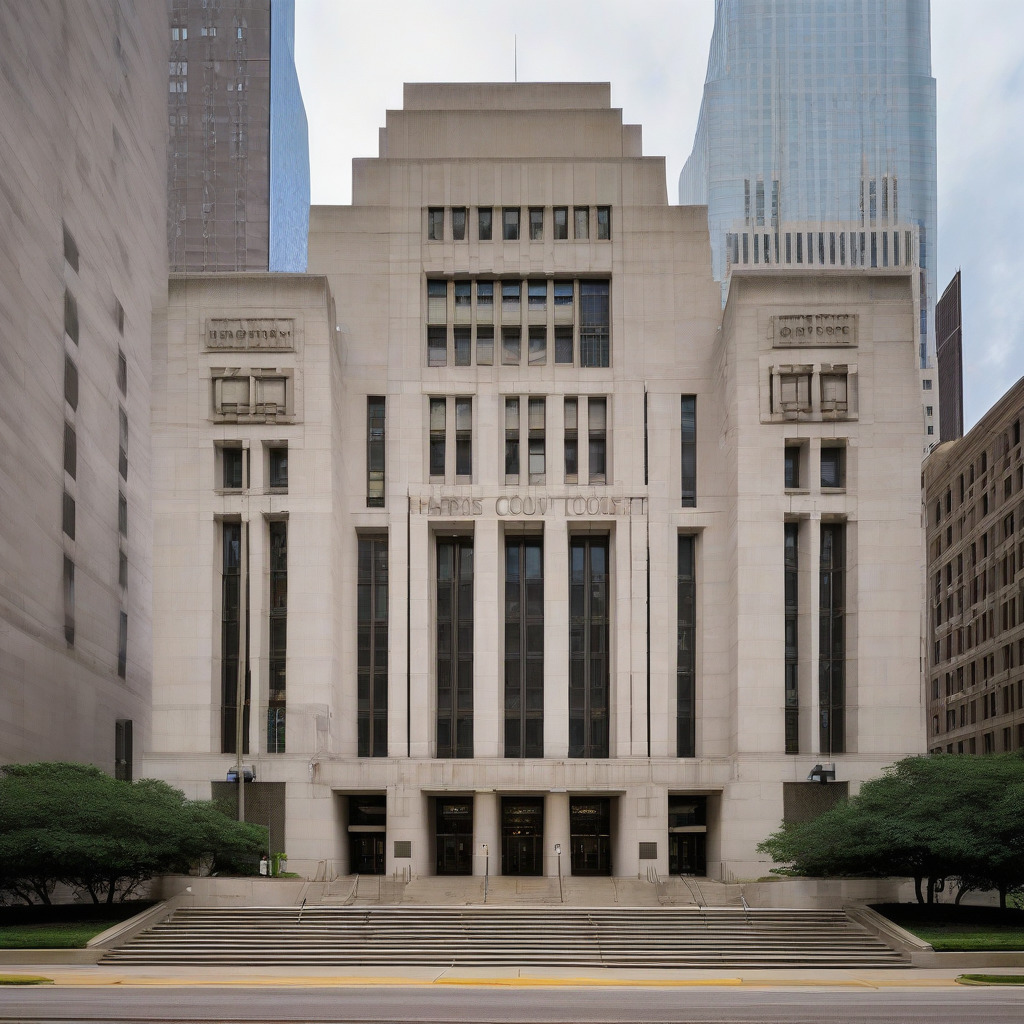
Harris County has four statutory probate courts (Probate Courts 1, 2, 3, and 4), all operating out of the Harris County Civil Courthouse at 201 Caroline Street, Houston, TX 77002. All four have concurrent jurisdiction over intestate estates. Assignment isn’t based on ZIP code, estate size, or property value. Cases are assigned by random docket rotation. You don’t get to choose your court.
The first mistake families make is filing with the wrong office entirely. Probate matters in Harris County go to the Harris County Clerk — not the Harris County District Clerk. These are separate offices with separate fee schedules, separate case lookup systems, and separate windows in the same building. The District Clerk handles civil litigation and criminal records. The County Clerk handles probate, real property records, and vital statistics.
The correct website for probate case lookups and forms is cclerk.hctx.net. The District Clerk’s site, hcdistrictclerk.com, won’t have your probate case. It’s a simple mistake, but if you’ve taken a day off work and paid for parking downtown, discovering it at the wrong counter is genuinely disorienting.
The County Clerk’s probate division is accessible from the main entrance on Caroline Street. Allow extra time for security screening. For families arriving by public transit, the METRORail Red Line stops at Preston Station, a short walk away. Street parking along Caroline and Congress is metered and fills fast on busy court mornings. The Harris County parking garage adjacent to the courthouse is more reliable.
SIDEBAR A — Harris County County Clerk: Probate Contact & Fee Reference
Address: 201 Caroline Street, Houston, TX 77002 Phone: (713) 274-8580 Website: cclerk.hctx.net Probate Division Window Hours: Monday–Friday, 8:00 a.m. to 4:30 p.m. (verify directly before visiting; hours have changed following COVID-era adjustments and may reflect reduced walk-in capacity) Small Estate Affidavit filing fee: approximately $50–$75 (verify with clerk at time of filing) Base probate application filing fee: approximately $300–$400 (verify; additional fees apply for issuance of Letters, each certified copy, and publication of citation) Certified copies of Letters of Administration: approximately $5–$10 per copy; Houston banks and title companies typically require 2–4 certified copies
All fees should be confirmed with the County Clerk’s office directly before filing. Fee schedules are subject to change following legislative sessions.
SIDEBAR B — The Wrong Office Mistake
When families arrive at 201 Caroline to deal with a deceased relative’s estate, many end up in the wrong line. The Harris County District Clerk and the Harris County County Clerk are entirely separate government offices sharing the same building. The District Clerk handles civil lawsuits, family court filings, and criminal records. Probate — including intestate administration, wills, small estate affidavits, and guardianships — belongs to the County Clerk.
Before you join any line, confirm the sign above the window says “County Clerk” or “Probate Division.” If you’re being directed to a computer terminal and the URL on screen contains “hcdistrictclerk.com,” you’re in the wrong place. The correct portal for probate matters is cclerk.hctx.net. This mistake is correctable, but it’s better to avoid it on a day you may have taken off work and paid for parking.
Can You Skip Probate Entirely? Three Paths That Don’t Always Work
Before any family spends money on an attorney or files anything at 201 Caroline, check three specific options. Each one has hard conditions. Getting them wrong is how families lose weeks on the wrong approach.
The Small Estate Affidavit. Texas law provides a faster alternative to full probate for smaller estates. Under Texas Estates Code §205.001, the gross estate cap is $75,000, excluding homestead and other exempt property. Verify this figure against any post-2025 legislative session changes before acting on it — the Texas Legislature meets in odd years, and estate thresholds have been adjusted before.
The affidavit is not self-executing. It requires signatures from all distributees (everyone entitled to a share under the Texas intestate succession statute), two disinterested witnesses — people who aren’t heirs and have no financial stake — and court approval from one of the four Harris County Probate Courts. Many families assume it’s simply a notarized document they file with the property records. It isn’t. A judge has to approve it before it carries any legal effect. Filing fees run $50–$75. Faster and cheaper than full probate, but it’s still a court proceeding.
Here’s where families most commonly misread the rule: owning a house doesn’t automatically disqualify the estate. A homestead property — the primary residence — is exempt under Texas law and doesn’t count toward the threshold. If the estate includes non-exempt real property, like a rental house, or enough other assets to push the total over the cap, the affidavit is no longer available.
Other disqualifiers: outstanding unsecured debts that exceed the estate’s assets; community property complications when a surviving spouse is involved (this analysis is not straightforward and usually requires an attorney); and any concurrent probate proceeding already open on the same estate. If a creditor has already initiated proceedings or another party has applied for Letters of Administration, the affidavit path closes.
Muniment of Title. Houston homeowners who’ve spent any time researching Texas probate have encountered this term. Muniment of title allows an heir to record a will directly into the property records as evidence of title, bypassing appointment of an administrator entirely. It can save thousands of dollars and months of calendar time in the right situation.
The catch most competing coverage glosses over: muniment of title requires a will. If your parent died intestate — no will, no testamentary document — muniment of title is not available. It’s not a procedural workaround. It simply doesn’t apply. Families who spend a consultation hour asking about muniment of title in a no-will scenario are paying to learn they have to start over. Cross it off the list before you call anyone.
The Vehicle. The 2018 Camry in this scenario may not need to go through probate court at all. Texas allows transfer of titled vehicles through a separate Affidavit of Heirship for a Motor Vehicle, processed through Texas DPS and the county tax assessor-collector — not the probate courts. This is distinct from the small estate affidavit and handles titled vehicles specifically. If the car is the asset the family needs most urgently, pursue that channel independently while the rest of the estate gets sorted. The house and the bank account are entirely different problems.
What Full Probate Costs and How Long It Actually Takes
When the small estate affidavit doesn’t apply and muniment of title isn’t available, families proceed to full administration. Here’s the actual sequence and what it costs in Harris County.
The application for administration is filed at the County Clerk’s probate window at 201 Caroline. Base court costs run $300–$400. After filing, the case is randomly assigned to one of the four probate courts. The court issues a citation that must be posted and published in a qualifying Harris County newspaper. Texas law requires a minimum of 10 days to pass after citation is issued before a hearing can be set. In practice — accounting for scheduling availability in the assigned court and the publication requirement — families should expect 30 to 60 days before a judge can issue Letters of Administration in an uncontested case. Contested matters take considerably longer. Confirm which publications currently qualify with the County Clerk at filing; the list has shifted over the years. The Houston Chronicle has historically qualified, but verify before you pay for publication.
Once Letters of Administration are issued, they become the document that gives the administrator legal authority to act. Banks won’t release funds without them. Title companies won’t close a sale without them. Houston banks — JPMorgan Chase, Wells Fargo, Frost Bank — typically require two to four certified copies. Order them at issuance. Ordering additional copies later means another trip downtown and more fees.
A clean, uncontested intestate estate in Harris County typically takes 6 to 12 months from application to final distribution and closure. That’s the best case: no disputed heirs, no real property sale complications, no significant creditor claims. Add a house sale, a creditor dispute, or siblings who can’t agree, and 12 to 24 months is the common experience. These are not edge cases.
Attorney fees in the Houston probate market have generally run $3,500 to $8,000 for straightforward intestate cases handled on a flat-fee independent administration basis. Complex estates, contested heirship, or matters that go to hearing shift to hourly billing — $300 to $500 per hour is the current Houston range. Get the fee structure in writing before signing an engagement letter. No exceptions, and any attorney who resists that request is telling you something useful.
The carrying cost reality hits hard. A house valued at $250,000 in Eastwood or Gulfton accumulates $5,000 to $6,250 per year in Harris County property taxes while the estate sits open. Readers tracking property tax exemptions Houston homeowners often miss may find that some of those exemptions lapse when an owner dies intestate, making the carrying cost gap even wider. That figure doesn’t include the mortgage payment, insurance, or maintenance. The cost of delay accrues every month, whether anyone is paying attention to it or not.
Who’s in Charge and What They Can Legally Do with the Property
This is where intestate estates generate family conflict. The law is specific, and it doesn’t bend for goodwill.
Texas allows independent administration — a form of probate in which the administrator has broad authority to sell property, pay debts, and distribute assets without returning to court for each transaction. Most experienced Houston probate attorneys default to it when possible. In an intestate estate, independent administration is only available if all heirs agree in writing to appoint the same person as administrator. Texas Estates Code §401.003 governs this. If any heir objects, can’t be located, is a minor, or simply doesn’t respond, the court defaults to dependent administration.
Dependent administration means the administrator must obtain a court order before selling real property. Distributions require court approval. Every significant action goes back before the judge. It’s slower, more expensive, and far more disruptive to a family that needs to sell a house and move on. It’s also what happens by default when siblings can’t agree — which, in my experience covering these situations, is more common than families expect going in. Everyone thinks their family will be the exception.
In an independent administration, the administrator can list a house with a realtor, negotiate, and close a sale without further court approval once Letters issue. In a dependent administration, a court order authorizing the sale must come first. That’s another hearing, another delay, and potentially a missed market window. This single distinction can determine whether a property sells in spring or sits through another summer. Families watching how the Harris County eviction process works in our legal & finance coverage will recognize the same pattern: the default legal process is slow, and the exceptions require unanimous cooperation.
What no administrator can do before Letters of Administration are issued: list the house under authority of the estate, access bank accounts held solely in the decedent’s name, transfer vehicle title, negotiate with mortgage servicers on behalf of the estate, or sign any contract that binds the estate. This gap runs at least 30 to 60 days in uncontested Harris County cases. In a contested matter, it can stretch to months.
One deadline that catches families in dependent administration off guard: the administrator must file an inventory, appraisement, and list of claims within 90 days of Letters being issued. Missing it creates additional court exposure and complicates the timeline. It doesn’t feel urgent until it suddenly is.
What to Ask a Houston Probate Attorney at the First Meeting
The information above prepares a family to use an attorney meeting efficiently rather than spending it on basics. These questions will reveal whether the attorney has current, hands-on experience in Harris County’s probate courts — and a few of them have answers that should raise flags if the attorney fumbles them.
Which of the four Harris County Probate Courts have you filed in recently, and how is the current docket pace in each? The four courts don’t move at the same speed. An attorney who files regularly in Harris County probate will have a working sense of which court has a backlog. Vague or hedged answers here suggest they may not be filing locally very often.
Given this asset list, does the estate qualify for a small estate affidavit? Walk them through the specific assets: the house, the car, the bank accounts, life insurance, retirement accounts. A probate attorney worth engaging should give you a preliminary answer in the first meeting, not bill you for research on a threshold question. This one has a right answer.
If the affidavit doesn’t apply, do all heirs agree on an administrator — and if they don’t, what’s your strategy? The difference between independent and dependent administration is real money and real time. An attorney who doesn’t raise this question early isn’t thinking about your case yet.
What is your fee structure, what does it include, and what is not included? A flat fee for a simple independent administration is reasonable to expect. Understand explicitly whether court appearances, document preparation, and Letters of Administration are covered, or billed separately. Get it in writing.
How many certified copies of Letters of Administration should we order at issuance, and which Houston institutions will require originals versus certified copies? Experienced Houston probate attorneys answer this without hesitation. It’s a small thing that saves a trip back to the courthouse at an already difficult time.
The Larger Picture
The system at 201 Caroline isn’t designed to be intuitive, and no amount of goodwill between siblings substitutes for legal authority. The four probate courts are assigned randomly. The filing goes to the County Clerk, not the District Clerk. Muniment of title requires a will. The small estate affidavit requires court approval. Independent administration requires unanimous agreement. Every one of these details is the kind of thing a family learns the hard way — in attorney time, in carrying costs, in procedural delay while a house sits empty and the taxes keep running.
What this article can’t do is shorten the court process itself. But knowing what it actually looks like — from the parking garage on Caroline Street to the certified copies of Letters that a Frost Bank branch manager will ask for — means moving through it instead of being surprised by it at every turn. That’s worth something when the clock is already running.
CityDesk Houston covers legal and financial topics affecting Harris County residents. This article is for informational purposes only and does not constitute legal advice. Consult a licensed Texas attorney for guidance specific to your situation. Filing fees, dollar thresholds, and procedural requirements should be verified with the Harris County County Clerk and an attorney before taking any action.
For more local coverage, explore our Legal & Finance section.