How to Transfer a Harris County House After a Death Without Full Probate
Muniment of title, small estate affidavit, or affidavit of heirship: a side-by-side guide for families sorting out inherited property before the end of the year


Muniment of title, small estate affidavit, or affidavit of heirship: a side-by-side guide for families sorting out inherited property before the end of the year
Editorial note: This piece picks up where CityDesk Houston’s earlier coverage of Harris County Probate Court — what happens when someone dies without a will — leaves off. This article covers only transfers of real property. If your situation involves a contested estate, significant creditor claims, or substantial non-real-property assets distributed among multiple heirs, you need an attorney. What follows is for readers who have identified a specific property, confirmed the basic facts of the estate, and want to know whether they can avoid full administration entirely.
Why Families Ask This Question in October
Families gather, someone mentions the house, and it turns out nobody has done anything about the title since a parent died. Sometimes years ago. In the short days between Halloween and the new year, more Harris County families than at any other time realize they have a property sitting in legal limbo.
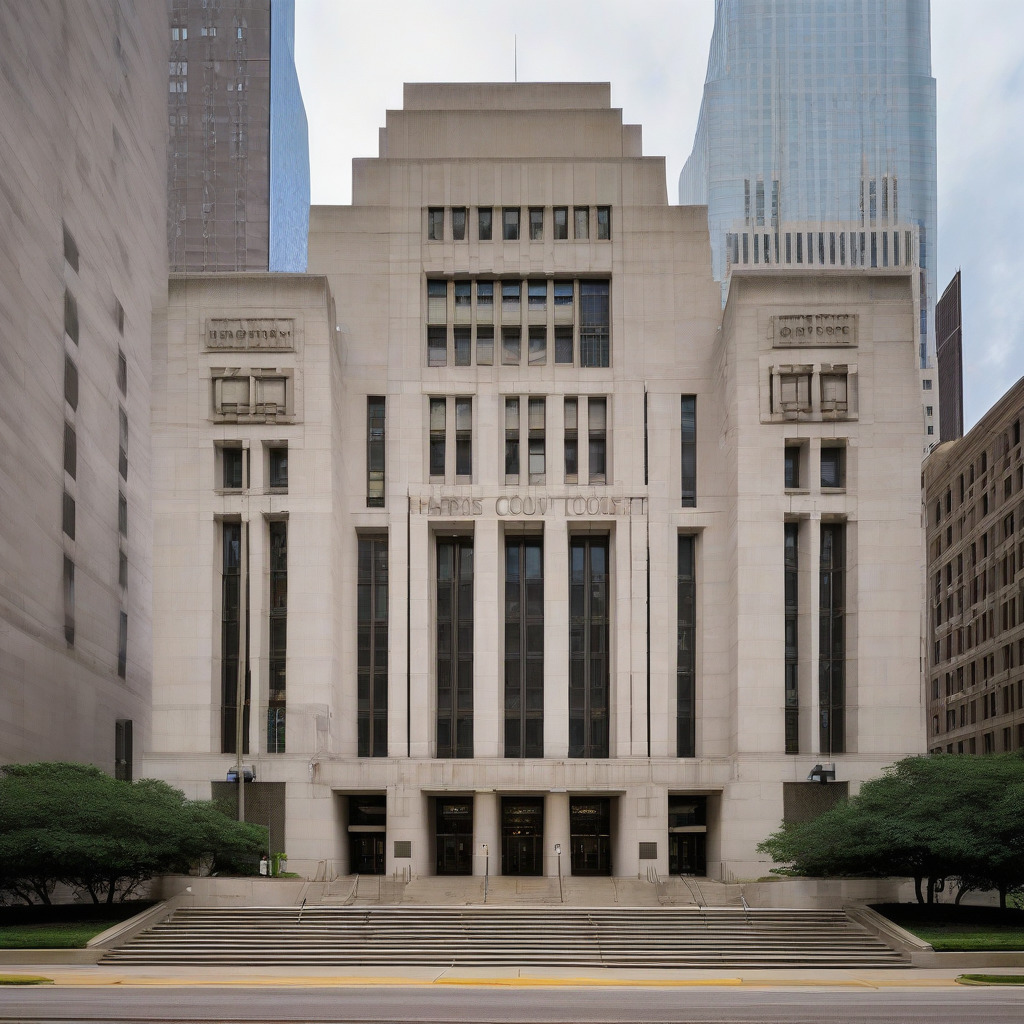
Harris County’s four statutory probate courts rank among the busiest in Texas. The volume affects timelines and explains why procedural details here diverge meaningfully from what a statewide or national guide will tell you. The court sits at 201 Caroline St., and the local fee structure directly shapes your actual costs and realistic deadlines.
The stakes are locally specific. Harris County’s median home value is somewhere around $300,000 right now, but the distribution is wide. In Acres Homes, Third Ward, and Fifth Ward, multigenerational ownership patterns and informal property transfers have created concentrated heirs’ property problems — a parent’s name never removed from a deed, a relative who moved in, paid taxes for decades, but never established legal title. In those communities, which path you choose and how fast you move can determine whether a family keeps an asset or loses it to a tax sale or adverse claim. That’s not hypothetical. It happens here, regularly.
Three Texas probate-avoidance tools address real property transfer: muniment of title, small estate affidavit, and affidavit of heirship. Each has different eligibility thresholds, different costs, and a very different relationship with the title insurance industry. This article gives you the framework to identify which one applies and what it will actually cost at 201 Caroline St.
Before You Choose a Path, Answer These Three Questions
None of the three works in every situation. Start here.
1. Did the decedent leave a valid will, or did they die intestate?
This is the first hard fork. Muniment of title requires a valid will. If your parent died without one, muniment is off the table. Small estate affidavit and affidavit of heirship are both available for intestate estates. If there is a will, all three are potentially open to you, though you’ll still need to satisfy each one’s other requirements.
2. Are there unpaid unsecured debts beyond a mortgage?
For muniment of title, this is a hard eligibility requirement. If the estate has general unsecured debts — medical bills, credit card balances, personal loans — the estate does not qualify. A mortgage is secured by the property and doesn’t disqualify you. But if your parent died with a $15,000 hospital bill and no assets to cover it, muniment is closed. Harris County courts have refused muniment petitions over a $200 utility bill. The small estate affidavit and affidavit of heirship have no comparable debt restriction, though heirs who use those remain exposed to creditor claims under applicable statute of limitations periods.
3. How quickly do you need to sell, and have you spoken with a title company?
The fastest filing method is not automatically the most useful one. An affidavit of heirship can be drafted and recorded for under $50. But if you plan to sell within the next two to five years, that affidavit almost certainly won’t produce title any major underwriter in Houston will insure. Before you file anything, call a title company or a real estate attorney. Ask directly whether they’ll insure a sale based on the instrument you’re considering. That one phone call can save months of backtracking.
Muniment of Title: The Court Shortcut When There Is a Valid Will
Muniment of title is a Texas-specific mechanism authorized under Texas Estates Code Sections 257.001 through 257.103. It allows a court to admit a will to probate for the limited purpose of establishing title to property — no executor, no full administration, no ongoing court involvement.
In plain terms: you file a petition, a judge signs an order admitting the will, and that order becomes your title transfer. Record it alongside the will in the county’s real property records and you’re done.
The two eligibility requirements are firm. There must be a valid will — an unsigned document, a revoked will, or one that doesn’t meet Texas’s execution requirements won’t work. The estate must also have no unpaid general unsecured debts. The explicit exception is debts secured by real property, such as a mortgage. Courts have refused muniment petitions over a $200 utility bill. If there are unpaid unsecured debts, the estate is ineligible no matter how small those debts are.
How it works in Harris County specifically
Harris County’s four probate courts handle muniment filings at 201 Caroline St. in downtown Houston. Confirm with the clerk’s office before filing whether your application routes to the Harris County District Clerk or the County Clerk’s office — intake procedures vary, and showing up without confirming is a real gamble on a downtown parking day.
The recording of the final order goes to the Harris County Clerk’s Real Property Division. This is a separate step from the probate court intake, with its own fees.
The petition must include the original will, or a certified copy if the original has been filed for safekeeping. You’ll also need a statement that the estate has no unpaid unsecured debts and a precise legal description of the real property being transferred. Citation by posting — a formal notice requirement — is typically satisfied by the clerk’s office posting notice at the courthouse for a statutory period.
Heading into late 2025 and 2026, expect a hearing date four to six weeks after filing. Total elapsed time from filing to signed order runs roughly six to ten weeks, assuming a straightforward petition with no objections. A contested hearing, a question about will validity, or a missing witness adds time.
After the order is signed, the order and the will must be recorded in the Harris County Clerk’s Real Property records to perfect the title transfer. You’ll need a certified copy of the court order. Recording fees apply.
The four-year deadline
Texas Estates Code establishes a four-year deadline from the date of death to file an application to probate a will. Harris County courts apply it strictly. Exceptions are narrow — a court can admit a will after four years only if the applicant was not in default for failing to file earlier, which is a difficult standard to meet. If your parent died more than four years ago and left a will, muniment of title may no longer be available to you. This is genuinely one of those situations where waiting to ask the question costs more than asking it would have.
What muniment of title does not do
A muniment order doesn’t appoint an executor, settle debts, or transfer anything other than the real property described in the petition. No personal property, no bank accounts, no vehicles. If the estate has a car that needs to be transferred or an account that needs to be closed, this won’t accomplish that. It’s a surgical instrument — precise and limited — which is exactly what families who just need to move the house are looking for.
What Muniment of Title Costs at the Harris County Probate Court
Here’s the line-item breakdown for a Harris County applicant filing in 2025–2026. Verify all figures against the current Harris County District Clerk fee schedule (hcdistrictclerk.com) before filing, as probate filing fees are adjusted periodically.
The new-case probate filing fee runs approximately $300–$400. Citation by posting costs roughly $50–$100. A certified copy of the court order costs approximately $5–$10 per page; you’ll need at least one for recording, and most orders run two to four pages. Recording the order and will with the Harris County Clerk follows the fee schedule in Texas Local Government Code Section 118.011: $25 for the first page and $4 for each additional page. A typical muniment package runs six to twelve pages depending on the length of the will — budget $45–$65 for recording, though a longer will pushes that higher.
Muniment can be filed without an attorney, and Harris County’s probate courts do see self-represented applicants. The Harris County Law Library at 1019 Congress Ave. maintains forms and research assistance for unrepresented filers. Lone Star Legal Aid (lonestar.org) serves income-eligible residents and handles some estate matters. Houston Volunteer Lawyers (hvlp.org) provides referrals and runs periodic clinics, some focused on estate and property issues. If your income qualifies, pursue these resources before paying a private attorney.
Rough total out-of-pocket without an attorney: $400–$575 for a straightforward filing.
Small Estate Affidavit: The Fast Track With a Catch for Houston Homeowners
Texas Estates Code Section 205.001 authorizes a small estate affidavit when total asset value — excluding homestead property and exempt property — does not exceed $75,000. The affidavit is signed by all distributing heirs and two disinterested witnesses, then filed with the probate court and, if real property is involved, recorded with the county.
Here’s where the math usually falls apart for Harris County estates. The home itself, if it was the decedent’s homestead, is exempt and doesn’t count toward the $75,000 cap. Bank accounts, vehicles, a second property, brokerage accounts, most personal property — those do count.
Run the numbers on a realistic Houston estate. A homestead worth $300,000 is exempt. But a checking account with $40,000 in it counts. A vehicle counts. If a retiree had Social Security depositing monthly and maintained a modest savings account — not unusual — that account alone might hold $50,000 to $70,000 at death. Add a car. You’re over $75,000 in non-exempt assets before you’ve accounted for anything unusual. Most Harris County homeowners’ estates won’t qualify. The threshold sounds generous until you actually add up what a working homeowner leaves behind.
The small estate affidavit must be filed with the probate court and, if real property is involved, recorded with the Harris County Clerk’s Real Property Division. Recording fees follow the same structure: $25 for the first page, $4 per additional page. Confirm the court filing fee directly with the probate court clerk before filing.
Affidavit of Heirship: No Court Required, But Patience Required
An affidavit of heirship has obvious appeal: no court, no hearing, no judge. Two disinterested witnesses — people with personal knowledge of the family who won’t benefit from the estate — execute a sworn statement establishing who the decedent’s heirs are. The affidavit is filed directly with the Harris County Clerk’s Real Property Division. Filing fee is $25 for the first page plus $4 per additional page; a complete affidavit typically runs three to six pages, so budget $33–$45 for recording.
The statutory authority is Texas Estates Code Sections 203.001 and 203.002. The instrument doesn’t transfer title by itself. It’s evidence of who inherits.
The Harris County Clerk’s Real Property Division accepts filings at 201 Caroline St. and at annex offices in Baytown, Humble, Pasadena, and Katy. Policies on in-person versus mail-only filing vary by location and have shifted in recent years. Confirm directly with the relevant annex before making the trip.
Now for the part that actually determines whether this is useful to you. Texas’s major title underwriters — Fidelity National, First American, Old Republic, and Stewart — won’t insure a sale or refinance based on an affidavit of heirship that hasn’t been on file long enough. The industry-standard waiting period is five years from the date the affidavit was recorded. Some underwriters will accept as few as two years under specific conditions — additional documentation, indemnity agreements, unusually well-documented family history — but that requires a direct conversation with underwriting counsel, and not every underwriter will go there.
Stewart Title, headquartered in Houston at 1360 Post Oak Blvd., is the most locally relevant underwriter to contact for written confirmation of their current policy. Their underwriting team’s familiarity with Harris County heirs’ property issues makes them the most useful starting point. Old Republic and Alamo Title are worth direct calls as well, since their policies can differ from the baseline in specific fact patterns.
If you file an affidavit of heirship today and want to sell in 18 months, you almost certainly can’t close. No major underwriter will issue title insurance on that timeline based solely on the affidavit. A buyer using a mortgage loan requires insurable title as a condition of funding. A cash buyer willing to close without it exists, but accepting a steep discount to attract one is a costly way to avoid a $400 muniment filing.
None of this makes affidavits of heirship useless. They’re the right instrument when the decedent died intestate and there’s no realistic alternative, when the family genuinely won’t sell for five or more years, when the goal is establishing a documentary record rather than immediate marketable title, or when the estate simply can’t afford court filing fees and will accept the waiting period. In Acres Homes and Fifth Ward, where heirs’ property has accumulated across multiple generations, the affidavit of heirship is often the first step in a longer process — a judicial heirship determination or subsequent muniment filing follows once resources allow. It’s not a complete solution, but it’s the right starting point when the alternatives aren’t accessible.
Side-by-Side Fee Summary
The table below reflects Harris County-specific costs as of 2025–2026. Confirm all court filing fees with the Harris County District Clerk’s published fee schedule (hcdistrictclerk.com) before filing.
| Muniment of Title | Small Estate Affidavit | Affidavit of Heirship | |
|---|---|---|---|
| Court filing fee | ~$300–$400 | Confirm with probate court clerk | None |
| Harris County Clerk recording fee | ~$45–$65 (order + will) | ~$33–$45 | ~$33–$45 |
| Estimated out-of-pocket without attorney | ~$400–$575 | Court filing fee unconfirmed; add ~$33–$45 recording | ~$33–$45 |
| Realistic timeline to completed transfer | 6–10 weeks | 3–6 weeks | Filed immediately; insurable in 2–5 years |
The affidavit of heirship is the cheapest filing. But a title that can’t support a sale for five years carries real costs — property taxes, insurance, deferred maintenance, carrying costs on a house you’re stuck with. Those add up faster than families expect. If your estate qualifies for muniment of title, spending $400–$500 to get insurable title in two months is almost always the better financial decision. As we cover in our legal & finance coverage, understanding the cost structure of these proceedings upfront is usually what separates families who resolve an estate cleanly from those who spend years backtracking.
What a Title Company or Mortgage Lender Will Actually Accept
A properly recorded muniment order produces marketable title. The will and court order, both recorded in the Harris County Clerk’s Real Property records, are what a lender wants to see. Stewart, Fidelity National, First American, and Old Republic all routinely insure sales where title was transferred by muniment in Texas. The caveat is execution: the recording must be complete and correct. The legal description in the petition must match the property records precisely. An error in the legal description or a missing page in the recorded instrument can create title problems that require additional proceedings. Get a second set of eyes on the legal description before you file.
Title companies will also insure sales based on a properly executed small estate affidavit, but they examine these more carefully than muniment orders. The affidavit must be correctly executed — all heirs, two disinterested witnesses, proper notarization — and filed in both the probate court and the real property records. A missing signature, a witness who turns out not to be disinterested, or an asset schedule that omitted a known account will create problems at closing. Lenders making federally backed loans — FHA, VA, or conventional loans sold to Fannie Mae or Freddie Mac — may have additional overlay requirements beyond what the title company requires. Confirm with the specific lender before relying on this path.
For an affidavit of heirship, major underwriters won’t insure without the waiting period. Five years is standard. Two years is possible in narrow circumstances with additional requirements. If a property’s title rests solely on an affidavit filed less than five years ago, expect a title company to decline or offer to insure with an exception carved out for heirship claims — and a lender won’t accept that exception. If you’ve already filed an affidavit and need to sell before the waiting period expires, you have two realistic options: file a subsequent court proceeding — a judicial determination of heirship, or muniment of title if a will exists — which produces a court order underwriters will accept, or negotiate a cash sale at a discount that prices in the title risk.
One more thing worth saying plainly: heirs who want to access equity in an inherited home — through a cash-out refinance, a home equity line, or a reverse mortgage — face the same title-perfection requirement as heirs who want to sell. A lender requires a title policy. A title policy requires insurable title. There’s no workaround. Whatever you’re trying to do with the property, insurable title is the threshold. If you’re weighing whether to hold the property or sell, what the Houston housing market actually looks like at mid-year 2026 is worth reading before you make that call.
Free and Low-Cost Help in Harris County
If your estate qualifies for any of these instruments but you can’t afford an attorney, Harris County has real resources.
The Harris County Law Library at 1019 Congress Ave. sits across the street from the Civil Courthouse. Staff can direct unrepresented filers, confirm form numbers, and explain procedural requirements. They can’t provide legal advice, but they’re often more useful than people expect on process questions.
Lone Star Legal Aid (lonestar.org) serves low-income Texans across a 72-county region including Harris County and handles some estate and property matters, with intake available by phone and online. Houston Volunteer Lawyers (hvlp.org) matches income-eligible residents with volunteer attorneys and runs periodic clinics, some focused on estate and property issues — their schedule is published on the website.
The probate courts themselves don’t maintain a formal self-help clinic, but the clerks’ offices for each of the four courts can confirm procedural requirements and point you to the correct forms.
The Decision
If your parent left a valid will and the estate has no unpaid unsecured debts, muniment of title is almost certainly your fastest path to insurable, marketable title. File at the Harris County courthouse, attend a hearing four to six weeks later, record the order and will with the County Clerk, and you have title a lender or buyer will accept. Total out-of-pocket is roughly $400–$575 without an attorney.
If the estate has no will and total non-exempt assets are under $75,000, the small estate affidavit is available and produces title that underwriters will generally insure — but run your specific asset numbers carefully before assuming you qualify. A vehicle, a modest savings account, a brokerage position: any of these can swing the outcome.
If there’s no will, non-exempt assets exceed $75,000, you can’t afford court filing fees, or you don’t intend to sell for many years, the affidavit of heirship is a legitimate starting point. File it knowing what it does and doesn’t give you. It’s a record of who the heirs are, not a deed. It becomes insurable title only after years on file.
Families who discover this November that a property has been sitting in limbo for a decade — with nothing filed or an affidavit recorded long ago — should start with a title company search and an attorney consultation before filing anything new. The oldest heirs’ property situations in Harris County, the ones that have crossed generations and accumulated multiple informal transfers, almost always require a judicial heirship determination rather than any of the three instruments described here. Knowing when you’re past the self-help threshold is as important as knowing how to use these tools when they apply.
Fees cited in this article reflect publicly available Harris County fee schedules and Texas statutory provisions as of 2025–2026. Confirm current fees with the Harris County District Clerk (hcdistrictclerk.com) and Harris County Clerk (harriscountyclerk.com) before filing. This article is editorial coverage, not legal advice. Consult a licensed Texas attorney for guidance specific to your estate.