What It Costs to Hire an Estate Planning Attorney in Houston and What You Actually Get
Flat-fee ranges from local attorneys, Harris County probate math, and the Houston-specific factors—community property, mineral rights, blended families—that can push your bill higher.


Flat-fee ranges from local attorneys, Harris County probate math, and the Houston-specific factors—community property, mineral rights, blended families—that can push your bill higher.
A basic estate plan from a Houston attorney runs $300 to $750 for a single person, $600 to $1,200 for a couple. That’s where the number lives.
But Houston estate planning isn’t generic estate planning. Texas is a community property state with no automatic survivorship rights. A meaningful slice of this city’s population—energy workers, retirees with legacy royalties, third-generation families sitting on Permian interests—owns mineral rights that require specialized handling. Harris County’s probate process is less burdensome than probate in most states, which changes the math on whether a revocable trust is worth the upfront cost. And the pending sunset of the Tax Cuts and Jobs Act exemptions could reshape planning for high-net-worth Houstonians before 2026.
Here’s a practical breakdown of what each type of estate plan costs, what drives the number up, and what your specific situation in Harris County actually requires.
What You’re Actually Shopping For
Most Houston estate planning attorneys work on flat fees for standard packages. It’s the right billing model for predictable work. Hourly billing appears when an estate is complex enough that an attorney can’t quote a fixed price upfront—business succession structures, contested separate-property tracing, trust arrangements with charitable components. For the majority of Houston residents, flat-fee packages are the norm. You should expect a quote before you sign anything. If a firm won’t give you one, that tells you something.
Price anchors, drawn from flat-fee schedules published or quoted by Houston-area firms:
| Service | Single | Couple |
|---|---|---|
| Basic will package (will, DPOA, MPOA, directive to physicians) | $300–$750 | $600–$1,200 |
| Revocable living trust package | $1,500–$3,500 | $2,500–$5,000+ |
| Complex estate (business interests, mineral rights, blended family) | $5,000–$15,000+ | $8,000–$20,000+ |
These ranges reflect fee structures quoted or published by Houston-area estate planning firms. They shift; treat them as orientation, not binding quotes. Confirm current fees directly with any firm you contact.
One critical distinction: flat-fee packages cover document drafting. They don’t automatically include funding a trust (retitling your assets into it), deed preparation, business succession planning, or mineral rights analysis. In Houston, the add-ons are often where the real work lives.
What a Basic Will Package Includes and What It Doesn’t
The standard flat-fee will package at most Houston firms bundles four documents.
A simple will directs how your probate assets are distributed after death. It names an executor—called an independent executor in Texas—designates beneficiaries, and, critically if you have minor children, names a guardian. The will only controls assets that pass through your estate; anything with a named beneficiary (retirement accounts, life insurance, jointly titled property) passes outside it.
A durable power of attorney authorizes someone you name to handle financial and legal matters on your behalf if you become incapacitated. “Durable” means it survives incapacity; a standard POA doesn’t. You want this document regardless of your age. The medical power of attorney is the healthcare equivalent—it authorizes your agent to make medical decisions when you can’t communicate them yourself. A directive to physicians records your wishes about life-sustaining treatment in terminal or irreversible conditions. Without it, your family and physicians are left guessing. That’s a genuinely awful position to put them in, and it’s avoidable.
What the package doesn’t cover deserves equal attention: funding a trust, deed preparation for real property transfers, business succession planning, mineral interest analysis, or a community property survivorship agreement for married couples. Many Houston attorneys offer these as add-ons; some require a separate engagement. Ask specifically before you assume they’re included.
Will vs. Trust—The Harris County Probate Math
The push to buy a revocable living trust is everywhere. Some of it is more sales pitch than sound advice.
Texas probate is, by national standards, relatively painless. The state’s independent administration statute—codified in the Texas Estates Code—allows executors to administer most estates without returning to court for each step. That’s different from California or New York, where court supervision is ongoing and expensive. Probate in Harris County with a valid will and a reasonably organized estate costs roughly $350–$450 in filing fees. A simple independent administration realistically takes 4–9 months.
Two Texas-specific tools sidestep probate for specific assets without the cost of a full trust. A Transfer on Death Deed lets a real property owner designate a beneficiary who receives the property at death, automatically, without probate. Drafting costs roughly $150–$300 at most Houston firms; recording at the Harris County Clerk’s office runs $25–$50 depending on page count. For a homeowner whose only major probate asset is a single piece of real property, this tool is worth understanding before committing to a $2,500 trust.
A muniment of title is available when a decedent leaves a valid will and no unsecured debts. It’s a streamlined probate procedure that establishes the will as proof of title transfer—no executor appointed, limited in application, but a real option for simple situations that too many people never hear about. Court fees run approximately $250–$350 in Harris County.
A revocable living trust earns its $2,500–$5,000 upfront cost when you own real property in more than one Texas county (avoiding ancillary probate alone may justify it); when you have beneficiaries with special needs or minor children who shouldn’t receive a lump sum; when you want privacy (wills become public record through probate; trusts don’t); or when your estate is complicated enough that an independent executor would struggle without clear structure.
A single person renting an apartment with $80,000 in a 401(k) and two named beneficiaries probably doesn’t need a trust. A couple with a Katy home, a rental property in Pearland, and grown children from previous marriages is a different story entirely.
Texas Community Property Law—What Every Houston Couple Needs to Understand
Texas is one of nine community property states. That status reshapes estate planning for married couples in ways that national DIY tools and out-of-state attorneys routinely get wrong.
The baseline rule: assets acquired during marriage are presumed to be community property, owned 50/50 by each spouse, regardless of whose name is on the account or the deed. Separate property—what you owned before marriage, received as a gift, or inherited—retains its separate character. But commingling separate and community funds muddies that line in ways that require expensive tracing to untangle. If you’ve ever moved an inheritance into a joint checking account, even briefly, you may have a commingling problem you don’t know about yet.
Texas community property carries no automatic survivorship rights. If a Texas spouse dies without a will, intestacy law governs. For community property, the surviving spouse keeps their own half. The deceased spouse’s half passes entirely to the surviving spouse only if all children are shared. Bring in children from a prior relationship and assets get divided between the surviving spouse and those children—routing significant property away from the surviving spouse in ways neither party intended. Discovering this after a death is not a pleasant surprise.
The fix is straightforward. Execute a Community Property Survivorship Agreement under Section 112.051 of the Texas Estates Code. This is not a standard provision in many will packages; ask whether your attorney includes it. Without it, your home, your joint brokerage account, and your bank accounts may not pass the way you assume.
The blended-family problem goes deeper than survivorship. Texas intestacy law allocates a deceased spouse’s separate property differently than community property. If children from another relationship are involved, separate personal property passes entirely to those children; the surviving spouse gets only a life estate in real property. A couple who’s been together for twenty years and raised a blended family may be genuinely shocked by what the default rules produce. Getting the structure right requires explicit, custom planning—and that adds legitimate cost above a basic will package.
Separate property tracing is the most expensive community property problem most couples encounter. When one spouse owned assets before marriage, or received an inheritance, and those funds have been mixed into joint accounts over the years, attorneys bill hourly for that work at $250–$500 per hour depending on firm size and specialization. Complex commingled estates accumulate fees faster than most clients expect. For more on navigating Houston legal and financial decisions of this kind, our legal & finance coverage addresses related topics in plain terms.
Oil and Gas Mineral Rights—The Houston Cost Driver Generic Guides Ignore
Mineral rights are the single issue most likely to push Houston estate planning costs into the $8,000–$20,000+ range. Most national estate planning guides never mention them. In a city built on energy money, that’s a serious gap.
This isn’t a niche concern. Energy workers, Permian royalty holders, retirees who inherited interests from grandparents, small working-interest owners—these clients walk into Houston estate planning offices constantly. If you or a family member has ever received a royalty check, signed a lease with an oil company, or inherited property in a producing Texas county, mineral rights are almost certainly part of your estate.
The categories aren’t interchangeable. Mineral interests represent ownership of the oil and gas in place beneath the surface. Royalty interests are a right to a fraction of production revenue, typically reserved when mineral rights are leased. Working interests carry a share of the operating costs and revenue from production—and a share of the liability. Nonparticipating royalty interests don’t participate in lease bonuses or rentals. Overriding royalty interests are carved out of a working interest and terminate when the lease does. Each has different classification implications under Texas community property law, different titling requirements when transferring into a trust, and different consequences at death.
A royalty stream from a mineral interest acquired before marriage is separate property. Royalties from community property minerals are community property. Getting this wrong creates title defects that can take years and substantial legal fees to unwind.
The probate complication is serious. If you own mineral interests in a county other than Harris—Reeves County in the Permian, Karnes County in the Eagle Ford—those interests may require ancillary probate in that county in addition to Harris County probate. A properly funded trust avoids this entirely. For a mineral interest owner, avoiding multi-county ancillary probate alone can justify the trust’s cost.
Houston firms with verified energy-and-estates practices include Locke Lord, Gray Reed, and Jackson Walker. All three maintain integrated energy law and estate planning groups. The State Bar of Texas’s Oil, Gas and Energy Resources Law Section can provide additional referrals. Confirm whether any firm accepts individual clients versus corporate-only engagements before scheduling a consultation.
A general estate planning attorney who mostly handles residential wills is not the right hire for an Energy Corridor executive or anyone whose estate includes working interests. The technical overlap between oil and gas title law and trust administration is substantial. Ask directly whether a prospective attorney has experience transferring mineral interests into trusts and handling the community-versus-separate classification of royalty streams. That question alone will tell you a lot.
Low-Cost and No-Cost Options for Houstonians Who Qualify
Cost is a real barrier to estate planning for a significant number of Houston residents. Real local resources exist that don’t require a private attorney.
The Houston Volunteer Lawyers Program (HVLP), administered by the Houston Bar Association, provides free wills, durable powers of attorney, and medical powers of attorney to Harris County residents at or below 125% of the federal poverty level (approximately $18,225 for a single person; $37,650 for a family of four—confirm current 2025 thresholds directly with HVLP). HVLP runs clinic-style events at Houston Public Library branches across the city. Call their intake line at (713) 228-0732 to confirm eligibility and find the next available clinic. The wills produced are real, properly executed Texas documents. They’re not templates.
Lone Star Legal Aid serves a somewhat broader income range across a multi-county region that includes Harris County. Services extend to estate planning documents in some circumstances; contact their office to determine current eligibility. Funding and capacity fluctuate, so call rather than assume.
The State Bar of Texas Lawyer Referral Service offers a different approach: for $20, you get a 30-minute consultation with a participating Texas attorney in the relevant practice area. Not comprehensive legal advice, but a low-risk way to get an expert read on whether your situation requires a trust, a simple will, or something more specialized—before you commit to a full engagement. The number is (800) 252-9690.
DIY tools like LegalZoom and Nolo Willmaker produce documents that meet Texas execution formalities if completed correctly. They work for a narrow use case: a single Texan with no real property, no mineral interests, uncomplicated beneficiary designations, and no community property concerns. They fall short for blended families, mineral rights owners, or any couple navigating community property.
An improperly funded trust is functionally no trust at all. A Transfer on Death Deed that doesn’t comply with Texas statutory requirements may be void. A community property estate with a DIY will may distribute assets through intestacy in ways the client never intended. The cost of fixing DIY errors—through litigation, corrective deed work, or clearing a title defect—routinely exceeds what an attorney would have charged upfront. Attorneys who spend billable hours cleaning up documents that cost clients $149 online will confirm this math without much prompting.
What Drives Your Specific Cost Higher—and How to Estimate Your Own Bill
Before you call an attorney, run through this checklist. Each item that applies moves your estimate toward the higher end of the range.
Blended family or children from a prior relationship. Texas intestacy and community property rules interact in ways that demand explicit, custom drafting. Budget above a basic will package.
Mineral rights or royalty interests of any kind. You need an attorney with specific energy estate experience. Budget $5,000–$15,000+ depending on complexity and whether a trust is involved.
Business interests requiring succession planning. Buy-sell agreements, LLC interest transfers into trusts, and business succession structures are separate engagements from personal estate planning, typically billed hourly at $250–$500 per hour.
Commingled assets requiring separate-property tracing. Hourly work at $250–$500 per hour, and it almost always takes longer than clients expect.
High net worth requiring sub-trusts or charitable vehicles. Charitable remainder trusts, irrevocable life insurance trusts, and grantor retained annuity trusts are specialty instruments that add substantially to an engagement.
Federal estate tax exposure. The current federal estate tax exemption under the Tax Cuts and Jobs Act is approximately $13.61 million per individual (2024). That exemption is scheduled to sunset at the end of 2025, dropping to roughly $7 million inflation-adjusted from the pre-TCJA baseline. For Houston households with substantial real estate, business interests, mineral rights, and retirement accounts that together approach or exceed that reduced threshold, the planning window is closing. An Energy Corridor executive with deferred compensation, a home worth $900,000, mineral interests, and an IRA can approach the post-sunset threshold faster than the headline number suggests. If federal estate tax is a realistic concern, engage an attorney before the end of 2025. That’s not a soft recommendation. Our coverage of how to find and hire a Houston business attorney for commercial contracts addresses how to vet legal counsel in adjacent practice areas, which applies here as well.
When to Update the Plan You Already Have
An estate plan accurate when you signed it can become dangerous as circumstances change. Houston-specific triggers to watch:
Marriage or divorce both require immediate review. Divorce revokes gifts to a former spouse under Texas law—but doesn’t automatically update beneficiary designations on IRAs and life insurance. Those must be changed separately, and people forget this constantly.
A new child triggers the primary driver for families in Katy, Sugar Land, The Woodlands, and other Houston suburbs: guardian designations. A will without a guardian designation for minor children is a serious gap. Full stop.
A real property purchase—new home, second property, rental—changes your probate exposure and may warrant a trust or a TODD where none was needed before.
Acquisition of mineral interests through inheritance, purchase, or a new lease signing triggers a review of how those interests are titled and whether your trust covers them.
Crossing the $1 million net worth threshold matters not because anything changes automatically at that number. The gap between a basic will and a more detailed plan simply becomes worth the cost.
Changes in federal estate tax law deserve active monitoring. The TCJA exemption sunset is a specific deadline worth circling.
One scheduling note worth knowing: estate planning appointments at Houston firms surge October through December—the year-end planning rush, amplified here by clients who waited out hurricane season before dealing with paperwork. That surge pushes availability 3–6 weeks out at many firms. If you’ve been meaning to call, October is not the time to start. September is.
Harris County Probate Court Filing Fees
Pull current amounts from the Harris County District Clerk’s fee schedule at harriscountytx.gov before filing. These figures change.
| Filing | Approximate Fee |
|---|---|
| Application to probate will and for letters testamentary | $350–$450 |
| Muniment of title application | $250–$350 |
| Dependent administration application | $400–$600+ |
| Each additional certified copy of letters testamentary | $5–$25 |
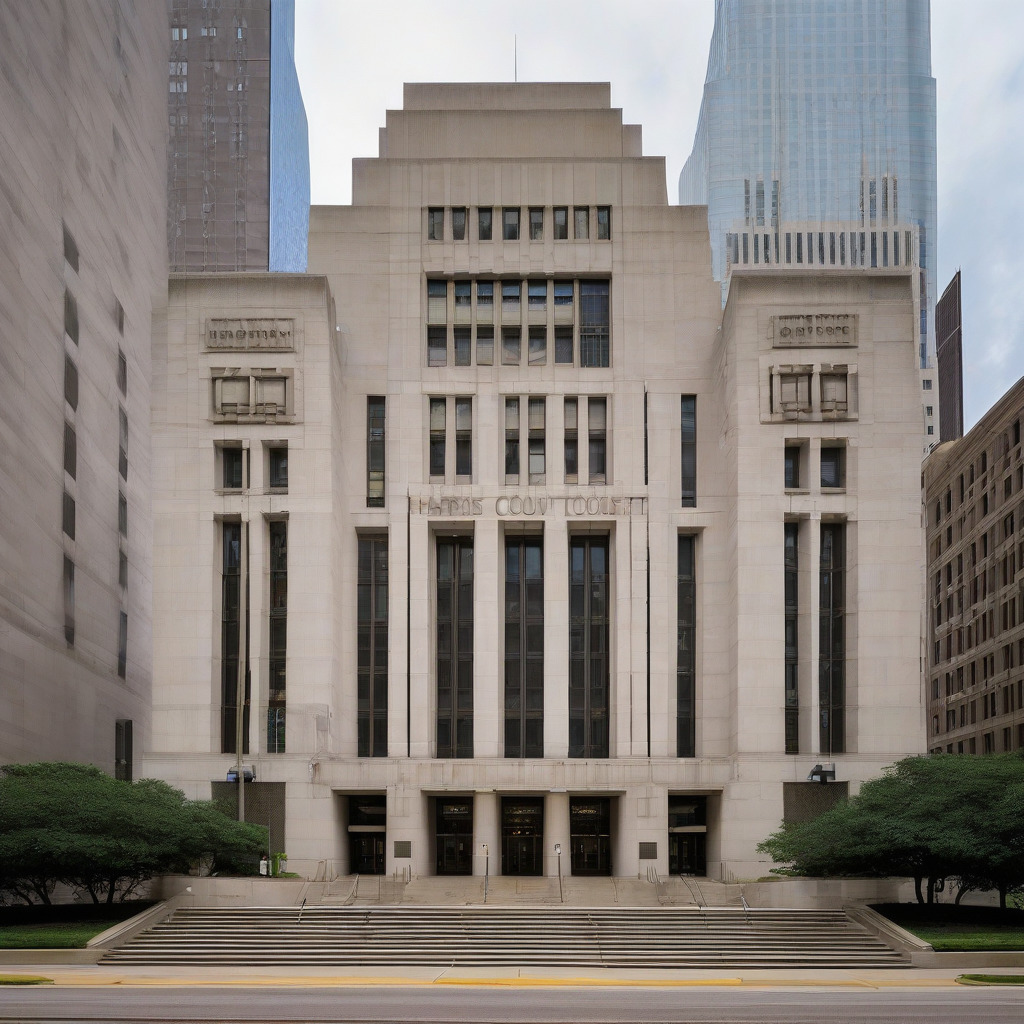
Harris County Probate Courts Harris County Courthouse 201 Caroline Street, Houston, TX Harris County District Clerk: (713) 274-8576 harriscountytx.gov
Probate court costs don’t include attorney fees, which are separate and typically significantly larger than the filing fees themselves.
Houston estate planning is not simply national estate planning in a warm city. The combination of Texas community property rules, a probate process that actually works reasonably well (which changes the will-versus-trust calculation), and a client base with real mineral rights exposure makes local context determinative in ways that out-of-state attorneys and DIY tools miss entirely. A $750 plan done right is worth more than a $12,000 plan done wrong. In Houston, the wrong plan usually comes from someone who didn’t ask about community property—or didn’t know to ask about the royalty check.