How Probate Works in Harris County and How Long It Usually Takes
From 201 Caroline Street to a recorded muniment of title — what executors and heirs actually face on one of Texas's busiest probate dockets


From 201 Caroline Street to a recorded muniment of title — what executors and heirs actually face on one of Texas’s busiest probate dockets
Someone in your family has died in Houston. Maybe it was a parent who owned a paid-off bungalow in the Heights. Maybe it was a spouse who handled all the finances, and now you’re trying to access a joint account at a local credit union that wants to see Letters Testamentary before it’ll release a single dollar. You have a death certificate. You have what you think is the will. You have no idea where to start.
What follows is a Harris County-specific walkthrough. Not a generic Texas probate primer. Not a roundup of things that might vary by jurisdiction. This is the actual process, the actual courthouse, the actual timelines local probate attorneys see on their dockets, and the shortcuts that can save a Houston family months of waiting.
Harris County’s Four Statutory Probate Courts
Most Texas counties send probate matters to a constitutional county court or a district court that handles probate alongside criminal, civil, and family cases. Harris County is different. Because of its filing volume, the Texas Legislature created four dedicated Statutory Probate Courts here, numbered Courts 1 through 4. Each judge is elected specifically to hear probate, guardianship, and mental health matters. These courts hear nothing else — which matters more than it sounds, because you’re not waiting behind a criminal docket.
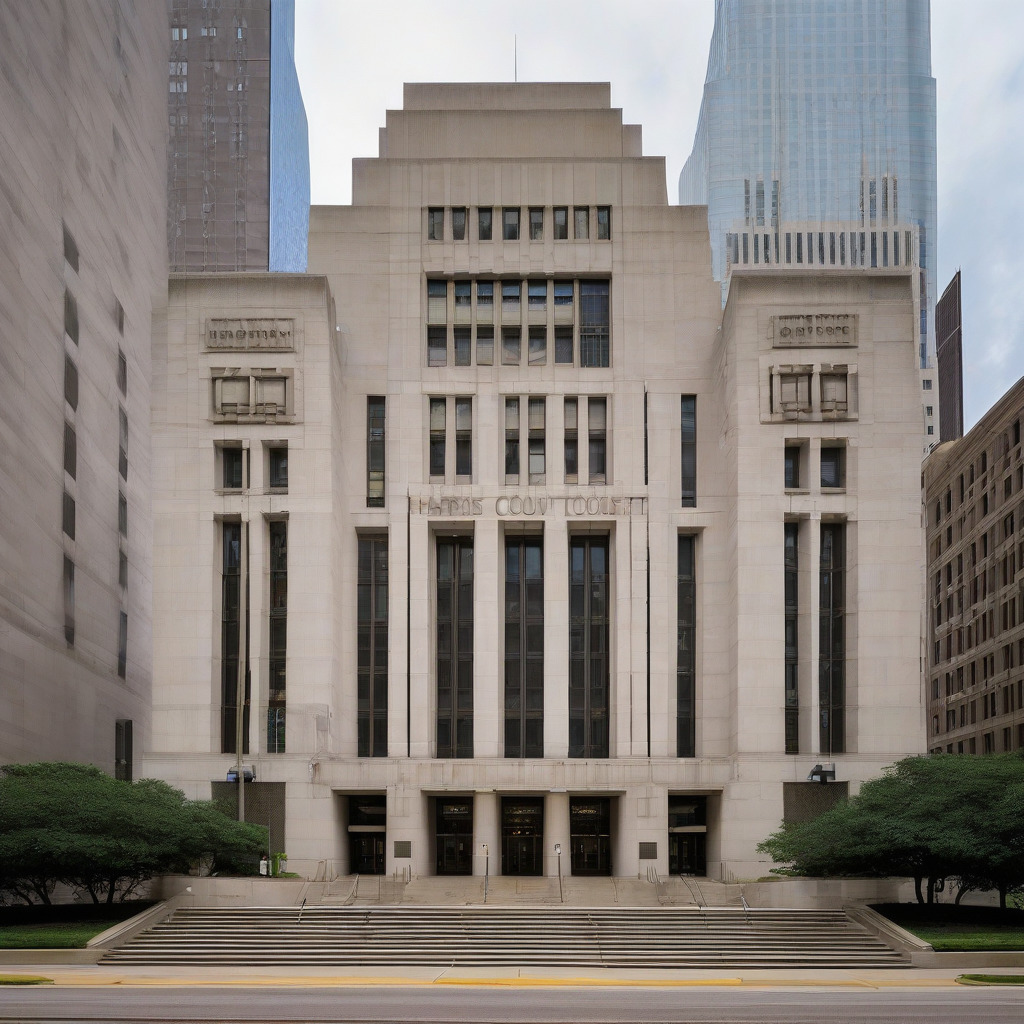
All four are housed at the Harris County Civil Courthouse, 201 Caroline Street, downtown Houston, 77002. The building is accessible via the METRORail Red Line, with stops in the Main Street/Theater District area nearby. When you file a probate application, you don’t choose your court. Cases are assigned by random draw at filing, which means it’s genuinely random whether you land on a faster or slower docket.
The intake counter is run by the Harris County District Clerk’s office, not a separate probate clerk. The District Clerk’s portal at hcdistrictclerk.com lets you look up your assigned case number and court once the application is processed. Judges change with election cycles, so verify current assignments directly with the District Clerk’s website. Each court maintains its own staff, and some procedural hearings in uncontested matters remain available under post-pandemic hybrid policies. Call the specific court’s coordinator before driving downtown for a routine setting. One unnecessary trip to 201 Caroline is one too many.
The Realistic Harris County Timeline, Stage by Stage
Generic Texas probate content will tell you “probate takes four to six months.” That’s technically true the way “traffic on I-10 can be slow” is technically true — accurate but useless. Here’s what the stages actually look like.
The mandatory two-week waiting period. Texas law prohibits any court from admitting a will to probate until at least 14 days after the testator’s death (Tex. Est. Code § 256.003). Hard statutory floor. No exceptions, no expedited waivers. The clock starts on the date of death, not the date you find the will.
Preparing and filing the application. An attorney verifying the will’s execution, drafting the application, and gathering a preliminary asset inventory typically needs one to three weeks. The timeline depends heavily on how organized the family’s paperwork is — and you’d be surprised how often it isn’t. Use that waiting period: order certified copies of the death certificate from the Texas Vital Statistics Unit or through Harris County (you’ll need eight to ten), locate original account statements, and compile a rough list of assets and debts.
Waiting for a first hearing date. This is where Harris County’s volume bites hardest. A first hearing date on an uncontested application typically falls four to ten weeks after filing. Filings toward the end of the year, when families who’ve been delaying since a summer death finally get organized, tend toward the longer end of that range. Some judges run tighter dockets than others, and attorneys who practice regularly in these courts develop a feel for scheduling patterns — one real reason to hire someone with local experience rather than a generalist who files wherever the phone rings.
The hearing itself and Letters Testamentary. For a straightforward, uncontested estate with a properly executed will and independent administration language, the initial hearing is often brief. The judge examines the will, confirms it meets Texas execution requirements, determines the court has jurisdiction, and admits it to probate. Letters Testamentary typically issue the same day or next day. That document is what unlocks accounts, allows real estate transactions, and gives the executor standing with third parties. It’s what everyone has been waiting for.
The executor’s work after letters issue. This is where most timelines fall short of expectations. Even with letters in hand, a typical uncontested Harris County estate takes several additional months to fully close. The executor notifies creditors, pays debts, transfers titled assets, files any required tax returns, and distributes to beneficiaries. Simple estates move faster — one beneficiary, no real estate, liquid assets only. An estate with a Heights bungalow, a brokerage account, two vehicles, and three adult children who must sign closing documents in sequence takes considerably longer. Add disagreements among those three children, and the timeline stretches further still.
For an uncontested estate with a valid will, budget four to twelve months from the date of death to final distribution. Most straightforward Harris County estates close somewhere around the five-to-eight-month mark. Contested wills — challenges to mental capacity or claims of undue influence — become litigation. Plan for two to four years and prepare to spend accordingly.
Real property with a clouded title creates friction. So do business interests that need appraisal or sale. Missing heirs stall distribution indefinitely.
There’s also a four-year deadline most families don’t know about. An application to probate a will must generally be filed within four years of the testator’s death. Miss that window, and the will cannot be admitted to probate in the ordinary sense. Families who sit on a parent’s will because “the estate is simple” or because no one wants to deal with it discover too late that the clock has been running the whole time.
Independent Administration: The Feature That Makes Texas Probate Bearable
Texas independent administration, authorized under Texas Estates Code sections 401.001 through 401.003, is the single most important feature of Texas probate law for Houston families. It’s also the one most out-of-state resources either miss or get wrong.
Once Letters Testamentary issue and the executor files an inventory and appraisement (or an affidavit in lieu of inventory), the executor in an independent administration can sell the family home, close bank accounts, pay debts, and distribute assets to beneficiaries without returning to court for approval of each step. The court drops out of the picture. The executor just acts.
This is not how it works in most states. In many jurisdictions, an executor must petition the court before selling real property, before paying certain creditors, before making any distribution. Each step generates a new filing, a new hearing date, and additional attorney fees. Harris County probate attorneys will tell you directly: Texas independent administration is why a relatively straightforward estate here is manageable in months, while the same estate in many other states drags through years of court appearances. It’s one of the genuinely sensible features of Texas law, and whoever pushed it through the Legislature deserves some credit.
Independent administration gets authorized in two ways. The will itself can authorize it — any attorney-drafted Texas will from the last several decades almost certainly includes this language. If you’re reviewing a will and see phrases like “independent executor” or “no action in the county court shall be required,” that’s the authorization. Alternatively, even if the will is silent on the question, all beneficiaries can unanimously agree in writing to independent administration.
Dependent administration is what happens when a court needs to referee a contested estate, when a beneficiary refuses to consent to independent administration, or when the court has reason to believe close supervision protects someone’s interests — a minor beneficiary without a guardian, for example. Most local attorneys will tell you they rarely see it in uncontested Texas matters. When it does occur, every significant action requires a court order, fees mount fast, and timelines stretch considerably.
Two Shortcuts Worth Knowing
Harris County families with simpler situations should know about two abbreviated procedures that can bypass the full probate process or eliminate the need for an executor entirely. Most people have never heard of either one.
Muniment of Title
Authorized under Texas Estates Code section 257.001, muniment of title applies when a decedent left a valid will, the estate has no unpaid debts other than a mortgage secured by real property, and no formal administration is needed. The prototypical Houston use case: a parent dies owning a home in Acres Homes or Meyerland, leaves it to one or two children, and the family simply wants to transfer the deed. Nothing more.
In a muniment of title proceeding, the court admits the will to probate but appoints no executor. The court’s order itself transfers the title. That order gets recorded with the Harris County Clerk’s office — not the District Clerk, a distinction that trips people up — and the deed records are updated accordingly. No Letters Testamentary are issued. No ongoing administration occurs. Timeline in Harris County typically runs six to ten weeks from filing to the recorded order, subject to the same two-week statutory waiting period and docket scheduling as any other probate matter.
The hard limitation: muniment of title transfers real property and real property alone. It cannot clear a bank account, transfer a vehicle title, or touch personal property. If the estate is a house plus a checking account with $40,000 in it, muniment of title handles the house; the account requires a separate approach. For families where the house is truly the only significant asset, it’s an efficient solution. For families with mixed assets, a full probate may be more practical. An attorney can walk you through that tradeoff in a single meeting.
Small Estate Affidavit
Where there’s no will being probated and the total non-exempt personal property doesn’t exceed $75,000 (verify this threshold against the current Texas Estates Code section 205.001, since it can be adjusted), heirs can collect assets using a small estate affidavit rather than opening a full probate. The affidavit must be signed by all distributees, signed by two disinterested witnesses, and notarized. It’s filed with the Harris County District Clerk, and a court order approving it is required.
On paper, families can execute this themselves. In practice, financial institutions — particularly larger banks and brokerage houses — frequently reject small estate affidavits that weren’t prepared by an attorney. The document must cite the correct statutory authority and correctly identify all heirs. A form from a generic legal website that misses Texas’s specific requirements gets rejected, and you’ve wasted the filing fee and several weeks.
Harris County probate attorneys see this pattern constantly: a family spends weeks in back-and-forth with a bank, then finally calls an attorney. By that point, the delay was entirely avoidable, and the attorney charges the same or less to do it right the first time. If the amount involved is meaningful, pay for attorney preparation. The shortcut that looks free often isn’t.
What Skips Probate Entirely in Texas
A significant portion of what a Houston family owns may not need probate at all.
Life insurance and retirement accounts with named beneficiaries pass directly to that beneficiary by contract. The probate court has no jurisdiction over them. The beneficiary presents a death certificate and a claim form to the insurer or plan administrator. Done.
Bank accounts with a payable-on-death designation and brokerage accounts with a transfer-on-death designation pass directly to the named party. Many Houston families don’t realize their local credit union or bank branch will add a POD designation to a checking account in about fifteen minutes. That single act can prevent months of probate for a surviving spouse or adult child.
Property held in a properly funded revocable living trust passes according to the trust’s terms. No court involvement. The trustee acts.
For Houston married couples, Texas community property with right of survivorship under Texas Estates Code section 112.051 is worth understanding. Spouses can sign a written agreement making their community property pass automatically to the surviving spouse, similar in effect to joint tenancy in other states. But it must be a written, signed agreement — it doesn’t arise automatically from marriage. An estate planning attorney can draft one in a short meeting, and for a couple who own a home and joint savings and want a clean transfer to the survivor, it’s straightforward and worthwhile.
Here’s a Texas-specific error that catches people off guard with some regularity. In most states, holding property in joint names means the survivor automatically inherits. In Texas, joint tenancy with right of survivorship does not arise automatically. A deed must explicitly create it using survivorship language — typically phrases like “as joint tenants with right of survivorship and not as tenants in common.” A deed that simply names two people as grantees creates a tenancy in common in Texas, meaning each co-owner’s share goes through their estate when they die. Surviving spouses who assumed they automatically owned the house discover otherwise, and now they have a probate problem nobody warned them about.
Texas homestead laws also provide significant protections for surviving spouses that matter independently of what the will says. A surviving spouse generally cannot be divested of the right to occupy the homestead during their lifetime, even if the deceased spouse’s will leaves the property to other beneficiaries. Worth raising with a probate attorney whenever the family home is involved.
For vehicles valued under $10,000, a transfer by affidavit of heirship filed with the Texas Department of Motor Vehicles can sometimes avoid a probate proceeding entirely.
What It Costs: Harris County Filing Fees and Attorney Fees
A standard application to probate a will in Harris County runs approximately $350 to $450 in filing fees, depending on the specific application type and any additional filings. Verify the figures against the current Harris County District Clerk fee schedule at hcdistrictclerk.com before relying on them. Muniment of title carries similar filing fees. A small estate affidavit runs somewhat less.
Once Letters Testamentary are issued, certified copies must be presented to every institution the executor deals with — banks, brokerage firms, the title company handling a home sale, the Harris County Appraisal District, vehicle title offices. Certified copies cost a few dollars each through the District Clerk’s office. Order more than you think you’ll need; running short at a critical moment causes delays that cost more than the extra copies would have.
For a straightforward, uncontested Harris County estate — valid will, independent administration authorized, no contested assets — expect to pay a probate attorney somewhere in the $2,500 to $5,000 range in total legal fees. Some attorneys charge a flat fee for routine estate matters; others bill hourly. Contested matters are a different category entirely. A will challenge, a fight over undue influence, a dispute about whether property was separate or community — one local attorney described contested estate litigation to me as “divorce court, but everyone’s angrier and there’s no one left to blame.” That captures it. Fees and timelines in contested matters are genuinely unpredictable, and anyone who quotes you a firm number upfront is guessing.
Harris County Complications Worth Flagging
Several complications arise with notable frequency in Harris County estates that generic Texas probate content tends to overlook. These are exactly the kinds of issues covered in our legal & finance coverage that generic statewide guides rarely address at this level of local specificity.
Mineral interests. Harris County sits at the edge of the energy corridor, and it’s not unusual for a Houston estate to include working interests, royalty interests, or overriding royalties in producing wells. These require title work beyond what standard probate provides. An oil and gas title attorney may need to prepare a probate title opinion acceptable to operators and title examiners. This adds cost and time. Flag any mineral interests at the first attorney meeting — don’t treat them as an afterthought. Discovering a mineral interest six months into administration is the kind of surprise that derails a timeline that was otherwise on track.
Cross-border property. Houston’s large immigrant community means that Harris County probate courts regularly encounter estates where a deceased parent owned property in Mexico, Guatemala, El Salvador, or Honduras. That property falls entirely outside the jurisdiction of the Harris County Statutory Probate Courts. Transferring it requires compliance with the legal system of the country where the property is located, often through a separate proceeding there. A Harris County probate order will not transfer a house in Oaxaca or a plot outside Guatemala City by itself. Families dealing with this need attorneys with specific cross-border experience.
Out-of-state real property. A Houston decedent who owned a vacation condo in Florida or a ranch in Colorado owned real property subject to the laws of those states. The Harris County probate handles Texas assets; a separate ancillary probate must be opened in Florida or Colorado for the property there. Timelines and costs vary significantly by state. Find any out-of-state deeds in a decedent’s papers and raise them with your attorney immediately, because overlooking them creates problems that get harder to unwind as time passes.
Getting the county right. Harris County’s four Statutory Probate Courts have jurisdiction over Harris County estates only. If the decedent lived in Sugar Land, Missouri City, or the unincorporated western reaches near the Fort Bend County line, probate is filed in Fort Bend County, not in one of Harris County’s four courts. If the decedent lived in Katy proper — which straddles Harris, Fort Bend, and Waller counties — the correct jurisdiction depends on the specific address. Filing in the wrong county wastes time and money. It happens more than you’d expect in a metro area with this many county lines running through suburban neighborhoods.
When to Call a Probate Attorney and What to Bring
Most Houston families benefit from at least a consultation with a probate attorney, even for seemingly simple estates. If a will is being challenged, or if you expect one to be, don’t attempt self-representation. Full stop.
Beyond that: missing heirs whose location is unknown, mineral interests of any value, real property in multiple states or countries, a business interest or professional practice, significant debt including federal or state tax obligations, beneficiaries who are minors or have disabilities or their own creditor problems — any of these warrant attorney involvement. So does any situation where family members aren’t in agreement about how to proceed. Bring in an attorney before three months of failed family negotiation, not after.
The State Bar of Texas Probate, Trust and Estate Law Section maintains a referral service. The Houston Bar Association maintains a lawyer referral service with probate attorneys listed by specialty. Both are reasonable places to start if you don’t have a personal recommendation. If you’re looking for help finding qualified legal counsel for related commercial matters, our guide to finding and hiring a Houston business attorney for commercial contracts covers that vetting process in detail.
When you make the first appointment, bring the original will — the executed document with original signatures, not a copy. Bring multiple certified copies of the death certificate (at least four; you’ll need more eventually). Prepare a rough asset inventory: real estate addresses, financial institution names and approximate balances, vehicle make and model and VIN, any business interests. Bring three months of statements on major accounts. If you have it, bring the deed to any real property. Locate any existing trusts, beneficiary designation forms, or TOD/POD documentation you can find.
Arriving with organized paperwork is not a small thing. An attorney billing by the hour who spends the first meeting asking you to locate documents you could have gathered beforehand is billing you to do filing work. Come prepared, and the first meeting becomes a strategy session instead of an intake exercise. That’s a real difference in both cost and momentum.
Harris County probate isn’t fast, and it isn’t free. But for most uncontested Houston estates with a properly executed will and independent administration language, the system is genuinely more manageable than what families face in most other large American cities — and that matters when you’re already dealing with grief and confusion simultaneously. Knowing where to file, what the timeline actually looks like, and which shortcuts apply to your specific situation is the difference between moving through this process with reasonable confidence and spending twelve months wondering why nothing seems to be happening. Start at 201 Caroline Street. But start informed.