Is Owning an Electric Vehicle in Houston Actually Practical in 2026
Three Houston households — a Katy commuter, a Midtown renter, and a Woodlands homeowner — on charging gaps, summer range loss, and the real math on their electricity bills.

Three Houston households — a Katy commuter, a Midtown renter, and a Woodlands homeowner — on charging gaps, summer range loss, and the real math on their electricity bills.
The August Test
By 7 a.m. on a Tuesday in late August, Marcus Delgado has already started his car. Not to drive it. To cool it down.
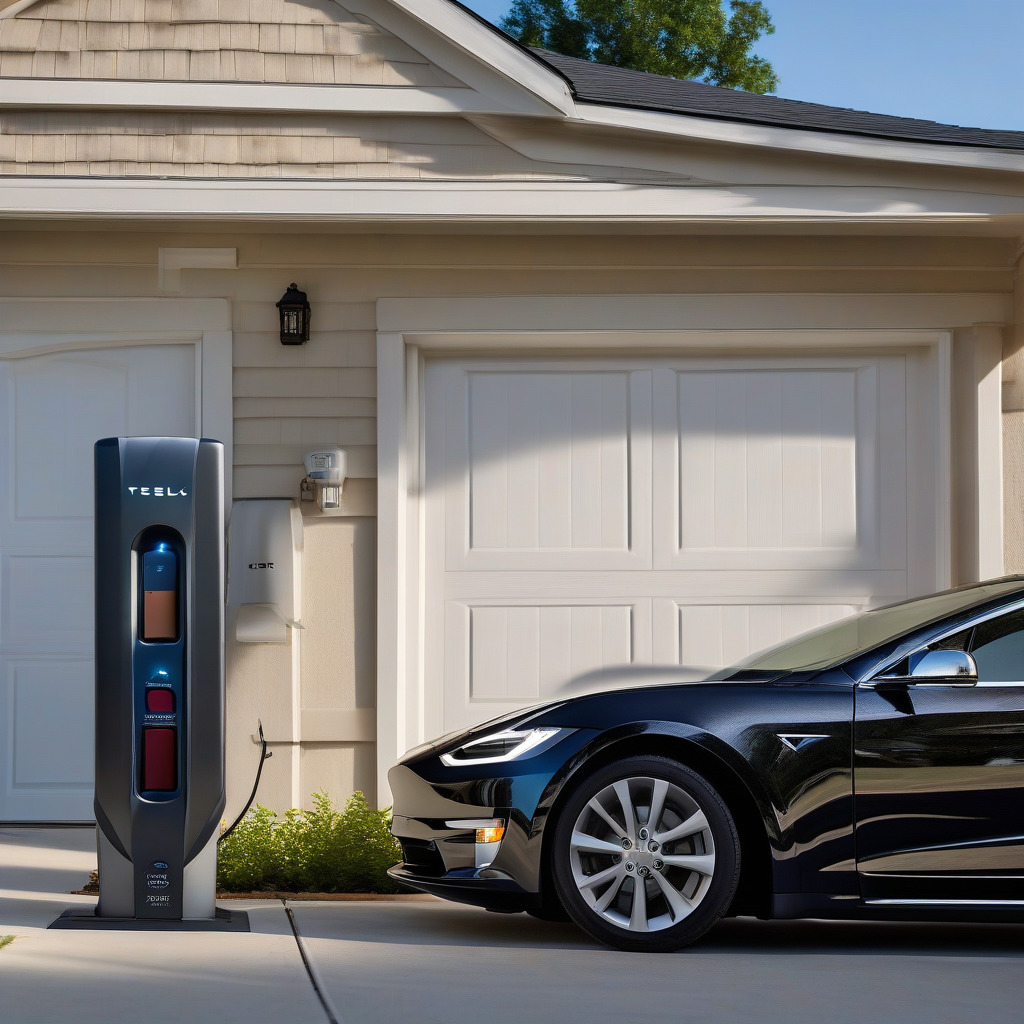
His 2023 Ford F-150 Lightning sits in the garage of his home off Fry Road in Katy, plugged into the Level 2 charger he had installed last spring. The cabin pre-conditioning is running through the app. Outside it’s already 88 degrees, climbing toward a forecast high of 99.
When Delgado walks out at 7:15, the truck’s range estimate reads below its overnight full-charge figure. Before he’s backed out of the driveway, the heat has already taken miles off the board. The AC hasn’t done any real work yet.
He has 32 miles of I-10 to run before he reaches his office near the Galleria.
“In December, I don’t think about range at all,” he says. “In August, I think about it the whole way there.”
This isn’t a story about whether electric vehicles work. They work. It’s about whether they work here — in a city where the thermometer cracks 95 degrees for weeks at a stretch, where a “short commute” by national standards can mean 35 miles each way on a highway that turns into a parking lot, and where roughly half the population lives in apartments with no realistic path to a dedicated charger.
Most national EV coverage is not written for Houston. It’s written for a city with a mild climate, 20-mile commutes, and an apartment stock that was built sometime in the last decade. Houston is none of those things.
Three households agreed to walk through the real numbers. What they describe isn’t a disaster. But it’s not the frictionless future automaker ads suggest, either — and the distance between those two things is where most Houston drivers are actually going to land.
What the Heat Actually Does to Your Range
Lithium-ion battery packs lose efficiency in heat. The battery management system in most EVs responds by pulling energy to cool the cells before they leave operating temperature bands. The pack is doing work before the car moves an inch. Add the cabin cooling load on a Houston summer morning and you’re running two significant draws simultaneously.
Owner data compiled through platforms like Recurrent puts range reduction at 15 to 25 percent in sustained high-heat conditions with AC running. That range is imprecise — it comes from self-reported owner data, not controlled studies — but it matches what Houston-area drivers consistently describe during June through September. Plan accordingly.
Phoenix comes up in this comparison constantly. It’s the wrong comparison. Phoenix is hot and dry. Houston is hot and wet. A car in 95-degree Houston humidity forces the AC system to dehumidify the cabin continuously, not just cool it — heavier compressor load, more range consumed. Several owners interviewed for this piece had previously driven EVs in other Sun Belt cities and found Houston noticeably harder on their estimates. One said: “I thought I knew what hot meant.”
On Delgado’s 32-mile I-10 run, this matters. The stretch from Fry Road to the Galleria rarely moves at the pace Google Maps promises on a weekday morning — stop-and-go through the Grand Parkway interchange, then again through the West Loop. Stop-and-go is actually somewhat friendly to EVs because regenerative braking returns energy. But it extends the time the AC runs, and sitting in stopped traffic with August sun coming through the windshield is its own thermal event. “The car handles it,” Delgado says. “But you learn pretty quickly what the real number is versus what Ford says it is.”
Marcus Delgado: Katy, 60-Mile Daily Round Trip, I-10 West
Delgado bought the Lightning in late 2022, partly because he hauls equipment for a side contracting business and partly because gas for his previous full-size pickup was punishing. He had a 240-volt circuit added to his garage before the truck arrived — $780 installed through an electrician from a neighbor referral in the Cinco Ranch area. He added a ChargePoint Home Flex unit for $629.
He charges on TXU’s Free Nights plan: zero cents per kWh from 9 p.m. to 6 a.m. He plugs in every night around 9:30. His electricity bill has gone up, but his gas bill has gone to zero. He’s net positive by roughly $180 a month in his own accounting — more in winter, less in summer when cooling the house and charging the truck hit the same bill.
He doesn’t let the truck drop below about 20 percent state of charge in summer. He’s stopped at the Katy Mills ChargePoint station twice when he forgot to plug in the night before. One evening last July, a ChargePoint unit he was counting on at a Galleria-area parking garage was offline. He rerouted to a Tesla Supercharger on Westheimer and waited 22 minutes. “That was annoying,” he says. “That was it.”
For Delgado, that story ends with a shrug. For someone with less buffer in their day, it might not.
Priya Nair: Midtown, 8 to 12 Miles Daily, No Dedicated Charging
Priya Nair drives a 2024 Chevrolet Equinox EV and lives in a mid-rise apartment building on the eastern edge of Midtown, near the Alabama corridor. Her building has no EV charging. The parking garage has standard 120-volt outlets that are technically accessible, but management discourages using them for vehicles. She asked about installing a 240-volt outlet in her assigned space. The answer was no.
Her daily driving is short — she works in Greenway Plaza and most days logs under 15 miles. The problem is replenishment. She relies on a cluster of ChargePoint Level 2 stations on Chenevert Street near the Midtown green space, EVgo units near Main Street, and ChargePoint nodes at select Houston First parking garages downtown. She charges at Greenway Plaza’s building garage two or three times a week when spaces are open.
“I plan around the chargers the way people used to plan around parking,” she says. “It’s not a tragedy. But it is work.”
Her biggest practical problem is station reliability. Of the six ChargePoint units she considers her primary network, she estimates one or two are offline or fault-displaying on any given day. She’s submitted more ChargePoint service requests than she can count. On three occasions in the past year, she drove to a station showing available in the app and found it occupied or malfunctioning. That’s not bad luck. That’s a structural reliability problem the EV industry has not seriously addressed, and ChargePoint in particular keeps not solving it.
Her monthly fuel costs are low — primarily commercial Level 2 rates at Houston ChargePoint locations. The savings over her previous gas car are real. But so is the planning overhead. She’s thought about what would happen if her company moved buildings and there was no charging nearby. “I think I’d manage,” she says. “But it would be a lot harder.” She’s probably right on both counts, and the fact that she’s already modeled that scenario tells you something about what public-only charging actually costs in mental energy.
David and Camille Okonkwo: The Woodlands, 45-Mile Daily Round Trip, I-45 South
The Okonkwos are the scenario that makes Houston EV ownership look easy. They own a home near Kuykendahl Road in The Woodlands. David commutes to downtown in a 2024 Tesla Model Y Long Range. There’s a Tesla Wall Connector in the garage. The Woodlands Mall Supercharger station — one of the more reliable in the metro — is a short drive from the house.
David’s I-45 commute is long but consistent. He charges at home on TXU’s free nights rate, leaves with a full battery every morning, and says he’s genuinely indifferent to range on his regular route. “The only time I really think about it is in August when the estimate drops,” he says. “And even then I’ve got enough buffer.”
One thing worth knowing for I-45 drivers: public non-Tesla charging on the corridor south of The Woodlands toward Houston is thinner than it looks on a map. Several stations near the Sam Houston Tollway are Level 2 only, with waits during peak periods. The map and the experience are two different things.
Camille drives a hybrid for shorter errands and school runs. “It takes the pressure off,” she says. “If the Tesla’s at 18 percent, I just grab the other one.” That backup vehicle shows up in nearly every low-friction EV household story in the Houston suburbs. It’s worth naming plainly, because households that look effortless on paper almost always have that safety valve. Not everyone does.
Where the Charging Map Works and Where It Stops
Harris County’s public charging network in 2026 is not evenly distributed. The gaps track almost precisely with income geography and development density. That’s not an accident.
Reliable infrastructure clusters in the high-income commercial corridor: the Galleria area, Greenway Plaza, Texas Medical Center, and downtown Houston First garages. Katy Mills Mall has a solid ChargePoint cluster. Pull up PlugShare and look east, and the picture changes fast.
Coverage in Pasadena, Deer Park, and Baytown drops sharply. Pasadena has a handful of Level 2 stations and limited reliable DC fast charging. Deer Park has less. Baytown is effectively the eastern edge of accessible fast charging for most I-10 corridor drivers. The southern Beltway 8 segment between 288 and I-45 South is thin. Pearland — growing fast, building everywhere — sits in a coverage gap on the 288 corridor that PlugShare community notes flag consistently. Cypress, on the 290 corridor northwest of the Beltway, has some retail Level 2 chargers but nothing approaching the DC fast-charging presence a community that size warrants.
TxDOT’s NEVI federal funding has designated I-10, I-45, and I-69 as priority charging corridors in our automotive coverage. That funding will eventually produce real stations. Site selection and construction timelines for gap corridors run into 2026 and 2027. “Designated” and “open” are separated by federal permitting, utility interconnection queues, and construction time. Residents in eastern Harris County should not count on this being solved in the near term.
The ChargePoint reliability problem deserves more attention than it gets. ChargePoint is the dominant non-Tesla public network in Houston, and complaints about hardware faults, payment failures, and communication errors are consistent across owner accounts. For someone like Priya Nair who depends entirely on public charging, even a modest downtime rate across a small cluster of stations means the odds of at least one charger being unavailable on any given visit are uncomfortably high. That’s not a minor inconvenience. It’s the difference between a workable situation and one that isn’t.
The Apartment Problem
Houston is a majority-renter city in its core neighborhoods. In Midtown and the inner loop, something like 55 percent of residents rent. Most live in buildings with either no parking or garages not wired for EV charging.
Texas passed a right-to-charge statute that prevents landlords from banning EV charging outright, but it’s a weaker law than California’s or Colorado’s versions. Texas landlords can require tenants to pay the full installation cost, can impose technical requirements that price out most renters, and face limited enforcement if they simply drag their feet. Many Houston apartment managers treat 240-volt circuit requests as commercial modification requests and run them through an approval process that outlasts most leases. Technically legal. Practically discouraging.
HOA resistance adds a layer even for suburban homeowners. Several HOAs in Cinco Ranch and Bridgeland have required exterior charging equipment to be visually screened or mounted inside the garage only. That’s an understandable aesthetic position. It also adds cost and complexity for owners who thought they’d cleared the hardest hurdles.
For Midtown renters without workplace charging, the math works only if daily mileage is genuinely low — under 30 miles — and they’re willing to treat public charging as active planning rather than passive refueling. Nair makes it work. She’s also honest that it requires more planning than owning a gas car. That’s not an argument against it. It is an accurate description of the trade.
What It Does to Your TXU Bill
Standard TXU variable-rate plans in summer 2025 ran roughly $0.13 to $0.25 per kWh, with the higher end applying during peak summer months. At $0.18 per kWh — a reasonable middle figure for a summer month — filling a 75 kWh battery from near-empty to full costs around $13.50. Still cheaper than a tank of gas in most full-size trucks, but not free.
TXU’s Free Nights plan changes the math. From 9 p.m. to 6 a.m., the rate is zero. The plan carries slightly higher daytime rates that offset some savings for households with heavy daytime usage, but for an EV owner charging exclusively overnight, those kilowatt-hours cost nothing. A Level 2 charger at 7.2 kW fills a depleted 75 kWh pack in about ten hours. Plug in at 9:30 p.m. starting from 20 percent state of charge and you’re close to full well before 6 a.m. It works for commuter use if you actually plug in nightly. Let it slip to every few days and the math gets messier.
Hardware costs are a real upfront number. Houston electricians are currently quoting $500 to $1,200 for the 240-volt circuit installation, depending on panel capacity, wire run length, and permit costs. The charger unit — ChargePoint Home Flex, JuiceBox 40, or similar — runs $400 to $800. A Katy or Woodlands homeowner is looking at $900 to $2,000 all-in before they’ve turned the charger on.
The IRA federal tax credit — up to $7,500 for new EVs meeting assembly and price requirements, subject to income caps — is worth confirming with a tax preparer before you buy. Qualifying vehicle lists have shifted repeatedly. Texas has no state EV rebate, no charging incentive, no purchase tax exemption. The federal credit is the only subsidy available to Texas buyers, and it’s not guaranteed. Run your specific numbers with someone who knows your tax situation before you count it.
ERCOT and the Summer Grid
Houston’s EV fleet is still small enough as a share of total residential load that it’s not ERCOT’s primary stress variable. But it’s becoming a timing variable: charging load that concentrates in the 4 p.m. to 9 p.m. window compounds summer peak demand at exactly the wrong hours. The Free Nights structure exists partly to push that load off-peak. It works if people actually use it.
Anyone who lived through Winter Storm Uri or watched ERCOT’s emergency conservation appeals during summer heat events knows this grid has a history. An EV plugged in at 6 p.m. during a stress event is a large load — around 7 kilowatts, roughly the draw of five window AC units running simultaneously. Setting the charger to start at 9 p.m. solves it. But it requires awareness that most national EV ownership advice skips entirely. Houston drivers are operating on a grid with a specific, documented vulnerability. Worth knowing.
Flood Season and Standing Water
Houston’s flood geography raises a question almost no national EV coverage bothers with: what do you do with an EV on a street taking on water?
Modern EV battery packs carry IP67 or IP68 water-resistance ratings, meaning they’re built to handle submersion at modest depth for limited time. Multiple Houston EV owners interviewed for this piece said they weren’t sure what that actually meant in practice — at what depth, for how long, with what consequences. That uncertainty is itself a problem, and it’s not getting resolved at the point of sale.
The underpasses that flood in Houston are well-known to anyone who’s been here through a few tropical systems: Shepherd and Durham near I-10, the I-10 underpasses near downtown, and stretches of the 610 loop that collect water faster than the drainage can handle. The practical guidance from manufacturers aligns with what you’d do in any car — don’t drive into water of unknown depth — but the localized version of that conversation matters. A Midtown renter with a street-parked EV ahead of a tropical system has real questions that connect directly to preparing your car for hurricane season in Houston. Dealerships aren’t having that conversation. They should be.
Hurricane Evacuation
The worst-case scenario for a Katy EV owner is a Zone C mandatory evacuation ahead of a major storm making landfall on the upper Texas coast. Mass evacuation means slow-moving traffic for hours with the AC running, burning range without covering miles. Anyone who was on I-10 during Rita in 2005 doesn’t need this explained.
A Lightning or Model Y leaving with a full charge at the start of a mandatory evacuation order will see real-world range under stop-and-go summer heat conditions meaningfully below EPA ratings. The Buc-ee’s in Katy has EV charging and is a known waypoint. Beyond that, drivers need to know in advance where the chargers are on their evacuation route, because that information isn’t widely circulated and the margin for error during a mass evacuation is thin.
This is solvable. Leave with a full battery. Leave early. Map the chargers on your route before you need them. But it requires preparation that gas-car owners simply don’t have to do, and dealers should be walking Houston buyers through it. Most aren’t.
A Practical Scorecard by Household Type
Here’s a direct answer to who the math actually works for in Houston in 2026.
It works well for homeowners in Katy, Sugar Land, The Woodlands, and comparable suburbs who have a garage, a compatible electrical panel, can install a Level 2 charger, and commute on I-10, I-45, or I-69 within 40 miles each way. Charging overnight on a free nights plan produces real monthly savings. The summer range reduction is manageable. These households should be looking seriously at an EV now.
It works with friction for inner-loop homeowners and renters who have access to workplace charging or live within reliable range of public stations and drive under 30 miles daily. The savings are real. So is the planning overhead. Public charging infrastructure in Midtown and the inner loop is functional but unreliable enough that you will have bad days. Go in knowing that, not hoping it won’t apply to you.
It’s premature for residents in eastern Harris County, far Cypress, outer Pearland, and other communities beyond the DC fast-charging network. NEVI funding will eventually improve this. Site selection and construction timelines run into 2026 and 2027. The eastern corridor problem is not solved this year, and anyone who buys assuming it will be is making a bet on a federal construction timeline. Wait.
Marcus Delgado is saving money, has figured out the August math, and says flatly he’s not going back to gas. Priya Nair makes it work through planning and a tolerance for occasional inconvenience that not everyone has. The Okonkwos barely think about it. All three are living the Houston version of this transition — uneven, dependent on where you live and how far you drive, and considerably more complicated than anything you’ll see in a commercial.
That’s the honest picture. It’s enough to make a real decision.