Which Houston Restaurant Patios Are Actually Usable in Summer and Which Are Theater
Every roundup names the same spots, photographed in October. Here are the specs that actually matter in June.

Every roundup names the same spots, photographed in October. Here are the specs that actually matter in June.
It’s June in Houston. The temperature hit 94°F by noon and the heat index on exposed concrete is brushing 108°F. Somewhere, a well-meaning food editor has just published a slideshow called “Best Patios in Houston for Summer Dining.” Every photograph was taken in November.
This isn’t a minor editorial problem. It’s a practical one. Houstonians who follow those lists into a west-facing parking lot at 1pm in July aren’t having a dining experience—they’re enduring one. The difference between a patio that works in summer and one that’s been photographed, marketed, and quietly abandoned by staff and guests alike by mid-afternoon comes down to a handful of physical specifications that no roundup bothers to report.
Shade structure type matters. So does misting system status, solar orientation, flooring material, and ceiling height. This piece reports those specs. Think of it as a patio assessment written the way a building engineer would approach it, not a lifestyle photographer.
The Five Variables That Actually Determine Comfort
Before the verdicts, the framework—stated plainly enough that you can apply it to any restaurant not covered here.
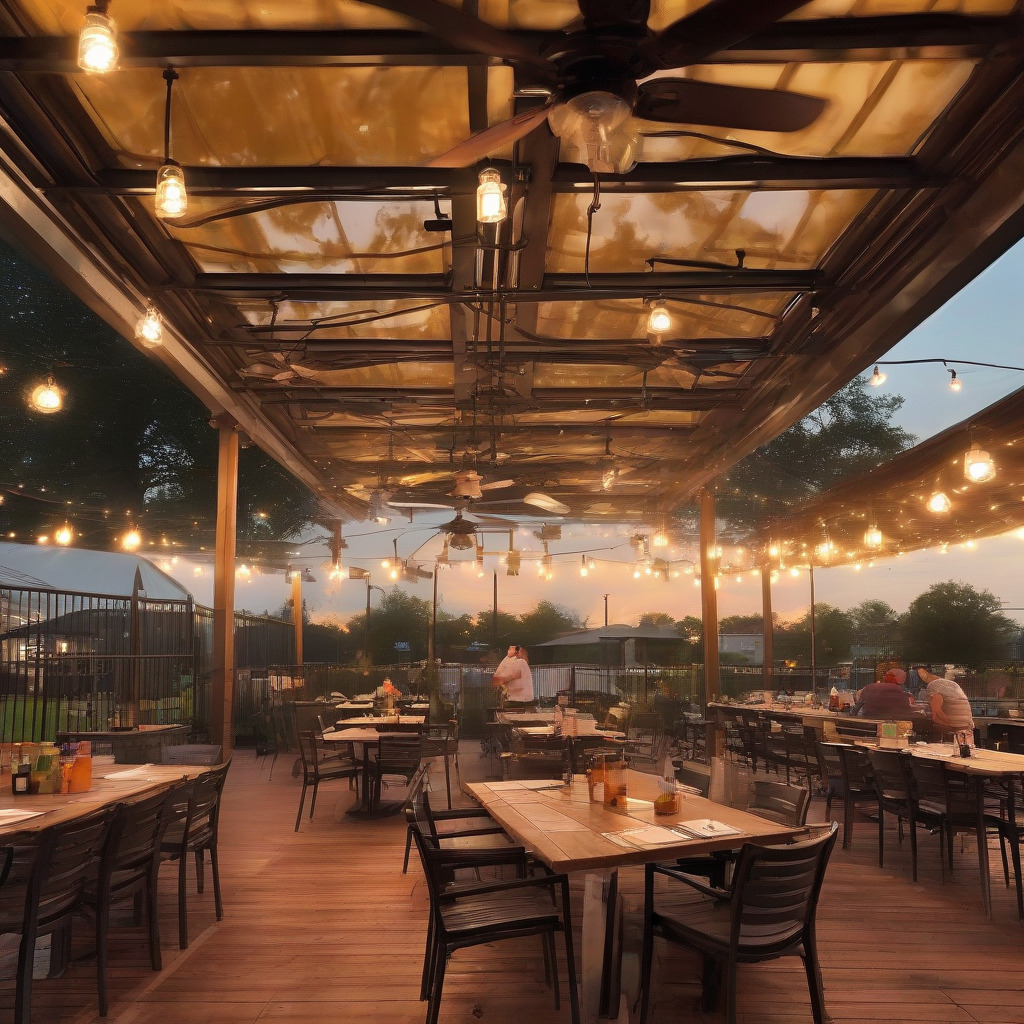
Not all shade is equal, and the gap between tiers is enormous. At the top: a permanent roof with solid decking, ceiling fans, and enough height for convective airflow. Below that, an engineered retractable system—not the hand-cranked canvas awning that’s been jammed since 2021, but a motorized pergola that actually deploys. Below that: established tree canopy with verified density. Axelrad’s live oaks are the Houston benchmark. At the bottom: umbrellas.
Umbrellas are autumn furniture. On exposed concrete at 2pm, a patio umbrella blocks sunlight roughly the way a paper plate blocks rain.
When a restaurant lists “misting system” as a feature, that tells you nothing functional. The questions that matter: Does it run during service? Is it pressure-fed or gravity-fed? Is someone actually monitoring the timer? Several Houston patios have misting systems that were operational in 2019, haven’t been serviced since, and now hang from pergola beams like decorative tubing. When you call ahead, don’t ask whether they have a misting system. Ask whether the misters are running right now during lunch service.
Houston in June sees the sun arc from east-northeast to west-northwest, reaching its highest point slightly south of directly overhead. A west-facing patio receives full direct sun from roughly 2pm until sunset—a five-to-six hour window with no escape. A south-facing patio with a solid roof is a fundamentally different environment: shaded from above, catching reflected rather than direct light, positioned to catch Houston’s prevailing summer breeze from the southeast. East-facing patios win in the morning and lose in the afternoon. North-facing patios are the underrated summer option—minimal direct exposure at any point in the day.
You can check any patio’s orientation in sixty seconds on Google Maps satellite view. Identify which direction the open face looks and apply the logic above. If it faces west, don’t book it before 8pm in summer.
Concrete and asphalt absorb radiant heat aggressively and release it slowly. A concrete patio at 9pm is still radiating heat from 3pm. Wood decking, decomposed granite, gravel, and grass all run cooler. A covered patio on concrete will still be meaningfully warmer at ground level than one on wood or pervious pavers—the floor is re-heating the air around your legs.
An eight-foot covered ceiling with no fans is a convection trap. A fourteen-foot ceiling with two running fans creates actual air movement. The higher the ceiling, the more volume hot air has to rise into; the more fans, the more it gets displaced. This is why Axelrad’s tree canopy—which in its densest sections sits well above the surrounding rooflines—functions so differently from a low pergola with a corrugated metal roof.
When Houston Patios Are Tolerable: An Honest Time Map
NWS Houston climate normals for June through August put the average high at 93–97°F, with heat index values on sunny days hitting 105–110°F on exposed surfaces. Morning humidity typically runs 70–80%.
The real breakfast and early brunch window runs roughly 7am to 9:30am. Radiant heat hasn’t yet become dominant, temperatures sit in the low-to-mid 80s, and east-facing patios get pleasant morning light instead of punishing afternoon exposure. By 10am on a sunny day, exposed surfaces are already functionally uncomfortable. By 10:30am, it’s over for anything open or partially shaded.
From 11am to roughly 4pm, heat index on exposed concrete regularly hits 105–110°F. A patio without a permanent roof and active misting isn’t a dining environment during these hours. It’s a liability. Even partially shaded umbrella patios become miserable by 11:30am because the surrounding concrete and masonry radiate stored heat from every direction at once.
Evening seating becomes functional again around 7:30pm. This is Houston’s real patio dining window in summer—and honestly, it’s the better experience anyway. By 7:30–8pm, the sun angle is low enough that even partially shaded west-facing patios start to recover. A fully covered patio with misters and fans at 8pm on a calm night is genuinely pleasant. Radiant heat from surfaces begins to dissipate. There’s occasionally a southeast breeze. The best Houston summer patio experience is a late dinner reservation, not a weekend brunch. Most food media has this exactly backwards.
Houston also gets afternoon convective thunderstorms roughly every three to four days in summer. Some covered patios with good drainage can push through a brief storm that passes in fifteen minutes. Most can’t. When booking summer dinner on a patio, ask the host whether service continues during rain or closes at the first drop. The answer tells you something real about the infrastructure—and about how seriously the restaurant thinks about outdoor service in the first place.
Tiered Verdicts: Which Patios Pass the Engineer Test
Infrastructure details below reflect the best currently available reporting. Call ahead before any summer visit to confirm misting system status, seating availability, and hours.
Tier 1: Usable All Summer
Axelrad Beer Garden (Eastwood/Midtown fringe) is the strongest case study in natural-canopy infrastructure in Houston—and it isn’t close. The live oak coverage is genuine: not decorative trees providing partial shade, but established canopy that cuts direct sun substantially across most of the seating area. Natural convective airflow in the canopy behaves differently than anything a low pergola can offer. The patio catches southeast breezes. Most sections sit on decomposed granite and gravel rather than concrete, which meaningfully reduces radiated ground heat. Misting systems are present; confirm operational status when you call. Drinks run $6–$10. This is what summer outdoor dining infrastructure in Houston should look like.
Caracol (Upper Kirby) has a covered front section that ranks among Houston’s better-engineered restaurant patios. Permanent covered area, ceiling fans during service. Confirm when booking which section you’ll be seated in—this matters more than it should. The open terrace sections adjacent are a different environment entirely. Worth a call before a July dinner; ask specifically for the covered section and ask whether fans are running.
Coltivare (Heights) is primarily a morning-window candidate. The garden patio’s combination of plantings and partial shade makes it one of the Heights’ better options for early summer brunch, and it fits naturally in our food & hospitality coverage of restaurants that actually perform in difficult conditions. It’s not a fully covered structure, which limits its evening performance—but for a 9am Saturday breakfast, the shade and orientation make it a genuine option. One of the more pleasant ways to spend a summer morning in this city.
Tier 2: Usable With Conditions
Wild Oats (Heights) works as an early-morning brunch stop. Partial shade and an early-service orientation make it functional before 10am. After that, the same heat math applies here as everywhere else. This is a 9am option, not a 10:30am option.
Xochi (Downtown) has a street-facing patio with a covered structure and fans, and the structure is real. The Downtown urban heat island adds ambient temperature to every outdoor environment in the area—you’re not imagining it, it is genuinely hotter down there than in the Heights. Dinner service works here. Midday doesn’t.
The Rustic (Upper Kirby) belongs in this tier as a cautionary entry rather than a recommendation. Large seating area, predominantly west-facing, largely unshaded. The open-air festival aesthetic that makes it pleasant in October becomes a punishing slog in July. The patio photographs beautifully at golden hour—which is also when the western exposure is at its worst. If you’re going to The Rustic in July, eat inside.
Tier 3: Theater
The Washington Avenue corridor’s large-format open-lot venues—built for spring and fall capacity—belong here in summer. No permanent roof, no verified misting, predominantly west-facing or fully exposed. They’re fine restaurants. Eat inside.
The Brunch Reckoning
The Houston brunch patio scene, as celebrated in most food media, is a fall-through-spring phenomenon. This isn’t cynical. It’s meteorological. The weekend morning patio experience filling Instagram happened in March.
In July, a 10:30am seating on an east-facing, partially shaded patio means arriving when the heat index is already past 95°F on exposed surfaces and leaving when it’s approaching 105°F. On concrete with umbrellas, the experience becomes uncomfortable within twenty minutes and genuinely unpleasant within forty-five. The first mimosa of brunch shouldn’t require heat acclimatization.
The real summer brunch window is before 9:30am—ideally close to opening—on east or north-facing patios with real shade. Coltivare’s garden patio is the Heights’ strongest early-morning option. Wild Oats works in the early window too, though you need to be seated and ordering before 9am to get ahead of the heat curve.
For the patios routinely recommended for Houston brunch but worth skipping outdoors once June arrives: any open-lot patio on Westheimer in the Montrose commercial strip, any west-facing sidewalk patio in Midtown, the large open patios on Washington Avenue. Eat inside. Book the same patio in November. For a broader look at how Houston’s independent operators are managing the season, how Houston food trucks are surviving the summer heat in 2026 covers the outdoor-service calculus from a different angle.
Neighborhood Infrastructure, Honestly Assessed
The Heights and 19th Street corridor is Houston’s most functional summer outdoor dining neighborhood, primarily because of building stock. Older commercial buildings along White Oak and 11th Street have deep overhangs and covered walkways that provide structural shade without expensive engineered systems. Heights Boulevard runs north-south, meaning east and west-facing patios along perpendicular streets receive morning and afternoon shade respectively. Check individual restaurants; don’t assume neighborhood uniformity.
Montrose has density of options alongside heavily mixed infrastructure. A significant share of Montrose patio dining is retrofitted parking lot—concrete surface, umbrella shade, no misting. The neighborhood’s best patios are individual exceptions. “Montrose patio” as a category means nothing in summer.
EaDo has seen newer development with more intentional hardscape design in some cases, but also more exposed concrete per square foot than most Houston dining neighborhoods. South and southeast-facing patios here catch the prevailing breeze. North-facing patios with shade are the best EaDo summer option. Assess individually.
Midtown suffers from a pronounced urban heat island effect. Impervious surface density drives ambient temperatures higher than surrounding neighborhoods on hot afternoons—walk from Axelrad to the nearest exposed parking-lot patio and you’ll feel the difference within ninety seconds. Axelrad’s tree canopy and pervious ground cover partially counteract this effect. Everything else in Midtown should be evaluated carefully.
The Washington Avenue corridor is mostly theater in summer. Full stop. The development model favored large-format entertainment venues with expansive outdoor spaces designed for spring and fall. There are covered exceptions, but they’re exceptions to a pattern that’s genuinely bad for summer outdoor dining.
Upper Kirby is mixed. Caracol is the area’s single best-performing summer patio based on available reporting. Mid-rise development creates some late-afternoon shade from adjacent buildings, which marginally helps west-facing patios—but “helped by building shadow” is a weak substitution for a permanent roof.
What Restaurants Won’t Advertise: Last Seating Times
Several Houston restaurants quietly stop seating new outdoor guests at some point in the afternoon during summer. No announcement, nothing in the reservation system. This is honest management—seating a new guest at a concrete table at 2pm in July is not hospitality.
Call ahead and ask directly: Do you seat guests outdoors in July, and is there a time when you stop outdoor seating in the afternoon? How quickly and specifically the staff can answer tells you something real. A restaurant that fumbles the question is making the decision ad hoc—which means your experience depends on who’s working that shift.
What to Check Before You Book
Shade structure. Permanent solid roof with fans and misters: usable all summer. Motorized pergola with confirmed deployment: usable if actually running. Dense verified tree canopy at significant height: usable with appropriate conditions. Umbrellas only: treat as no functional shade after 9:30am. If you can see sky through the top, it’s not summer shade.
Orientation. Google Maps satellite view, sixty seconds. Find the patio, identify which direction the open face points. West or southwest with no permanent roof: don’t book it between noon and 8pm.
Two questions for the phone call. Are the misters running during lunch and dinner service right now? Is there a time in the afternoon when you stop seating guests outside? Both have yes-or-no answers. A restaurant that can’t answer the first question is telling you the misters aren’t being actively managed.
Flooring. Ask whether the patio is on concrete or has wood decking, gravel, or grass. If the host doesn’t know, find a ground-level photo. Concrete patios radiate significantly more heat at foot and leg level than wood or gravel.
Ceiling height. Under a permanent roof, ask how tall the ceiling is or look for interior photos. Below ten feet with no fans is a heat trap. Fourteen feet with two fans is functional.
Rain policy. Ask whether patio service continues through a brief summer shower. A patio with a solid roof, proper drainage, and walls on the windward side can push through a fifteen-minute storm. An open umbrella patio on concrete that puddles cannot. Knowing this in advance tells you whether an early-evening storm ends your reservation or just provides atmosphere.
Two windows exist for comfortable outdoor dining in June in Houston. One is early enough that most people aren’t awake yet. The dinner window is real, but only with genuine infrastructure—a permanent roof, active misting, ceiling fans, an orientation that isn’t funneling afternoon sun into your face. Maybe a dozen Houston patios clear that bar. The rest were photographed in October and described as summer options ever since.
Book Axelrad for a summer evening. Coltivare’s garden before 9:30am on a Saturday. Caracol’s covered section for late dinner—call first, confirm the roof and the fans, and go.