How to Find Good Venezuelan and Colombian Food in Houston Right Now
The stretch of southwest Houston along Hillcroft Avenue between Westheimer and Harwin Drive holds the city's most concentrated cluster of Venezuelan and Colombian restaurants. Almost no one outside…

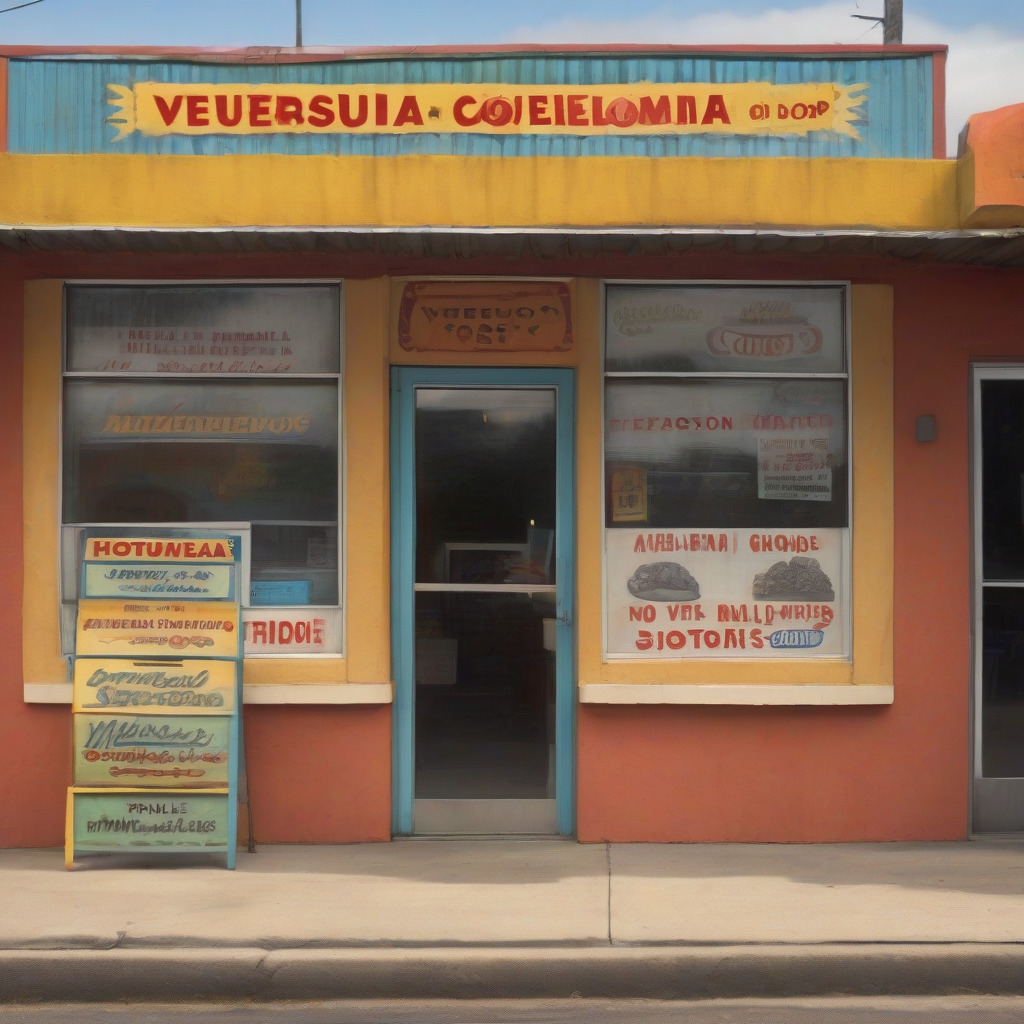
The stretch of southwest Houston along Hillcroft Avenue between Westheimer and Harwin Drive holds the city’s most concentrated cluster of Venezuelan and Colombian restaurants. Almost no one outside the neighborhood is covering it.
Why This Corridor, Why Now
If you follow Houston’s food media, you know the Heights, Montrose, East End, and Midtown in granular detail. You know which chef opened where and what the bar program costs. What you probably don’t know—unless you live in zip codes 77036, 77057, or 77074—is that southwest Houston has quietly developed one of the most distinct immigrant restaurant corridors in the city. Venezuelan and Colombian kitchens have opened here, survived, and in some cases thrived with essentially zero coverage from anyone with a byline. That’s a real gap.
The geographic frame matters. Hillcroft Avenue runs south from Westheimer Road, through Gulfton Street, past the Fondren intersection and toward Harwin Drive. That roughly two-mile spine, and the side streets branching into Gulfton and Westwood, is where the concentration lives. It’s not a food hall or a destination district. It’s a working immigrant corridor where the restaurants exist to feed a community, which is exactly what makes the food worth knowing about.
Gulfton has been Houston’s most densely settled immigrant neighborhood for four decades. Latin American, Middle Eastern, and Southeast Asian communities arrived in waves starting in the 1980s. The affordable apartment stock and strip-mall commercial spaces absorbed each successive group. The Colombian community established a foothold in the late 2000s and 2010s, opening restaurants, bakeries, and small import shops that created the infrastructure a newer population could build on.
The newer population is Venezuelan. The Kinder Institute for Urban Research at Rice University has tracked Harris County’s Venezuelan-born population closely since the post-2015 economic crisis that triggered mass emigration across South America. That population roughly tripled between 2015 and 2023, per Kinder Institute estimates. Houston now ranks among the top five U.S. metro areas for Venezuelan arrivals—behind Miami, ahead of most other Texas cities. The TPS designation extended to Venezuelans beginning in 2021 stabilized the legal standing of a significant portion of that population. The practical effect on this corridor has been visible: restaurant after restaurant with hand-lettered arepa menus opening in storefronts that previously held tax preparers or quinceañera shops. Walk Hillcroft on a Saturday morning and you can feel the thing that’s happening here.
This guide is based on on-the-ground visits conducted across multiple Saturdays and weekday lunch hours in 2026, conversations with owners and cooks, and a review of Harris County Public Health inspection records pulled directly from the county database. Every restaurant named here was verified open and operating at time of publication.
How to Get Here and What to Expect When You Arrive
Be clear-eyed about this: the Hillcroft corridor is not walkable in any meaningful Houston sense, especially not between June and September. The restaurants scatter across strip-mall bays, small freestanding buildings, and the occasional converted house, separated by surface parking lots and four-lane roads with inconsistent shade. You will drive here.
METRO Route 65 runs along Hillcroft. Technically an option—frequency runs about 20 minutes on weekdays and stretches past 30 on Sunday, which is when many of these restaurants do their strongest brunch and lunch business. Plan around the schedule and expect a wait.
For drivers, parking splits into two distinct experiences. Weekday lunch, generally 11 a.m. to 1:30 p.m., is manageable. Weekend midday—Saturday and Sunday from roughly 11 a.m. to 2 p.m.—is genuinely tight. The strip-mall lots shared among three or four adjacent restaurants fill fast. Cars double-park at the edges. The lots at Hillcroft/Gulfton and Hillcroft/Beechnut require patience in particular. Arriving before 11 a.m. or after 2 p.m. on weekends solves the problem almost entirely, and the food at several spots is good enough to justify setting an alarm.
Three sub-clusters organize the corridor. The northern zone around Hillcroft at Westheimer anchors the longer-established Colombian restaurants—operations that have been running 10 to 15 years in denser commercial strip settings where orientation is easier. Move south into the Gulfton cross-street area and you hit the newest Venezuelan concentrations: smaller storefronts, hand-painted signage, Spanish-only menus more common, kitchens more likely to be first-time restaurant operations rather than experienced operators scaling up. The Beechnut-toward-Fondren cluster is shorter and slightly more spread out, blending Venezuelan and Colombian spots with Peruvian and Ecuadorian neighbors. Worth a secondary stop on the same trip; not a standalone destination.
Venezuelan Versus Colombian on the Menu
What most food roundups treat as interchangeable Latin American categories are actually quite distinct. The differences matter for deciding where to eat and what to order—and conflating them is a reliable way to end up confused about why your food tasted “wrong.”
The Venezuelan arepa is almost universally misunderstood outside the community. What most people have eaten at festival booths or trendy fast-casual counters is a pale approximation. A proper arepa is made from masa harina (precooked white cornmeal, typically Harina P.A.N.), hand-formed thick and round, cooked on a budare (a flat iron griddle) until a crust forms. You split it while hot and fill it immediately. Reina pepiada—shredded chicken and avocado bound with mayonnaise—is the benchmark order everywhere. Pelúa (shredded beef and yellow cheese) and dominó (black beans and white cheese) tell you whether the kitchen is making caraotas from scratch or opening a can. Ask. Good operations make their black beans daily with onion, garlic, and cuajito seasoning. It’s a fifteen-second question that tells you a lot about the kitchen’s attitude toward everything else.
The cachapa is Venezuela’s other calling card—a thick griddle cake made from fresh sweet corn, folded over hand cheese. The critical variable is whether the batter uses fresh or canned corn, or a powdered mix. Fresh corn cachapas have a texture and sweetness that the other versions genuinely can’t replicate. Several spots on this corridor use the powdered mix and will tell you so if asked directly. A few grind their batter from fresh corn on-site. The difference, when you taste it side by side, is not subtle.
Pabellón criollo—shredded beef, black beans, white rice, and fried sweet plantains on a single plate—is Venezuela’s national dish. A properly executed pabellón involves beef braised slowly until it pulls apart in long fibers, not the stringy dry shred of a quick-cooked flank. The plantains should be ripe and soft inside, caramelized at the edges. Skip a spot where these arrive from a steam table rather than made fresh that day.
The Colombian arepa is a fundamentally different object. Thinner, often griddled as a side dish rather than a vehicle for filling, sometimes made with nata (cream) in the batter. Ordering one at a Colombian restaurant and expecting what a Venezuelan restaurant serves is how you end up confused. They’re related the way biscuits and cornbread are related. Same general territory, different thing.
Bandeja paisa is the Colombian benchmark plate—a tray loaded with red beans and rice, chicharrón, ground beef or chorizo, fried egg, sweet plantain, avocado, and an arepa on the side. Its quality scales almost entirely with the chicharrón. Good chicharrón has a crackled, blistered skin giving way to a thin layer of fat and pork. Mediocre chicharrón is either underrendered and chewy or overdone and dusty. The beans matter too: housemade red beans cooked with pork and hogao (tomato and scallion sofrito) bear almost no resemblance to beans that sat through the lunch rush in a steam table.
Ajiaco bogotano is the Colombian soup that separates serious kitchens from shortcut operations. It requires three varieties of potato—papa criolla, papa pastusa, and papa sabanera—simmered with chicken and guasca herb until the papa criolla dissolves and thickens the broth. Finding actual three-potato ajiaco in Houston is not guaranteed. Several spots on this corridor serve a single-potato chicken soup labeled ajiaco, which tells you something about the kitchen’s priorities. Ask before you order.
The Venezuelan Restaurants: What to Order, What to Skip, What It Costs
Arepa Zone sits on Hillcroft near Gulfton, family-operated by a couple from Maracaibo who came to Houston through the Texas-Mexico border crossing. The reina pepiada is made to order and the chicken is shredded by hand rather than the food-processor chop that flattens the texture. The pelúa uses a well-seasoned mechada beef; the owner said they start the broth around 6 a.m. for lunch service. Caraotas are made fresh daily. Tequeños—fried cheese sticks wrapped in a soft dough—are excellent when they come out of the oil at your table and diminish noticeably if they’ve been sitting under a heat lamp. Ask when the next batch is coming; it’s worth the wait. The cachapas use a powdered base, which the owner says freely, and they’re fine for what they are—just not the best version on the strip. Cards accepted with a 3.5 percent surcharge posted on the register. Cash preferred. Lunch plates $14–$18. No critical health violations on record. Open Tuesday–Sunday, 9 a.m.–8 p.m.
Sabor Venezolano on Bissonnet near Hillcroft is the oldest Venezuelan spot with consistent operation in this cluster—opened late 2021, which makes it practically a veteran here. The pabellón criollo is the strongest version I found across multiple visits: the beef is braised properly, the plantains are ordered ripe, and the kitchen doesn’t shortchange the portion when the lunch rush hits. Black beans are housemade and arrive with a slick of onion oil on top. The menu also includes cachitos—Venezuelan ham croissants baked in-house—that are worth getting at breakfast if you arrive early. By 10 a.m. on weekends they’re usually half gone. The tequeños are inconsistent; I’ve had them fresh and excellent and once had them clearly reheated from earlier in the day. Skip them at dinner. There’s a hand-lettered cash-only sign on the door that has been there since opening—take that as your reminder before you sit down. Plates $13–$19. Two inspections in 2025: one notation for a temperature-logging gap on the prep cooler, corrected at reinspection. Open Wednesday–Monday, 8 a.m.–7 p.m.
La Maracucha opened in the Gulfton corridor in spring 2024 and runs a short menu executed tightly. Four arepa fillings only—reina pepiada, pelúa, dominó, and perico (scrambled egg with tomato and onion)—and all four are good. The dominó is worth ordering specifically: the caraotas get a long simmer and the white cheese is sliced fresh from a Colombian distributor on the corridor. But the cachapa here is the real reason to come, and honestly the reason I keep coming back. The owner, who worked in a catering operation in Caracas before leaving in 2019, grinds fresh corn for the batter every morning. It shows. The texture is softer, the sweetness is real corn rather than added sugar compensating for a powder, and the queso de mano analog—she sources a domestic hand cheese from a supplier in Miami—melts properly into the fold. Eight tables, and the room fills fast on weekend mornings. Cards accepted, no surcharge. Arepa plates $12–$15, cachapa $11. Health record clean. Open Thursday–Tuesday, 8 a.m.–4 p.m.; closed Wednesday.
El Patio Criollo on Harwin near Fondren has a larger footprint than the others, with a full lunch and dinner service and a menu that extends into hallacas during the holiday season. The pabellón criollo is serviceable but not the best on the strip—the beef runs a bit dry and the plantains are inconsistently ripe batch to batch. The strength here is breakfast: tequeños come out in rounds from 8 to 11 a.m. and are reliably fresh, the cachitos are baked on-site, and the hot chocolate—made with Abuelita and whole milk, thickened properly with a molinillo frother—is the kind of thing you don’t expect to find on Harwin Drive and then can’t stop thinking about. Family-run since 2022, parents on the floor, adult daughter in the kitchen. Cards accepted. Breakfast items $8–$13; lunch plates $15–$20. No critical health violations in the past 18 months.
The Colombian Restaurants: Bandeja Paisa, Ajiaco, and Where the Baked Goods Are
Donde Mafe anchors the northern end on Hillcroft near Westheimer and has been in the same location with the same ownership since 2012. This is the bandeja paisa that other spots on the strip get compared against—at least by the community that eats here weekly, which is the only benchmark that matters. The portion is a true bandeja, not a downsized plate. The chicharrón has actual crackle. The red beans are made from scratch with a pork hock base you can taste in the broth. The ajiaco bogotano on weekends uses papa criolla alongside two other potato varieties; I couldn’t confirm the third was sabanera rather than a Russet substitute—the kitchen wasn’t offering specifics—but the texture and broth thickening were noticeably different from the single-potato soups at two competing spots on the same strip. Lechona—whole roasted pig stuffed with rice, peas, and spices—appears occasionally on Sundays on no fixed schedule. Call Saturday to ask. About 40 seats, efficient service, English-speaking staff present on most shifts. Cards accepted. Bandeja $22, ajiaco $14, lechona $19 when available. Health inspection record for 2024 and 2025 clean. Open daily, 10 a.m.–9 p.m.
Panadería y Restaurante Bogotá on Hillcroft between Westheimer and Gulfton deserves attention first for what comes out of the oven. Pandebono—cheese bread made with yuca starch and fresh white cheese—bakes starting around 6:30 a.m. and the first batch goes fast. By 9 a.m. on weekends it’s either sold out or cooling off, and that distinction matters because pandebono is best eaten within about 20 minutes of leaving the oven. Full stop. The almojábana (similar to pandebono but made with corn masa) holds up slightly longer. The restaurant side serves a full menu including bandeja paisa—competent, filling, chicharrón decent but not the best on the strip. The baked goods are what set this place apart from Donde Mafe; they’re a completely separate reason to come. Natilla and buñuelos appear in the case starting in November and run through early January. Cash only at the bakery counter; cards at restaurant tables. Bakery items $2–$5; bandeja $18. Health record clean. Open daily, 6 a.m.–8 p.m.
Restaurante El Antioqueño on Beechnut near Fondren opened in 2019 and focuses squarely on the bandeja paisa and surrounding Antioquian dishes without trying to cover the full Colombian menu. The owner, who worked as a line cook in Medellín before emigrating, sources chorizo from a Colombian charcutier in Miami rather than using domestic substitutes—and it comes through. The chorizo on the bandeja here has the right smoke and fat ratio, and it’s sliced rather than crumbled, which is correct for the tradition. There’s no ajiaco on the menu, which the owner describes as a deliberate choice: “That’s a Bogotá dish. We do Antioquia.” I find that kind of clarity refreshing. It signals a kitchen that knows what it is. The chicharrón is the best I found on this corridor—heavily scored, crisped in lard, salted properly. Cards accepted with a 3 percent surcharge. Bandeja $21. Most recent inspection: one non-critical violation (labeling on a prep container) corrected on-site. Open Tuesday–Sunday, 11 a.m.–8 p.m.
What the Owners Say: How These Businesses Actually Got Here
The physical and bureaucratic path to opening a restaurant in Houston is nominally the same for everyone. The experience of getting there varies considerably based on language access and existing community knowledge.
Houston’s One Stop business permitting center at 1002 Washington Avenue offers in-person assistance, but Spanish-language staff availability is inconsistent depending on day and time. The Health Department’s food establishment permitting documentation is available in Spanish online, which multiple owners cited as genuinely helpful. The Fire Marshal’s inspection requirements—hood suppression systems, egress clearances, occupancy load documentation—were described by two owners as the most time-consuming part of the process. Less a language barrier than a coordination problem: those requirements involve multiple city departments that don’t always communicate quickly with each other. Anyone who’s tried to track a multi-department permit in Houston will recognize the picture.
The owner of Sabor Venezolano, who asked that his name not be published, spent four months between signing his lease and receiving the final certificate of occupancy. “The lease was running and we weren’t open,” he said. “That is the hardest part. You’re paying rent and you can’t make any money.” He credited a business advisor connected through a local Venezuelan mutual aid organization with helping him track the inspection sequence and understand what each department needed. That kind of community infrastructure doesn’t show up in any city database, but it’s doing real work.
The relationship between the established Colombian community and the newer Venezuelan operators on the corridor is not the tension an outside observer might expect. Multiple Colombian owners actively helped Venezuelan newcomers—sharing distributor contacts, referring them to food equipment suppliers on Harwin Drive, and in at least one case subletting prep kitchen space during the permitting wait. “We were new once,” said the owner of Donde Mafe, who arrived from Bogotá in 2006. “The neighborhood helped us. Now we help.” That informal infrastructure—shared supplier relationships, community knowledge about which landlords are reliable, referrals to bilingual accountants and insurance agents—is part of what makes this corridor function as more than scattered restaurants. It’s a real network operating on something close to trust and institutional memory, between people who have no formal obligation to each other.
While You’re Here: Peruvian, Ecuadorian, and the Broader Corridor
The same density of South American immigrants that explains Venezuelan and Colombian restaurant concentration on this corridor also explains the Peruvian and Ecuadorian spots within a short drive.
Cevichería Lima on Hillcroft near Beechnut makes ceviche to order—no pre-soaking the fish in leche de tigre for batch service. The leche de tigre is mixed with fresh lime and ají amarillo in-house. The corvina is fresh. The lomo saltado is the other anchor order and it holds up: wok heat is adequate, the beef has good char on the edges, and the fries are added late enough to retain some structure. Cards accepted. Ceviche $16, lomo saltado $19. Open Tuesday–Sunday, 11 a.m.–9 p.m.
Sabor Ecuatoriano in the Gulfton area is a small operation with an honest menu built around both the coast and the sierra. The caldo de bolas de verde—a rich plantain dumpling soup filled with ground beef, egg, and vegetables—is the signature order and sells out on weekends; plan around it. The seco de pollo (chicken braised in beer, cilantro, and naranjilla juice) is available daily and is the smarter weekday order. Small room, family service, Spanish-only menu but the owner speaks English. Cash preferred. Caldo de bolas $12, seco de pollo $14. Open Thursday–Tuesday, 10 a.m.–7 p.m.
This broader concentration exists for a straightforward reason: Gulfton and Westwood have some of the highest Latin American immigrant population density in Harris County, and commercial rents are accessible compared to inner-loop neighborhoods. The supply chain—South American food distributors, importers of specific chiles and starches and cheeses—has developed over decades to serve this market. A Peruvian restaurant on the Hillcroft corridor doesn’t have to import ají amarillo paste through a specialty food broker in New York. It buys it from a distributor five miles away on Harwin. That’s not a small thing. That supply infrastructure is part of why the food here is better than what you’d find in a neighborhood where chefs are improvising substitutes.
Practical Rundown: Hours, Drinks, Holidays, and What to Know Before You Go
Most of the Venezuelan spots on the corridor are not licensed for alcohol sales and several are BYOB with no objection to a cold beer in a bag—ask before assuming. Donde Mafe holds a beer and wine license and serves Águila (Colombian lager) and a rotating selection of South American wines. El Antioqueño is beer and wine only. None of the Venezuelan-focused spots hold a full liquor license. If cocktails matter to you, this corridor isn’t built for it.
Several restaurants are cash-only or cash-preferred with a surcharge on cards. Bring cash. It avoids the surcharge and the occasional card-reader outage. There’s a Walgreens ATM at the Hillcroft/Westheimer intersection and an independent ATM inside the strip mall that anchors the Panadería y Restaurante Bogotá.
November through January is when this corridor fully shows what it is. Hallacas—the Venezuelan Christmas tamale, masa filled with sofrito-stewed meat and wrapped in banana leaves—appear at nearly every Venezuelan spot starting in late November. They are labor-intensive and most spots pre-sell them by the dozen. Call or stop in during October to get on the list. El Patio Criollo pre-sold over 200 dozen in 2024 and ran out before Christmas week. Colombian kitchens bring out natilla and buñuelos in December. The Panadería y Restaurante Bogotá makes both daily through January 6 and sells natilla by the cup or the tray for parties.
Don’t assume a dish you had in December will be on the menu in July. Lechona at Donde Mafe is not a regular weekend feature outside the November-January window. The cachito supply at Sabor Venezolano runs thinner in summer when the owner adjusts production to slower traffic. If there’s a specific dish you’re planning around, call ahead.
All of the spots named here have functional air conditioning. La Maracucha has the smallest room and it takes a few minutes to cool down when a rush of people come in on a hot Saturday, but it recovers. Arriving right at opening during summer months helps.
Spanish is the primary operating language at most of these restaurants. English fluency among staff varies. At Donde Mafe and Cevichería Lima, English-speaking staff are consistently present. At La Maracucha and Sabor Ecuatoriano, you may be ordering by pointing at the menu or using Google Translate, which works fine. Having the dish names from this guide on your phone before you walk in solves most of what could otherwise feel uncertain.
Across this corridor, a full lunch plate—entrée, rice, beans, and a drink—runs $13 to $22. There are no restaurants here charging what a comparable midday meal costs in Montrose or the Heights. For the quality of food at the best spots, that gap is hard to explain except by the obvious: these kitchens aren’t cooking for a dining destination. They’re cooking for their neighbors. That tends to produce better food.
Reporting for this piece included multiple on-site visits between February and June 2026, owner interviews conducted in Spanish and English, Harris County Public Health inspection records accessed through the county’s public database, and demographic data from the Kinder Institute for Urban Research at Rice University. Restaurant hours and policies were verified at time of publication and are subject to change.