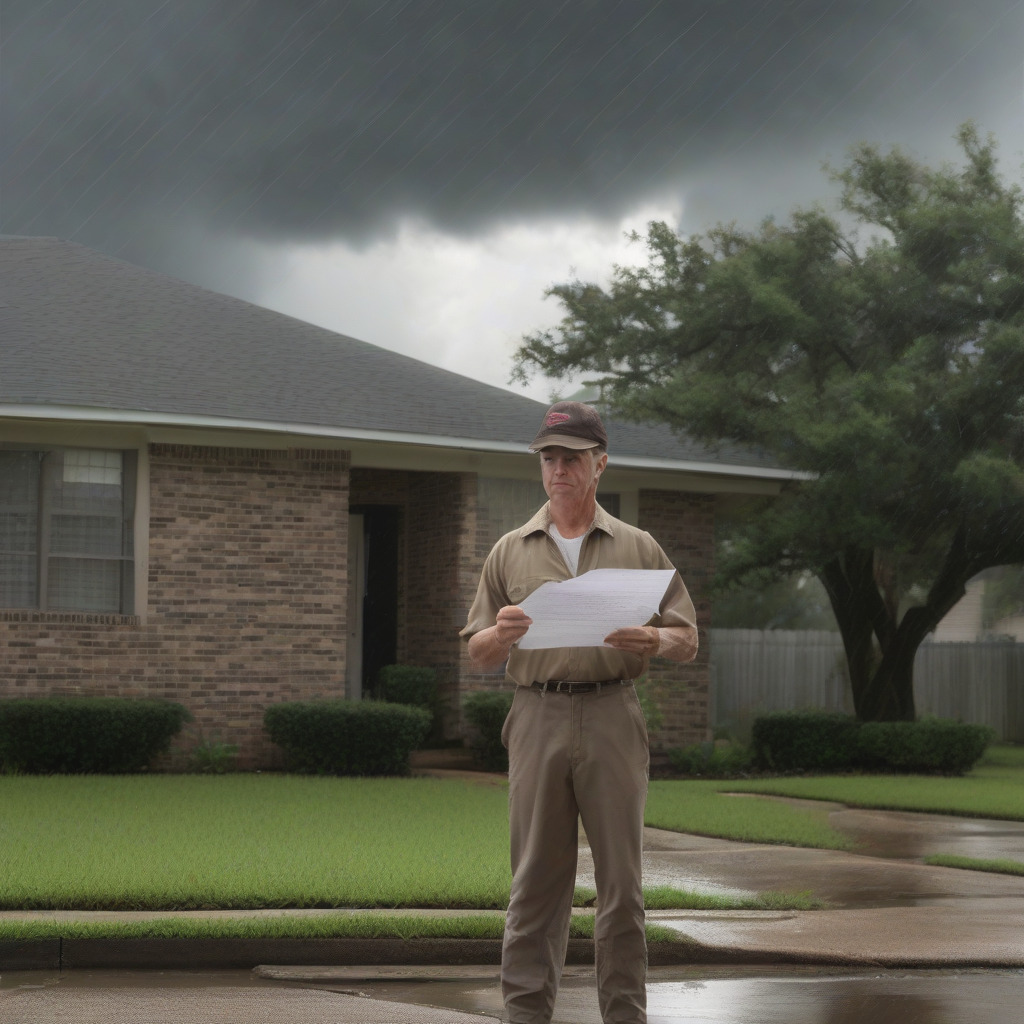
What Foundation Repair Actually Costs in Houston and When You Really Need It
Contractor quotes dominate search results, but licensed structural engineers give a different picture. Here's what Houston homeowners need to know before signing anything.

Contractor quotes dominate search results, but licensed structural engineers give a different picture. Here’s what Houston homeowners need to know before signing anything.
If you’ve typed “foundation repair Houston” into a search engine recently, you already know what comes back: company after company promising free inspections, lifetime warranties, same-day estimates. What you won’t easily find is what a licensed structural engineer—someone with no financial stake in whether you repair anything—actually thinks about your house.
This guide rests on that perspective. The cost figures here reflect what licensed professional engineers working in Houston document, not marketing materials. Before a contractor ever sets foot on your property, you should understand what’s actually wrong, whether it needs fixing now or in five years, and roughly what it will cost.
Why Houston Is a Worst-Case Scenario for Foundations
The foundational problem in Houston (forgive the phrasing) is the soil. The Houston Black clay and Beaumont clay series underlying most of the metro area have a plasticity index running 40 to 60. When that soil dries out, it shrinks. When it gets wet, it expands. Every Houstonian who’s watched their backyard crack open in August already knows this intuitively.
The seasonal swing in vertical movement across a typical Houston yard runs 2 to 4 inches, depending on drainage, tree proximity, and how dry the previous summer was. That’s unusual — in most of the country, clay soils move a fraction of an inch seasonally. Houston’s climate, alternating between extended droughts and heavy Gulf Coast rainfall, drives an outsized moisture cycle that makes the city one of the most active foundation repair markets in the country. Which also, not coincidentally, makes it one of the most active markets for contractors who’d like to help you spend money on it.
A second problem compounds the first, and most homeowners don’t know about it: long-term subsidence. The Harris-Galveston Subsidence District has documented cumulative land-surface subsidence of up to 12 feet in some areas of greater Houston since 1906, primarily from historical groundwater withdrawals. Modern regulations have slowed the rate, but the baseline elevation of the land has permanently shifted in ways that affect drainage and stress existing structures.
Inner-loop neighborhoods — the Heights, Montrose, the East End — sit on land that has already compressed substantially over decades. Older homes in those areas often have foundations installed at grade conditions that no longer exist. That’s not a scare statistic. It’s just the geology.
National foundation repair cost guides are essentially useless for Houston. A pier installation in stable Colorado soil is a completely different engineering problem than one in Harris County clay. Keep that in mind any time you see a national average figure.
A Tale of Two Foundation Types
Houston’s foundation market splits cleanly along a geographic and temporal line. Older inner-loop neighborhoods — the Heights, Montrose, Midtown, the East End — contain substantial stock of pier-and-beam homes built in the 1940s through 1960s. Wood-framed structures with a crawl space underneath, supported by concrete or wood piers with wooden beams and floor joists above.
The system was appropriate for the era and the soil, and it has a real advantage: it’s adjustable. When soil moves, a pier-and-beam system can often be re-shimmed without major reconstruction. That’s genuinely good news for Heights bungalow owners, provided the wood members haven’t been quietly rotting for thirty years.
The suburbs tell a different story. Katy, Sugar Land, Pearland, League City, the Woodlands — all dominated by post-1980 construction, mostly slab-on-grade or post-tension slab foundations. Post-tension slabs, which appear throughout Houston’s high-volume suburban homebuilding from the 1990s through the 2010s, incorporate steel cables tensioned after the concrete cures, designed to resist the cracking Houston’s clay would otherwise cause. It works, to a point. But post-tension slabs fail differently and require a specialist when they do.
Quoting a single price for “Houston foundation repair” conflates two entirely separate engineering problems. That’s why contractor quotes vary so wildly — they may literally be describing different work.
Symptom Triage: What Requires a Structural Engineer This Week vs. What Can Wait
Not every crack in your wall is a crisis. Houston’s soil movement is seasonal, and some cosmetic cracking is normal for a house sitting on clay. The problem is that distinguishing cosmetic from structural has real financial consequences in both directions. Over-reacting to normal seasonal symptoms costs money. Ignoring genuine warning signs costs more.
Call a licensed structural engineer promptly if you see:
Stair-step brick cracks wider than ¼ inch, particularly at corners or along diagonal mortar joints — these indicate differential settlement, not shrinkage. Diagonal cracking at the corners of door or window openings, especially if doors have started sticking. Floor slope exceeding 1 inch over 10 feet, which you can check yourself with a 4-foot level and a tape measure. Any crack that’s been patched before and has reopened, which suggests ongoing movement. Interior drywall cracks running floor-to-ceiling diagonally. Chimney separation from the main structure.
What can probably wait, or may not be structural:
Hairline drywall cracks under 1/16 inch that appear in late summer, particularly at window corners, are often just Houston’s clay shrinkage signature. Many partially close after fall rains return soil moisture. Isolated stable brick cracks narrower than ¼ inch with no evidence of recent movement are generally not urgent. Doors that stick in summer and free up in winter may be humidity cycling, not foundation movement — genuinely frustrating, but probably not expensive. Minor grout cracking in tile floors is common in Houston homes and usually not structural.
One thing worth flagging: the worst symptoms typically appear in August and September, after an extended dry period, and some improvement shows by November. A structural engineer accounts for that timing. A contractor eager to schedule repairs before fall rains arrive may not.
The Inspection You’re Paying For vs. the One That’s Free
This is the most consequential decision in the entire process. Before you call a foundation repair company, call a licensed structural engineer.
A PE-stamped foundation inspection in Houston costs $400 to $750 for a typical residential structure. For that fee, you get an elevation survey conducted with a Ziplevel instrument — a precise digital water-level device that maps the relative elevation of the floor slab or pier-and-beam system at a grid of measurement points across the house. You get a written report documenting what the engineer observed. If repair is warranted, the report includes written specifications: pier type, depth, placement. That report is signed by a licensed professional engineer who carries liability for its contents.
A free contractor inspection is something else. The contractor who inspects your foundation for free is also the contractor who will quote you a repair. They’re not licensed structural engineers. They can’t stamp a report. Their financial incentive isn’t hidden — it’s just rarely stated plainly — which is to find something to fix. That doesn’t mean every free inspection produces an unnecessary recommendation. But you are receiving a sales call, not a professional assessment. Those are different things.
Texas licenses structural engineers through the Texas Board of Professional Engineers. You can verify any active PE license at tbpe.texas.gov. Any engineer offering a stamped report should provide their PE number without hesitation. If they hesitate, that tells you something.
Some lenders financing properties with visible foundation concerns require a PE-stamped letter certifying stability — a document distinct from a routine inspection, typically costing $750 to $1,500. A free contractor inspection won’t satisfy that requirement.
What Pier-and-Beam Repair Costs in Houston
For an older inner-loop bungalow — say, a 1,400-square-foot wood-frame home in the Heights or Eastwood — pier-and-beam repair costs depend almost entirely on what’s actually failing.
When the structure has settled unevenly but the framing is otherwise sound, the repair is shimming: steel or hardwood shims placed on top of existing piers to re-level the beams. If the mudsill has rotted, that gets replaced at the same time. For a typical Heights bungalow, this work runs $1,500 to $5,000 depending on access, shim count, and the extent of mudsill replacement. It’s among the most cost-effective foundation repairs available — which is one reason pier-and-beam homes, despite their age, aren’t necessarily the money pits people assume.
When the existing pier count is insufficient or wood piers have deteriorated, new concrete piers go in. Houston-area engineers put the cost at $250 to $400 per pier for poured concrete in a pier-and-beam application. Typical counts range from 8 to 20 depending on home size. Fourteen new piers at $325 each is roughly $4,550 for the pier work alone, before shimming or mudsill repair.
Severely deteriorated structures are a different problem. Homes where deferred maintenance has let wood rot progress through multiple beams — or where previous owners covered up problems without addressing them, which happens more than anyone likes to admit — may need beam rehabilitation: sistering or replacing major structural members. This work is labor-intensive.
Engineers working on similar projects estimate $8,000 to $20,000 and above for extensive beam work on a significantly deteriorated structure. At the high end, you’re approaching a genuine decision point about whether full rehabilitation makes economic sense. The numbers shift based on the extent of rot (which can only be confirmed after opening the crawl space and probing the members), access difficulties, total pier count, and whether beams need full replacement or just sistering.
What Slab Foundation Repair Costs and Why Pier Depth Matters More Than Pier Count
For the post-1980 suburban slab home in Katy or Pearland, the repair market is dominated by two competing pier systems. Understanding the engineering difference between them is probably the single most useful thing a homeowner can know before soliciting bids.
Hydraulic pressed concrete cylinder piers are the most common and least expensive option. Prefabricated 6-inch concrete cylinders are hydraulically pressed into the soil beneath the slab’s edge until resistance stops the driving. Cost runs $250 to $350 per pier. A typical suburban repair involves 20 to 40 piers. A 30-pier project at $300 per pier is $9,000 — that’s the entry price point quoted by most volume foundation repair companies. You’ve probably seen that number in ads.
What those ads don’t explain: in Houston clay, pressed piers typically terminate at 10 to 12 feet below grade. That depth is still within the active shrink-swell zone for Harris County soils. The pier has reached temporary refusal in dense clay — not a stable bearing stratum. Structural engineers here note that pressed piers can continue to move slightly with soil moisture changes after installation. Whether that’s acceptable depends on the severity of the original problem and your expectations for “fixed.”
Drilled bell-bottom piers go deeper: 15 to 25 feet below grade, where the drill bit opens to flare the bottom of the shaft, bearing on stable clay or sand below the active zone. Cost is substantially higher — $1,200 to $2,000 per pier. Typical projects use 8 to 15 piers. A 12-pier drilled bell-bottom project at $1,600 per pier is $19,200 — more than double the cost of a pressed pier job on the same house, using fewer piers.
Houston-area structural engineers are consistent on this: for homes with significant or ongoing differential movement, drilled bell-bottom piers hold better because they reach below the soil layer that’s actually causing the problem. The lower pier count is by design — placement is strategic, not perimeter saturation. A PE-stamped repair specification calls out pier type, diameter, depth, and placement. A legitimate quote should match those specifications exactly.
Post-tension cable repair is a separate category requiring a specialist. When a post-tension slab develops cracking that suggests cable failure or anchor deterioration, repair means opening the slab, installing a new strand, and re-anchoring. General foundation contractors can’t do this work. Houston-area post-tension specialists quote cable repair at $500 to $1,500 per cable depending on location and access.
One hard rule: if a contractor touches a post-tension slab and doesn’t immediately identify it as such, leave. Cutting a cable during another repair operation causes catastrophic progressive slab failure. This is not a theoretical risk.
What Insurance Covers and What It Almost Never Does
Standard homeowner’s insurance in Texas covers almost nothing related to foundation movement. Texas HO-3 policies explicitly exclude “earth movement” as a covered cause of loss. The language is broad enough to cover foundation settlement, soil shrinkage, and expansive clay movement. It doesn’t matter that the movement is caused by naturally occurring Houston soil conditions rather than an earthquake. The exclusion applies.
One meaningful exception: if a slab plumbing leak causes soil erosion beneath a slab, and that erosion contributes to slab movement, the resulting water damage may be covered. The foundation repair itself typically isn’t. This matters because Houston’s high rate of slab plumbing failures — driven partly by the same soil movement that causes foundation problems — does generate legitimate insurance claims for related water damage. If you have a slab leak accompanied by foundation symptoms, document both carefully and contact your insurer before any repair work begins. Before, not after.
For homeowners approaching a sale: the Texas Real Estate Commission requires sellers to disclose known foundation defects and any previous foundation repairs on the standard seller’s disclosure form. Failure to disclose is a legal exposure, not just an ethical one. A PE-stamped report documenting condition and repair history, obtained before listing, protects sellers and gives buyers objective documentation that a free contractor inspection can’t provide. This is the kind of topic we cover regularly in our Houston home and property reporting, from pre-sale inspections to contractor accountability.
Permits, Warranties, and the Contractor Licensing Gap
Structural foundation repair in the City of Houston generally requires a building permit when piers are added. The city’s permit fee for foundation work runs roughly $150 to $500 depending on scope. In unincorporated Harris County, requirements are generally less stringent — but that’s not permission to skip documentation. A permitted job has a city inspection record. An unpermitted job has nothing, which creates problems at resale and can void warranty claims. Any contractor who waves off the permit question is avoiding a record of your repair. Worth asking yourself why.
Texas doesn’t license foundation repair contractors as a specific category. General contractors need licenses for certain work, but hanging a shingle as a “foundation repair company” requires no demonstrated technical qualification specific to structural repair. Your plumber is individually licensed and regulated. Your electrician is individually licensed and regulated. The company installing 30 piers under your house may answer to no comparable credential requirement. I find that genuinely alarming given the stakes, and I’ve been covering this beat long enough that it should probably stop surprising me.
This is exactly why a PE-stamped inspection and repair specification provides accountability that the contractor market doesn’t inherently offer.
Under Texas Property Code Chapter 430, builders of new residential construction carry statutory warranty obligations, including a 10-year warranty on structural defects. For suburban homes built after 2004, that warranty may still be in force and may cover foundation defects attributable to original construction. Worth investigating before you pay out of pocket for repair on a relatively new house. A construction law attorney is a better resource here than a foundation contractor.
How to Read a Contractor Quote Without Getting Burned
Once you have a PE-stamped inspection and written repair specifications, you’re in a fundamentally stronger position. You know what kind of pier, at what depth, at how many locations, is actually needed. You’re comparing quotes against a benchmark rather than evaluating competing sales pitches in the dark.
A legitimate quote includes:
Pier type specified clearly — pressed cylinder vs. drilled bell-bottom, with diameter noted. Pier depth stated explicitly. “To refusal” without a stated depth is a red flag in Houston, where refusal in clay and refusal at stable bearing stratum are not the same thing. The quote should list pier count and placement, and it should match the PE specification — or explain in writing why it differs. There should be a permit line item. A quote that omits it either isn’t pulling a permit or is hiding the cost.
Warranty terms should appear in writing: duration, what’s covered, and whether the warranty transfers to a future buyer. A non-transferable warranty has substantially less value if you might sell in the next decade.
Walk away from:
Same-day pressure or a “discount if you sign today” — that’s not how legitimate structural work operates. A “free engineering report” that isn’t a PE-stamped document. Warranty language without a written definition of what voids it. Quotes that diverge from your PE’s specifications without explanation. Any contractor who doesn’t ask to see the elevation survey before bidding isn’t taking the repair seriously. A contractor who wants the work should want that information.
The correct sequence: observe symptoms, consult a licensed structural engineer, receive a written elevation survey and repair specification, then solicit bids against that specification. The homeowner who reverses that order — contractor bids first — is negotiating without information in a market where the other party has a strong financial incentive to fill that vacuum. It’s avoidable, and the $400 inspection fee is how you avoid it.
The Bottom Line
Some of the costs in this guide are real numbers that real Houston homeowners write checks for. The soil conditions are genuinely difficult. The housing stock is aging. None of that is exaggerated.
But the difference between a necessary $12,000 repair and an unnecessary one — or between a $9,000 pressed-pier job that moves again in four years and an $18,000 drilled bell-bottom job that holds — comes down almost entirely to whether an independent licensed engineer looked at your house before the first bid was signed.
There’s no shortcut that produces the same result. The $400 inspection is not optional if you want to make a good decision. It’s the whole game.