The Houston Homeowner's Hurricane Season Prep Checklist for 2026
What Beryl broke, what insurers are watching, and what you need to fix before June 1

The Houston Homeowner’s Hurricane Season Prep Checklist for 2026
What Beryl broke, what insurers are watching, and what you need to fix before June 1
Hurricane Beryl made landfall near Matagorda Bay on July 8, 2024, as a Category 1 storm. By meteorological standards, it wasn’t the catastrophic event Houston had long dreaded. By claims and recovery standards, it was a case study in everything Houston homeowners had put off, misunderstood, or never been told.
More than 800,000 CenterPoint Energy customers lost power. Restoration in Meyerland, Kingwood, and parts of southwest Houston dragged on for two and three weeks in July heat that regularly topped 100 degrees. Insurers received a surge of roof claims, then discovered a large share of affected homes had shingles old enough to trigger actual cash value settlements instead of replacement cost. Homeowners called their agents to add flood coverage after the storm was already in the Gulf. Neighbors in master-planned communities found out their generator installations violated HOA rules. And thousands of residents learned for the first time — mid-claim — what their fence and tree-damage sub-limits actually said.
That last one is the one that gets me. Not the storms, not the outages. The idea that people were finding out what their policy said while they were trying to use it.
This guide is built from those specific failures: roof condition, flood coverage, generator permitting, and structural vulnerabilities. The calendar gives you real deadlines. Several of the most important steps have their own earlier deadlines built in, and “before June 1” doesn’t cover them. Houston’s Atlantic hurricane season peaks mid-August through mid-October, but Gulf storms can develop and reach landfall in under 72 hours. Meaningful preparation requires months of lead time.
Your Season Calendar: Act by Month, Not by Storm
January through March is when to order a standby generator if you want one installed before the season opens. Post-Beryl demand pushed lead times at Houston-area suppliers to four months and beyond through late 2024 and into 2025. That will happen again as 2026 approaches. Order in January. Your electrical and gas contractors need time to pull permits, schedule inspections, and finish the work without everything compressed into May.
March through April: schedule a professional roof inspection and get insurer documentation. Roofing contractors’ spring calendars fill fast — call in late April and you’ll find out firsthand. If an inspection reveals condition problems that affect your coverage, you have time to act before the season rather than scrambling after a denial.
May 1 is the hard flood insurance deadline. The National Flood Insurance Program’s 30-day waiting period does not pause because a storm is named. If you don’t have a flood policy in force by May 1, you’re effectively uninsured for the first significant storm of the season. Private flood carriers have shorter waiting periods — some as brief as 10 days — but that still requires action well before a named threat appears.
Late April: HOA generator approvals need to be in hand. Master-planned communities including Cinco Ranch in Katy and Bridgeland near Cypress have architectural review processes that can take 30 to 60 days, with specific requirements on placement, noise, and sometimes fuel type. Starting that process in April for a June installation is already cutting it close.
Roof Condition: What Insurers Are Counting and What the Wind Is Testing
Beryl’s most financially damaging revelation for Houston homeowners was the gap between what they thought their roof claim was worth and what their insurer actually paid. The mechanism is straightforward — and honestly, it should be explained when you sign the policy. It usually isn’t.
Texas carriers — Farmers, State Farm, and several regional insurers among them — have increasingly adopted age-based underwriting thresholds that determine how roof claims are settled. The operative threshold for many carriers is 15 years. A roof under that age, in serviceable condition, qualifies for replacement cost value: the insurer pays what it actually costs to replace the damaged portion at current prices. A roof at or beyond 15 years may be shifted to actual cash value, which means depreciation gets applied.
That’s real money. On a $25,000 roof replacement, the gap between an RCV and an ACV settlement can easily run $8,000 to $15,000 out of pocket. Some carriers have gone further, declining to renew policies on homes with roofs over 20 years old unless the homeowner produces a recent condition certification. This isn’t hypothetical — after Beryl, several Houston homeowners discovered this threshold when their renewal didn’t arrive.
Houston has a substantial stock of homes built in the 1980s and 1990s with original or once-replaced shingles now at or past those thresholds. The post-Beryl claims surge put a spotlight on exactly that population.
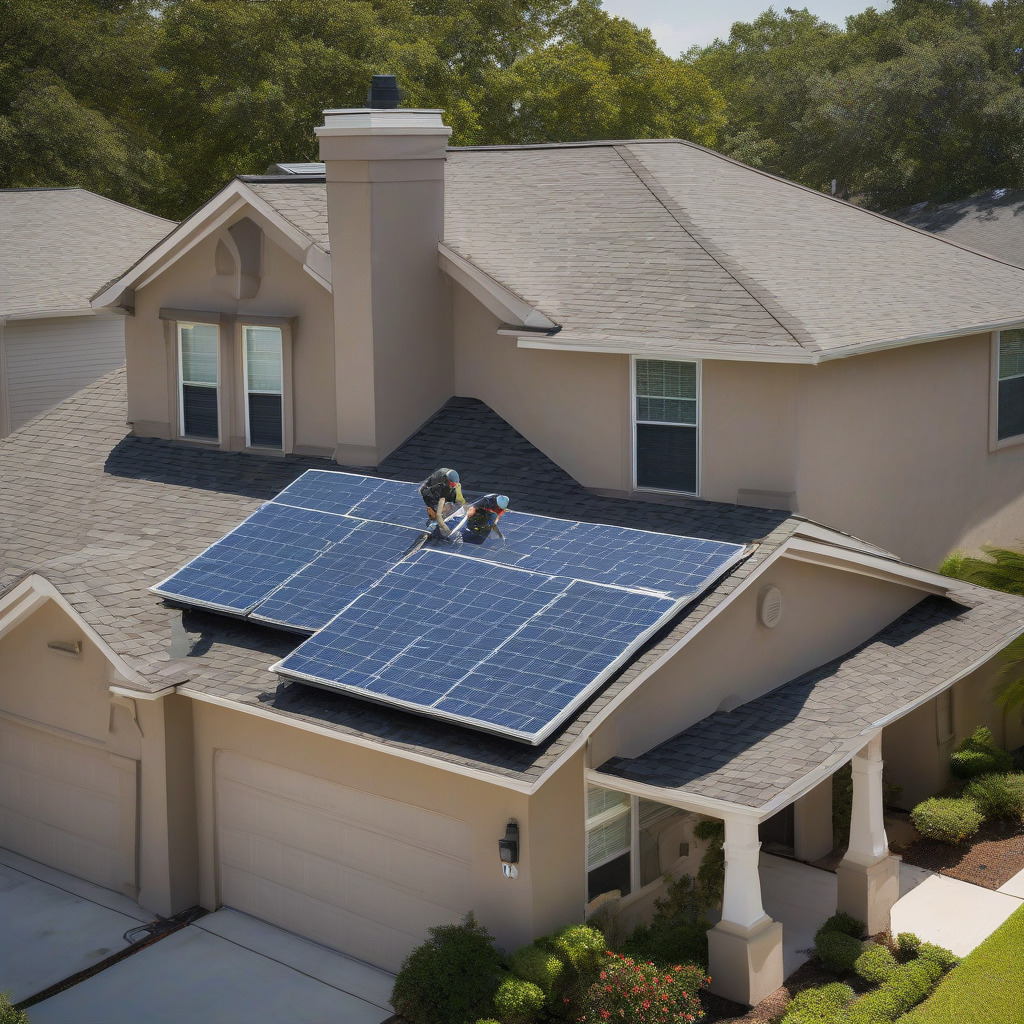
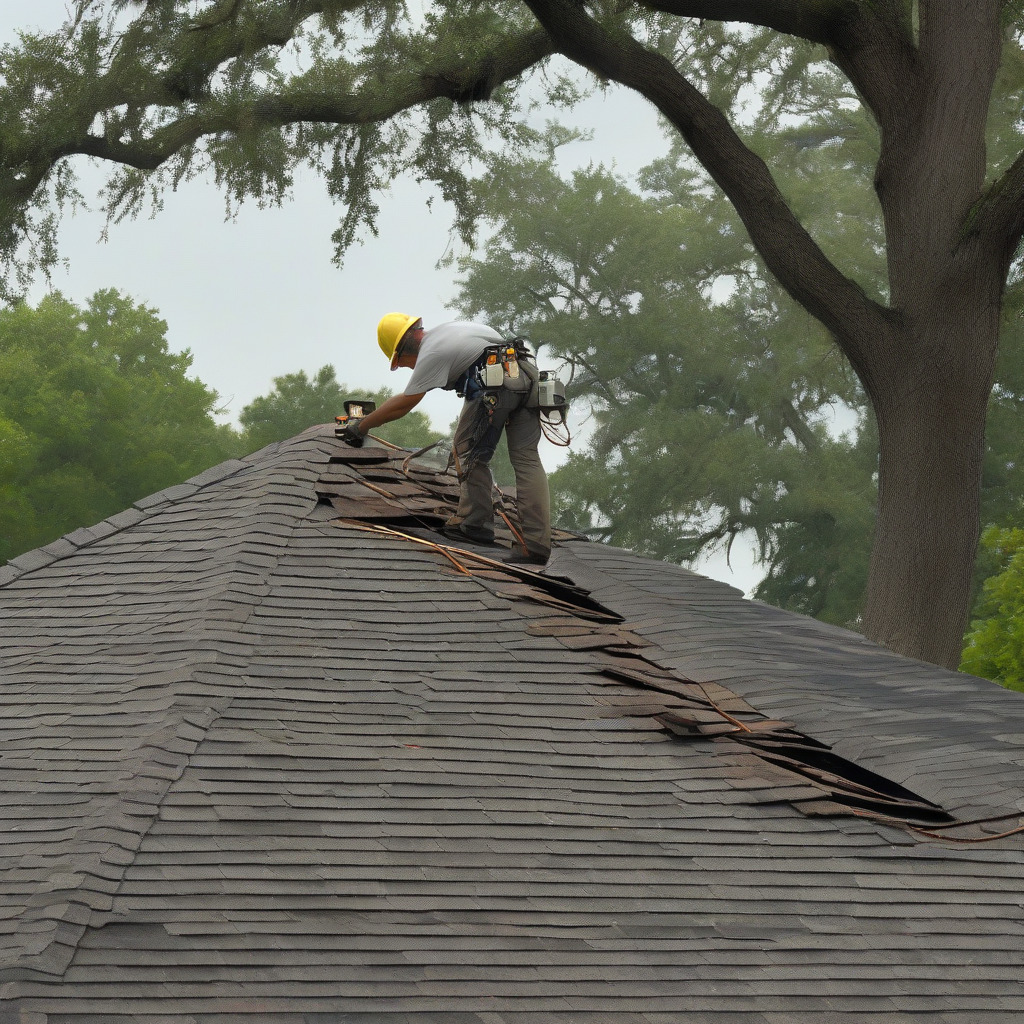
Houston’s tropical storm winds load roofs asymmetrically, and the details that fail first are predictable. Ridge cap integrity is a real vulnerability at 80-plus mph. The ridge cap — the shingles or metal cap running the roof’s peak — takes wind from every direction and is often first to lift. If you can see your ridge cap from the street and it looks raised, cracked, or missing sections, that’s an urgent repair before June.
Gable end bracing is a weakness concentrated in pre-2000 construction. Homes built before Houston adopted more stringent wind codes may have gable ends framed as simple triangular extensions of the wall, not braced against lateral wind load. When a gable end fails, it doesn’t just create a roof problem — it can compromise structural integrity across a wide section of the home.
Deck fastening is invisible from outside but it matters. Older homes commonly used 6d smooth-shank nails to attach roof sheathing to rafters. Current standards call for 8d ring-shank nails at tighter spacing. The difference in uplift resistance is substantial. A roofing contractor during an inspection can walk you through this.
Flashing around HVAC penetrations is a frequently missed failure point. Houston homes have multiple roof penetrations for HVAC equipment, and the flashing around those penetrations — particularly on flat or low-slope sections — is often where water infiltration starts after a storm.
Here’s a self-assessment you can do before you call anyone. Walk your gutters after the next rain and look for granule accumulation — that fine grit that looks like coarse sand means aging shingles. In our home & property coverage, we’ve tracked how Houston’s aging housing stock intersects with these insurer thresholds in detail. In the attic on a sunny day, look for daylight visible through the decking, and look for water staining on the sheathing or rafters. Staining indicates past leaks even if everything looks dry now. If you find any of this, or if your roof is approaching 15 years old, a paid certification inspection from a licensed roofing contractor is worth scheduling. A documented certification can preserve your RCV coverage status. Ask your insurer what documentation they require, and get that answer in writing before you pay for anything.
Flood Insurance Gaps: The NFIP Trap and What Houston ZIP Codes Should Know
The most expensive single mistake documented after Beryl was straightforward: homeowners without flood insurance tried to buy it after a storm was named and tracking toward the Gulf. FEMA does not waive the 30-day waiting period because a storm is coming. The handful of exceptions — loans closing at purchase, map revisions — did not apply to anyone calling their agent in the 72 hours before landfall. Not one of them.
This matters because flood insurance is genuinely counterintuitive, and the confusion is persistent no matter how many times it gets explained. Homeowners insurance does not cover flood damage. This isn’t fine print. It’s a categorical exclusion in virtually every standard HO-3 policy. The homeowner who watched water come through the front door and expected their homeowners policy to respond was wrong. That misunderstanding has cost Houston families serious money after every major flood event from Harvey to Beryl.
The National Flood Insurance Program, administered by FEMA and sold through licensed agents, offers maximum building coverage of $250,000 and contents coverage of $100,000 — as separate policies, purchased separately. It does not cover additional living expenses. The six weeks in an extended-stay hotel while your first floor gets remediated, the storage unit holding your furniture: NFIP doesn’t pay for those. That surprised thousands of Harvey survivors and a meaningful number of Beryl claimants who hadn’t read that far into their policies.
Risk Rating 2.0, FEMA’s overhauled premium methodology implemented in October 2021, changed the Houston flood insurance market in ways still playing out. The new system prices risk based on property-specific factors — distance to water, first-floor elevation, foundation type — rather than FIRM flood map zone designations. For properties in high-repeat-flood ZIP codes, premiums have moved sharply. Meyerland (77096) has seen particularly steep increases because the neighborhood’s flood history is now priced into individual policies. Kingwood (77339 and 77345), Clear Lake (77058), and Friendswood (77546) have all seen substantial movement.
If your property is in one of these ZIP codes, find out whether you have a current elevation certificate on file with your local floodplain administrator. Harris County Flood Control maintains records, and your permit history may show one from construction. A new elevation certificate from a licensed land surveyor runs $400 to $700 in the current Houston market. It can document that your first-floor elevation exceeds the base flood elevation, which can reduce premiums — sometimes enough to pay for the certificate within a year. Many Zone AE homeowners are paying more than necessary because they never obtained this documentation.
Get a private flood insurance quote as well. Private carriers have been competing aggressively in Houston, and for properties in Zone X — outside the 100-year floodplain — private pricing often runs 20 to 40 percent below NFIP rates. Private policies typically offer what NFIP doesn’t: additional living expense coverage, shorter waiting periods, and building limits above $250,000 for homes whose replacement costs exceed that threshold. The tradeoff is that private carriers can non-renew; NFIP cannot. For a Zone X property that’s never flooded, the private market often makes more financial sense.
Also check your existing homeowners policy for a water backup endorsement. This is a separate rider covering water damage from sewer or drain backup — it’s distinct from flood, and it’s frequently triggered in Houston’s flat drainage environment during heavy rain. Many homeowners who thought they had “flood coverage” of some kind actually had only this endorsement, which does not cover rising water. Those are not the same thing, and the distinction matters enormously when you’ve got three inches of water on your first floor.
Use Harris County Flood Control District’s flood map viewer (hcfcd.org) and FEMA’s Flood Map Service Center (msc.fema.gov) to verify your current zone designation. If your property sits near a zone boundary, a surveyor or floodplain consultant can tell you whether a Letter of Map Amendment filing makes sense.
Before May 1, confirm five things: building flood coverage in force, contents flood coverage in force, water backup endorsement on your HO policy, ALE coverage if applicable, and an elevation certificate on file. This is a one-hour conversation with an independent agent. Have it.
Generator Permits in Houston: The Actual Requirements, by Jurisdiction
Permit requirements for standby generator installation are not uniform across the Houston metro. The consequences of skipping them include failed inspections, voided manufacturer warranties, and real safety risks from improper gas and electrical connections. Contractors will sometimes suggest you skip the permit. Don’t.
Inside the City of Houston city limits, permits come from the City of Houston Permit Center (houstontx.gov/permitcenter). Unincorporated Harris County goes through Harris County Engineering. Sugar Land, Pearland, Katy, and The Woodlands each have their own municipal permit offices with different fees, inspection processes, and timelines. Parts of what residents call “Katy” are actually unincorporated Harris County. Parts of “Houston” addresses fall outside city limits. A five-minute phone call confirms this before you start.
A standby natural gas generator installation typically requires two separate permits. An electrical permit covers the generator connection, the automatic transfer switch, and the load side wiring — performed by a licensed master electrician. City of Houston fees for this currently run roughly $150 to $300 depending on job scope, with a required inspection before energizing. A gas or mechanical permit covers the gas line connection from the meter to the generator — performed by a licensed plumber, since gas line work falls under plumbing licensing in Texas. Fees run roughly $75 to $150, with a required inspection.
The automatic transfer switch is not optional. It disconnects your home from the utility grid before the generator comes online, preventing dangerous back-feed that can kill utility workers restoring power. Any contractor who proposes a manual transfer, or suggests the ATS can be deferred, is a contractor to cross off your list.
On cost: an 11 to 13 kW unit covering essential circuits runs approximately $4,500 to $7,500 installed. A 20 to 22 kW whole-home unit capable of running central air in a typical Houston home runs $8,000 to $13,000. Larger homes with multiple AC systems may need 26 to 36 kW units, with installed costs pushing $14,000 to $20,000 and above. Those numbers depend heavily on what gas line work and panel configuration your specific home requires.
For residents of master-planned communities: HOA pre-approval is required before you order equipment, not after. Getting the placement or specs wrong means potentially moving an installed unit. Apply to your architectural review board first.
Sizing Your Generator for CenterPoint’s Actual Track Record
Generic generator sizing advice assumes generic outages. Houston’s post-Beryl experience is a more specific and more demanding standard.
When CenterPoint’s restoration in Meyerland and parts of Kingwood ran to three weeks in July, the math on “essential circuits” coverage shifted. A generator running a refrigerator, some lights, and a few fans works fine for a 24-hour outage. It’s a different calculation for a multi-week outage in triple-digit July heat — and it’s a health calculation, not just a comfort one, for households with elderly residents, young children, or anyone whose medical condition is worsened by heat exposure. The 20 to 22 kW range is the right target for a Houston home planning for extended outages. It provides enough headroom to run air conditioning alongside other loads without constant triage.
Portable generators are a reasonable option for homeowners who can’t yet budget a standby unit, but they require strict safety protocols. Carbon monoxide poisoning from portables operated indoors or in attached garages kills people after every major storm event. Every single time. And it happens to people who thought they were being careful. The rule: portable generators run outside only, at least 20 feet from any window, door, or vent, exhaust pointed away from the structure. Keep a battery-powered carbon monoxide detector running inside whenever a portable is operating nearby. Use a properly rated extension cord or have a transfer switch installed. Never backfeed a portable generator into a panel through a dryer outlet. That configuration is both illegal and has killed people.
Structural Vulnerabilities Beyond the Roof
The secondary damage category that generated the most post-Beryl claim surprises wasn’t the roof. It was everything attached to the property that homeowners assumed was covered the same way the main structure was.
Wood privacy fences almost always take damage in Category 1 winds. Most HO-3 policies sublimit fence coverage to somewhere between $1,000 and $2,500. Pull out your declarations page and find the other structures sublimit. If you haven’t looked at that page recently, that number will surprise you. Like-for-like wood fence replacement is generally permit-free in Houston. Replacing wood with masonry may require a permit from the relevant jurisdiction — call before you start.
Garage doors are a specific vulnerability for pre-2006 construction. Houston adopted wind-load requirements for garage doors after Hurricane Rita, so homes built after that date generally have rated doors. Older single-skin steel doors — the flat panel type common in 1980s through early 2000s homes — are a documented failure point. When a garage door fails under wind pressure, the resulting pressure change inside the structure can contribute to roof damage. Retrofit bracing kits run $100 to $300 and can be installed by a reasonably capable homeowner. Full replacement with a wind-rated door runs $1,200 to $2,500 installed. If your home predates 2006 and you haven’t replaced the original door, find out whether it has a wind rating.
Tree canopy is a concentrated exposure in older Houston neighborhoods — River Oaks, Tanglewood, the Memorial Villages, the Heights — where mature live oaks and loblolly pines have grown to significant size over decades. These trees are why those neighborhoods look the way they do. They’re also a real source of structural damage in tropical winds. I’m not suggesting cutting everything down; that would be a different kind of disaster. But it means knowing what you have. Houston generally doesn’t require permits to remove trees on private property, with exceptions: the city’s tree preservation ordinance protects designated heritage trees, and some deed restrictions or HOA rules add further constraints. Before removing a significant tree, verify with Houston’s Urban Forestry division. A certified arborist’s assessment — not a landscaper’s opinion — is worth getting for any large tree within falling distance of your structure. Removing a tree before the season is far less expensive than repairing what it falls on.
How to Document Your Property Now So Claims Move Faster Later
Insurance claims are decided on documentation. The homeowner who walks an adjuster through a pre-storm video inventory is in a fundamentally different position than the one trying to reconstruct from memory what they owned and in what condition. If you’ve filed a claim without documentation, you already know how that goes.
Walk every room on video, narrating what you see. Open closets. Open cabinets. Get serial numbers on appliances and electronics. Walk the exterior: every face of the structure, the roof from the ground, detached structures, fencing, all mechanical equipment — HVAC condenser units, pool equipment, any outdoor generator. Store the video in cloud storage off-site so that a fire or flood destroying your home doesn’t also destroy your documentation.
Detached structures, fencing, and landscaping are the items most commonly absent from home inventories and most commonly disputed in claims. Photograph fence sections individually with a timestamp. Photograph mature trees and document any prior professional assessments of their condition.
If your property is in a Special Flood Hazard Area, verify with your agent whether an elevation certificate is on file. If one exists, check whether it reflects the current structure — certificates prepared before a substantial renovation may not accurately represent your current first-floor elevation. A current certificate from a licensed land surveyor can correct this and may produce a premium reduction that pays for itself.
For disputes and regulatory complaints, the Texas Department of Insurance consumer helpline is 800-252-3439. TDI has a formal process for investigating claim disputes, and filing a complaint creates a documented record. If a claim is being improperly handled — a denial you can’t get explained in writing, a settlement calculation that doesn’t match your policy language — this is the resource to use. Insurers are required to respond to TDI inquiries on a defined timeline.
Before May 1, sit down with an independent insurance agent who represents multiple carriers and confirm your coverage gaps: building flood coverage in force, contents flood coverage in force, water backup endorsement on your HO policy, ALE coverage through private flood if applicable, and an elevation certificate on file. That conversation is the single most productive hour you can spend on hurricane prep before June.
Beryl wasn’t Houston’s worst storm. It was a useful preview of what the gaps look like when a manageable storm hits a city that thought it was prepared. The homeowners who came out of it in the best shape had made deliberate decisions about flood coverage before the season, knew what their roof’s age meant to their insurer, and had backup power that could run their household through weeks of July heat — not hours. None of that requires anything unusual. It requires doing it early enough to matter. June 1 is closer than it feels.