How to Appeal Your Harris County ARB Decision to District Court Before the Window Closes
ARB orders from the 2026 protest season are landing in mailboxes now. Texas law gives you exactly 60 days to file a district court appeal. For most Houston homeowners, that window closes in Septemb…

ARB orders from the 2026 protest season are landing in mailboxes now. Texas law gives you exactly 60 days to file a district court appeal. For most Houston homeowners, that window closes in September or October. Here’s the plain-English walkthrough that law firm ads don’t provide.
If your Harris County Appraisal Review Board protest was denied — or reduced by less than your evidence supported — you’re not done. The ARB decision ends the administrative phase. What comes next is different in structure, timeline, and cost.
Texas Tax Code §42.06 gives you one more path: a district court appeal or binding arbitration through the State Office of Administrative Hearings. Either can produce a reduction the ARB panel was unwilling or procedurally unable to grant.
Here’s the catch. The moment that written ARB order arrives, a 60-day clock starts. Miss it by even one day and a court will dismiss your case for lack of jurisdiction. No extensions. No equitable exceptions. No second chances.
For most 2026 residential protests — hearings that ran through July — ARB orders are arriving on a rolling basis through August. That puts most filing deadlines in September and October 2026. If you’re reading this after opening your order, the clock is already running.
Step One — Read Your ARB Order and Decide Whether an Appeal Is Worth It
The document HCAD mails you is titled “Order Determining Protest.” It states the appraised value the ARB certified, any reduction from HCAD’s original notice value, and language about your appeal rights. Read it carefully. The order must include the ARB’s determined value and notice of your right to appeal. If that language is missing, call HCAD’s customer service line at 713-957-7800 immediately. The absence of proper notice language can affect how courts interpret the deadline — and that’s not a loophole you want to rely on anyway.
Before you call anyone, run the math. Take a Houston home the ARB appraised at $600,000. A 10% reduction means $60,000 less in taxable value. Multiply that by your combined tax rate — confirm the current figure for your specific property at hcad.org — and you have your annual savings. A 15% reduction saves you 15% of your annual bill, and that value holds as long as the settlement stands.
Against that, weigh what an appeal costs. SOAH binding arbitration runs $450 to $800 depending on property value. A contingency-fee property tax consultant typically charges 25–35% of the first year’s tax savings. An attorney runs 30–40%.
My read: if the ARB already got you most of the way to your argued value and the remaining gap saves you less than a few hundred dollars a year, skip it. If the gap is 10% or more on a property worth $400,000 or above, the math almost always favors filing. Most cases settle before they get anywhere near a courtroom, so you’re often looking at a negotiated result months before the process fully plays out.
Step Two — Choose Your Path: District Court or SOAH Binding Arbitration
Most how-to coverage skips this choice entirely. It shouldn’t, because it determines your timeline, your costs, and what you can do if you don’t like the result.
SOAH Binding Arbitration is administered by the Texas State Office of Administrative Hearings. To qualify, your property must have a certified ARB value at or below $5 million for a residential homestead. The fee structure is tiered: $450 for properties valued under $500,000; $500 for properties between $500,001 and $1 million; $800 up to the $5 million ceiling. Verify current tiers at comptroller.texas.gov before filing — the Legislature can adjust these. You pay upfront. Win, and HCAD reimburses your deposit. Lose, and it’s forfeited.
The word “binding” is not decorative. An arbitrator’s decision cannot be appealed. If the arbitrator sides with HCAD or grants less than you wanted, that’s it — you cannot go back to district court. That finality matters most on properties where the dispute turns on contested evidence or a legal question rather than a straightforward comparable-sales argument. What arbitration gives you in exchange is speed: cases typically resolve within three to six months of filing, with none of the docket congestion or discovery timelines that district court involves.
For a residential homeowner with a clean comp argument and a property in the $400,000–$800,000 range, arbitration is usually the faster and cheaper path. Know what you’re giving up for it.
District Court follows the standard civil litigation route. You file a petition with the Harris County District Clerk, HCAD becomes the defendant, and your case enters the civil docket. Filing runs approximately $350–$400 for the petition plus $75–$150 in service fees — verify the current schedule at hcdistrictclerk.com or call 713-755-5711, because Harris County adjusts civil filing fees between legislative sessions. The Harris County civil docket is heavily congested. A case filed in fall 2026 probably won’t see a scheduling conference for three to six months, and trial readiness — if the case doesn’t settle — is typically 18 to 36 months out.
That timeline sounds brutal until you understand what it actually does for you. The filing itself is the pressure. Once HCAD’s legal counsel is engaged and discovery is coming, the incentive to negotiate increases substantially. District court also preserves options arbitration eliminates: you can settle, go to trial, or appeal a ruling to the court of appeals. For complex commercial properties, legal disputes over exemption status or equal and uniform taxation claims, or any case likely to require a contested evidentiary hearing, district court is the right path. For a straightforward residential valuation dispute, it’s slower and more expensive than arbitration — though still workable.
One thing worth repeating plainly: the 60-day deadline applies to both paths equally. Arbitration does not give you more time. File whichever way you go within 60 days of receiving the ARB order.
Step Three — How to File in Harris County District Court
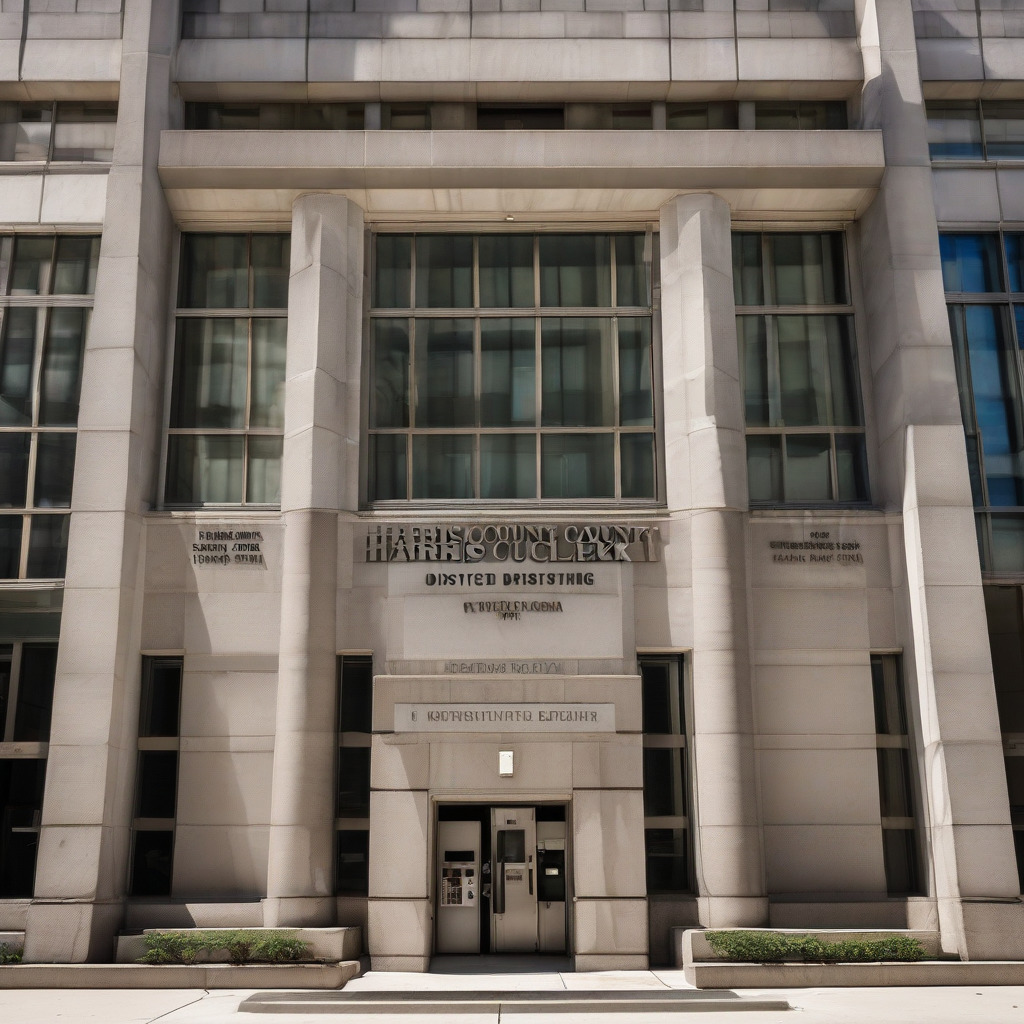
File your petition as a civil case with the Harris County District Clerk at 201 Caroline St., Houston, TX 77002. You can file in person during business hours or electronically through eFile Texas at efile.txcourts.gov. When the deadline is close, eFile is faster. You get a time-stamped confirmation the same day — which matters considerably if you’re filing on Day 58 or 59.
Property tax appeals in Harris County are assigned through the central civil docketing system to general civil district courts. The assignment is essentially random, so don’t waste time trying to select a favorable court.
The named defendant is HCAD. Serve it through its general counsel at 13013 Northwest Freeway, Houston, TX 77040. This address isn’t prominently published for homeowners, but it is the correct service address for district court property tax appeals. Confirm it with the district clerk’s office or hcad.org before filing.
Your petition must identify the property, state the ARB order date and certified value, assert that the value is excessive, and ask the court to determine the correct value. The Texas Rules of Civil Procedure govern format. For homeowners filing without an attorney, the clerk’s office can tell you whether the court requires a specific form — they can’t give legal advice, but they can tell you what the court expects to receive.
Step Four — What Evidence Actually Works in District Court
If you already showed the ARB your comparables and they ignored you, why would district court be different?
The structure of the process changes everything. ARB hearings run 10 to 15 minutes. HCAD’s appraiser at the table has limited authority to agree to a reduction that deviates significantly from HCAD’s own model. The panel isn’t bound by the Texas Rules of Evidence, and the format actively discourages working through complex comparable data. If you’ve sat through one of those hearings, you know exactly what I mean — it often feels like the decision was made before you walked in.
District court opens up full discovery under the Texas Rules of Civil Procedure. You can compel HCAD to produce its internal valuation methodology, the comparable sales its automated model used, and any internal adjustments made to your property’s assessed value. That exchange alone frequently surfaces inconsistencies that HCAD’s legal team would rather settle than defend at trial.
A certified appraisal by a Texas-licensed MAI appraiser is the most persuasive single document you can bring. An ARB panel may acknowledge it and still uphold HCAD’s value without blinking; HCAD’s attorneys are far more reluctant to take an independently appraised value to trial. Confirm current appraisal costs with local appraisers before assuming the investment is justified, but on most residential cases where meaningful tax savings are in dispute, it usually is.
Physical condition evidence — photographs, contractor estimates, inspection reports documenting foundation issues, flood damage history, dated systems, deferred maintenance — rarely gets adequate attention at the ARB. HCAD’s mass appraisal model misses these factors regularly, and a 15-minute hearing isn’t built to surface them. A consultant or attorney presenting this evidence gives HCAD’s legal team something to work with at the negotiating table.
The same is true for granular comparable sales. HCAD’s automated comparables sometimes cross neighborhood lines, mix lot sizes, or ignore road noise, proximity to commercial uses, or functional obsolescence. A tight comp set — properties that sold in the preceding 12 months, in the same neighborhood, with genuinely similar characteristics — is far harder to dismiss in litigation than at an ARB hearing. For a fuller picture of where the Houston housing market stands heading into this appeal cycle, see what the Houston housing market actually looks like at mid-year 2026.
Industry estimates put the district court settlement rate at 70–85%. The petition is the mechanism. Many homeowners who got nothing at the ARB see reductions of 10–25% from the ARB-certified value through district court settlements. Those figures are widely cited, but ask any consultant or attorney you hire to describe their own outcomes on comparable residential cases. Don’t take the brochure version.
Step Five — Attorney or Property Tax Consultant?
Texas law (Occupations Code Chapter 1151) licenses property tax consultants through TDLR. A TDLR-licensed consultant can represent property owners in district court property tax appeals. Verify the current scope of that authority with TDLR directly before assuming it covers your situation.
For residential cases that settle — the likely outcome — a consultant can file the petition, negotiate with HCAD’s attorneys, and carry the case through to a signed settlement agreement without an attorney. The cost difference is real. Consultants in the Houston market typically work on contingency at 25–35% of the first year’s tax savings. Attorneys handling property tax appeals typically charge 30–40% on contingency, sometimes with additional flat fees for filing and court appearances.
The more relevant question is whether your case will require a contested evidentiary hearing or raise legal issues beyond pure valuation. You need an attorney when: the property is a complex commercial asset; the core dispute involves a legal question like exemption status, improper notice, or an equal and uniform taxation claim under Tax Code §41.43; the case is realistically headed to trial; or the dollar amounts make the higher cost structure worth it. For a single-family homeowner with a valuation dispute and no unusual procedural complications, a qualified consultant is a reasonable and common choice.
Houston-area firms active in post-ARB district court work include Texas Protax, which handles residential and commercial cases on contingency and maintains a dedicated district court practice; Resolute Property Tax Solutions, which works residential cases across Harris County; and O’Connor & Associates, one of the larger volume residential consulting firms in Texas. On the attorney side, Brusniak Fine & Haas PC — Dallas-based, but with a significant Harris County commercial docket — has an established presence in Harris County property tax litigation. Before engaging any of them, call to confirm they take residential district court cases, their current contingency structure, and whether they require an independent appraisal as a condition of taking the case. This list is not exhaustive, and CityDesk Houston does not endorse any specific firm.
One practical note: consultants and attorneys see a spike in calls every August and September as ARB orders hit. This is the kind of deadline-driven process we track closely in our legal & finance coverage. Don’t wait until week eight. The firms doing this work well fill up fast, and you don’t want to be scrambling on Day 55.
Step Six — What to Expect After You File
Once the petition is filed and HCAD is served, the case enters the Harris County civil docket. The immediate post-filing period is often quiet — sometimes unsettlingly so. HCAD’s legal staff reviews the petition. The court will eventually issue a scheduling order, typically three to six months after filing depending on current docket backlog.
Discovery is where movement actually happens. Your attorney or consultant sends requests for HCAD’s internal records on your property: the appraisal card, the comparable sales used in the automated valuation, any review appraiser notes. HCAD’s attorneys do the same in reverse. This exchange often surfaces the inconsistencies that lead to a negotiated settlement, because HCAD’s internal data sometimes reveals things its appraisers aren’t eager to defend in open court.
A property tax settlement takes the form of a stipulated value — both sides agree in writing that the appraised value for the tax year in dispute is a specified amount lower than the ARB’s certified number. The agreement is filed with the court, the case is dismissed, and HCAD issues a corrected appraisal record. Confirm the mechanics for handling any tax overpayment with your taxing unit’s collector at the time of settlement.
If the case reaches trial, you present evidence under the Texas Rules of Evidence before a judge — property tax cases in Harris County are tried to the bench far more often than to a jury. Trial preparation, including depositions and expert witness fees, gets expensive quickly. That’s one reason the settlement rate is so high.
A realistic outcome is a settled reduction of 10–25% from the ARB-confirmed value, applied to the tax year in dispute. That settled value can influence future protests — it creates a documented market data point — but it doesn’t bind HCAD in subsequent years. HCAD reappraises annually. Don’t assume a settlement this year locks in anything for 2027. Houston homeowners who want to maximize their position going forward should also review property tax exemptions Houston homeowners often miss, which covers homestead and other exemptions that reduce your taxable value before any protest is even necessary.
Key Contacts and Verification Checklist Before You File
Filing fees and procedural rules change. Verify each item below before you act.
Harris County District Clerk 201 Caroline St., Houston, TX 77002 713-755-5711 | hcdistrictclerk.com Confirm the current civil filing fee for a property tax appeal petition (approximately $350–$400 at publication, plus $75–$150 in service fees) before you file.
HCAD General Counsel — Service Address for District Court Petitions 13013 Northwest Freeway, Houston, TX 77040 Confirm this is the current service address with the district clerk or hcad.org before serving your petition.
eFile Texas efile.txcourts.gov Accepted by Harris County civil courts. Provides time-stamped confirmation — use this when filing close to the deadline.
Texas Comptroller — SOAH Binding Arbitration comptroller.texas.gov (search “property tax arbitration”) Confirm current fee tiers and the $5 million residential homestead threshold. Verify whether any changes from the 2025 legislative session are in effect for the 2026 protest year.
HCAD Customer Service 713-957-7800 | hcad.org Use this line to confirm your ARB order date, mailing date, and the appraised value on record.
What in this article is confirmed: The 60-day deadline under Tax Code §42.06; the SOAH eligibility threshold of $5 million for residential homesteads; SOAH arbitration fee tiers of $450/$500/$800 as of the research underlying this article; HCAD’s general counsel service address; the eFile Texas portal; the structure of contingency fee arrangements; the TDLR licensing requirement for property tax consultants.
What you must verify before filing: The exact current filing fee at the Harris County District Clerk; the exact current SOAH arbitration fee tiers; any procedural or fee changes from the 2025 legislative session; and the current fee structures of any consultant or attorney you engage.
The 60-day window started the day your order arrived. If you haven’t counted the days yet, start now.