How a Harris County Eviction Actually Works from Notice to Constable Lockout
If your landlord just handed you a notice, or if you're a landlord trying not to get your case thrown out on a technicality, here is the only Houston-specific guide that walks through every stage o…

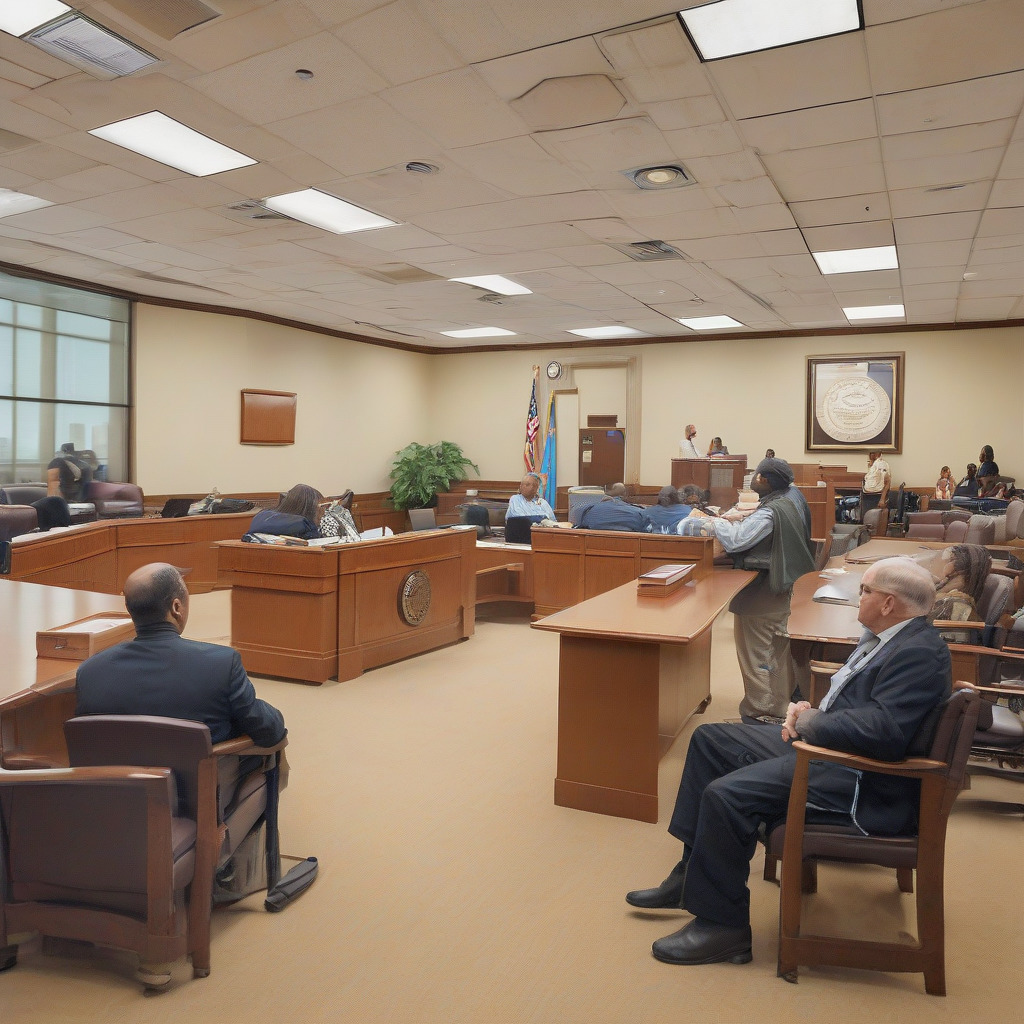
If your landlord just handed you a notice, or if you’re a landlord trying not to get your case thrown out on a technicality, here is the only Houston-specific guide that walks through every stage of the 2026 process with actual JP court locations, realistic timelines, and what each step legally requires.
If you’re a Houston renter who just got a notice taped to your door: in an uncontested nonpayment case, you realistically have five to seven weeks from the day the landlord posts that notice before a constable shows up to change your locks. Appeal, and that window stretches to ten weeks or more.
Every stage has a specific legal trigger. Miss one — as a landlord or as a tenant — and the outcome changes. Here’s the full map.
Why September Is Peak Season at Harris County JP Courts
Harris County JP courts process more eviction filings in September and October than in almost any other stretch of the year. The pattern is predictable: landlords who absorbed summer rent deferral or informal payment arrangements reach the same decision point simultaneously once September arrives, and they all file at once.
The result is docket congestion at precisely the moment when both landlords and tenants most need clarity about how the process works.
That clarity is genuinely hard to find. Most available information about Texas eviction law is either a vague firm-generated FAQ or the Harris County JP courts’ own procedural page, written for clerks. This guide is written for the person holding a notice at 7 p.m. who needs to understand what “3-day notice” actually means — and for the landlord who needs to know why filing in the wrong precinct will get the case dismissed and force a complete restart, with new fees, from zero.
Step One: The Notice to Vacate
Before any court gets involved, a landlord must deliver a written notice to vacate. This is governed by Texas Property Code §24.005. It produces no court record and does not appear on a tenant’s rental history.
The law sets minimum notice periods. For nonpayment of rent, the baseline is three days, unless the lease specifies longer — so dig yours out, because leases vary. Month-to-month tenancies terminated without cause require 30 days. Lease violations other than nonpayment get three days unless the lease says otherwise. These are floors, not ceilings.
Valid delivery under §24.005 means one of several things: in person to the tenant or any resident 16 or older, posted on the inside of the main entry door, or sent by regular mail, certified mail, or registered mail. For landlords, certified mail matters as evidence. A signed return receipt proves the delivery date in court. Door-posting is legally valid but produces no third-party confirmation of when it happened — a gap that becomes a real problem if the tenant contests notice timing and the landlord is standing in front of a judge with nothing but their own word.
If the notice was slipped under the door, sent by an unauthorized method, or delivered with fewer days than the statute or your lease requires, that’s a procedural defect you can raise at the JP hearing. Most tenants don’t know this.
The notice to vacate is not the same as eviction. The landlord cannot change locks, remove belongings, or cut utilities after posting a notice. All of that requires a court order. Self-help eviction is illegal in Texas regardless of what a lease says.
Confirm at Texas Legislature Online (capitol.texas.gov) and with Texas RioGrande Legal Aid before relying on this for active legal proceedings, as the 2025 legislative session may have produced changes to Chapter 24 notice requirements.
Step Two: Filing at the Right JP Court
Once the notice period expires, the landlord can file a forcible detainer petition at the Justice of the Peace court covering the property’s address. A case filed in the wrong precinct will be dismissed — no transfer, no second chance. You refile, pay fees again, and restart the clock.
Harris County has eight JP precincts, some with multiple places. Filing in the wrong one is the single most common landlord mistake in this process, and it’s entirely preventable.
The precinct finder is at hctx.net. You can also call Harris County’s central information line at 713-274-4600. When in doubt, call the clerk of the precinct you think is correct and give them the property address. Clerks will confirm jurisdiction before you file.
JP precinct boundaries shift with annexation and redistricting. The coverage areas below reflect known general coverage as of this writing but must be confirmed before filing:
- Precinct 1, Place 1: Central Houston, Midtown, EaDo, portions of the Heights
- Precinct 1, Place 2: Pasadena, South Houston, Deer Park
- Precinct 2, Place 1: North Houston, Acres Homes, Northside
- Precinct 2, Place 2: Kingwood, Humble, Atascocita
- Precinct 4: Baytown, Channelview, Galena Park
- Precinct 5: Southwest Houston, Stafford, portions of Missouri City
- Precinct 6: Cypress, Jersey Village, Northwest Houston
- Precinct 7: Southeast Houston, Hobby area, South Belt
Call to confirm. Do not rely on this list alone.
Filing fees run approximately $121 to $135 for a single defendant. Constable citation service adds approximately $75 to $80 per defendant — and if you’ve named multiple defendants, that fee multiplies. Call the JP clerk of your specific precinct to confirm the current fee schedule before filing in 2026. Low-income filers on either side can request a fee waiver by filing a Statement of Inability to Afford Payment of Court Costs; the JP clerk can provide the form.
Step Three: The Hearing and the Realistic Timeline
Texas law sets a window for the eviction hearing: no sooner than 10 days after the defendant is served with the summons, no later than 21 days. That’s the statutory floor and ceiling.
Harris County JP courts — particularly the busier urban precincts — are running hearing dates three to five weeks after filing during the fall surge, not the statutory minimum. A landlord who files in early September should plan for a hearing in late September or early October. The 21-day ceiling is a legal maximum, not a scheduling guarantee.
How the timeline actually stacks up in a standard nonpayment case:
- Notice to vacate period: 3 to 30 days depending on grounds
- Filing to service on tenant: 3–7 days
- Service to hearing: Statutory 10–21 days; realistic Harris County lag, 3–5 weeks
- JP judgment: Issued same day as the hearing in most uncontested cases
- Mandatory wait before writ issues: 6 clear days post-judgment
- Constable scheduling + 24-hour door notice: 3–7 days
- Total, uncontested, no appeal: 5–7 weeks from the day the notice was posted
- Total, appealed to County Court: 10 weeks minimum, often longer
Call the JP Pct. 1 Pl. 1 clerk at hctx.net to confirm current scheduling lead time before relying on any of those estimates.
What a Tenant Can Actually Contest at the JP Hearing
The JP hears both sides and rules the same day in most cases. You don’t need an attorney to appear, and showing up — even in a case with limited defenses — matters.
Improper notice is the most reliable procedural defense. If the landlord gave fewer days than the statute or lease requires, used an unauthorized delivery method, or can’t prove the delivery date, the case gets dismissed. The landlord must refile and restart — which buys the tenant real time. This defense works more often than either side expects, because landlords routinely skip certified mail and then can’t document when notice was delivered.
Landlord acceptance of rent after filing is another clean defense. If the landlord cashed your check or accepted any payment after filing the petition, that action can defeat the nonpayment claim for that rental period under Texas law.
Habitability failures under §92.056 exist as a defense, but almost no tenant who walks into a JP hearing has met the procedural prerequisite. Texas law requires written notice to the landlord, reasonable time to repair, and a second written notice if the first went ignored. A phone call or a text doesn’t clear that bar. The defense is real; the procedure is a barrier most tenants didn’t know they needed to follow.
Retaliation under §92.331 is worth raising if the landlord filed within six months of the tenant making a good-faith complaint to a government agency — the city’s 311, a housing inspector, HUD — about a code violation or habitability issue. That six-month window creates a rebuttable presumption of retaliation. The burden shifts to the landlord to overcome it.
Domestic violence protections under §92.016 allow a victim of domestic violence, sexual assault, or stalking to terminate a lease without penalty and assert specific protections against eviction. Texas RioGrande Legal Aid handles these cases directly.
Wrong precinct filing is a jurisdictional defect that results in dismissal regardless of the merits. No exceptions.
Financial hardship alone — job loss, medical bills, family crisis — is not a legal defense to nonpayment of rent under Texas law. The JP is not a mediation forum and cannot restructure a payment plan over a landlord’s objection. Verbal agreements you can’t document are difficult to establish. Unrelated grievances about the landlord don’t constitute a defense.
Even in a losing case, appearing at the hearing creates a record useful on appeal. It also opens a window to negotiate a voluntary move-out agreement directly with the landlord — that conversation happens in the hallway before the case is called, and it happens regularly. For additional context on tenant rights in our legal & finance coverage, readers will find related guides on landlord obligations and renter protections under Texas law.
The 5-Day Appeal Window
If the JP rules against you, you have exactly five calendar days from the date of judgment to file a notice of appeal to Harris County Court at Law. Miss that deadline and the judgment is final. There is no grace period.
An appeal triggers a completely new trial — County Court at Law doesn’t review whether the JP made an error; it rehears the whole case on the merits.
Filing the notice of appeal and posting an appeal bond (or filing a Statement of Inability in lieu of a bond) pauses the writ of possession. The constable cannot execute a lockout while a timely appeal is pending. For a tenant who needs time to find alternative housing, this is the most consequential move available. The appeal doesn’t erase the debt owed or guarantee a different outcome, but the weeks it buys while County Court schedules the new hearing can matter enormously.
The appeal bond is set to cover unpaid rent and potential court costs. For tenants who can’t afford the bond, the Statement of Inability is the alternative — but it requires a sworn statement of financial condition and can be challenged by the landlord. Confirm whether any 2025 Texas legislation modified appeal bond calculation or the Statement of Inability procedure before relying on this.
The Writ of Possession and the Constable Lockout
If the landlord wins at the JP hearing and no appeal is filed, the landlord still cannot immediately change locks. Texas Property Code §24.0061 requires a mandatory six-day waiting period after judgment before the writ of possession can be issued.
After the writ issues, it goes to the constable for execution. Harris County’s constable precincts don’t map identically to its JP precincts — the writ is processed through the JP court where the case was heard, but executed by the constable of the precinct where the property is physically located. If you’re unsure which constable precinct covers your address, call 713-274-4600 or look up your precinct at harriscountytx.gov.
Before the lockout, the constable posts a 24-hour notice on the unit’s door. On the return visit — with the landlord or the landlord’s representative present — the constable supervises the lockout, the landlord changes the locks, and any tenant property still inside is moved to the exterior of the property.
The landlord is required to move the tenant’s belongings outside. They are not required to store them, protect them from weather, or take any responsibility for what happens once items are curbside. The constable may allow a brief window during the lockout for the tenant to retrieve belongings. Constable Precinct 1 can be reached at 713-755-6130. Call ahead if you’re in this situation — showing up without knowing the policy puts you at a disadvantage.
Anything you need and can’t afford to lose should be out of the unit before the 24-hour notice period expires. After lockout, your belongings are legally on the curb.
And landlords should note: self-help eviction before the writ is executed — changing locks early, removing belongings without the constable present, cutting utilities — is a violation of Texas law regardless of the JP judgment in hand.
The Eviction Record You Don’t Know You Have
In Texas, the act of filing an eviction case — not just losing one — can appear in commercial tenant screening databases. Services like LexisNexis Resident History and the Rent Bureau draw from public JP court records. Because Harris County JP court filings are public record from the moment they’re docketed, a filing shows up in those databases regardless of how the case resolves.
A case dismissed because the landlord filed in the wrong precinct. A case the tenant won on a legitimate defense. A case that settled before a hearing. All of them can appear as an eviction record on a future rental application.
A landlord’s procedural mistake can follow a tenant for years. That’s not a hypothetical; it’s a documented problem that housing advocates in Harris County have been pushing to address through the legislature.
A dismissal or a tenant win doesn’t automatically scrub the filing from commercial screening databases. Some databases have dispute processes, but they’re tenant-initiated and not guaranteed. With roughly 55 percent of Houston households renting, this affects an enormous share of the city’s population.
Texas Housers (texashousers.net) and Texas RioGrande Legal Aid have tracked 2025 legislative efforts to address eviction record sealing and tenant screening reform. Confirm current status at capitol.texas.gov.
For tenants in borderline situations: negotiating a case resolution before the landlord files matters, precisely because the filing itself is the damage. A case dismissed on a technicality still leaves a public record — though a documented landlord overreach at least gives a tenant a defensible narrative when future landlords ask questions.
Rental Assistance in 2026: What’s Left
The safety net looks very different in 2026 than it did in 2021 and 2022, when federal ARPA-funded emergency rental assistance was actively paying landlords and tenants directly in amounts large enough to keep Harris County eviction filings temporarily below historical norms. Those programs are gone.
Harris County Community Services’ ERAP and the City of Houston’s HURA funds are largely exhausted. What remains is smaller, waitlisted, and changes faster than any article can track.
BakerRipley (bakerripley.org) has historically administered rental assistance in Harris County and continues to operate stabilization programs. Program enrollment status changes frequently — call or check the website for current availability.
Catholic Charities of the Archdiocese of Galveston-Houston (catholiccharities.org) operates emergency financial assistance including rent support for eligible clients.
The single most useful call a tenant facing eviction can make is 211. Call or text your ZIP code to 898-211. A 211 Texas specialist has current program availability in a way no published article can — programs open and close enrollment on short notice, sometimes within days.
Texas RioGrande Legal Aid provides free civil legal services to eligible low-income Texans. For tenants who can’t afford an attorney, TRLA can represent you or connect you with resources. Call 1-888-988-9996 or apply at trla.org.
Some Texas JP courts have piloted eviction diversion programs — informal mediation that gives landlords and tenants a structured opportunity to reach a payment agreement before a formal hearing. No Harris County JP precinct has a consistently operating, publicly accessible diversion program at the scale of pilots seen in other Texas counties. Individual judges have discretion to encourage mediated agreements even without a formal program. Call the clerk of your specific precinct to ask. If you’re navigating a related housing dispute, what Houston renters can actually do when a landlord won’t fix the AC covers another area where tenant rights are commonly misunderstood.
Quick Reference: Harris County Eviction Process at a Glance
| Stage | Controlling Authority | Realistic 2026 Timing |
|---|---|---|
| Notice to vacate (nonpayment) | Tex. Prop. Code §24.005 | Minimum 3 days |
| Notice to vacate (month-to-month) | Tex. Prop. Code §24.005 | Minimum 30 days |
| File at correct JP court | Harris County precinct jurisdiction | Day after notice period expires |
| Constable serves tenant with summons | JP court + constable | 3–7 days after filing |
| JP hearing scheduled | Statutory 10–21 days; docket reality | 3–5 weeks after filing |
| JP judgment | Issued same day as hearing | Day of hearing |
| 5-day appeal window | Tex. Prop. Code §24.007 | 5 calendar days from judgment |
| Mandatory wait before writ issues | Tex. Prop. Code §24.0061 | 6 clear days post-judgment |
| Constable schedules lockout + 24-hr notice | Constable precinct scheduling | 3–7 days after writ |
| Total (uncontested, no appeal) | 5–7 weeks from notice | |
| Total (appealed to County Court) | 10+ weeks from notice |
Figures reflect fall 2026 Harris County JP court scheduling conditions. Call the clerk of your specific JP precinct to confirm current docket lag.
Key contacts:
- JP Court precinct finder: hctx.net
- Harris County central information: 713-274-4600
- Harris County Constable Pct. 1: 713-755-6130
- Rental assistance / program referral: Call 211
- Texas RioGrande Legal Aid: 1-888-988-9996 / trla.org
- Texas Housers (policy and advocacy): texashousers.net
- Houston Apartment Association: haaonline.org
Article information verified for publication in fall 2026. Statutory citations are to the Texas Property Code and Texas Rules of Civil Procedure. This article is informational and does not constitute legal advice. Readers with active cases should consult a licensed Texas attorney or contact Texas RioGrande Legal Aid.