Where Are the Affordable Full-Service Car Washes in Houston That Won't Scratch Your Paint
From tunnel washes on the Katy Freeway to hand washes on Bissonnet, here's what each format actually costs — and which ones are worth the risk in 2026.

From tunnel washes on the Katy Freeway to hand washes on Bissonnet, here’s what each format actually costs — and which ones are worth the risk in 2026.
You spent real money on a ceramic coating last fall, or you just drove a new Civic off the lot on the Southwest Freeway. Now you’re idling outside a Mister Car Wash on Westheimer wondering if the tunnel is going to leave swirl marks you’ll spend the next two years trying to explain away. That anxiety is based on documented outcomes. It deserves a better answer than “just hand wash it” or “all tunnels are fine.”
This guide is for Houston drivers who want a direct, location-specific answer to a concrete question: where can you get your car washed in this city without gambling on your clear coat? We’ve organized it by wash format, price tier, and neighborhood, because “cheap” and “safe” aren’t mutually exclusive — but they require knowing what you’re pulling into.
What the Three Wash Types Actually Do to Your Paint
The format matters before the locations do.
Touchless washes use no physical contact. High-pressure water and heavy-duty detergent do all the work. Nothing touches your paint, nothing scratches it. The tradeoff is chemistry. The detergents strong enough to lift road grime without mechanical agitation are aggressive enough to strip wax off a freshly waxed car in one pass and degrade spray sealants over time. If you’ve had a professional ceramic coating applied, repeated touchless washes won’t scratch the coating — but they’ll strip the hydrophobic top layer faster than a hand wash with pH-neutral soap would. Most touchless washes in Houston run $10–$18 for exterior-only; verify prices at the specific location.
Soft-cloth tunnel washes use foam strips or mop-style curtains made of microfiber or cloth. They physically agitate the surface. When those strips are clean and properly conditioned, a soft-cloth wash is fine for most factory paint. The problem: a strip that’s accumulated grit from the last hundred cars running through with mud-caked wheel wells is, functionally, a dirty mitt dragged across your hood. There’s no reliable way to assess strip condition from your car window in 45 seconds. The maintenance schedule of the equipment matters more than the brand on the sign — and most of the one-star Google reviews about swirl marks are legitimate.
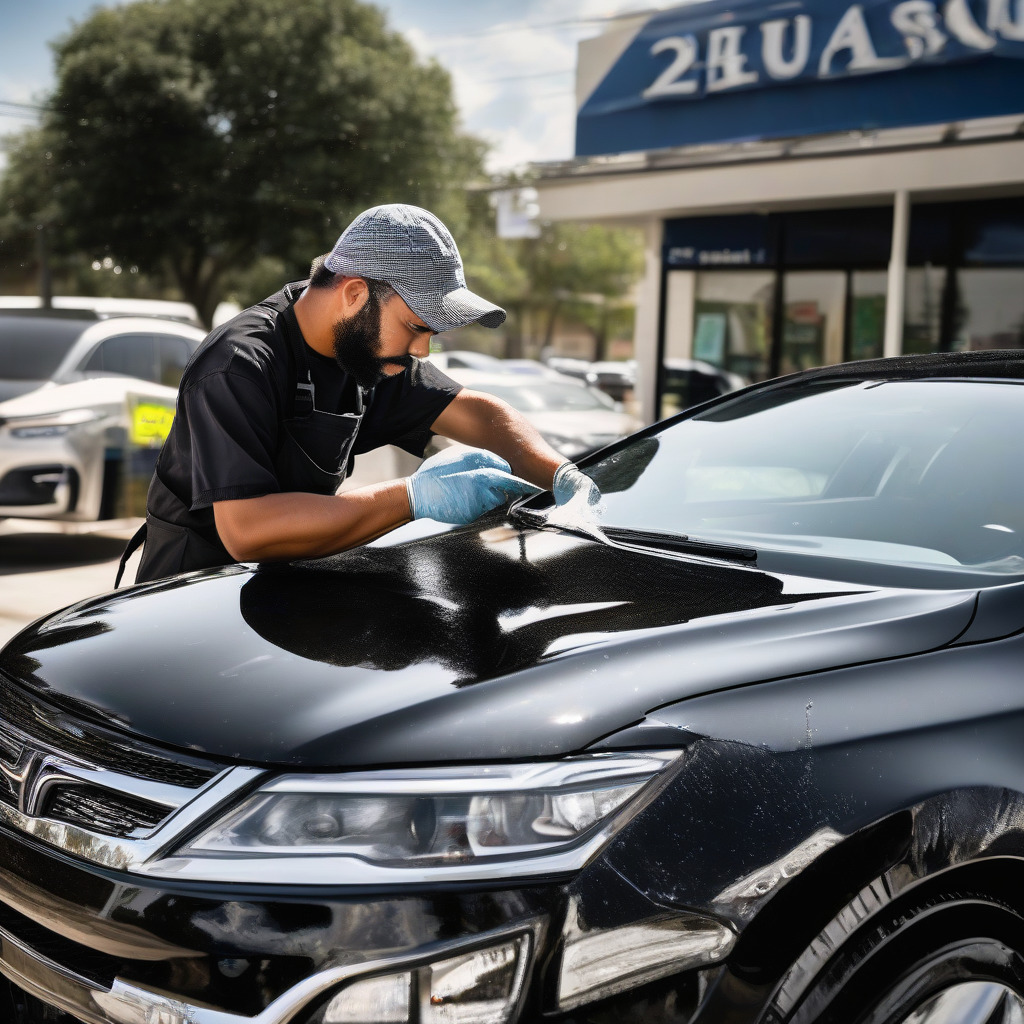
Hand washes remove the mechanical variable but replace it with a human one. A two-bucket hand wash with clean microfiber mitts and proper rinse protocol is the gold standard for paint safety. A hand wash where one bucket of increasingly brown water gets reused across every panel is arguably worse than a well-maintained tunnel. When you’re evaluating an independent hand wash, what you’re really evaluating is technique and how clean the equipment actually is.
One more format worth flagging: the older friction brush wash, with large cylindrical spinning nylon or polyethylene bristle brushes. It’s mostly phased out at dedicated car wash facilities, but it still shows up at some Houston gas-station washes — particularly older independents on the frontage roads in the northwest suburbs. They’re identifiable by the big spinning brushes visible through the tunnel entrance. They look like brushes from a 1990s car wash because they often are. If you see that format, don’t pull in.
Is a Cheap Express Wash Safe for a New or Recently Detailed Car?
For most vehicles with stock factory paint that hasn’t been professionally coated, a well-maintained soft-cloth tunnel at a reputable facility is unlikely to cause visible damage in a single wash. Over months of weekly use, micro-scratches accumulate and become visible in direct sunlight. But one wash? Usually fine.
The caveats matter more than the baseline. If your car is visibly dirty when you pull in — construction dust from a Heights job site, caked mud from trail riding, that dark-orange industrial grime that settles on cars parked east of the 610 Loop — pre-rinse before any brush or cloth makes contact. Pulling a heavily soiled car through a soft-cloth tunnel is the single highest-risk scenario for swirl marks. The pre-soak arch at most modern tunnels is designed to address this, but it needs dwell time and pressure to work. If the car ahead is rolling slowly through a backlogged tunnel, your pre-soak time gets cut short.
If your car has a fresh ceramic coating or PPF wrap, the calculation changes entirely. Houston-area coating installers consistently advise against soft-cloth tunnels on coated vehicles — not primarily because of scratch risk, but because coatings require specific low-pH wash chemistry to maintain their hydrophobic properties, and most tunnels use whatever their supply contract provides. If you’ve invested in a professional coating, use a touchless wash for routine maintenance. That’s not a close call.
On pricing: the lowest price points get you an exterior tunnel wash. That’s it. Full service — actual interior vacuum, windows inside and out, tire dressing, door-jamb wipe-down — realistically starts around $25 at budget-end chains and runs $50 or more at better independents. Anyone quoting lower than that for “full service” is describing something from several years ago.
The Houston Climate Variables Most Guides Miss
Houston’s car-care math is different from the national average, and most guides written for a general audience don’t account for it.
Pollen season runs roughly February through April, with live oak being the primary culprit. Oak pollen is mildly acidic. On a warm hood in direct sun, it can begin etching clear coat within days — this is straightforward chemistry at temperatures Houston hits routinely in March. Practical implication: during pollen season, wash weekly or trigger a rinse-only cycle after heavy pollen days. Don’t wait for the car to look dirty.
Saharan dust events have become more reliably documented over the Houston metro in the last five years. These plumes of fine mineral particulate cross the Atlantic and reach the Gulf Coast, typically June through September. They deposit abrasive grit across everything parked outside. You can’t always see it the way you’d see mud — but it’s there. Wiping it dry off a dark-colored car is a reliable way to scratch the paint. After a dust event, rinse before any contact wash.
Industrial fallout is a specific and underreported problem for drivers in the Pasadena, Deer Park, La Porte, and Baytown corridor east of the city. The petrochemical complex along the Ship Channel emits fine metallic and chemical particulate that settles on cars parked within several miles downwind. This fallout bonds to clear coat and, over time, causes pitting and staining that looks like paint defects from a distance. If you live or work in that corridor, your paint faces a contamination burden that no national car-care guide addresses. Bi-weekly washing is reasonable. Iron decontamination — clay bar or a dedicated iron fallout spray — should be part of your routine a few times a year.
UV index levels of 10 and 11 are routine in Houston from May through September. Paint oxidation accelerates exponentially under sustained UV exposure, which is why unprotected light-colored Houston cars develop that chalky, faded look faster than identical cars sitting in Minneapolis. Consistent washing removes contamination that traps heat and speeds oxidation. A monthly full-service wash with a sealant application isn’t vanity in this climate. It’s maintenance. For a broader look at Houston vehicle ownership costs in our automotive coverage, the climate factor shows up repeatedly across maintenance categories.
The Chains: What They Cost and What They’re Actually Worth
Mister Car Wash is the dominant chain presence in Houston, with locations including the Westheimer spot near Fountainview Drive and the Katy Freeway location near Barker Cypress. It’s publicly traded with published pricing — verify current menu prices directly, because they change.
Here’s what the reviews actually tell you: filtering Google reviews for “scratch,” “swirl,” and “antenna” across Houston Mister Car Wash locations surfaces a consistent pattern — antenna snapping at the base, swirl marks on darker paint after repeated use, occasional side-mirror clip damage. These complaints are documented and recurring. They’re also not unique to Mister Car Wash; every high-volume soft-cloth tunnel in the city generates similar complaints. If you notice damage after a wash, document it on-site with timestamped photos before you leave. Ask for a manager. Don’t drive home and call later. That ship has sailed.
Zips Car Wash has expanded into Houston through post-2022 acquisitions. Equipment tends to be newer at recently converted locations, which matters for cloth condition. Review patterns resemble Mister Car Wash — periodic swirl complaints on dark vehicles, but nothing that flags the chain as an outlier. Pricing is comparable to other express-tunnel chains; verify at the specific location.
Buc-ee’s self-serve wash bays at the Katy location on TX-99 represent the price floor for the self-service format. Not a full-service wash — not close. It’s useful for knocking road grime off before it bakes on, or for drivers who want complete control over the process. The foam brush attachment is an unregulated contact surface. Bring your own mitt if paint safety matters to you. As a pre-rinse station before a hand wash, it works.
Crew Carwash has a strong DFW presence but no confirmed Houston-area locations.
The Bissonnet Corridor and Southwest Houston’s Independent Hand-Wash Scene
This is the part of Houston car-wash coverage that most regional content ignores, and it deserves original treatment.
The concentration of independent, staff-intensive hand-wash operations along Bissonnet Street, the Hillcroft corridor, and the Near Northside along Fulton Street offers some of the best value in the Houston car-wash market. Many of the Bissonnet/Hillcroft shops are South Asian-owned and staffed; the Near Northside operations are largely Latino-community-anchored. Both corridors offer full-service hand washes in the $20–$35 range — verify prices directly, these aren’t corporate menus. What they include is what most chain “full service” doesn’t: a genuine interior vacuum reaching seat crevices, hand-wiped windows inside and out, tire dressing, door-jamb wipe-down. The labor intensity is the entire point.
The paint-safety advantage is real but conditional. Watch for a few seconds before you commit: Are workers using separate wash and rinse buckets? Are mitts being rinsed visibly between panels? Does the car get a pre-rinse with a pressure hose before contact begins? Those are the signals that the operation takes technique seriously. A hand wash performed with one bucket of increasingly brown water isn’t safer than a well-maintained tunnel — but the good shops on these corridors genuinely do better work than most chains at a comparable or lower price.
The Near Northside/Fulton corridor shops serve a working-truck and family-SUV clientele and move higher vehicle volume than the Bissonnet strip. They can be less attentive to luxury-paint concerns. But for a work truck that needs a legitimate interior cleaning after a week of job sites, they’re efficient and honestly good value that doesn’t get nearly enough attention. These places have been doing solid work for years; they just don’t have marketing budgets.
Neighborhood by Neighborhood
Katy and Cinco Ranch sit in a chain-heavy corridor with real price competition. Mister Car Wash at Katy Freeway/Barker Cypress and area Zips locations push base exterior pricing into the budget-tunnel range. If your facility offers a dedicated touchless lane and paint safety is the priority, call ahead to confirm — not all Katy locations have both formats. For factory paint on a normal week with no heavy soiling, the soft-cloth options here are acceptable.
Sugar Land and Missouri City have a stronger mid-market independent scene than Katy. Owner-operated full-service shops along US-90 and the First Colony Boulevard corridors offer hand-wash-plus-interior packages in the $25–$40 range on sedans — verify on arrival. The customer base in these neighborhoods expects cars returned in genuinely clean condition, and that expectation keeps quality reasonably consistent. Ask about two-bucket method before leaving your car.
Montrose and Midtown have fewer independents and higher commercial rents. The customer base skews toward newer and higher-value vehicles, and pricing reflects it. Detail-forward shops here are more likely to ask about coatings and adjust their chemical selection accordingly. Budget exterior-only tunnel options exist along Westheimer, but this isn’t the neighborhood where the lowest price gets you anything meaningful.
Memorial and River Oaks benchmark toward mobile detail, not car wash. Mobile detailers in this corridor run $150–$350-plus depending on service level and vehicle size. For regular maintenance washing on a garaged vehicle here, the realistic options are a weekly hand wash from a trusted independent or a touchless tunnel between details. Soft-cloth chains along Memorial Drive are fine for trucks and non-coated vehicles. For coated cars, touchless or hand wash only.
Heights and Near Northside are the geographic sweet spot for value hand washes in inner-loop Houston. The Fulton corridor operations described above serve this population. The Heights itself has independent full-service operations along Yale Street and Washington Avenue serving a mixed clientele — work trucks alongside people who just bought a house and now somehow care about their car again. Solid for factory paint. Ask about their process if yours is freshly detailed.
Red Flags to Check Before You Pull In
Most paint damage from car washes is preventable if you spend 60 seconds looking before you commit.
At a tunnel wash: walk or drive slowly past the entrance and look at the cloth strips or foam curtains. Frayed edges, gray-black discoloration in the lower sections, and a visibly dirty trough at the base of the entrance are all signs of deferred maintenance. A clean operation has strips that look lightly tinted by conditioner, not dark with accumulated grime. Check the pre-soak arch — it should be several feet before the first contact element, with active spray coverage at low pressure. If the car ahead of you is entering the tunnel less than 90 seconds after the pre-soak arch, dwell time is insufficient for anything but a lightly dusty car.
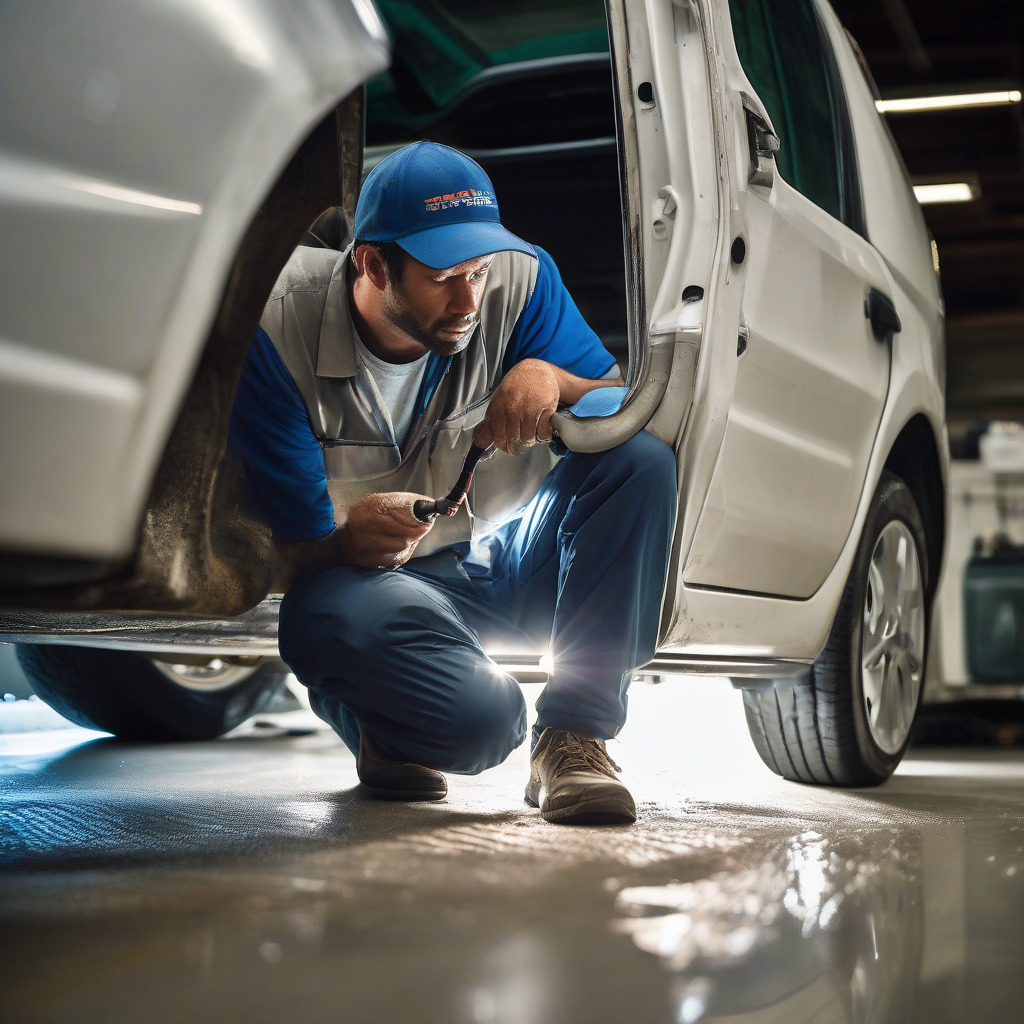
At an independent hand wash: ask directly whether they use a two-bucket wash method. The answer should come without hesitation. If the person at the front doesn’t know what that means, that’s informative. Look for grit guards — the plastic inserts at the bottom of wash buckets that prevent grit from contaminating the water when a mitt is agitated against them. They’re inexpensive, and every shop that takes technique seriously has them. Microfiber mitts versus sponges is a meaningful distinction: microfiber traps grit in its fibers instead of grinding it across your paint.
At any facility: if staff are waving cars through without a brief walk-around to check for pre-existing damage before wash entry, that’s a problem — both for quality and for your ability to make a claim if something goes wrong.
If a Houston Car Wash Scratches Your Car
Here’s the part nobody wants to hear: the Texas Department of Licensing and Regulation does not license or regulate car washes. No state board to file a complaint with. No license to threaten. You’re on your own.
On-site documentation is non-negotiable. If you notice damage before leaving the property, stop — don’t drive away. Take timestamped photos of every visible scratch, swirl, or broken antenna component. Ask to speak with a manager and request that they document the damage in writing. If they refuse to engage, document that refusal too.
If you have a dash cam, the tunnel entry footage is your most valuable evidence. It establishes your vehicle’s condition before the wash began. This is the difference between a credible claim and a dead argument. If your car is worth more than a few thousand dollars and you wash it regularly, a front-facing dash cam is a reasonable investment that pays for itself the first time something like this happens.
Recourse options in order of effort and likely effectiveness: Direct negotiation with the operator is the most probable path to any recovery. Bring timestamped photos, a written repair estimate from a body shop, and a clear account of what happened. Most operators would rather address a documented claim quietly than manage a public complaint. A BBB complaint has no enforcement power — the BBB is not a government agency — but it creates a public paper trail and prompts most franchise operators to respond formally. Texas small claims court through the Justice of the Peace system handles claims under $20,000, which covers most paint correction and minor panel repair scenarios. Filing fees are low, no attorney required. You need timestamped photos, a written estimate on letterhead from a licensed body shop, your credit card receipt for the wash, and ideally your dash cam footage. File with the JP court in the precinct covering the car wash location. If a shop’s conduct crosses into outright misrepresentation, the Texas Deceptive Trade Practices Act gives consumers a separate avenue worth understanding before you pursue a claim.
One useful quality indicator worth knowing: Houston car washes that maintain proper stormwater runoff compliance require active drainage management and regular equipment inspection under city permit requirements. A shop that’s current on its stormwater permit is probably also current on its equipment maintenance. You can ask about it. A good operator will know exactly what you’re referring to and won’t find the question strange.
The Practical Baseline
For a factory-paint vehicle on a normal week with no fresh wax or coating, a reputable soft-cloth tunnel at a facility you’ve visually inspected is fine. Mister Car Wash and Zips locations with current equipment are acceptable for routine maintenance — as long as your car isn’t heavily soiled going in.
For a ceramic-coated or PPF-wrapped vehicle, the only options worth considering are touchless wash or a quality independent hand wash. The Bissonnet/Hillcroft corridor and the Near Northside are genuinely good for this, at $20–$35 for full service. They’re doing work the chains simply don’t. For a freshly detailed car or a dark-colored vehicle where swirls show up clearly in afternoon sunlight, hand wash at a shop you’ve vetted for technique, or touchless only.
And regardless of which format you choose: don’t pull in after a pollen event, a Saharan dust deposit, or a week of driving in the Pasadena corridor without pre-rinsing first. The wash isn’t the risk. Dragging contaminated paint through a tunnel without a proper pre-soak is.